The Traitors finale, review – Rachel and Stephen’s win was dazzling, but the BBC must heed this warning
By the end of its fourth series, the BBC reality show had everyone entranced once again. But the Beeb must be wary about over-exposing its winning formula
When Alan Carr won The Celebrity Traitors back in November, I wondered whether the success of that series had salted the earth for its civilian sibling. Just 56 days after the Carr supremacy (only a week longer than a Liz Truss premiership) The Traitors returned at the start of this year with a groan. Did the country have the enthusiasm for another month-long obsession? Wouldn’t Traitors fatigue set in? But it was New Year’s Day and, with nothing else to do, I, like many others, threw caution to the wind. Along with almost 12 million Brits, I started another round of the parlour game that’s gripped the nation. And – dammit – again I got sucked in.
Whether it was traitorous Celtic duo Rachel and Stephen forging an unshakeable bond in the turret, rogue “Secret Traitor” Fiona self-immolating, crime novelist Harriet also self-immolating (this was a season typified by interesting decision making), or side-burned gardener James delivering mixed metaphors and malapropisms like they were going out of flavour, season four delivered. And then some. When, with stifled delight, Stephen revealed his final board (“for reasons that will become clear”), he brought the curtain down on something quite rare in the world of reality TV: a genuinely impressive performance. This isn’t The Apprentice, where ill-equipped buffoons stumble through simple tasks, or I’m a Celeb, where the public torture former politicians and footballers for their onanistic viewing pleasure. This is a competition that was won by two traitors who did really, really well. That their skill is lying and deceiving is beside the point. They have proven themselves to be the Willliams sisters, the Pelé and Garrincha, the Torvill and Dean, of subterfuge.
This finale captured the best of the brutal psychological drama. The distraught reaction of PhD student Jade – “blinded by trust,” in her own words – when her castle bestie, Stephen, shafted her at the last roundtable. Faraaz’s realisation, moments after his banishment, accompanied by a whispered “idiot…” of self-admonishment. “Two traitors,” Claudia Winkleman narrated at the climactic moment, “but totally faithful to each other.” Even the host – behind the fringe and eye shadow – was brought to tears. It was another great moment in a show that has proven capable of delivering big watercooler thrills.
And yet, The Traitors is clearly disposable entertainment. I scarcely remember the last series of the show (won by Leanne Quigley and Jake Brown, apparently), and what sticks in the mind most are those big dramatic moments: the first series’ doomed traitor Wilf, begging for his life; victorious villain Harry successfully knifing Molly; not-Welsh Charlotte announcing that she would be affecting a Welsh accent for the entire show. There have been only the occasional flashes of the sort of organic carnage (“she’s not a traitor, she’s my girlfriend”, for example, or “Paul’s not my son… but Ross is”) that we saw in the early-Noughties heyday of deranged, destructive, but delicious, reality TV. In my review of the second series’ finale, I wrote that winner Harry was “born television gold” – since then, the only show I’ve seen him on is Traitors: Uncloaked, the post-match analysis that follows each episode.
But in that moment, while we’re all gripped to our television sets (finally, it felt like the nation was rooting for a traitor victory, after three seasons of anaemic public support for their feeble faithfuls), the throwaway nature of the entertainment feels irrelevant. This is a form of public communion, a shared intrigue. It is a show that has been deliberately engineered for the frayed, disaggregated modern mind. The twists and turns, betrayals and alliances, all give us that same dopamine hit that we get from the inane doomscroll. The Traitors isn’t an alternative to The Bear or Adolescence or Severance – it’s a replacement for an hour spent with your brain in the vice of a Big Tech algorithm. And, for that, it should be cherished.
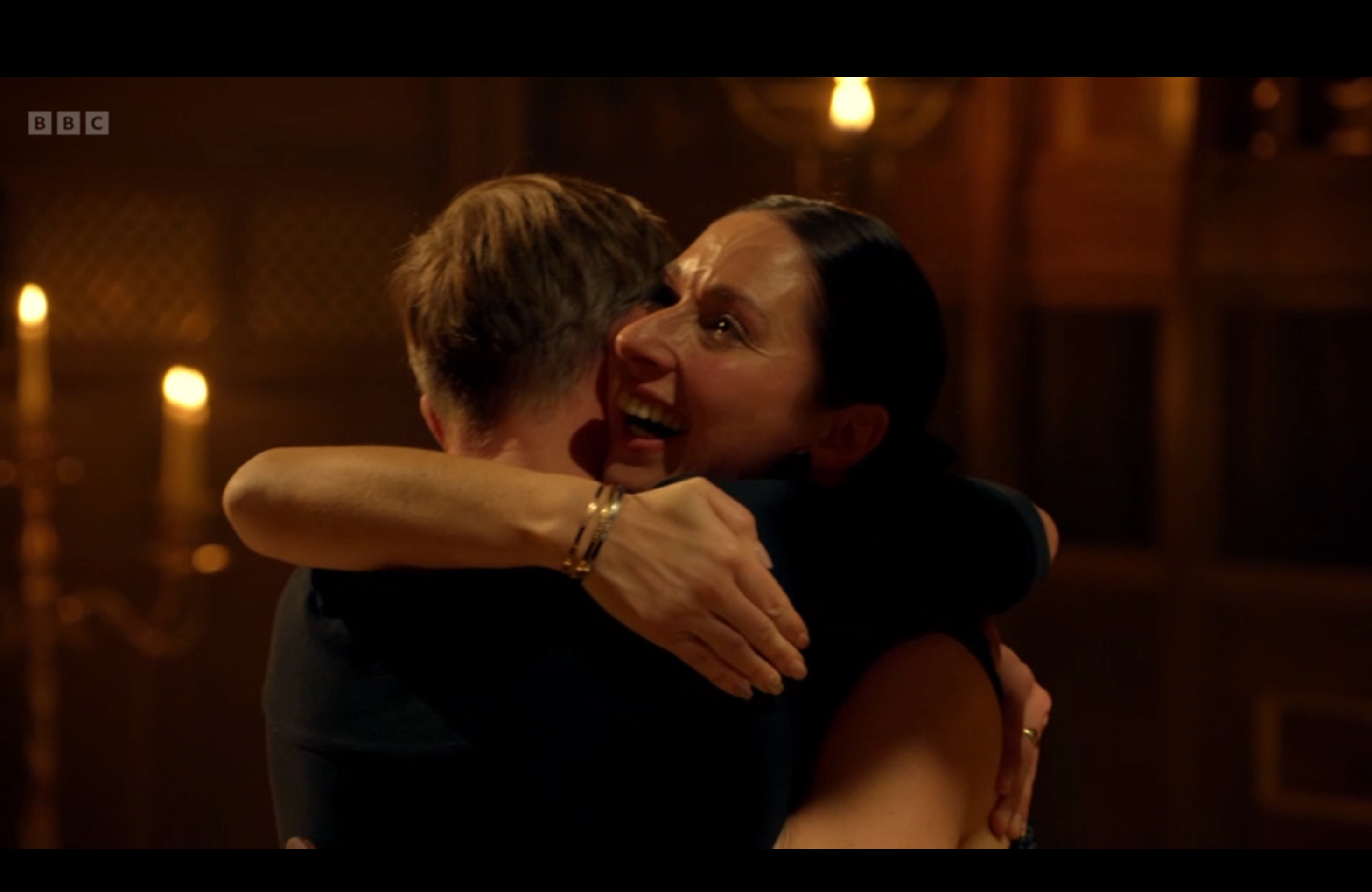
What remains to be seen is whether the BBC can control themselves. Fifty-six days between the end of The Celebrity Traitors and the start of The Traitors is not a long time. They have a winning formula that they must avoid over-exposing. After all, reality TV shows go through cycles of salience. There have been moments where Strictly Come Dancing, The X-Factor or Britain’s Got Talent have mustered eight-figure ratings and captured our country’s conversation. All have, in turn, faded into irrelevance. There may come a time when The Traitors, too, releases its hold on small-screen audiences.
But, right now, the producers seem to have hit upon a perfect set-up. Fantastic casting, tightly controlled narrative reins, and a host who allows contestants to hold the limelight: all have colluded to make The Traitors the biggest, most dazzlingly enjoyable distraction that could be conceived in these troubled times.
Join our commenting forum
Join thought-provoking conversations, follow other Independent readers and see their replies
Comments
Bookmark popover
Removed from bookmarks