The Independent's journalism is supported by our readers. When you purchase through links on our site, we may earn commission.
Bad Bunny’s meteoric rise: from grocery store bagger to Grammy awards and a Super Bowl stage MAGA can’t silence
After making history at the Grammys, the Latin trap titan is set to headline the Super Bowl halftime show this weekend. Kevin E G Perry reports
Donald Trump certainly knows about Bad Bunny now. In October last year, the president claimed he’d “never heard” of the trailblazing 31-year-old, born Benito Antonio Martínez Ocasio. As recently as 2016, Ocasio was working as a grocery store bagger in Vega Baja, Puerto Rico, uploading tracks to SoundCloud between shifts. Today, the Puerto Rican star has made himself simply inescapable.
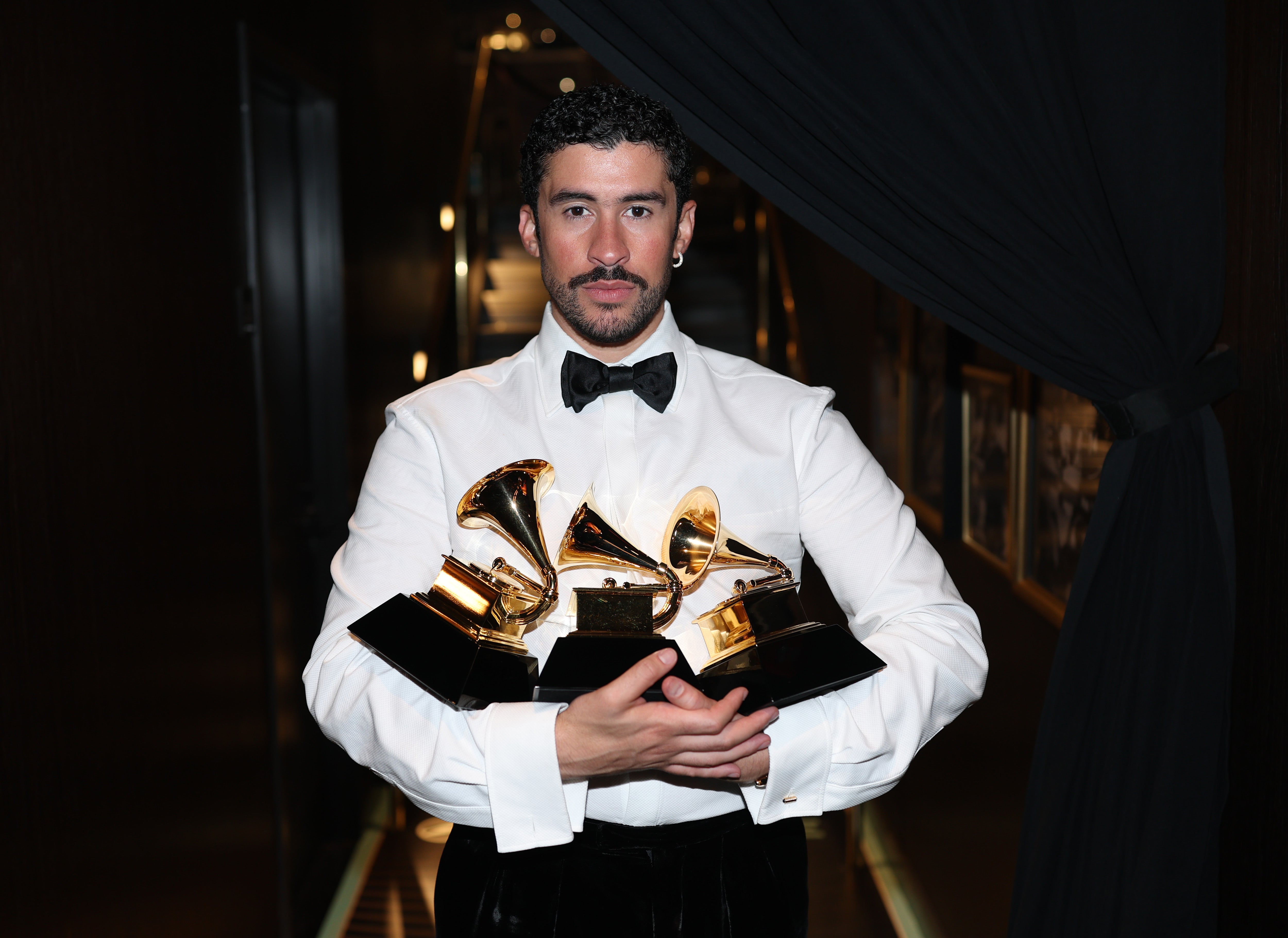
His sixth album, Debí Tirar Más Fotos, became the first Spanish-language record ever to win the Grammy for Album of the Year last weekend. This Sunday, he will become the first solo male Latin artist to headline the Super Bowl Halftime Show. He is also likely to be the first person to perform on the NFL’s most high-profile stage entirely in a language other than English. Needless to say, Trump still isn’t impressed. “I’m anti-them,” the president grumbled about Ocasio and fellow Super Bowl act Green Day last month. “I think it’s a terrible choice. All it does is sow hatred. Terrible.”
Ocasio may have had that comment in mind at the Grammys. After collecting the award for Best Música Urbana Album, he spoke out powerfully about the injustice of ICE raids before taking a few moments to clarify that hatred is the last thing he’s interested in spreading. “Hate gets more powerful with more hate,” he said. “The only thing that's more powerful than hate is love. So please we need to be different. If we fight, we have to do it with love. We don’t hate them. We love our people. We love our family and there’s a way to do it, with love, and don’t forget that.”
That same open-hearted, compassionate message reverberates through Ocasio’s music. Debí Tirar Más Fotos (I Should Have Taken More Photos) is a record that celebrates the culture and history of Puerto Rico, blending infectious reggaeton and house with traditional Puerto Rican instrumentation, while also reckoning with its present-day realities. On the mournful “LO QUE LE PASÓ A HAWAii” (“What Happened To Hawaii”), Ocasio compares the political situation in his homeland, a territory of the United States without full statehood, to the state of Hawaii. His fears for what will happen to Puerto Rico if it follows a similar path are laid clear as he describes encroaching gentrification, crooning somberly in Spanish: “Thеy want to take my river and my beach too. They want my neighborhood and grandma to leave.”
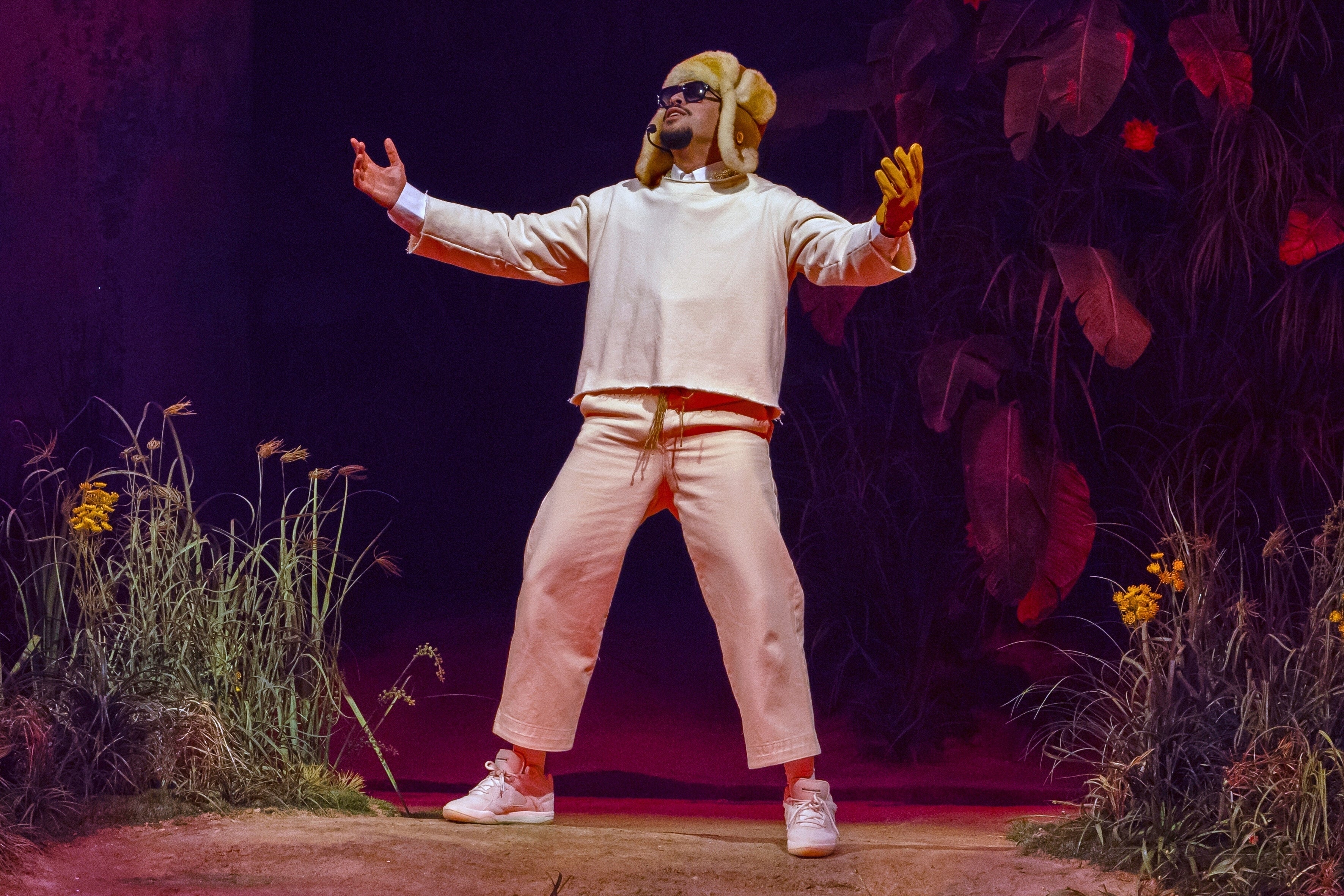
Elsewhere, on “TURiSTA” (”Tourist”), he draws parallels between a brief romantic relationship and the tourists who come to his island to party without looking deeper. “You only saw the best of me,” he sings. “And not how I suffered.” Songs like these have made Ocasio a hero to Puerto Ricans both on the island and in the wider diaspora. Professor Amílcar Barreto, who teaches at Northeastern University in Boston, tells The Independent that by highlighting issues of power and colonization, Ocasio has almost inadvertently become a powerful figure of resistance. “Not in a partisan sense, but in a broader sense, Bad Bunny is a very political artist,” says Professor Barreto. “His music speaks to issues that are frequently ignored - certainly in most popular venues.”
That might explain why Trump and the wider MAGA movement have been so riled up by Ocasio’s presence on some of America’s biggest stages. After he was announced to play the Super Bowl, Rep. Marjorie Taylor Greene expressed concern that Ocasio would deliver “demonic sexual performances.” Turning Point USA has announced that on Super Bowl Sunday, they’ll host Kid Rock and others for an alternative “All-American Halftime Show”. Professor Baretto believes this is evidence of Ocasio’s ability to expose a wider divide in American culture. “His embrace of his latinidad (Latin-ness), puertorriqueñidad (Puerto Rican-ness) and even gender fluidity speak to an evolving American society — a younger society that has more people of color, is more likely to embrace sexual minorities and other progressive social stances,” he says. “This runs completely counter to the MAGA vision of America which is very white, Christian, straight and distrustful of foreigners. This America is running up against an increasingly diverse America — one that Bad Bunny represents.”
Thankfully, the NFL has given MAGA activists short shrift. Commissioner Roger Goodell has said that the decision to book Ocasio had been “carefully thought through,” adding: “We’re confident it’s going to be a great show. He understands the platform that he’s on, and I think it's going to be exciting and a united moment. He’s one of the leading and most popular entertainers in the world. That’s what we try to achieve. It’s an important stage for us.”
It will undoubtedly prove an important stage for Ocasio too, even as his performance remains a political flashpoint. Homeland Security Secretary Kristi Noem threatened last year to station ICE agents at the Super Bowl to catch anyone who is not a “law-abiding American who love[s] this country,” although this feels more theatrical than genuinely targeted. As Michael Che joked of Noem’s threat on Saturday Night Live: “You know, to catch all those farm workers who can afford Super Bowl tickets.” Ocasio has previously stated that concerns about the presence of ICE factored into his decision not to tour the United States and instead to play a residency in Puerto Rico last year. “There was the issue of — like, f***ing ICE could be outside [my concert],” he said. “And it’s something that we were talking about and very concerned about.”
When Ocasio’s historic Grammy win arrived at the weekend, it came on a night when everyone from Joni Mitchell to Billie Eilish and Justin Bieber took the opportunity to speak out in opposition to ICE. The message was one of anger about events in Minneapolis and beyond, but also one of hope.
When Debí Tirar Más Fotos was first released, Trump’s second presidential election victory was fresh in the collective memory and he was still weeks away from being inaugurated once again. The record bursts into life with the defiant opening track “NUEVAYoL”, a vibrant song that interpolates El Gran Combo’s 1975 salsa hit “Un Verano en Nueva York”, for an irresistible tribute to the city’s Dominican diaspora. By the time it was nominated for a Grammy, New Yorkers were celebrating the election of a young, progressive mayor who ran his campaign in direct opposition to Trump’s mandate. In some ways, at least, the times really do seem to be changing.
Whether he intended it to be or not, Ocasio’s music has become the unavoidable soundtrack of the moment. When Bad Bunny headlines the Super Bowl, Ocasio may be walking out on stage in Santa Clara, California but he will be directing the eyes of the world to Puerto Rico. And although he’ll probably never admit it, even President Trump will be listening.
Join our commenting forum
Join thought-provoking conversations, follow other Independent readers and see their replies
Comments
Bookmark popover
Removed from bookmarks