Gwen John: Strange Beauties review, National Museum Cardiff: Quietly intense studies of ordinary life
Opening 150 years after her birth, this exhibition honours a diligent and rigorous artist who found beauty in ‘drabness’
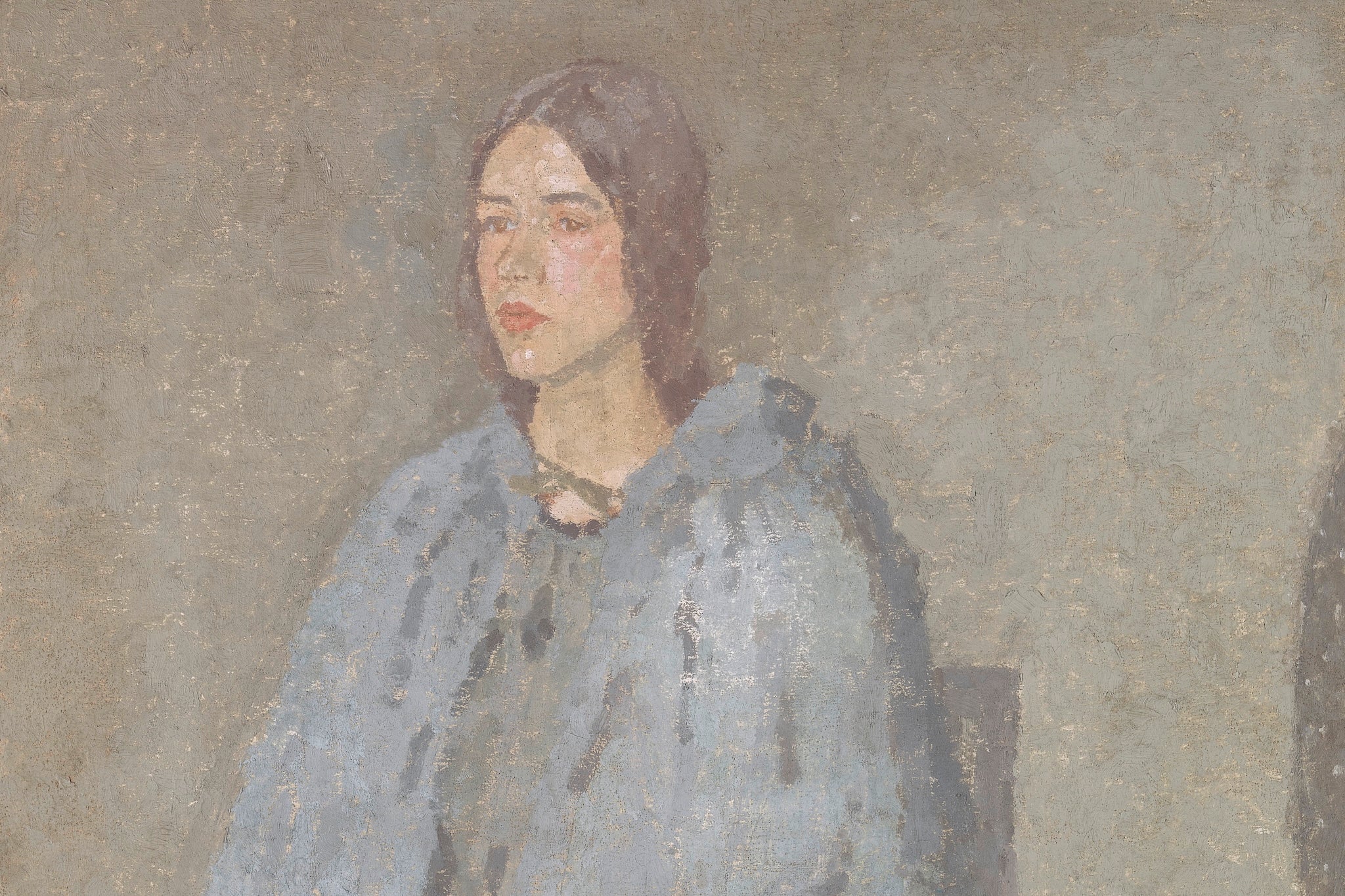
Gwen John was about 22 years old when she painted her landlady, Mrs Atkinson, sitting in a room. It’s an unassuming portrait – you could even call it ordinary – and therein lies its charm. The floral wallpaper is faded, a hazy wash of chestnut. The papery edges of the drawing tacked to the wall are crumpled and curled, like the petals of days-old flowers in a vase. In her black clothes, Mrs Atkinson is a looming presence; squint, and her triangular form morphs into a shadowy mountain. And those eyes: pale and glassy, ferrying heavy lids and bags, pink-rimmed. Has she been crying? Pressed down onto her lap beneath her hands is a handkerchief, a crisp white.
When Mrs Atkinson (c. 1898) was exhibited in 1926, one critic praised the artist’s ability to find beauty in “drabness”. Four years earlier, John referred to herself as “a seer of strange beauties”, which is where this glorious retrospective beginning at the National Museum Cardiff got its name. Opening 150 years after the artist’s birth here in Wales, Strange Beauties brings together more than 200 of her quietly intense and mostly muted oil paintings, drawings, watercolours, and notebooks. She returned repeatedly to the same subjects and compositions – contemplative women, sparsely furnished interiors, still lifes, devoted churchgoers – and each time saw them through fresh and attentive eyes.
Her own eyes are unwavering in the strident self-portrait she painted in 1902. She greets us with her auburn hair tidily drawn back, buttoned up in a crimson blouse. A few years earlier she’d traded the Welsh seaside town of Tenby, where she learnt to draw, for London’s progressive Slade School of Art, where she re-learnt to draw; upon arrival, she scribbled that she must “Learn! Learn! Learn!”. She was a diligent and rigorous artist, with a desire to look closely at life’s ordinary edges. In a playful group portrait she made of her siblings Augustus and Winifred among friends in a student house around 1897, she paid as much attention to a discarded shoe, forgotten behind a curtain, as to her sitters’ youthful faces.



Instead of telling the story of John’s life – four published biographies do just that – the exhibition focuses on her methods, rhythms and themes. Yes, there are glimpses of her bohemian younger brother Augustus (the better-known artist in the family for a while) and the sculptor Auguste Rodin (for whom she began modelling in 1904, aged 27, and with whom she had a decade-long affair), but glimpses they remain. Instead, in a room dedicated to the seven years she spent living and working in Paris, the emphasis is on reunited pairs of canvases and their subtle variations. In one version of A Corner of the Artist’s Room in Paris (c. 1907), the window is veiled by a gauzy curtain, and a parasol leans tipsily against the wicker chair; in another, the parasol is gone, the window open wide. The alterations between two portraits of the model Fenella Lovell – Girl with Bare Shoulders (c. 1910) and Nude Girl (c. 1910) – are more immediately obvious.
I wonder how the nuns would feel about Fenella’s undressing. The largest room in the exhibition is dedicated to religion; in 1911 John moved to the leafy Parisian suburb of Meudon, where she started going to church and, in 1913, converted to Catholicism. Unfolding along one wall, as if in a long, skinny pew, are experimental sketches and watercolours of the congregation observed from behind or in profile, praying and listening to sermons. Nearby is the captivating series of portraits John painted of the local convent’s 17th-century founder, the delightfully named Mère Marie Poussepin, including one with a surprisingly mischievous smile.
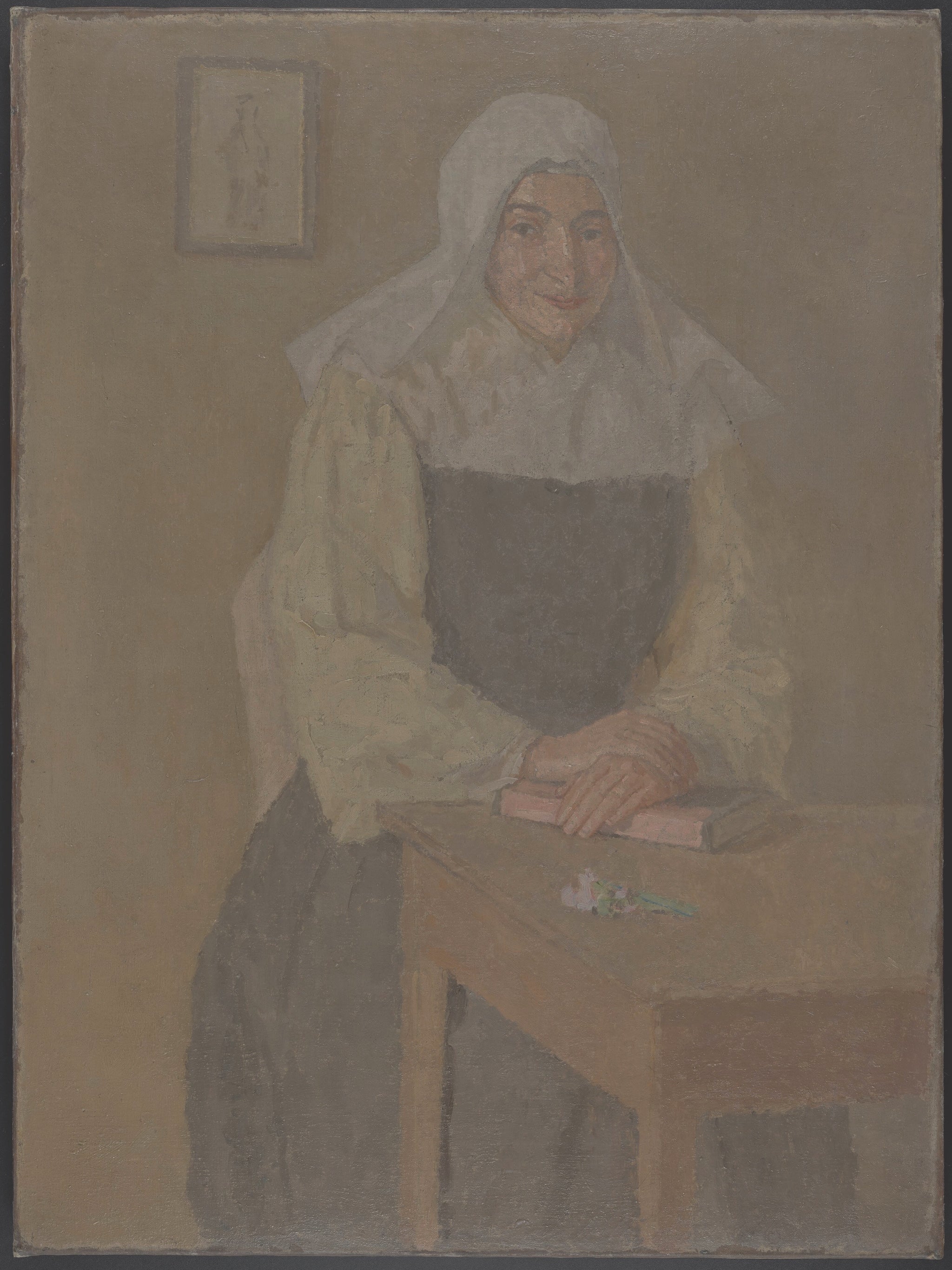
John’s devotion to her subjects is most apparent in the 60 paintings she made of a single neighbour in Meudon (nobody knows her name), who in Cardiff has a room of her own. In one portrait she holds a book, in another a rose. Spend enough time with her and you’ll notice small tweaks to her dress, props, hair. One by one, the images are simplified until, just like Mrs Atkinson when you squint, the neighbour is less a neighbour than a still life. The result is art that’s sensitive but unsentimental, studious, and, yes, strangely beautiful.
‘Gwen John: Strange Beauties’ is at National Museum Cardiff until 28 June 2026 before touring to the National Galleries of Scotland, the Yale Center for British Art, and the National Museum of Women in the Arts, Washington DC
Join our commenting forum
Join thought-provoking conversations, follow other Independent readers and see their replies
Comments
Bookmark popover
Removed from bookmarks