Sky scored a huge own goal with its ‘girl sports’ TikTok channel – now I really feel like kicking something
The broadcaster has pulled its patronising ‘female-focused’ TikTok channel after only two days and no wonder, says Victoria Richards – it was cringe, lazy and my 13-year-old daughter absolutely hated it


What’s the first thing that comes to mind when you think of the Lionesses?
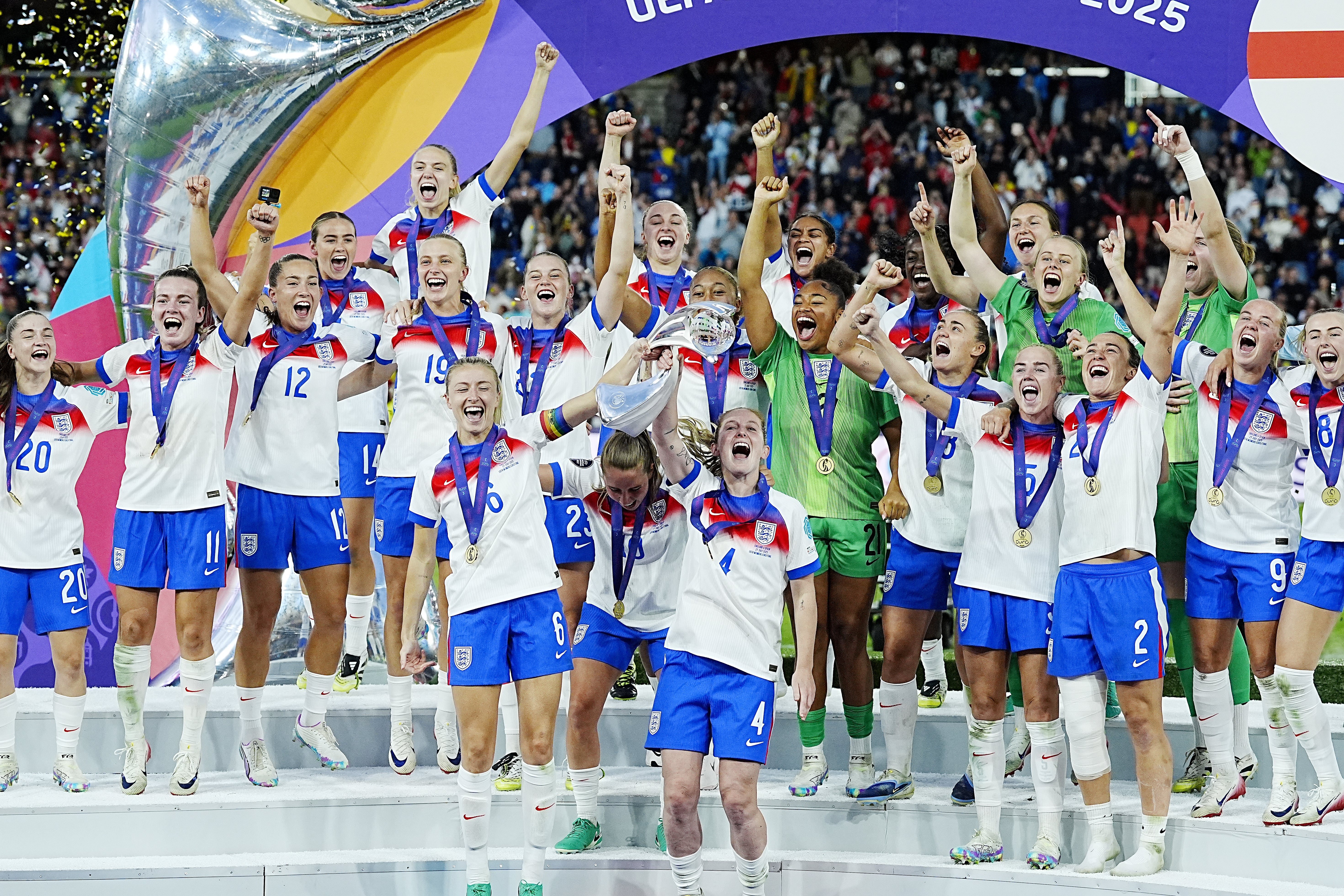
Is it the fact that in July the England team won their second European Women’s Championship trophy in a row by beating Spain on penalties after a nerve-wracking final in Switzerland? Or, perhaps it’s the fact that Euros 2025 was the first major football trophy won abroad by any England team?
Or that they are objectively more successful overall than the men’s team? When it comes to recent tournaments, the Lionesses have reached three major finals in a row, winning two, while the men's team hasn’t won a major tournament since 1966.
Sky Sports, on the other hand, clearly has a very different way of marking the Lionesses’ success – by introducing Barbies and memes, bright pink love hearts, talk of “matcha”... and references to “hot girl walks” in a brand new “female-focused sports channel” called Halo. And that got it an immediate red card for being sexist. The backlash to its ill-thought-out TikTok channel has, in fact, been so disastrous that it has been forced to pull it after only two days, admitting: “We didn’t get it right”.
I’ll say. When it launched last Thursday, Halo – touted as the “li’l sis” of Sky Sports by the broadcaster – was hyped as: “About ALL sports and championing female athletes. We’re here for the culture, community and connection. We don’t just watch sports – we live it.” Yet five of the first 11 videos featured male sports stars and the rest were full of pink text, love hearts and references to matcha lattes and Labubu toys. One toe-curling post about the New York mayor Zohran Mamdani read: “Thinking about Zohran Mamdani rizzing us and Arsenal up.”
It was meant, presumably, to appeal particularly to Gen Alpha – they are the first fully digital generation, after all – but it has badly backfired: my daughter (who’s 13) is livid about it. And so are all her friends. “Everyone is talking about it,” she told me this morning. I’m not surprised. At 13, they’re all avidly into football, netball, athletics – and feminism. “Why do they think we’ll only watch it if it’s pink?” my daughter added with the kind of scathing veneer and arched eyebrow only teenage girls can truly perfect. “It’s sooo patronising.”
She’s right – today’s teens are savvy and smart and sassy and all too aware of when they’re being belittled. They already follow female sports stars like Chloe Kelly, Leah Williamson and Alessia Russo on Instagram (the trio have more than a million followers each). And like it or not, Sky Sports has fallen right into the trap marked “cringe”. By this age, girls are achingly aware of the weaponisation of pink and how it’s used against them. They have to be.
That’s because the “pinkification” of little girls begins before they’re even born – and comes with a whole host of implications: that they’re “pretty” and “cute” and have to strive to be “ladylike” or later – shudder – “sexy”. Whereas blue is “for boys” because they’re “brave” and into “science” and are “born leaders”. It is both antiquated and insidious.
Yet by now, thankfully, some toy makers have cottoned on to the dangers of sexist branding – in 2021, Lego pledged to make its toys free from gender bias after global research found children remain held back by embedded gender stereotypes (girls were five times more likely to be encouraged to try dancing or dress-up than boys when it came to play and three times more likely to be encouraged to try baking – while boys were encouraged to do sports or Stem activities). So how did Sky Sports miss such an important memo?
I thought we’d moved beyond the kind of behaviours I spotted when my daughter was small: the dad who put on a ridiculous display of horror when his son rushed up to show him he had painted nails at a street party; the other dad at school who told my daughter (after she’d been picked as “player of the week” at her after-school football club) that he hoped they’d “start some clubs for girls soon” – presumably so his son didn’t have to play with one on the team.
There was the Italian man in a cafe who, on seeing my six-months pregnant belly, asked me if I knew if I was having a boy or girl. “A boy,” he said, kissing his fingers. “This is what you want.” The taxi driver who trilled: “Let’s just hope you’re having a boy – playing with trains is much more fun than dolls.” There was the woman in the supermarket who – on seeing my daughter in her favourite dress, which had the Star Wars logo emblazoned across the middle – leaned over to her and said, “You can’t like Star Wars – Star Wars is for boys!” I had to watch her little face crumple like an accordion.
The problem is that this kind of lazy gender stereotyping isn’t just outdated, but actively damaging. In 2019, the Fawcett Society, the gender rights charity, published research that showed the lifelong impact of gender stereotypes in early childhood – of the 45 per cent of people who said they’d experienced stereotyping as a child, more than half (51 per cent) said it had constrained their career choices, and 44 per cent said it had harmed their personal relationships.
More than half (53 per cent) of all women affected said gender stereotyping had a negative impact on who did the caring in their own family – with older women particularly affected. Seven in 10 younger women aged 18-34 affected by stereotypes said they believed their career choices had been restricted as a result.
And it’s not just women – boys and men feel it too. Some 69 per cent of men under 35 said they believed gender stereotyping had a damaging effect on perceptions of what it means to be a man or a woman; and men were just as likely as women to say that gender stereotypes they experienced had negatively affected their relationships.
Sam Smethers, former chief executive of the Fawcett Society, said evidence showed “there is no such thing as a female or a male brain, but retailers persist in creating and perpetuating gender differences just to sell products”.
In a report published just last month, based on pupils from 1,400 primary schools, children as young as six were found to be influenced by gender stereotypes when it came to what jobs they wanted to do.
With that in mind, imagining role models like Chloe Kelly and Hannah Hampton doing a “hot girl walk’” when they inevitably collect their MBEs in the New Year honours list 2025 isn’t just patronising but offensive. Will things change for the better now that Sky has learned from this epic own goal? I sincerely hope so – but I won’t be watching its channels to find out. Nor will my daughter.
Join our commenting forum
Join thought-provoking conversations, follow other Independent readers and see their replies
Comments
Bookmark popover
Removed from bookmarks