Read her lips: Rachel Reeves means tax rises
This was the week that sealed Labour’s fate: it would now take a miracle to avoid defeat at the next election, writes John Rentoul


Rachel Reeves’s speech on Tuesday was so unusual that it was tempting to avoid the obvious message. Perhaps it was an exercise in expectation management, some people thought, allowing everyone to think that she was going to put up income tax in the Budget so that she could declare with a flourish on 26 November that she had decided not to do that.
You do not need inside information to know that ministers do not play games of that kind.
A more plausible explanation was that she and Keir Starmer had realised, now that the Treasury was several shots into its ping pong of forecasts with the Office for Budget Responsibility, that she might have to raise income tax, and that she had to prepare the public for that eventuality.
Again, no. The final decisions have not yet been made, but Reeves was not driven to make her speech “just in case”.
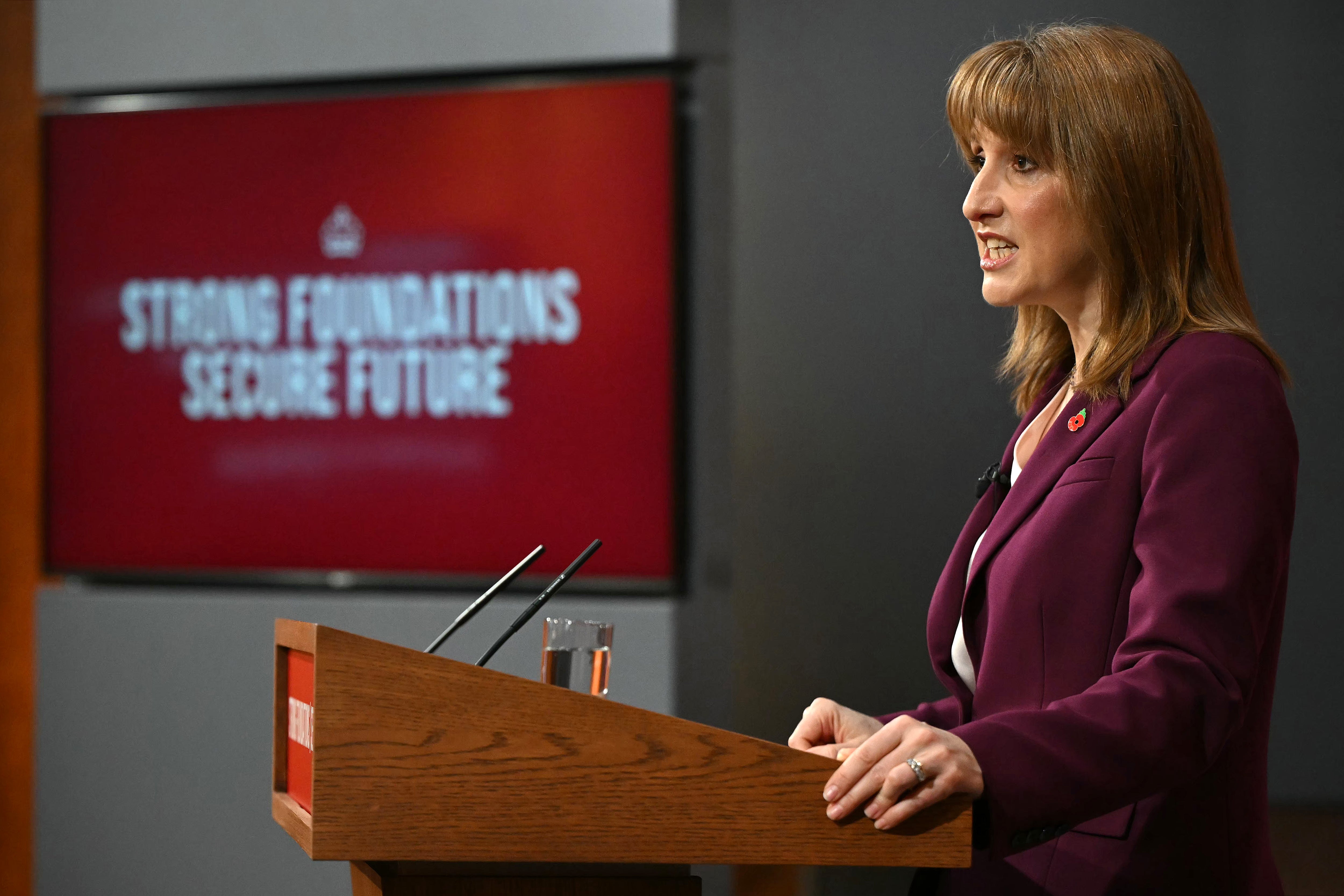
Here is some simple advice for anyone who was puzzled by Reeves’s “scene setter” speech: read her lips. “If we are to build the future of Britain together, we will all have to contribute to that effort,” she said. “Each of us must do our bit.”
There really was no ambiguity there. We will all have to contribute. That means income tax, national insurance or VAT. It cannot be VAT because that would set off another inflationary spiral. So it must be income tax or national insurance, which are roughly the same for most workers. Income tax raises more money because it covers the earnings of people over pension age and income from property and savings, although it is more politically sensitive because of the myth that national insurance pays for the NHS.
Either way, it will be a straightforward breach of Labour’s manifesto promise, which was not to raise any of those taxes. The Times reported confidently on Friday that the chancellor had already told the Office for Budget Responsibility that she intends to raise income tax. Although the final details have not been decided, the big decision has been made. She and the prime minister have decided to break the manifesto pledge.
There is speculation about clever wheezes such as putting income tax up by 2p in the pound and national insurance down by the same amount for those earning less than £50,000 a year.
But that is not what Reeves said. She said each of us must do our bit. Even if the better-off are going to be hit harder, she has told us that people on middle incomes are going to be hit too.
Her speech was not some weird expectations management game. It was not a precaution in case it turned out that a manifesto-busting tax rise was needed. It was forced on her because she and Starmer realised that the fiscal gap was too big to be bridged without tearing up the manifesto. It was intended to prepare the markets and the public for a broken promise.
The markets responded well, pleased that Reeves is prepared to bear the political cost of keeping debt under control. The public has not reacted yet. When it does, the scale of the political disaster will unfold. There is no pedantic way out, as there was last year, when employers’ national insurance contributions were deemed not to be “national insurance contributions (paid directly by working people)”. This is an unambiguous, category A, tuition-fee-level broken promise.
It is not even the right thing to do. A government unconstrained by manifesto promises would put up income tax as the fairest, broadest-based way of raising money according to ability to pay, but such an imaginary government would also restrain the growth of public spending at the same time.
Reeves’s speech was an admission that the government’s spending policy is dictated by Labour backbench MPs who complain, as Lucy Powell, the party’s deputy leader, did, about breaking a manifesto promise – at the same time as demanding higher welfare spending.
The broken promise is a disaster because it was so central to the election campaign. Starmer called Rishi Sunak a liar in a TV debate in the election campaign when Sunak said that Labour would put up taxes by £2,000.
All Starmer and Reeves have now is a hope and a prayer. They must hope that the markets will be so impressed by fiscal rectitude that the cost of borrowing will come down, allowing a virtuous circle, improving the public finances, boosting growth and giving Reeves or her successor space to cut taxes before the next election.
They could then pray for forgiveness and short memories.
That might be a possibility if the broken tax pledge were Labour’s only problem. But the government was already heading for fifth place in the opinion polls before the Budget.
Labour will lose the next election if it fails to stop the boats, in my view. In the past week, we have learned that the French government is stalling the pilot scheme to return migrants as it demands more money. If that scheme, which has sent back only 75 people in seven weeks, in which 7,000 arrived, cannot be expanded quickly, then it will not be a deterrent.
Shabana Mahmood, the home secretary, urgently needs to find something else. Mere talk about copying the Danish social democrats will not cut it.
If she cannot stop the boats, Reeves’s broken tax promise will seal Labour’s fate.
Join our commenting forum
Join thought-provoking conversations, follow other Independent readers and see their replies
Comments
Bookmark popover
Removed from bookmarks