Nnena Kalu’s Turner Prize win will change the landscape for our neurodivergent children
With politicians questioning the validity of neurodivergent diagnoses, this award shows the power of a mind that works differently, writes Annie Ridout
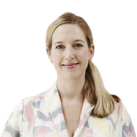

For the first time in its 41-year history, the prestigious Turner Prize has been awarded to a neurodivergent learning-disabled artist: Nnena Kalu, 59, who is autistic and has limited verbal communication.
Kalu experiments with colour, texture and dimension in her practice, creating large-scale hanging sculptures that look as if they’re at once containing and bursting with joy. Her detailed pencil drawings have a similar energy, almost leaping from the canvas.
Charlotte Hollinshead, who has worked with Kalu for 25 years as her studio manager and facilitator, said at the Turner Prize awards ceremony: “This is a major, major moment for a lot of people. It’s seismic. It’s broken a very stubborn glass ceiling.”
I have three children, all of whom are neurodivergent with both autism and dyslexia in the mix. My younger two struggle with the formality of school, but at home, all three of them are prolific artists, producing detailed, emotive drawings.
Art is where my children excel.
This is one area where they feel free to be themselves and to experiment. They will work hard to bring a vision to life, whether it’s on paper or three-dimensional, staying in a state of hyperfocus until it’s just as they envisaged, or has evolved into something unexpected but pleasing.
When school became too difficult for one of my sons, making him unwell, he spent a year being home-educated and recovering. On returning to school, gradually, his spark returned and he began drawing characters that impressed the other children. This is how he re-found his place among peers: through art.
I have often tried to explain neurodivergence to my children, highlighting both the potential challenges and the associated strengths. But while dyslexia has more concrete examples of both – it might be hard to read, write, spell, it can make you think very creatively – autism can feel too abstract for some children to grasp.
The vast autistic spectrum means that each autistic person has an individualised experience. So, one autistic person might be non-verbal, while another is verbal. Sensory experiences and sensitivities vary, as well as communication. For a child who favours the literal, this information can feel vast and uncontained.
So, I’ve found that the best way in is through pointing to adults who are neurodivergent, as examples of what’s possible with a mind that works differently. Microsoft’s Bill Gates, for example, is autistic, and the entrepreneur Steven Bartlett has ADHD.
But I was keen to find neurodivergent artists, too, so I launched a digital magazine, We Hyperfocus, featuring only neurodivergent creatives.
The original callout on Instagram instantly went viral and has now been viewed more than half a million times. I’ve received thousands of emails and DMs, and off the back of this, I’ve begun interviewing neurodivergent creatives across all art forms who, so far, have been dyslexic, autistic, ADHD or dyspraxic.
Poet Alfiah Jade Brown is dyslexic and says words come alive for her when spoken rather than on the page, something my dyslexic daughter relates to. Rapper Tom Pegram, aka Peggy, says his ADHD means he’ll be simultaneously performing on stage and thinking about what’s for dinner. Painter Vanessa Stockard describes her autistic brain as “a slot machine of ideas, constantly spitting out new obsessions”.
As I show my children the work and success of these artists, it gives them a context for their neurodivergence and how this can play out, creatively. In fact, since launching the magazine, one of my children has asked me, for the first time, about his neurodivergence.
“How many neurodivergences have I got?” he asked, and we spoke about the combination of autism and dyslexia. “So I’ve got two?” he said. He was curious and perhaps even excited about how his mind works, skipping around the house, making up a song about being dyslexic.
When our neurodivergent children see neurodivergent and learning-disabled adults being recognised and succeeding in the art world, it shows them that they can succeed, too. It creates a sense of possibility and gives them hope.
On discovering Kalu’s Turner Prize win, I excitedly told my children about her artwork and neurodivergence. We looked at photos of her sculptures and drawings, and spoke about Kalu being autistic, discussing how this might feed into her creative process.
Kalu’s win is a triumph for her, as well as for the art world and the neurodivergent community. At a time when discrimination is rife, with politicians questioning the validity of neurodivergent diagnoses, we need more of a focus on the power of a mind that works differently. A spotlight on neurodivergent artists.
This will change the landscape for the next generation of neurodivergent creatives, like my children.
Annie Ridout is an author, journalist and poet. She is also the founder of ‘We Hyperfocus’, an arts magazine featuring only neurodivergent creatives.
Join our commenting forum
Join thought-provoking conversations, follow other Independent readers and see their replies
Comments
Bookmark popover
Removed from bookmarks