Men of Britain, it’s time to give in and put the heating on
Failing to heat your home can make you sick, harming your ability to work. Yet men and women fight about it every year. I know who’s side I’m on, says James Moore


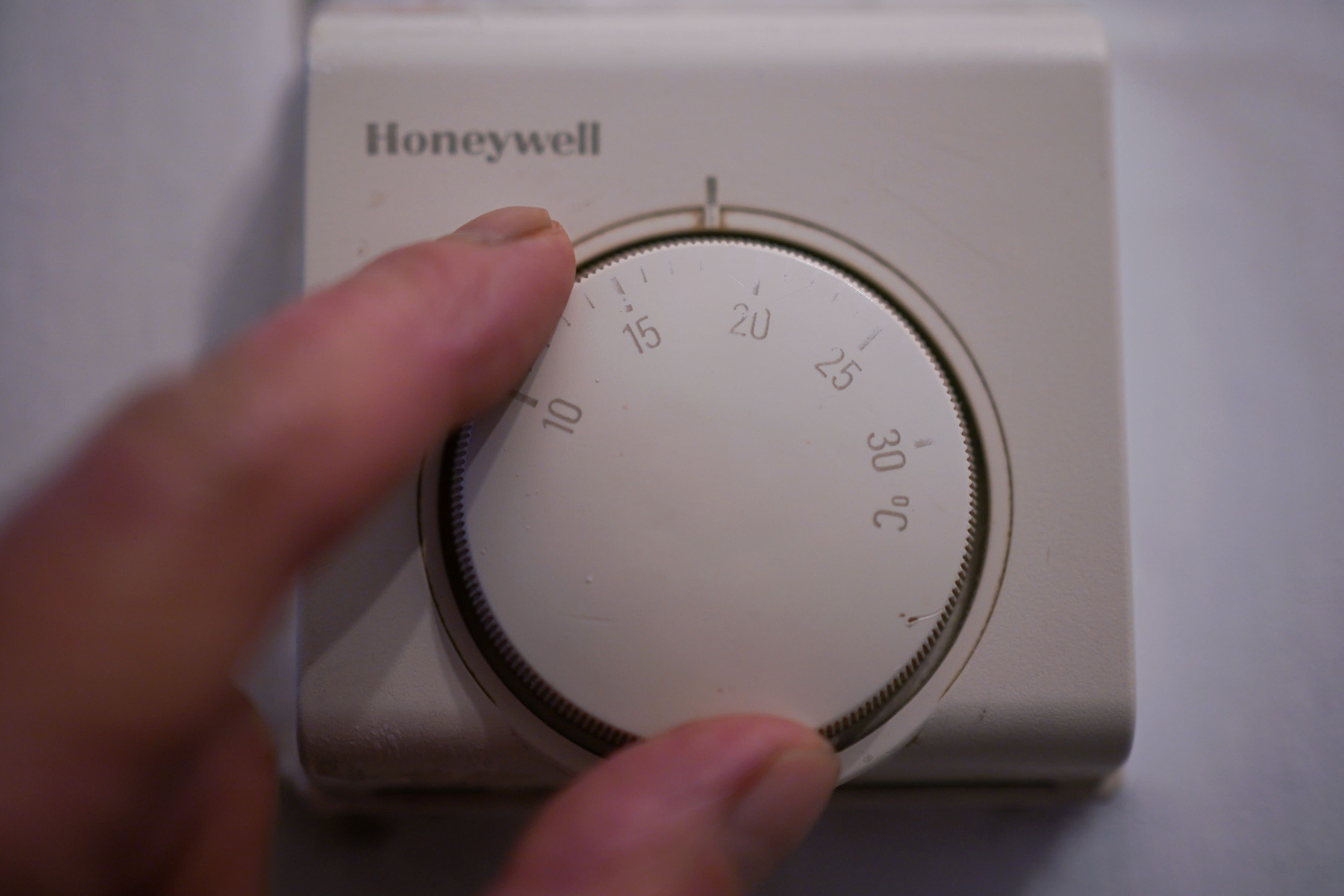
There’s a nip in the air, which means you’ll probably have fired up the annual conversation about when to put the heating on: now known as the thermostat wars.
Like Christmas, this debate seems to come earlier and earlier each year. The great offices of the land who have (inadvertently) stuck their oar in, the NHS and the Met Office, have done it again: The NHS advises switching on heating for health purposes once external temperatures drop beneath 15C, Met Office data meanwhile says that was 17 October, a full month earlier than it was last year. Presto, the internet sleuths do the rest.
There is an especially cold place in hell for people who piously tell you they wouldn’t dream of turning to the thermostat until 21 December, and maybe not even then. And why – why – does it always seem to be men who are refuseniks? If there is a dividing line through modern Britain, this is it. I remember a survey a few years back that suggested four in 10 women covertly crank up the temperature behind their partners’ backs. I know whose side I’m on.
Women tend to feel the cold more than men do. They’re often smaller, and there are physiological differences between the sexes which also play a role. While men’s and women’s core body temperatures are roughly the same, at over 37C, our perception of temperature depends more on the skin, which for women, tends to be lower.
Even the female hormone oestrogen is a contributing factor. By slightly thickening the blood, it reduces the flow to capillaries in areas of the body like the fingers and toes, meaning they shut off more readily when it’s cold. Research has also shown that women tend to feel colder when they are ovulating and oestrogen levels are higher than usual.
The science could not be clearer. It’s not an argument that we have in our house given my disabilities/health issue – I have both a long-term medical condition (the autoimmune disorder known as type 1 diabetes) and a mobility impairment, both of which put me in the UK Health Security Agency’s “at risk” category. But it is a debate in some, and chaps? Man up and deal with it because here’s the thing: the advice holds good for anyone. Sitting shivering in the cold is a wonderful way to deleteriously impact your health.
For the record, here’s when I put my heating on: When it’s cold. It’s that simple. If I’m feeling the chill in September, it’s going on. Ditto early October. You can always turn it off if it warms up a bit.
Here’s the thing: the NHS tells us that’s what we should do. Its advice is not to look at the date but at the external temperature. When that falls – as previously mentioned – to 15C, which is where it has been for some time, you should put the heating on. Then feel free to flip off anyone piously trying to lay on a guilt trip.
It’s why anyone with an ounce of compassion – admittedly hard to find in Britain at the moment – is concerned over the unconscionably large number of people who can’t afford to heat their homes. National Energy Action, the charity, puts the number of households in fuel poverty at 6 million. We’ll circle back to that.
The NHS, and various other health agencies, recommend keeping rooms at a minimum of 18C. They will also tell you that you may find you need a higher temperature to keep the living room comfy. I work in a small home office lacking a radiator. Instead, I have a small fan heater that tells me the temperature even when I’m not using it. I find it chilly at 19C, and pretty unpleasant to be sitting writing at 18C. So, for me, the floor is 20C (mercifully, I don’t need to have the heater on for long to warm up my workspace).
It’s much higher than that for NHS hospitals, which are kept at tropical temperatures. When recovering from a life-threatening accident, I was at times not allowed to drink. My blood sugar levels were also running very high, resulting in a raging thirst. The combination of those two while laying in a room that felt like a Finnish sauna, was torture.
Of course, the reason hospitals keep the mercury at risk of smashing through the top of their thermometers is that they contain lots of elderly people, lots of disabled people, lots of sick people.
The reason 18C is quoted in the official advice, however, is that it is the tipping point at which the body starts having to work to maintain its core temperature. Below that, as well as the shivering and the goosebumps, it goes through a process of vasoconstriction as the blood vessels retreat from a person’s extremities, so that the warm blood is retained for essential organs. In extreme situations, this leads to frostbite. Fingers and toes turn black as their tissues die.
Blood pressure rises, increasing the risk of heart attack and/or stroke. There are a lot more of those in during the winter.
“Keeping warm over the winter months can help to prevent colds, flu and more serious health problems such as heart attacks, strokes, pneumonia and depression,” says the NHS.
Scrimping on that heating is thus a false economy, particularly for those in unstable occupations. It’s not going to your relationship any good if you make your partner freeze, either. Better to be a bit too warm than too cold because, well, it’s tough to work when you’re sick, and that is what a cold dwelling leads to. There are also consequences for the health of one’s home. Damp, mould, you get the drift. These also have a detrimental impact on a person’s health
Don’t forget your kids, newborns in particular. The NHS recommends heating their rooms at between 16-20 degrees to reduce the risk of Sudden Infant Death Syndrome (SIDS), popularly known as cot death. Older children, who are also smaller than adults, need it to be warm enough for them to do their schoolwork.
So it’s really quite simple: heat your home when it’s cold. There’s nothing virtuous about not doing so, unless you’re into mucking up your health and putting extra strain on a creaking NHS.
I said we’d return to the problems faced by those for whom that isn’t an option. The idea of a ‘social tariff’ for energy, so they aren’t faced with the unsolvable dilemma of “heat or eat” is a good one. I think that it is time to work out the details. One suggestion is using the windfall profits energy companies have made to pay for it.
Join our commenting forum
Join thought-provoking conversations, follow other Independent readers and see their replies
Comments
Bookmark popover
Removed from bookmarks