What Father’s Day is really like as a disabled dad
The lack of spontaneity is frustrating – everything has to be planned – and we’ve suffered some unpleasant incidents. But we’ve made it work, writes James Moore


The marketing people would have us believe Father’s Day is about “active dad”. He’s there with the kids running around, kicking a ball about, giving piggyback rides, fooling around at the park.
And that was me. I embraced the role, even though all that activity didn’t prevent the development of, ahem, a bona fide dad bod. Until that is, I had an uncomfortably close encounter with a cement truck. Fun fact: the padding offered no protection.
My first thought when it hit was that my children (one born, one on the way) would be left without a father. I had almost no contact with mine growing up. I had no relationship with him. I didn’t want to leave my children in the same place. It was a horrifying thought, on top of the physical agony and the fear of death.
Nightmare number two was this: am I wearing the loud and obnoxious purple boxers that came as part of a three-pack? It is a universal truth that if you buy three packs of boxers, one will be horrible. Would the ghouls hanging around to watch the show see them when they pulled me out, put me on a stretcher and started the first aid? Fortunately, no. Turns out mine were a utilitarian black. The icky purple ones have since been binned.
Coming out the other side and learning to live with disability inevitably changed my most important job, and thus the day celebrating it. Kicking a ball about? Not going to happen with a paralysed right leg. Pushing a swing? Same thing.
Another painful truth is that I not only missed my daughter’s birth, I missed out on a lot of the other stuff in the early days while I was busy trying to coax my body into doing things it didn’t want to do – like walking. I can manage a little. But I’m bad at it, I need a pair of sticks and I still manage to fall over and break bones a lot. So, I use a wheelchair most of the time.
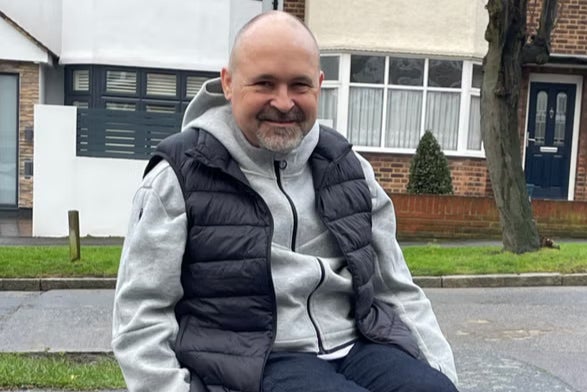
The new, disabled dad bod inevitably complicated things. I never used to mind my kids jumping on me before. But Dad 2.0 was apt to scream loudly when this happened. That’s before we get onto the subject of PTSD, panic attacks out in public and the like. One of the women who witnessed the infamous Orkney Island shooting of a waiter in an Indian restaurant described it like this in Amazon’s documentary: “You don’t move on from trauma. You just live around it.”
Very true.
Even when mine had been addressed (well, mostly – I still periodically see a therapist), trips out, one of the joys of parenting, became massively more complicated because of the extra level of planning required. No longer could we just jump on the Tube and go somewhere on a sunny day, or indeed on any day. First, we had to check that our destination was accessible. Then we had to assess the route to see if it was even possible to get there. Then we had to work timings out and what medication we would need to take with us.
Londoners often like to grouse about the capital’s public transport system, but they are spoiled compared to much of the rest of the country. Unless you’re disabled, of course. Transport for London – TFL – has become an expletive in our house, believe me.
My wife actually got very good at the planning part. So when I took my daughter to see Taylor Swift, she handled the logistics. If there was a degree in disability science, she’d get a double first without having to extend herself.
But I still find the lack of spontaneity frustrating.
There were a few compensations. Using the disabled queue at theme parks is kind of handy. But even that’s a mixed blessing, as I realised when I heard a mother’s venomous hiss about me being one of “those special people” at Peppa Pig World.
I wanted to wheel up to her and tell her I’d happily trade my position in the queue for a properly working body that didn’t torture me. But we made do with one of my wife’s patented “teacher glares”. You don’t want to be on the receiving end, believe me.
My wife often gets more angry about the crap I have to deal with than I do. Disabled dad survival tip: having a tiger partner makes life, and parenting, a lot easier. Oh, and try Legoland. It’s another favourite family venue, but the people there seem a lot nicer.
The wheelchair did sometimes come in handy on trips when our children were younger, because you can sling a rucksack over the back, and you can also put a tired and grouchy child on the operator. A “daddy ride” used to cheer my daughter up. It cheered me up. It helped get me fit, too.
“Active dad” – just on wheels. And that’s what I became. I even ended up taking the sports wheelchair I used for playing basketball into school to give a talk about keeping fit while disabled. I seemed to get cool points for doing that, partly because I let my children’s friends have a spin. Sports wheelchairs are fast – and a lot of fun.
Plus, all that activity means that today’s dad bod is less dad bod than it was.
Working from home – for I joined the revolution long before the pandemic hit – also meant I saw a lot more of my kids when they were young than most fathers get to: a rare and unequivocal plus. And it has given them a perspective that others don’t have. My daughter, in particular, doesn’t like it when she sees me getting grief. She has a keen sense of justice. What’s fair, and what’s not.
So Father’s Day? It is still a bit different. It always will be. But we’ve learned to work with it. You adapt, because you have to – but also because it’s worth it.
Join our commenting forum
Join thought-provoking conversations, follow other Independent readers and see their replies
Comments
Bookmark popover
Removed from bookmarks