The EU’s €90bn won’t win the war – but at least Ukraine won’t lose (for now)
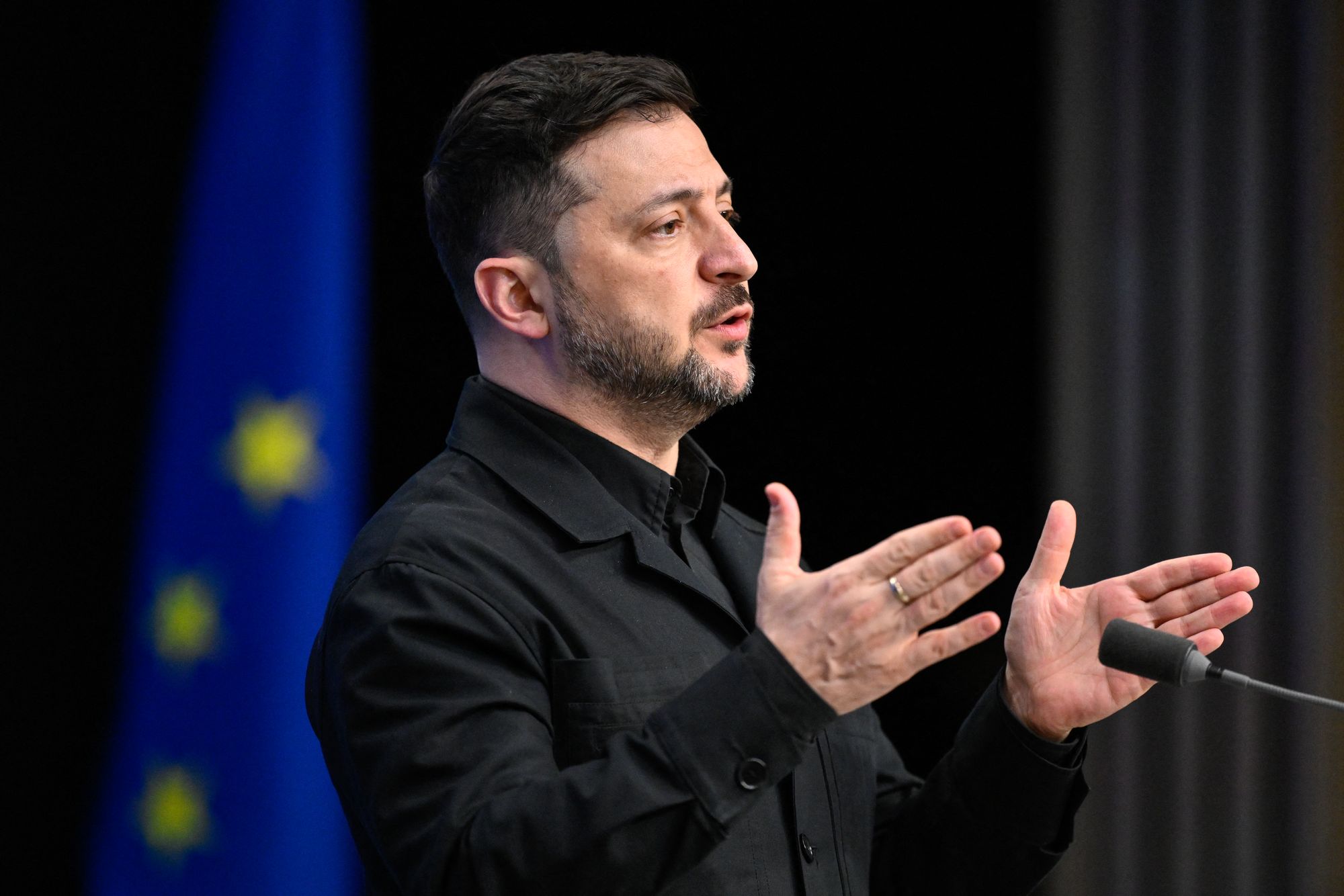
Volodymyr Zelensky has welcomed Europe’s loan, but what he really needs is Putin’s economy to crash – and Western allies to stop running scared of the Russian paper bear, writes Sean O’Grady


One way to gauge the success of any European initiative in the Ukraine war is to consider how it looks from the point of view of the Kremlin. At his annual talkathon press conference, Vladimir Putin looked pretty chipper about his “special military operation”, and not obviously perturbed by the €90bn loan to Ukraine eventually agreed by EU leaders, or “the piglets”, as Putin likes to call them.
This did not look to be a man bent on peace, ruminating away to the assembled journalists about assault groups, battle positions and hard-fought territorial gains. Putin, indeed, looks to be a man who enjoys a battle, even when his “meatgrinder” is not doing spectacularly well – perhaps over a million casualties, of whom about 100,000 plus dead. It’s not the first time a Russian leader has placed a low value on human life.
Will Europe’s €90bn loan win the war? Probably not. It will likely be a continuation of the approach taken by what we used to call the West since the moment in 2022, when it looked like the Russian tanks weren’t about to roll into Kyiv, Volodymyr Zelensky wasn’t going to flee, and the Ukrainians would put up a brave resistance.
The approach by the Europeans and the US under Joe Biden has been to give the Ukrainians sufficient money and equipment so that they don’t lose the war – but never enough to win it. A similarly half-hearted approach to strangling the Russian economy, and therefore its war machine, was also adopted, also blunting the threat to Putin. Even now, as we approach the fourth anniversary of this war, some European nations are still importing Russian gas.
So while Russia and Ukraine have been expending anywhere between 20 per cent and 50 per cent of their national income on defence, in Europe, we struggle to devote even 3 per cent of GDP to help Ukraine win and deter the Russians. The Ukrainians spend about €15bn a month on trying to save their homeland, and are running out of money. The EU loan will supposedly last a year or two, buying more time for them to hold the Russians back, but not enough to make any decisive military breakthrough. A transformational infusion of funds and advanced military supplies is needed – now.
If Europe did more immediately to protect Ukrainian infrastructure, for example, and fill the space with drones, then the war might more easily be won. We need to buy and install the kit from the Americans while Trump is still prepared to supply it to us. Ukraine is also running short of people to fight.
The Europeans, still too complacent and confused, won’t do any of that. As has been discussed for years, they could have seized the €200bn in frozen financial assets, which happen to be stuck in the financial clearing centre in Brussels. The Belgians, understandably, did not want to be exposed to the risk of reprisals from the Kremlin. Nor do the Hungarians, Czechs, or Slovaks want to support Ukraine at all – presumably they have fond memories of their own Soviet occupation – and so the EU itself couldn’t agree on the radical action needed to bolster Ukrainian resolve over a longer time frame. This is no way to win a war.
The best hope Europe and Ukraine have for a victory of sorts in this conflict is for the struggling Russian economy to collapse completely, and with it the war machine, forcing a retreat. Some say that it’s only a matter of time, even if China, India and Iran are helping to keep it running. A defeat for Russia, by no means impossible, would be a turning point in our history and would kill off this current wave of Russian imperialism for a long time to come. Ukraine, with its large army and expertise in drone warfare, could become the front line of European security. That would be a formidable counterweight to Russia and hold it at bay.
Yet all that the Kremlin sees today is an EU hopelessly divided and weak, and a Nato fatally ruptured by Donald Trump’s infatuation with doing deals in Russia and making lots of money. Things aren’t going so well for the Russians, but they have put on a Potemkin-style show of bogus military strength and national unity and determination, aided by one of the few things the country is good at: spreading pro-Kremlin propaganda via social media.
The current digital bot-powered strategy seems to be aimed at asking people in the West whether they’re prepared to send their sons and daughters to die for Ukraine, even though that really isn’t what anyone is being asked for. What the Russians mean to do, having effectively persuaded America to switch sides, is to undermine European resolve to make the necessary sacrifices to deter and resist Russian domination of our continent, and make us fear this paper bear. The tragedy is that the Russians don’t need to try that hard to make the Europeans, if not the Ukrainians, surrender.
Join our commenting forum
Join thought-provoking conversations, follow other Independent readers and see their replies
Comments
Bookmark popover
Removed from bookmarks