This shameful Covid report leaves no way back for Boris Johnson
Editorial: That 23,000 people in England alone lost their lives because of the dithering of the former leader is a fitting – and awful – denouement to the political career of a man who was never up to the job of prime minister
Too little, too late” is the summary offered by Heather Hallett herself of the Johnson government’s response to the Covid-19 pandemic. Indeed, and in all fairness, that conclusion also applied to the devolved administrations in Scotland, Wales and Northern Ireland.
As a result of the various errors of judgement and incompetence displayed by all of the leaders concerned, many thousands of lives were needlessly lost – 23,000 in England alone. In addition – though the chair of the Covid inquiry doesn’t highlight this – countless others have endured the prolonged suffering brought on by long Covid.
It is a damning report, as it was widely expected to be. Everyone who lived through those turbulent and terrifying times will recall the growing sense that the then prime minister, his chief adviser, his health secretary and others were not in control of events.
Yet the scale of the failures, that specific detail about lives being cut short because of a “toxic and chaotic culture” in Downing Street, still lends a shocking quality to Baroness Hallett’s report. In particular, Mr Johnson seems to have been very much the wrong man for the job in 2020, and so unlike his hero, Winston Churchill, in 1940.
Mr Johnson is an unserious man, and was poorly suited to the most serious crisis that one can envisage – a potentially deadly disease, not fully understood, for which there was no cure, not much treatment, and, for a year, no vaccine.
Baroness Hallett doesn’t hold back, criticising Mr Johnson personally for the “failure to appreciate the urgency of the situation” in the early days as the virus took hold, which is put down to “his optimism that it would amount to nothing”. Some may recall his cheerful determination at the time to wander around a Covid ward in an effort to boost morale, as if a few quips could send a micro-organism “packing”.
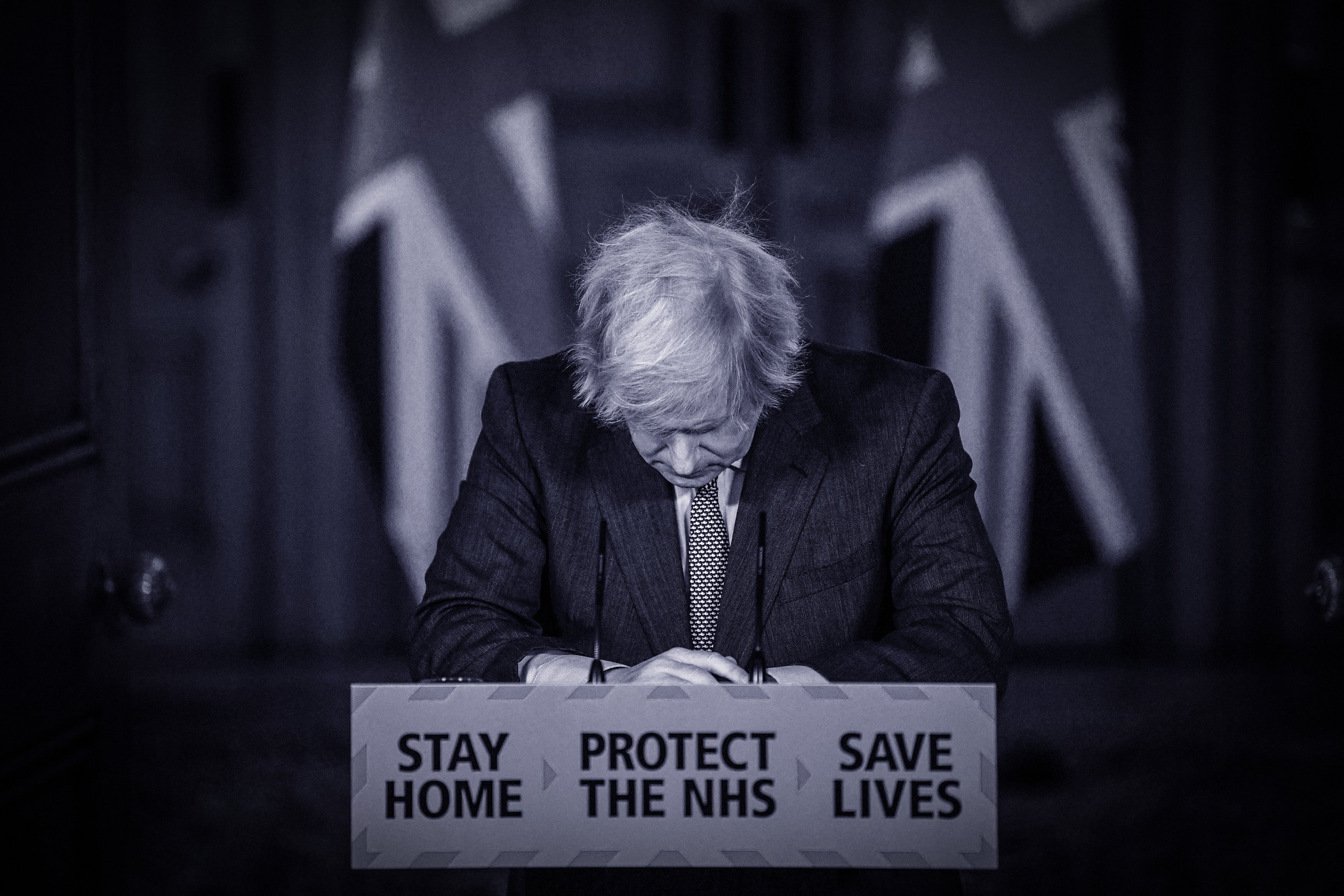
That he himself was almost killed by the coronavirus seems not to have heightened his sense of its potency; instead, it seemed to do the opposite – emboldening his feeling that it didn’t matter so much because it mainly affected the over-80s. Hence his infamous remark that he would rather let “the bodies pile high” than implement the second lockdown that was in due course forced upon him – too little, too late, once again.
With hindsight, we can see how “Partygate” was simply another symptom of a deeper moral malaise.
As balanced and considered as might be expected of a High Court judge, Baroness Hallett disposes of the various excuses offered by Mr Johnson and others in their evidence to her, such as the unprecedented nature of the crisis, and their caution about the public’s response to draconian measures.
In fact, as her earlier report on resilience and preparedness made clear, the likelihood of some sort of pandemic erupting had been evident for years, if not decades, with the danger signals coming from bird flu and other viral outbreaks. That is why the personal protective equipment had been stockpiled – albeit allowed to go out of date, rendering it useless.
But even if Covid itself had been unforeseeable, there was no excuse for the way in which mistakes that were made about imposing restrictions in February and March 2020 were repeated a few months later, and again in 2021. The plainest of lessons were ignored, and as a result, many more vulnerable people suffered severe illness, long Covid, and death.
When the gravity of the Covid-19 pandemic became clear during the early months of 2020, none of the various administrations in the UK took it seriously enough.
Mr Johnson is hardly alone in his culpability. Dominic Cummings, the chief adviser left by Mr Johnson to go feral, “materially contributed to the toxic and sexist workplace culture” that impaired prompt decision-making (although Mr Cummings’s criticisms of Mr Johnson and others for not locking down sooner concur with those of Baroness Hallett).
Matt Hancock, the health secretary, who later left his post because of a breach of the Covid rules, was noted for “overpromising and underdelivering” – and, as a result, critically distorting the background to crucial decisions. The chancellor, Rishi Sunak, launched the Eat Out to Help Out scheme, which was premised on insufficient scientific evidence. Even the chief medical officer, Professor Sir Chris Whitty, and the chief scientific adviser at the time, Sir Patrick Vallance, are rebuked for underestimating the public’s willingness to obey onerous rules.
What will remain galling for those still suffering the lingering effects of Covid, those who lost loved ones, and those who suffered from the isolation, is that all of those named and shamed by the report will, in all likelihood, suffer no personal material detriment as a result, and will continue to enjoy their comfortable lives. Their reputations, such as they are, will be further undermined, and they will (or more accurately should) feel some sense of shame. But that’s the most they will suffer.
What the work of the Hallett inquiry once again evinces is a great sense of injustice, of innocent people wronged by a negligent political culture. Is there any hope that Mr Johnson and others will face up to what they did wrong? Or will their apologies just be another case of “too little, too late”?
Join our commenting forum
Join thought-provoking conversations, follow other Independent readers and see their replies
Comments
Bookmark popover
Removed from bookmarks