As a Uyghur, I had to flee China – don’t let them build a ‘super-embassy’ here
If the government permits Beijing’s proposed diplomatic compound – whose blueprints indicated hundreds of ‘secret’ rooms, and would allow spies to access the City’s financial data – political migrants like me will no longer be safe, says human rights activist Rahima Mahmut

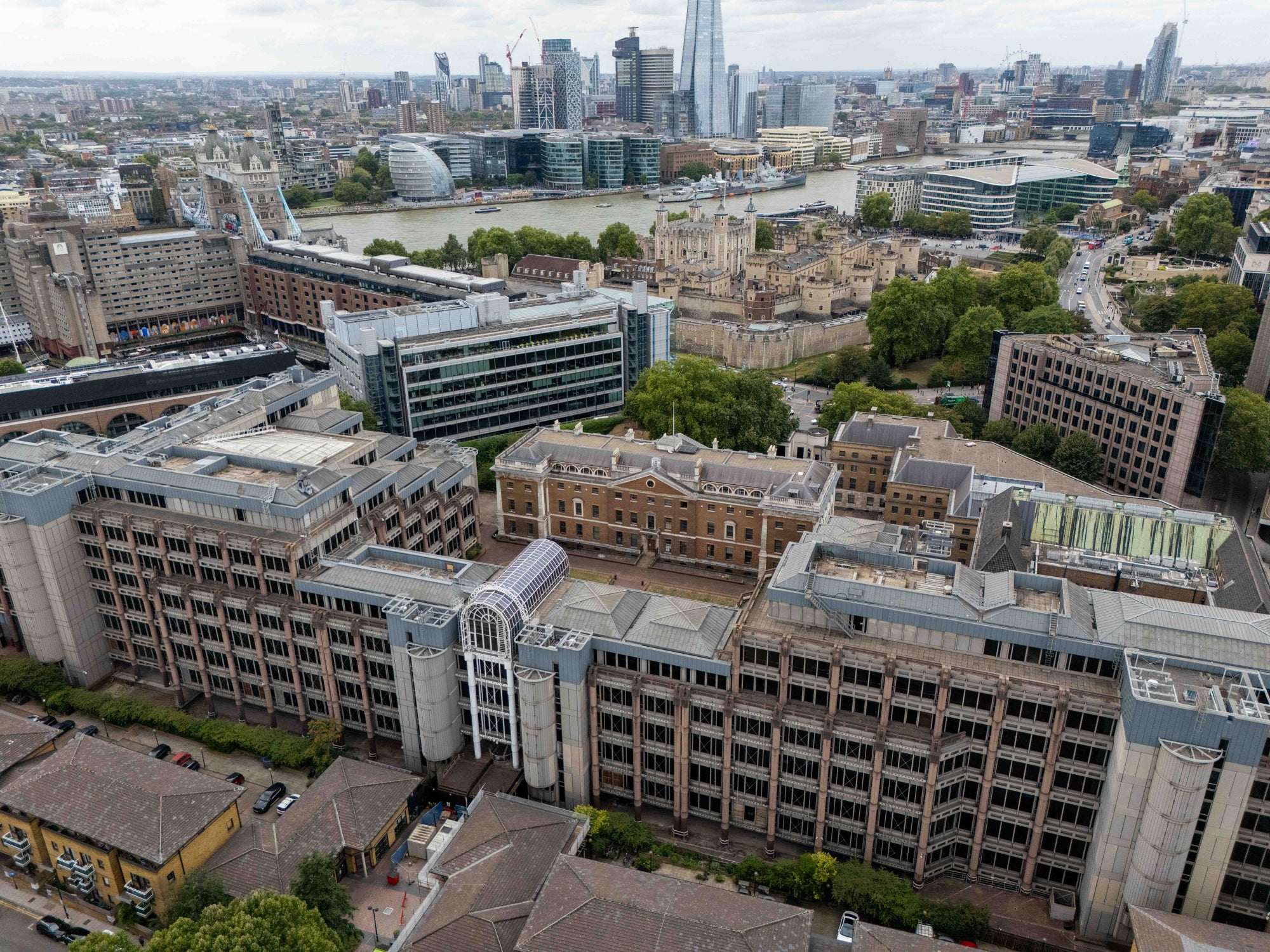
On Monday, the UK government will decide whether or not to approve the Chinese ‘super-embassy’ in London – a protracted issue that has united a diverse range of voices and groups in its opposition, from Labour MPs and cybersecurity experts to our intelligence and security allies, and even the White House.
There was widespread concern about Beijing’s plans even before revelations last week of a secret basement next to sensitive cables that carry data to and from the City of London. But the pushback has rightly focused on the role the embassy, at a derelict site near the Tower of London, will play in helping China to conduct espionage and economic warfare against Britain and her allies.
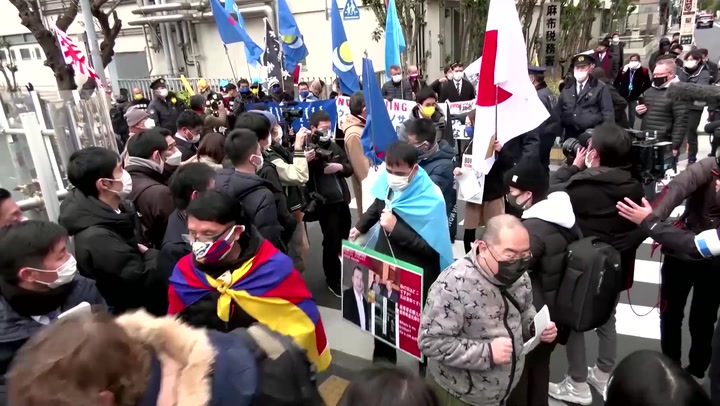
I welcome the recent cross-party debate in the House of Commons on the real dangers of transnational repression this embassy will bring to ethnic groups and communities opposing the Chinese Communist Party, such as Hong Kongers and the Uyghur community, of which I am a part.
When I came to Britain, I believed distance would bring safety. London was meant to be a place where speaking freely no longer carried consequences. Yet for Uyghurs living in the UK, the proposed super-embassy feels like a reminder that the shadow has not lifted; it has followed us. This is not a matter of paranoia, but experience.

For years, the Chinese Communist Party has extended its repression far beyond its borders. Uyghurs in exile are monitored, intimidated, and silenced. Families back home are threatened over words we have spoken abroad. Activists are harassed, journalists targeted, and dissent tracked. This phenomenon, known as transnational repression, is now widely recognised. And embassies and consulates are often central to how it operates, used for espionage activities and as an extension of the state.
In 2021, an independent people’s tribunal concluded beyond reasonable doubt that the Chinese Communist Party is committing genocide and crimes against humanity against Uyghurs. That finding was based on leaked state documents, satellite imagery, survivor testimony and expert analysis. It has not been overturned, only ignored.
Today’s Labour ministers, while in opposition, promised to recognise atrocities committed by the Chinese Communist Party against the Uyghurs as genocide. It is a commitment they have reneged on since coming to power.
Against this backdrop, the UK is being asked to approve the largest Chinese diplomatic and surveillance complex in Europe, in the heart of London. For those of us who have lived under the Chinese Communist Party’s surveillance state, this is not a routine planning decision. It is a deeply political and moral one.
If approved, the CCP’s super-embassy is a statement of power, presence, and legitimacy. For Uyghurs, Hong Kongers, Tibetans, Chinese dissidents, and others targeted by the Chinese Communist Party, it signals the expansion of a state apparatus that has already proven willing to intimidate and silence communities overseas.
Many of us already live with the knowledge that our communications are monitored, and our activism comes at a cost to loved ones we have not heard from in years. Approving a mega-embassy without addressing these realities tells affected communities that their fears are secondary, their safety negotiable, and their trauma inconvenient.
This decision cannot be reduced to diplomatic necessity or economic pragmatism. Engagement with the Chinese Communist Party does not require denial of its crimes. Diplomacy does not require granting ever-greater space to a state accused of genocide, without conditions or accountability.
The UK has repeatedly affirmed its commitment to human rights, freedom of expression, and the protection of vulnerable communities. Those values are tested not in speeches, but in decisions like this. A government cannot credibly condemn repression abroad while enabling intimidation at home.
London should remain a city of safety, not a place where survivors feel watched, and activists feel silenced by proximity to the power that destroyed their lives. The shadow of authoritarianism should not be allowed to stretch unchallenged across British streets.
This is a moment of choice. The UK can listen to those who live with the consequences of China’s policies, or it can look away and hope the problem remains out of sight. But for Uyghurs, the problem is never out of sight. It follows us.
The shadow can be pushed back, but only if it is confronted with honesty and principle. Approving the Chinese Communist Party’s super-embassy without reckoning with reality would be more than a planning error. It would be a moral failure.
Rahima Mahmut is executive director of Stop Uyghur Genocide
Join our commenting forum
Join thought-provoking conversations, follow other Independent readers and see their replies
Comments
Bookmark popover
Removed from bookmarks