Thieves stole my keyless car – but I had an ace up my sleeve
A new BBC investigation shows that any old crook can pick up a £20k car-hacking device and use it to steal a car without even breaking in – no wonder it happened to me, says James Moore


When you are woken at 6am by your wife telling you that the family car’s been stolen, it’s never a good start to the day. Our lovely Nissan Leaf, electric blue and clearly recognisable around the neighbourhood, had disappeared in the night, targeted by a group of professional thieves.
This is the problem with keyless cars – they are nowhere near as secure as one would hope. The BBC has found that theft gadgets used by criminals to steal my car and thousands of others like it, are available online for a relative snip at £20k. It’s not (yet) even illegal to possess these things. The report revealed price lists and video guides for how to half-inch your buyer’s required vehicle, with claims that even Lamborghinis and Maseratis can be taken, along with our modest Leaf.
I hadn’t even taken the news in, until my wife disappeared for 10 minutes, returning to say that not only had she found our car returned at the bottom of our road, but that “they’ve parked it really nicely”.
Just like that, the morning improved dramatically, although I admit my initial response was, “What the f***?” How had this happened?
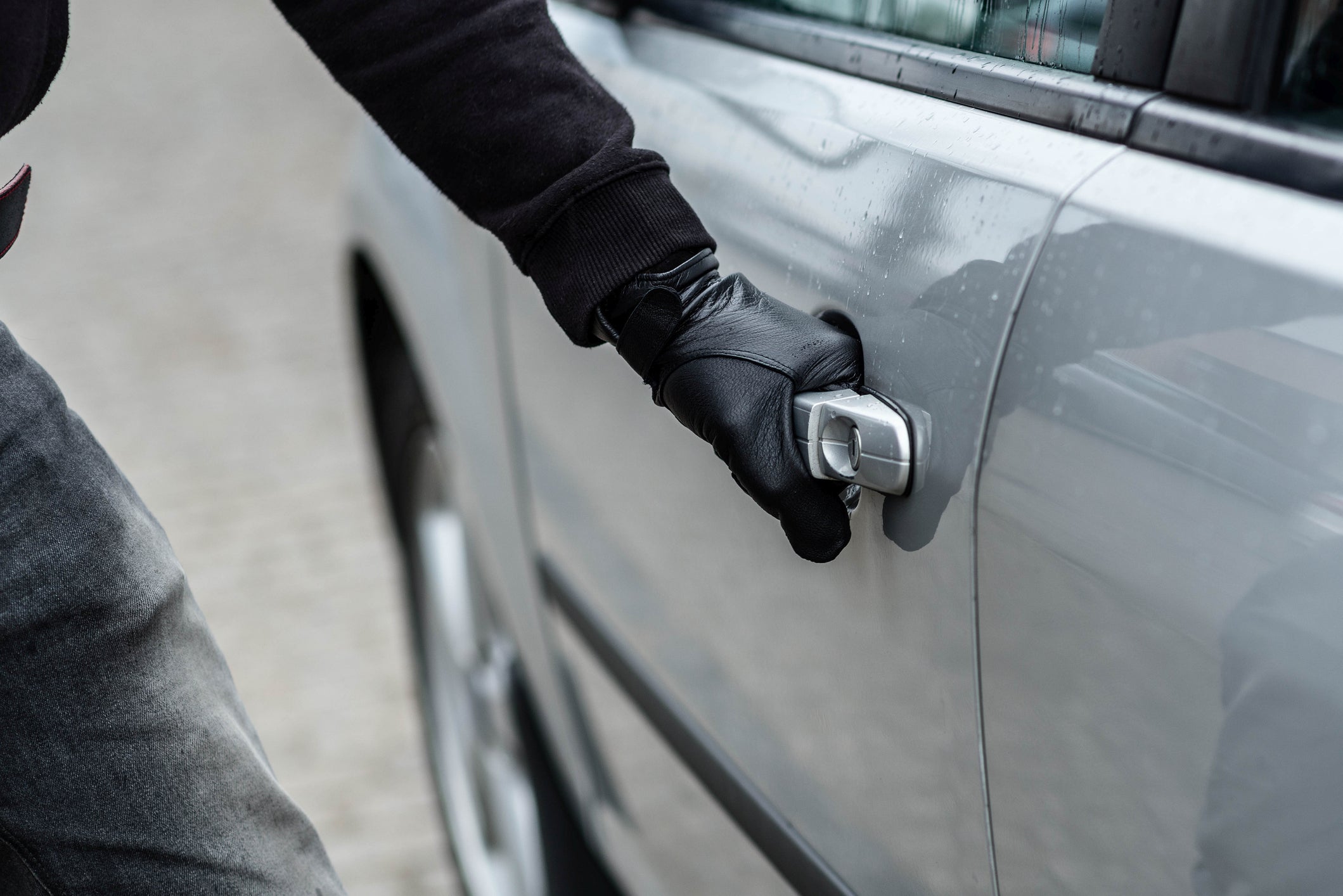
Footage from our doorbell camera and the CCTV images the neighbours kindly supplied made it clear that we’d been targeted by the motor mafia. They were all dolled up in balaclavas to evade identification and quietly circumnavigated our semi until they got a signal from a car.
We had stored our electronic fob in a Faraday wallet, designed to thwart cloning, but I’d not properly closed the thing and that, as it turned out, was enough. The dodgy devices are clearly sensitive enough that just a tiny part of the fob poking out of the wallet is enough.
Why did they leave the car? This sometimes happens with these attempted thefts for tech reasons. I’m disabled, so I drive an adapted vehicle. The paralysis in my right leg means I can’t operate a conventional accelerator pedal, so the throttle’s on the left. In our case, it also seems that the thieves struggled to deal with the adaptations.
The CCTV showed them looking at the non-standard throttle in obvious puzzlement. Clearly, this was not what was on their buyer’s menu.
They’d also covered the car in some slippery ick, designed to prevent fingerprints, we surmised. It took weeks to get rid of the stuff and served as an unpleasant reminder of the attempted theft. This was all highly disturbing.
Needless to say, we upped our security in response. The fob is now stored in both the Faraday wallets and a Faraday box to be doubly sure (supposedly it blocks electromagnetic signals from entering or leaving). We also purchased an ugly, bright yellow, police-recommended steering wheel lock. And we bought our own CCTV cameras for added deterrence.
All this inevitably left us feeling vulnerable, even violated. Just getting in the car and plonking myself down where the thieves had sat was weirdly unpleasant. Also, life is less colourful. Our lovely Leaf has been replaced with an anonymous black Ariya. It’s officially described as green, but good luck recognising it as such. You need the right light.
Cars had become much harder to steal under the old-style metal keys and anti-theft devices. Now we’re back to square one, where they can be pinched to order from outside your home.
I actually have my doubts over how much good a forthcoming law, which should bring in a jail term of up to five years for possession of an electronic thieving kit, is going to do, given we’re dealing with crooks. No: to my mind, it’s up to the manufacturers to make what they sell us secure. The tech is advancing. But so are the thieves.
Perhaps it’s simply time to take a step backwards and return to good old-fashioned keys. Car-makers need to put themselves in the position of their customers, with whom this could prove quite popular. Right now, too many of us are finding ourselves the victims of a nefarious free-for-all.
Join our commenting forum
Join thought-provoking conversations, follow other Independent readers and see their replies
Comments
Bookmark popover
Removed from bookmarks