‘Andreas came over to the news desk and gave us a 15 per cent pay rise on the spot’
For such a buccaneering newspaper editor, Andreas Whittam Smith – who co-founded The Independent in 1986 – could be quaintly old-fashioned, only rarely ditching his sanguine, City gent approach for a chilling temper known in the newsroom as his ‘red mist’, recalls one of the paper’s earliest recruits, David Lister


There are few things so exciting as starting a new venture, and the autumn of 1986 – with the launch of Britain’s first new broadsheet in more than a century – was full of excitement. For Andreas Whittam Smith, co-founder of The Independent and its first editor, who has died aged 88, work had begun before that, when he started recruiting that summer.
As one of the paper’s founder members – I began my Independent career on the news desk – I arrived in August and we started producing dummies every day, with reporters explaining to interviewees that, no, we were not calling from their local freebie paper of the same name.
Pre-launch, Andreas held regular meetings with staff to discuss the way forward. He charged us to develop his initial thoughts on how to cover the royal family. That led to an afternoon discussion in the home editor’s garden to come up with a policy that would remain controversial for decades: the paper would give the royals precisely no coverage unless the story had solid news value. Thus, the birth of one of the then-Prince Andrew’s daughters was worthy of a paragraph in the “news in brief” column.
From the start, Andreas took the entire workforce into his confidence. That willingness to share and to offer praise marked a distinct change from most newspaper editors, perhaps most bosses, of the time. Every month after the board meeting, he would give a staff briefing, a habit unknown in newspapers and one that made us all feel included in the adventure – until his briefings started leaking to The Guardian.
Regular praise helped make us all feel that The Independent was a family. Andreas never forgot that the staff were taking a risk joining an unknown venture with an uncertain future, and he insisted that everyone be offered share options. In his first address to the excited but slightly nervous team, he said that the fledgling paper had few resources but one invaluable resource – “the best staff in Fleet Street”. I was among those thrilled by the compliment. Years later, over lunch with Andreas, I told him how much that phrase had meant to me. He mused for a few seconds, as he was wont to do, then spoke languidly: “It wasn’t true – but it was a good thing to say.”
That summed up two sides of the man: his eagerness to praise and involve and a wry, sometimes hidden, humour.
Andreas cut an imposing figure as he strolled through the newsroom: tall, distinguished-looking, effortlessly magisterial. He had two lieutenants and fellow founders in Matthew Symonds and Stephen Glover. All three were from The Daily Telegraph, all three ex-Oxbridge – but there was never any doubt who was the boss, whose brainchild The Independent was, the man who signed dozens of copies of the first edition in the excited “first-night” atmosphere of the launch.
Though a pioneer and innovator at the cutting edge of journalism and technology, he was also quaintly old-fashioned. Two small examples stick in my memory. One morning in conference, he was irritated to see that a new columnist had been employed without his knowledge, one Jane Asher. “Who is this Jan Aysher?” he demanded to know.
During the paper’s first year, there was a nostalgic celebration in the country of the 20th anniversary of the Summer of Love and The Beatles’ album Sgt Pepper’s Lonely Hearts Club Band. “I was around at the time,” he mused aloud, “and I don’t recall it being a big deal.”
He was also strangely and rather wonderfully detached from his invention. He gave what seems now astonishing power to his heads of department – barons, as he liked to think of them. He trusted them implicitly and often would not know everything that was in the paper until the next morning. In one memorable exchange, Andreas met the then editor of The Observer, Donald Trelford, at an event and said: “Donald, do you also find you marvel at some of the articles in your paper when you read it the next day?” Trelford replied sardonically: “No, Andreas. I tend to read my paper before it goes to press.”
The everyday mechanics of a newspaper could also come as a surprise to him. Once, it was very much to my and my newsdesk colleagues’ advantage. Literally days after The Independent’s launch, Andreas came over to the desk, said he hadn’t appreciated how much we did, and gave us a 15 per cent pay rise on the spot.
There was no mistaking his authority – but his very English, sanguine approach would on occasion be replaced by a chilling temper, which became known in the office as the “red mist”. Fortunately, the red mist was a relatively rare occurrence.
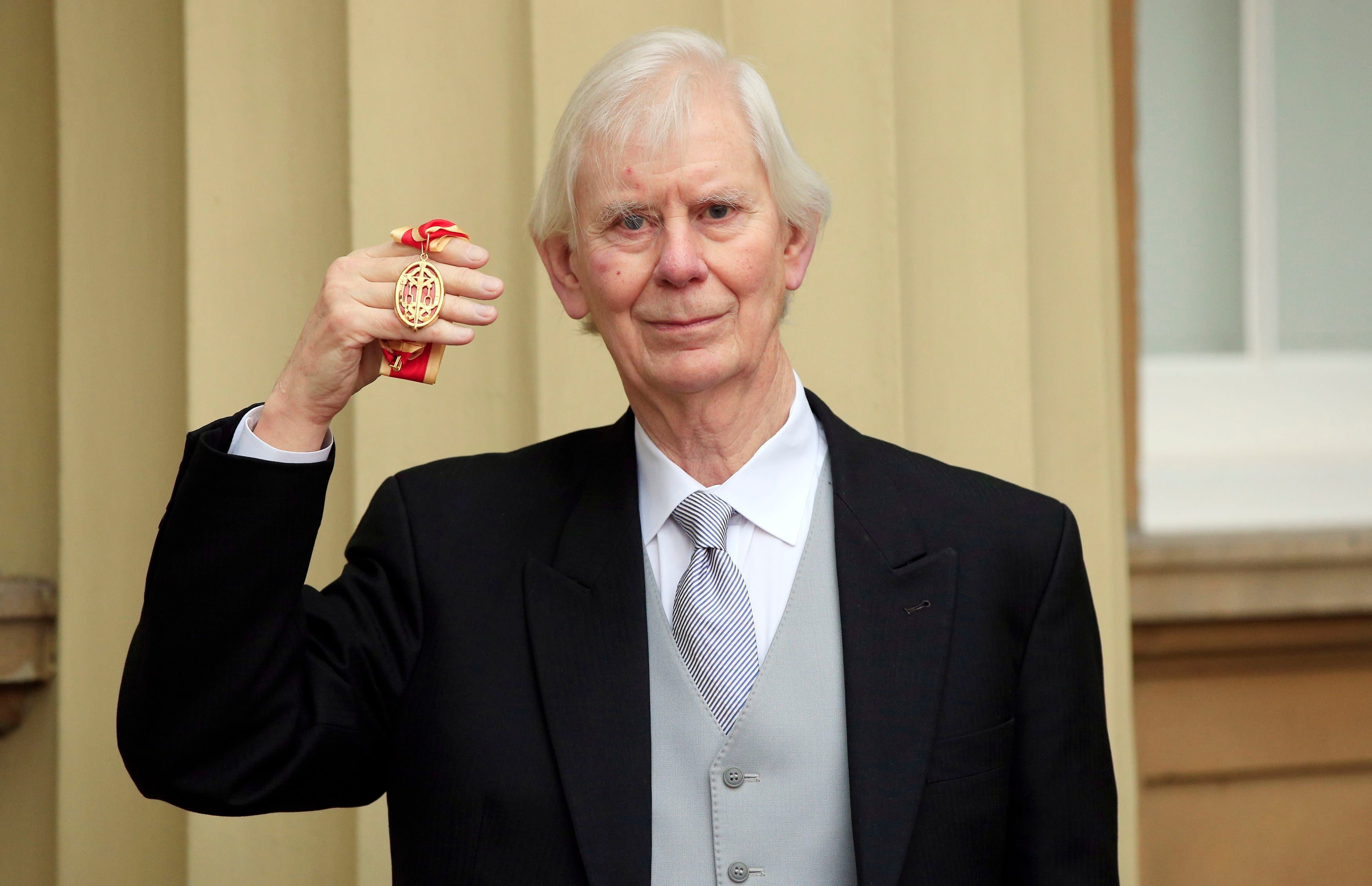
Many myths have grown up about The Independent over the years. One is that it was “worthy, but dull”, which is to forget that under Andreas’s aegis, the humorist Miles Kington had a daily column. Andreas also introduced a daily poem, again a startling addition to a newspaper, but one that readers loved.
Another particularly tiresome myth is that it was a left-wing newspaper. It wasn’t. One of Andreas’s great achievements, and one which typified The Independent in my view, was to present readers with all sides of the argument and let them make up their minds. In those days, progressive left-wing columnists rubbed shoulders with right-wingers. In the same spirit, he would not allow the paper to endorse a party in general elections. The readers should make their own decision, he maintained.
If Andreas had an abiding philosophy, it was the free market. Sometimes, the staff had to bite their collective lip. Once, in morning conference, there was talk about ethics in the City. Andreas, a former City editor at The Telegraph, cut the debate short: “The City is a marketplace,” he said. In the same vein, he simply could not understand or tolerate antipathy towards ticket touts when they were in the news, for they too were part of the free market.
His decision to trust the readers and not to take a side politically was a key factor in The Independent’s success, and a key factor in readers feeling part of an exclusive club. In the very early days, many of them wore Independent badges with the marketing slogan: “I am. Are You?” We didn’t tell Andreas that the badge and slogan had also been adopted by several gay groups around the country.
But there were other crucial key factors and they revealed his true instinctive genius and pioneering approach to newspapers. He wanted pictures to be given a bigger display than was usual in papers, and with some brilliant photographers on board, The Independent quickly gained a reputation for its photography. Other inventions are so ubiquitous now that it’s hard to recall that they were his brainchild. Daily listings (and a whole listings department) were very popular. There was also the clean, attractive design of the paper, which was “classic with a twist”, a term he loved.
Most of all, there was his constant ability to think laterally and eschew newspaper traditions for new approaches. I recall being in conference one morning when Joseph Stalin was enjoying a bit of a renaissance in Russia. “Let’s make Stalin the profile this weekend,” said Andreas. “But you can’t,” we protested. “He’s dead – you can’t make a dead person the profile.” Unimpressed with the argument, he insisted – and, of course, it worked.
His urbane style disguised a steeliness that could be quite chilling. He may not have shouted “You’re fired!”, Lord Sugar-style, at executives who were not up to it. But I certainly witnessed him telling one: “This can’t go on, you know” – a very clubbable way of telling someone to clear their desk.
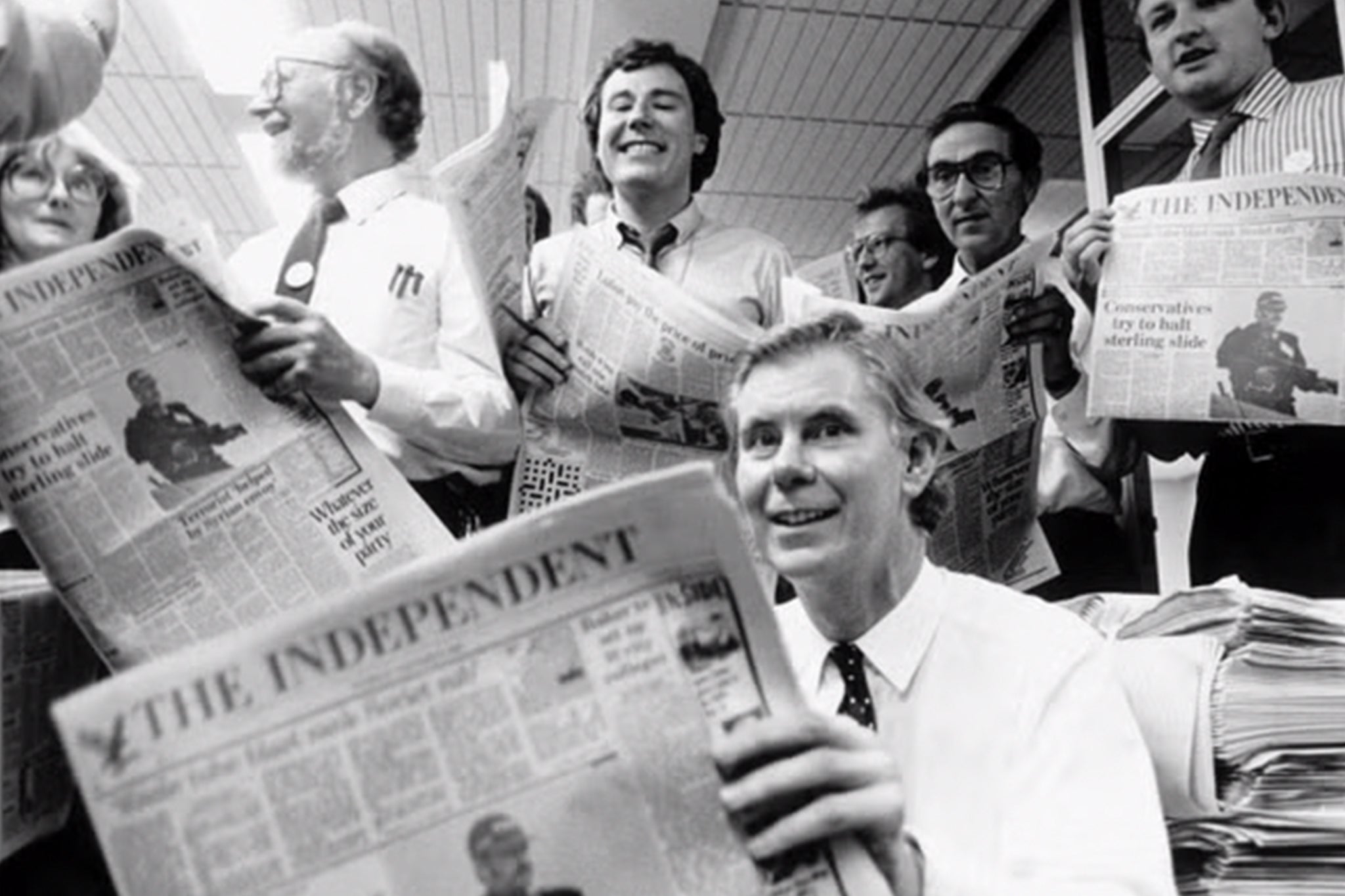
As I reminded him when he spoke at my official leaving do in 2016, before I sneaked back in as a freelancer, he once gave me the chills. I had moved over from the newsdesk to become arts correspondent, and just a couple of months into my tenure, Salman Rushdie went into hiding. Walking through the newsroom to conference, he wagged his finger at me (another common trait) and said, “I expect you to find him,” then walked on. Even though the rest of the world couldn’t manage that task, he wanted you to know that his expectations were high.
He may have had some good luck when launching The Independent when he did. New desktop publishing technology made producing a newspaper affordable, as typesetters and printers were no longer necessary. An exodus from The Times and Sunday Times brought him a good number of experienced journalists, as many of us couldn’t stomach working behind barbed wire in “Fortress” Wapping, in east London, where Rupert Murdoch had secretly moved his newspaper business overnight – and which meant being harangued daily by pickets by striking print workers.
But good timing alone cannot overshadow the unique importance of one man in the launch and startling success of The Independent: a man who was a newspaper pioneer, who brought a dynamic originality of thought to British journalism – and who was, quite simply, an inspiration.
David Lister was a founder member of The Independent, working as assistant home editor, arts correspondent and arts editor. He still works for The Independent
Join our commenting forum
Join thought-provoking conversations, follow other Independent readers and see their replies
Comments
Bookmark popover
Removed from bookmarks