Amol Rajan is certifiably clever. But does he need to let everybody know?
After the ‘Today’ host wowed the airwaves by interrupting his own interview with an impressively in-depth critique of poetry, despite having an Oxford don in his Radio 4 studio who was perfectly willing and able to do it himself, Kat Brown wonders whether it’s wise to show off your brains even when you undoubtedly possess them

Winter is a time when cleverness pops up again: the Reith Lectures return to Radio 4, and BBC Two’s Quizzy Monday reaches its zenith, with the finals of Only Connect (which I have competed in) and University Challenge (which I have not). And Simon Callow will pop up in some form or other to casually recite the entirety of Dickens for Christmas.
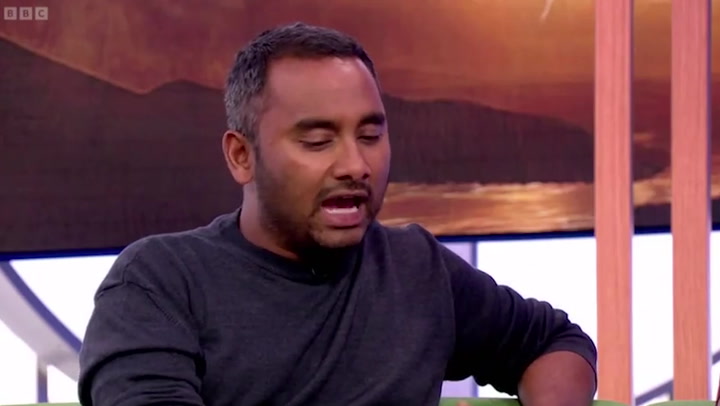
On Thursday’s Today programme, it was Amol Rajan’s turn, interviewing Oxford don Professor Robert Douglas-Fairhurst – a name arguably in search of a professorship – about how to rebuild the habit of reading after you’ve totally fallen out of love with it. The professor had a poem he’d brought in (and sent in advance) to show just how fun reading can be: “This Is Just to Say” by William Carlos Williams.
“And I’m going to try and do a close reading,” said Amol, puppyishly. No, the professor insisted, Amol would read it and the don would offer his own comments. “I might offer some comments as well,” Amol said.
A little can go a long way with the ubiquitous Rajan. Still, his enthusiasm for analysis was delightful – and even more so once he’d finished a rather breathless fact dump about sibilance in Paradise Lost’s Book 9, and started just enjoying himself. By the time the professor had obligingly said, “Give that man a first!” you could feel Rajan’s beam of pride warming the chill November morning across the airwaves.
There are so many types of cleverness, of intelligence. Whether it’s street smarts, a professorship, or doing the cryptic crossword in less than 15 minutes, cleverness is usually worn lightly.
The question, really, is if you are clever, should you show it off? For geekery, learning and education full stop was, for some time, seen as deeply uncool. But then, too, some like to throw references in as tests. Just as Mitford had her words that were U and non-U, so little references can appear, whether to combat low self-confidence or make it clear that their education was really, really great. Really, it’s a class thing. Forget dog-whistling – this is snob-whistling. It is a way of pulling up the drawbridge to the ivory tower and throwing the key in the moat. This is regrettably rather sad and usually English; the equivalent of an American twentysomething who peaked at high school, only this time, during three years at Oxford or Cambridge.
As the good prof said on Today, “We tend to think that reading is a skill we acquire once and then do automatically, like learning to ride a bicycle. The truth is, we are learning to read all the time.” Using cleverness as a social trap is just as middle-middle as pronouncing your surname Bouquet rather than Bucket. It suggests that you stopped being interested in the world, in learning, around the time you handed in a dissertation or finished your finals.
I consulted one of the most collegiate Brain Trusts I know: my WhatsApp group of former Only Connect contestants. Three years after our teams competed on the show, we do pub quizzes together and have Christmas drinks. Predictably, for a group with 39 people considerably smarter than me, they had some useful things to say: 1) that playing up intellect is less socially acceptable than other areas ( “No one apologises for winning a football tournament”) but also that showing off brains can be on a par with showing off about lavish holidays or the difficulty of finding a cleaner. You need to know your audience.
One of our gang shared a newspaper clipping about his graduating from university at 18. When asked by the paper how he did it, he said at the time (I have to stress, aged 18), “I was lucky enough not to have to work too hard.” So yes, why not be a show off? Or, as he phrased it cheerfully, and with the benefit of some 30 years of reflection: “Being a bit of a d***head.”
Of course, the fear of “being a bit of a d***head” or worse, “thinking you’re all that” means that people with more self-confidence than qualifications risk running away with the story. See how Boris Johnson charmed the country by waffling his way through some Latin, and then utterly destroyed it during the pandemic. The book on Shakespeare that he was supposed to publish in 2016 remains unwritten – probably because top-level smarts and deep work are not at all the same thing.
That timing chimes with the UK’s concerted swing against brainboxes since Brexit. From Michael Gove’s infamous line during the referendum, “We’ve had enough of experts”– gosh, how well that’s played out – to the Daily Mail labelling three senior justices as “enemies of the people” for pursuing the rule of law. Last week’s Covid inquiry report revealed the tragedy of an incompetent, panicked government ignoring experts and science by delaying lockdown, and sentencing tens of thousands of Britons to death. Johnson, again, is at the heart of it. If he hadn’t shown off his cleverness, the public might never have succumbed to his charm and been so utterly damaged by it.
So, let’s hear it for intelligence: knowing when to apply knowledge, having the empathy to see how it could best be applied, and getting Amol Rajan to wax lyrical about sibilance before 7.45am. We all need to pay closer attention because, truly, the smartest thing is to appreciate how much you still have to learn. And, whatever happens to the BBC, let’s pray nothing touches Radio 4.
Of course, the greatest risk is that by showing off your cleverness, you reveal you’re not all that clever at all. As we can only pray that Johnson may one day learn, it is better to keep your mouth shut and appear a fool than open it and remove all doubt.
Join our commenting forum
Join thought-provoking conversations, follow other Independent readers and see their replies
Comments
Bookmark popover
Removed from bookmarks