What would you recommend doing in Copenhagen in September?
Simon Calder answers your questions on Denmark’s capital, passport dates, criminal records and Vietnamese currency


Q Any tips for what to do in Copenhagen in mid-September?
Dave Pearson
A A short stay in the Danish capital should prove a joy from beginning to end (so long as you don’t think for too long about some of the prices in the city). Access from the airport to the centre is swift and easy: I prefer the driverless Metro to the main-line train because it takes you to the heart of the city rather than the main station, which is some way to the west in an unappealing area.
Once you are in the centre, Copenhagen is eminently walkable; a capital, like Amsterdam, on a human scale. The tourism hub is the colourful dock of Nyhavn, which is a convenient place from which to board a harbour boat trip: a good option to get your bearings on this maritime city.
Devote a morning or afternoon to the considerable collection of the National Gallery of Denmark. You should also spend time in the hippie enclave of Freetown Christiania, a former military base taken over in the 1970s by squatters and middle-ranking drug dealers. The latter even had its own retail thoroughfare, informally called Pusher Street. A guided walk with someone who knows the area well will be rewarding.
If you have a day to spare, a side trip to Copenhagen’s non-identical twin, Malmö in Sweden, will be worthwhile. It boasts industrial good looks complemented by the shimmering Baltic and the gentle countryside of Sweden’s deep south.
You can reach it in about 20 minutes by train, which travels over that Scandi noir screen gem, The Bridge. In Malmo, take a look at the Master Johan Hotel, with an elegant inner courtyard that gives it the feeling of a Moroccan riad or a Cuban colonial mansion, and wander to the Ribersborgs open-air baths, poking out into the Baltic.
Finally, I recommend you end your visit at the pretty fishing port of Amager – actually on an island, accessible by the Metro, and close to the airport. Enjoy a final drink and/or stroll before you journey home.
Read more: Best cheap hotels in Copenhagen
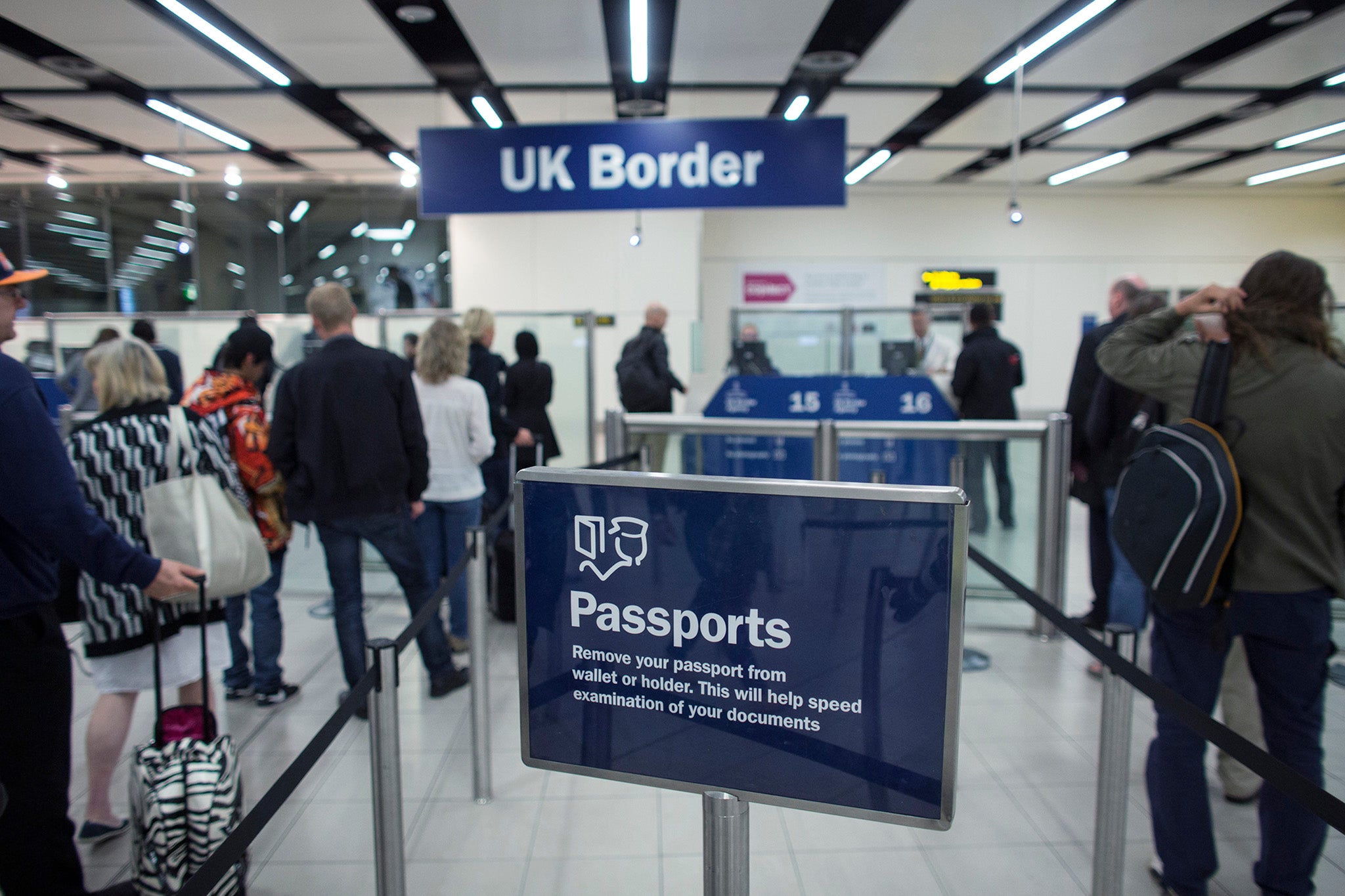
Q You reported on a British Airways passenger with a valid passport who was turned away at the airport – yet another awful story of a holiday ruined by inadequately trained staff misinterpreting passport validity rules. No one should have to go through the stress endured by the many travellers who have been put through the wringer like this. But a thought occurred to me. When we check in online, the airlines ask for passport details in advance. Could they modify their systems to include the issue date? Then the checks could be completed before you even travel to the airport.
Paul Morrison
A Since the post-Brexit border arrangements took effect at the start of 2021, the passports of UK travellers have had to meet two conditions for journeys to the European Union (and wider Schengen area). On the day of entry to the EU, the document cannot be over 10 years old; and on the intended day of departure, at least three months must remain. These two conditions are independent of each other. That is relevant because many British passports issued up to September 2018 carried forward unspent time on the previous document, allowing a maximum of 10 years and nine months’ validity.
With a passport issued on 8 September 2015, which is valid until 8 June 2026, you could travel out to the EU up to and including 7 September 2025 for a stay of up to 90 days (the maximum allowed to UK passport holders). Regrettably, some airport ground staff have repeatedly insisted that UK passports cannot be used for travel to the EU once they are nine years and nine months old.
I agree that it would help if airlines predominantly focused on flying British passengers to the EU – including easyJet, Jet2, Ryanair and Wizz Air – could add an online field to the advance passenger information procedure to identify non-compliant documents ahead of travelling to the airport. British Airways is a separate case, because BA flies a vast range of travellers to dozens of destinations – many of them outside Europe, where no one cares when the passport was issued.
Airlines say, with some merit, that it is down to the passenger to identify and comply with passport rules. In return, airlines need to ensure they always get the rules right.
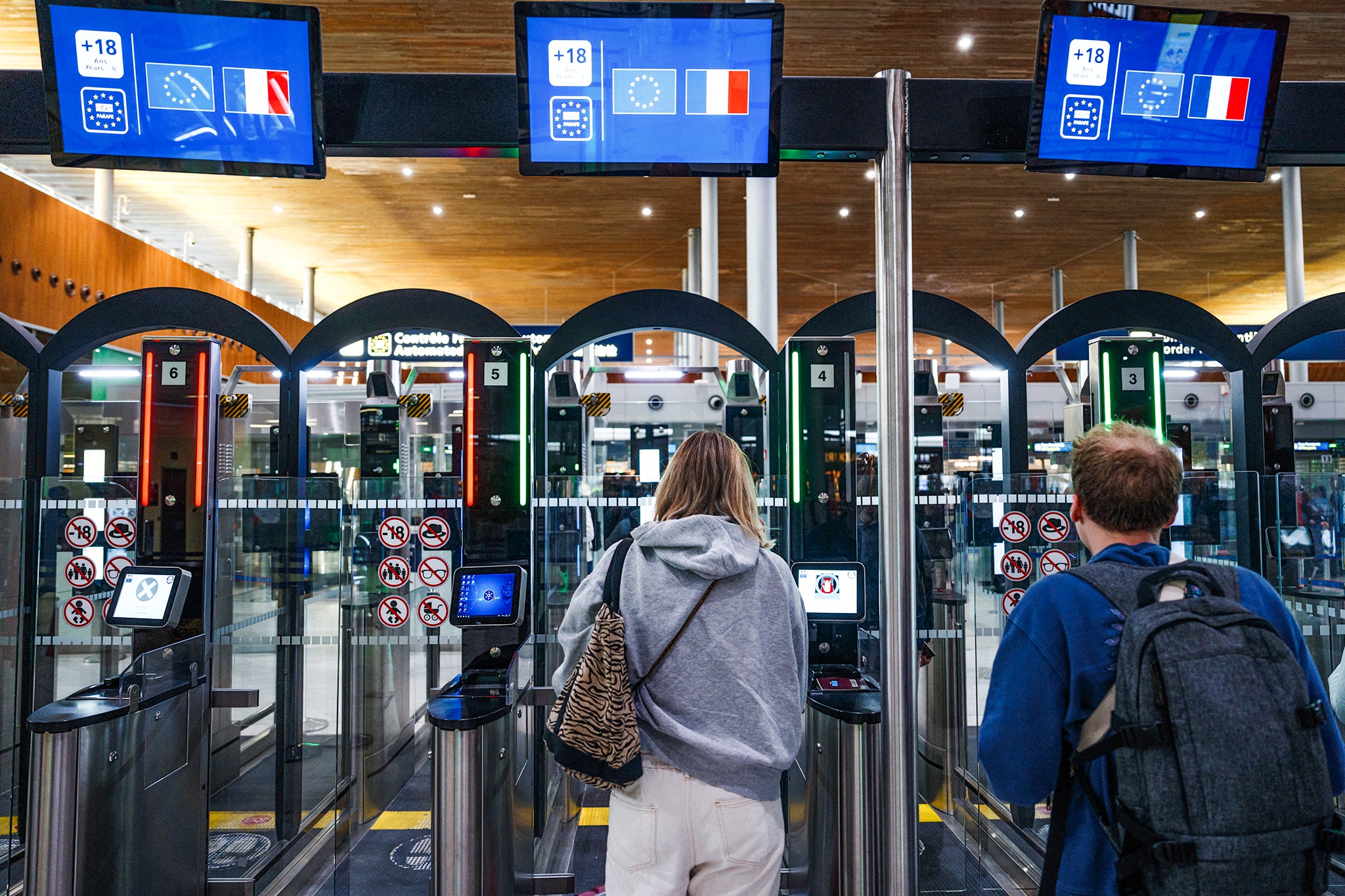
Q What will happen after 12 October for British passport holders wanting to travel to the EU who may have a criminal record from many years ago? I am trying to book a holiday for a friendship group, but one party member is concerned…
Amit T
A Thank you for a question on the European Union’s entry-exit (EES) system that I had not previously contemplated. The short answer is: “Nothing will change from 12 October 2025.” Now I shall spell out why that is the case for at least the next year, but why, from October 2026, a criminal record could conceivably become a problem.
The EES is nothing more than the long-overdue digitisation of frontiers of the Schengen area (comprising most of the EU plus Iceland, Norway and Switzerland). At present, when third-country nationals, including the British, cross the Schengen border, their passport is scrutinised (or at least it should be) and stamped to show the date of entry or exit. In addition, the frontier official may ask about your travel intentions, evidence of a ticket out of the Schengen area and how you intend to support yourself during your stay.
From 12 October, this red tape will stay in place. In addition, you and your friends may be asked to provide fingerprints and a facial biometric to be stored on a central database (once your fingerprints are in the system, only the face check will be required for subsequent crossings). By 9 April 2025, the rollout is due to be completed. After that, the analogue check stops and everyone will provide a biometric. The aim: for the EU to know for certain who is coming and going, and how long they are staying. A traveller’s personal background is not relevant.
By October 2026, if all goes according to plan, one’s history will become relevant with the introduction of the European Travel Information and Authorisation System (Etias). British travellers will need to obtain this so-called euro-visa in advance for a fee of €20 (£17). One question will ask for “details about any past criminal convictions”. It will be incumbent on the prospective visitor to answer truthfully. But every indication is that only serious crimes (which I infer as those with a substantial prison sentence attached) and terrorist offences will present a problem.

Q We are going to Vietnam for a two-week holiday in November, flying out and back via Doha on British Airways and Qatar Airways. Much of it has been organised. We will start in Hanoi for four nights, including a Ha Long Bay boat trip, then go to Hoi An for three nights. We spend a further three nights in Ho Chi Minh City and then four nights on the beach in Phu Quoc before the flight home. We’ve never been there before, and wondered if you could advise on currency and any added extras you could recommend for those locations.
Nick F
A Congratulations on your choice of destination and timing (November is the start of the dry season). Make the most of Hanoi, which is one of the very few Asian capitals that remains a joy to explore. I suggest you make your decision based on when you plan to travel. Ha Long Bay, a Unesco heritage site, has dramatic limestone outcrops soaring from the water and will be a joy.
Hoi An, on the coast about halfway down the country, is interesting. But I suggest you devote at least a day during your stay to venture a short way north to Da Nang – a thriving 21st-century city – and Hue, the former imperial city. If you are flying rather than taking the train around Vietnam, you will be able to make the Hoi An-Hue journey in about two and a half hours. Ho Chi Minh City is hyperactive, but by now you should be fully attuned to metropolitan mayhem. The well-trodden tourist path to the tunnels of Cu Chi – dug by nationalists during struggles against both the French and Americans – is worth following to understand the extraordinary resilience of the people during the devastating years of warfare.
You may be happy to just enjoy the beach at Phu Quoc, but in your position, I would consider at the very end of your trip the seven-hour overland journey to Phnom Penh, Cambodia’s beautiful capital, before heading for the airport in Ho Chi Minh City.
Finally, take lots of clean, crisp US dollars in a variety of denominations – perhaps $500-worth (£372), in singles, $5s, $10s and $20s.
Email your question to s@hols.tv or tweet @SimonCalder
Join our commenting forum
Join thought-provoking conversations, follow other Independent readers and see their replies
Comments
Bookmark popover
Removed from bookmarks