The trip that opened Antarctica to tourists – 60 years on, was it a mistake?
The first tourists stepped ashore at Smith Island and Melchior Islands on the Antarctic Peninsula on January 23, 1966. Since then, the White Continent has become a bucket-list item, with 80,000 visitors last year. US Travel Editor Ted Thornhill speaks with polar explorers and climate scientists to explore whether that landing 60 years ago was for better or worse

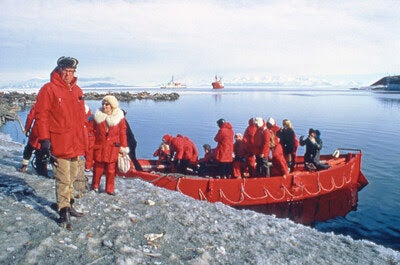
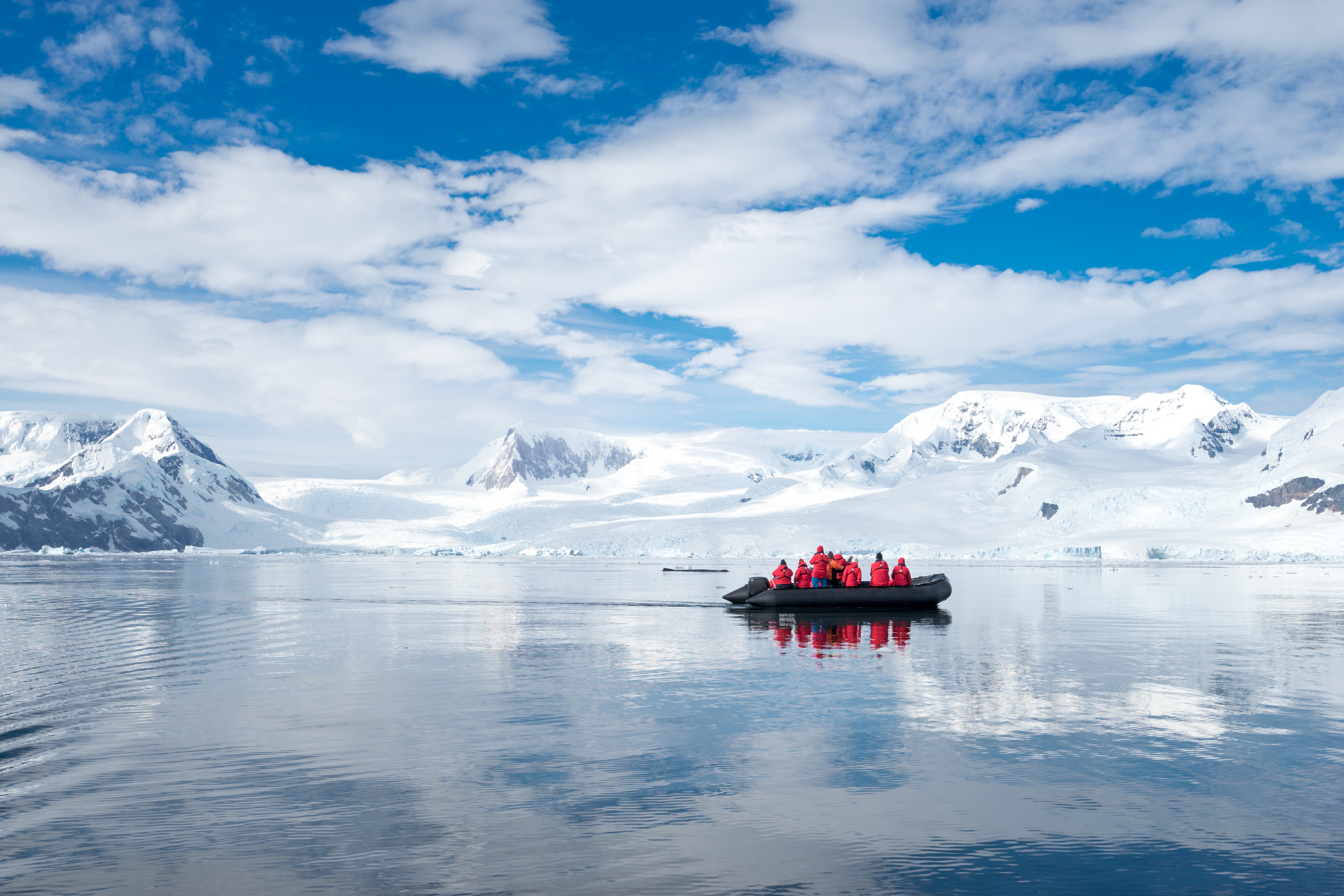
Sixty years ago, American Lars-Eric Lindblad led the first group of non-scientific travelers to Antarctica, opening the most remote continent on Earth to tourism.
If 1966 seems relatively recent, consider just how isolated and inhospitable the region is: it’s 700 miles from the nearest landmass (South America), temperatures can plummet to -112F (-80C), and winds can reach 186mph.
The original mission, with 57 guests, was partly to inspire people to become stewards for the planet, by exposing them to one of its most awe-inspiring places.
Lars-Eric’s son, Sven Olof-Lindblad, the founder and former CEO of Lindblad Expeditions (now National Geographic-Lindblad Expeditions), told The Independent: “I remember the postcard my father, Lars-Eric Lindblad, sent me from Antarctica in 1966. At the time, he was in the midst of an unprecedented achievement — bringing the very first tourists to the White Continent and pioneering modern expedition cruising.
“As we mark 60 years, it is still our driving belief that if you expose people to the raw beauty of the world, and even more, the fragility of it all — awestruck, they will be inspired to learn more and ultimately, become planetary stewards.”
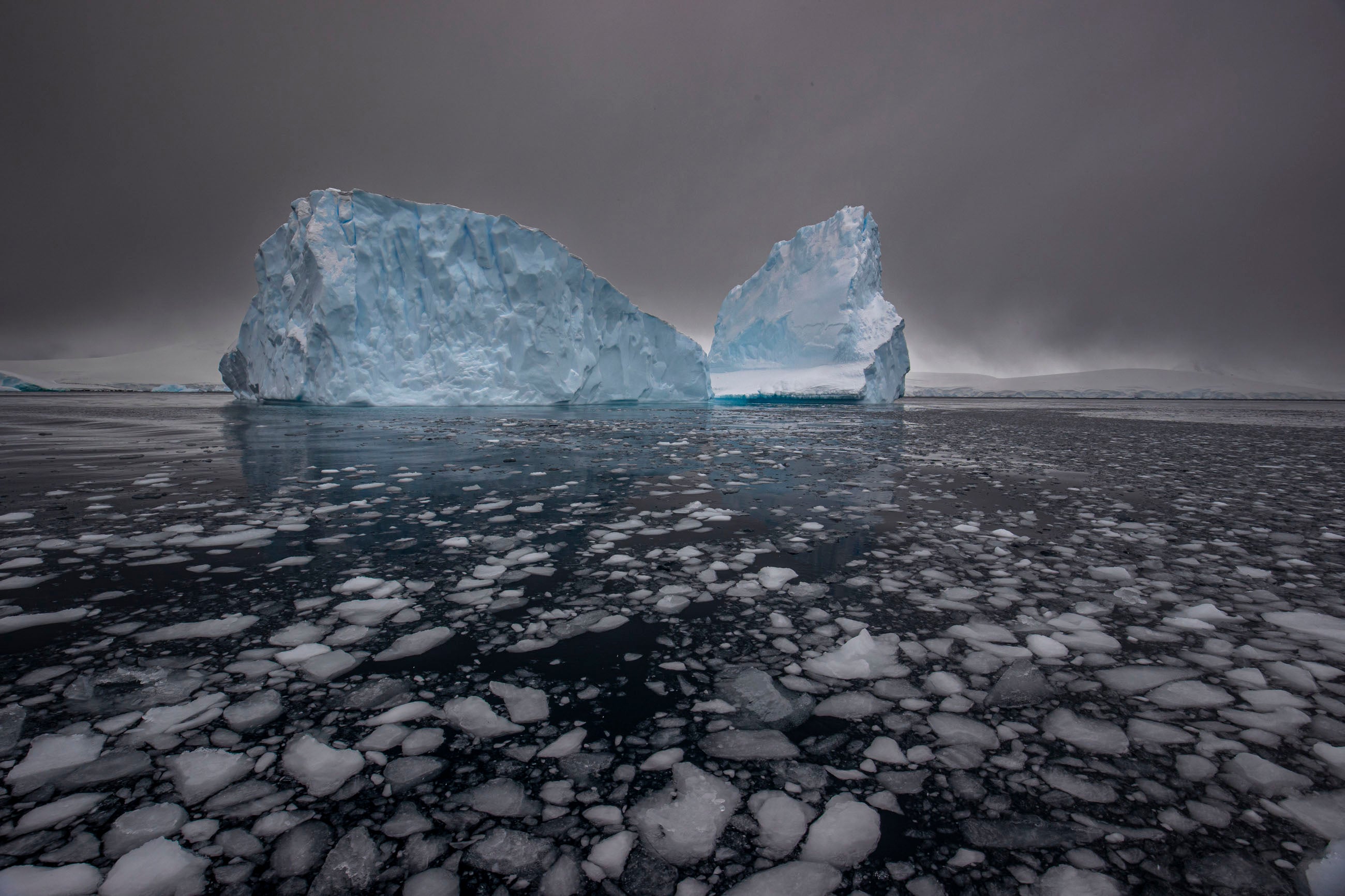
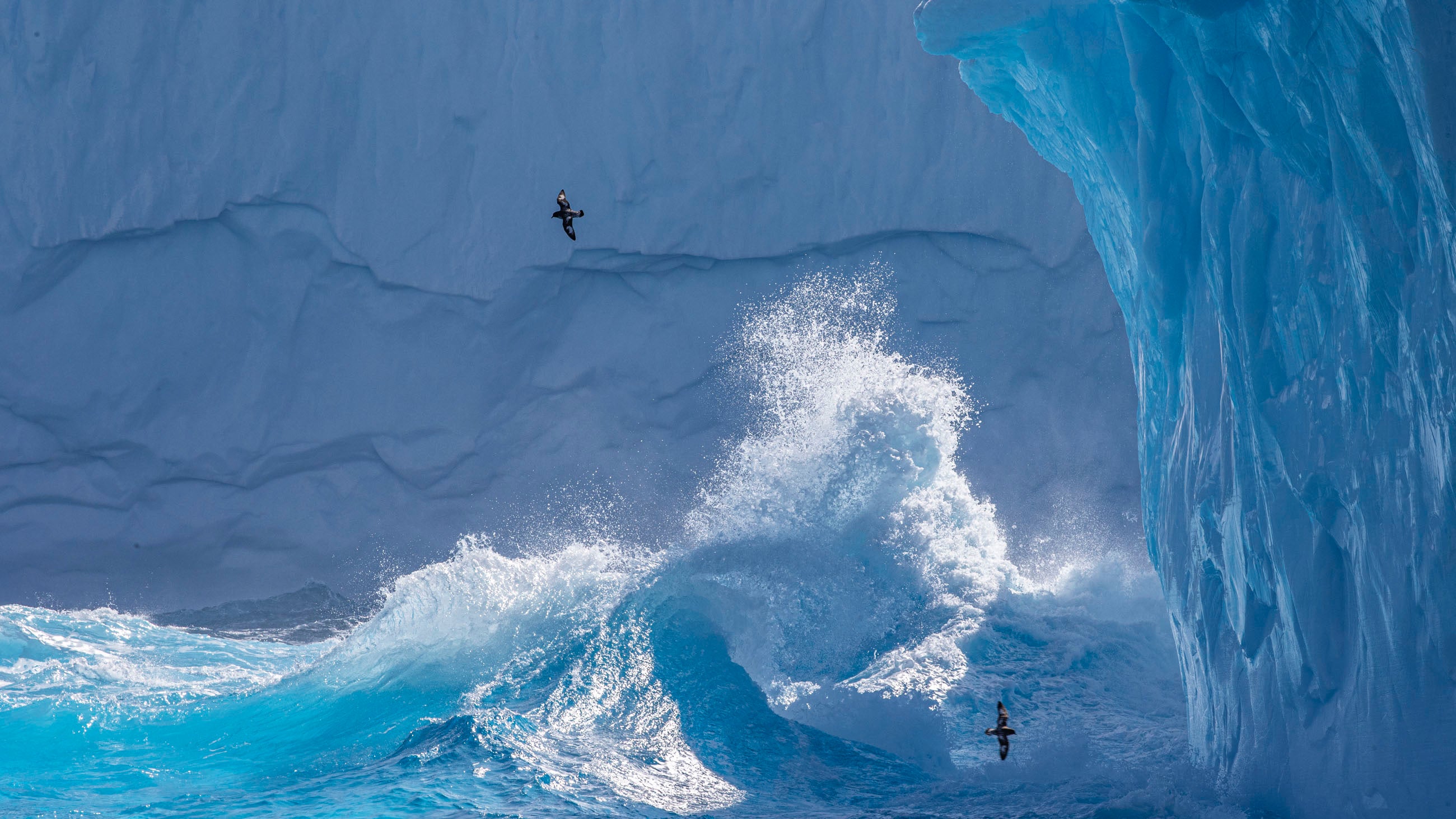
But was the trip a mistake? After all, Antarctica is far more than a spectacle, it’s a pristine deep-time climate laboratory: its 2.5-mile-thick ice sheets are a one-million-year record of the Earth’s atmosphere. Its cold, salty water drives global currents; the fate of the ice it holds, 90 percent of the world’s total, directly affects sea levels; and its Southern Ocean absorbs around 40 percent of human-made carbon dioxide emissions.

.jpeg?quality=75&width=230&crop=3%3A2%2Csmart&auto=webp)

Since Lars-Eric brought civilian travelers ashore at Smith Island and Melchior Islands on the Antarctic Peninsula on 23 January1966, the region has undergone what some describe as “destinationification” — the development of landing sites and seasonal itineraries. Around 80,000 people visited Antarctica last year, the vast majority arriving on expedition cruise ships, many of which offer high-end comforts. For an environment that’s so fragile, this is a big influx.
This is something Sven is well aware of.
He said: “My father turned Antarctica into a possibility. We hold a tremendous responsibility for opening the doors to tourism to the continent, and we take that seriously, which is why in 1991, we joined six other operators to found the International Association of Antarctic Tour Operators (IAATO), helping set the standards that guide the industry today.”
Read more: My epic Antarctica voyage ended in angry protests – but I loved every minute
Two of the crucial rules stipulate that only 100 people can set foot on the ice at any given time, and ships with capacities of more than 500 aren’t allowed to make landings at all.
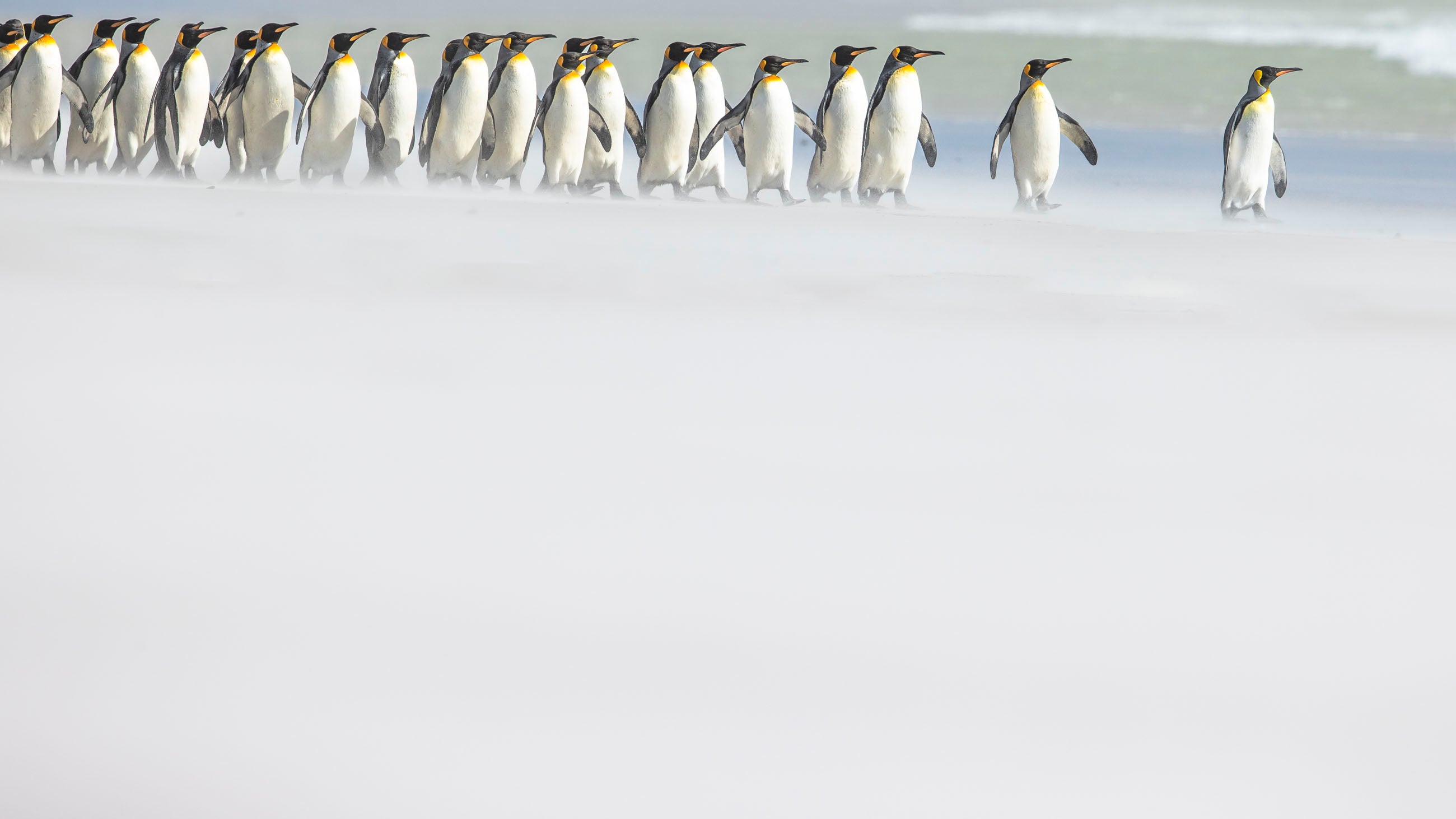
Another expedition leader who sees the 1966 landing as beneficial is guide, photographer, conservationist and polar veteran Paul Goldstein, who has spent a total of around 10 months in Antarctica. He told The Independent that opening the continent to tourists was “certainly positive,” adding: “Sensitive travellers understand the delicate nature of the South Atlantic, know the fine lines upon which the species eke out existences in this savage Eden. They also understand just how critical climate change is to this vast area and how important that is to the world's ecological equilibrium. Antarctica needs firm governance, but also needs ambassadors. Tourism has assisted that.”
Tudor Morgan, HX Expeditions Antarctic Ambassador, holds similar sentiments.
He said: “I began my career working with the British Antarctic Survey, so I have seen Antarctica through a scientific and heritage lens. One of the ongoing challenges is that scientific understanding of Antarctica is not always communicated effectively beyond the research community. Allowing people to see and experience the continent can help bridge that gap. When done responsibly, tourism can be a force for good.”
He also pointed out that to aid scientific understanding, HX Expeditions partners with the University of Tasmania to offer guests the chance to take part in onboard science and education programmes. Heritage Expeditions does the same, with co-owner Aaron Russ revealing that its guests take part in citizen science programmes, such as helping researchers collect penguin bones and eggshells to assist with the study of penguin paleoecology.
Despite the science projects, not everyone is convinced.
Assistant Professor Melisa Diaz from the Ohio State University's School of Earth Sciences is sceptical about the wider benefits of Antarctic tourism.
She acknowledges that “part of understanding Antarctica is seeing Antarctica,” and she “enjoys seeing others experience this wild continent.” She also notes that many contractors at McMurdo Station, the American Antarctic research station on the southern tip of Ross Island, “arrive to check off the ‘7th continent’ on their bucket lists yet leave as stewards of the continent.”
But she’s not so sure tourists do.
In an email written from Antarctica, she said: “I'm not convinced most tourists develop a similar deep connection with Antarctica. Perhaps I'm just optimistic that tourists will happily and willingly campaign for conservation and stewardship. But in the years since we've seen tourism increase in Antarctica, we haven't seen an appreciable action or investment in environmental conservation.”
The scientist is also concerned about even low levels of tourism.
She explained: “I don't think any tourism is low-impact. Even just getting here is logistical gymnastics, and the planes, helicopters and ships have an enormous environmental footprint. It's been high-impact and always will be.”
As an example, she cited the fragility of the McMurdo Dry Valleys: “The ecosystems that exist in the McMurdo Dry Valleys are tough. They have adapted to live and persist in both 24-hour sunlight and darkness, in high salinities, and frigid temperatures. But we're unsure how or if they can adapt to microplastics, or goose-down feathers from coats, or warming temperatures from climate change or rainfall (it's a desert).
Read more: This cruise line is teaching guests how to track climate change in polar ice caps
“Experiencing it firsthand makes it feel more real. But there are definitely consequences if environmental protection does not remain a priority. Personally, I do not find that tourism to Antarctica is worth the obvious environmental degradation that comes along with it.”
Dr Marco Tedesco, a climate scientist and research professor with the Columbia Climate School in New York City, agreed.
He said: “Opening Antarctica has helped build a global consciousness that ‘knows’ more and more about the ice, what is happening because of climate change, and explores the unique nature of the extreme continent. However, the scale of current tourism has enormous ecological and environmental impacts, pushing a fragile system closer to its limits. We are allowing tourism to grow faster than the rules. Our focus should be protecting that environment before fulfilling our curiosity.”
So, what’s the solution? As the Antarctic tourism industry cannot simply be cancelled.
Dr Tedesco posits that there is a way to establish true “low impact” tourism.
He explained: “We need to have the following ingredients: the number of visitors has to grow slower than our ability to monitor and manage sites; activities affecting wildlife behavior or fragile vegetation need to be contained or eliminated; and per-capita emissions need to be reduced or offset.
“My biggest concern is that Antarctica becomes another ‘must-see’ bucket-list destination for a growing global elite, with incremental impacts further eroding the very wonder people travel so far to experience.”
Paul Goldstein, though, argued that there are bigger threats, such as “plunderers Norway and China harvesting huge shoals of krill.” Last year, he pointed out, boats from these countries scooped up 600,000 tons in Antarctic waters.
“This is unsustainable,” he said. “Krill are the single most important foodstuff in the world. You destroy the bottom of the food chain, you destroy more than one tiny species.”
It’s clear that the question of whether opening Antarctica to tourism has been for better or worse doesn’t have a straightforward answer. If you do decide to go, Mr Goldstein has some straightforward advice: “The good guys never employ the word 'cruise' – that is maritime heresy. It is an expedition, a journey, quest, voyage, crusade or pilgrimage... Never. Ever. A cruise.”
Join our commenting forum
Join thought-provoking conversations, follow other Independent readers and see their replies
Comments
Bookmark popover
Removed from bookmarks