How safe was air travel in 2025?
Four fatal aviation accidents cost the lives of 366 passengers and crew members, while 37 were seriously injured during flight turbulence
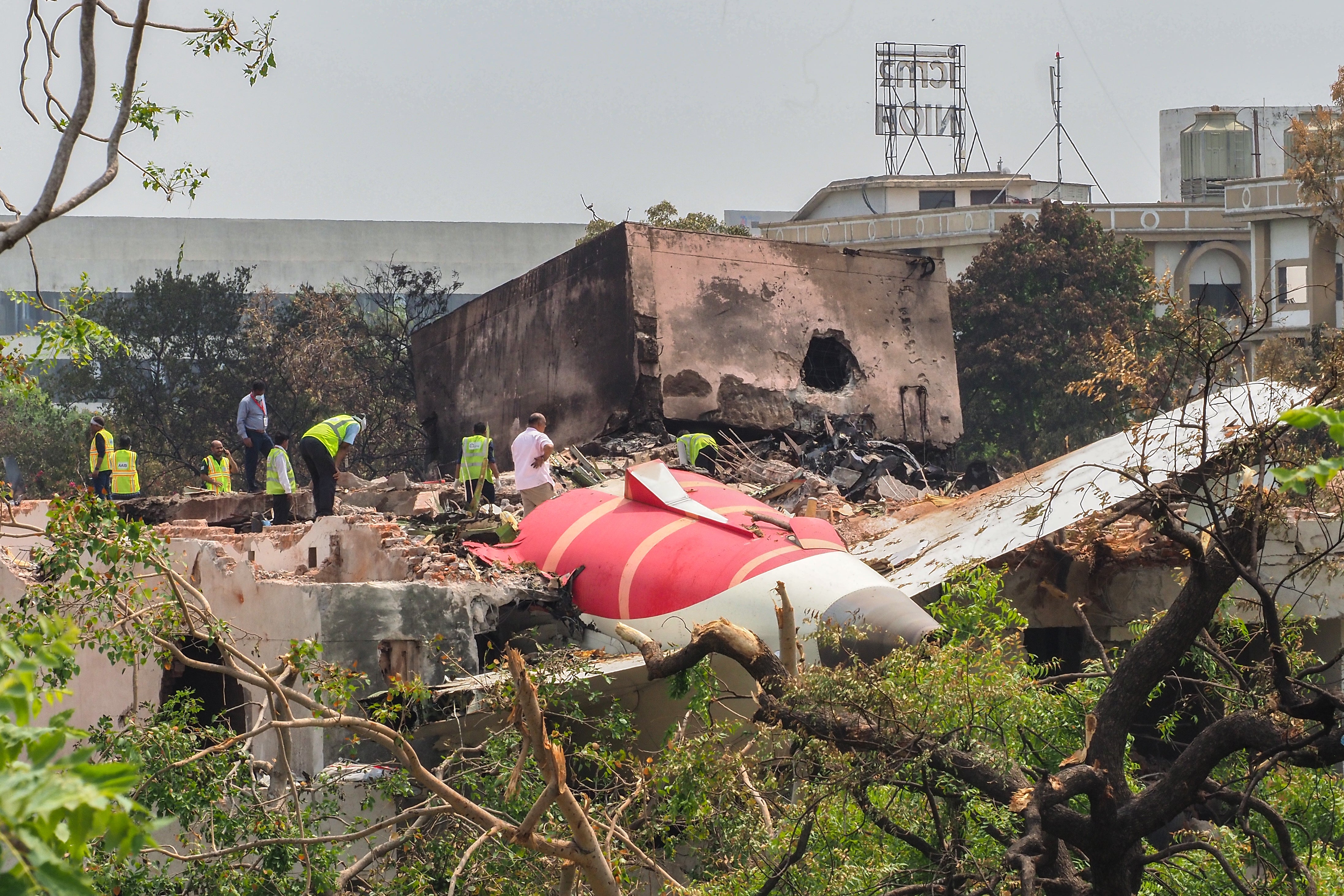
Four fatal aviation accidents involving passenger aircraft cost the lives of 366 passengers and crew members in 2025. In addition, 22 other people died in the two biggest tragedies of the year.
While the death toll is more than 100 higher than in 2024, the rate of fatal accidents has fallen to one in every seven million flights – compared with about one in five million the previous year.
A leading air safety expert who has studied the fatal events warned: “There is absolutely no room for complacency.”
Adrian Young, safety expert for the Dutch aviation consultancy To70, has compiled a review of accidents involving passenger flights over the past year.
By far the greatest loss of life took place on 12 June 2025, when Air India flight AI171 crashed seconds after take-off from Ahmedabad in India. The Boeing 787 was bound for London Gatwick, with many British citizens on board. All but one of the 242 passengers and crew died, along with 19 people on the ground.
The sole survivor, Vishwash Kumar Ramesh, escaped from the emergency exit next to his seat on board, 11A.
He said from his hospital bed: “At first, I thought I was dead. Later, I realised I was still alive and saw an opening in the fuselage.
“I managed to unbuckle myself, used my leg to push through that opening, and crawled out.”
A preliminary report into the disaster concluded fuel switches for the engines of the twin jet were cut off. Both engines were starved of fuel at the moment when power was most needed.
The report says: “In the cockpit voice recording, one of the pilots is heard asking the other why did he cutoff? The other pilot responded that he did not do so.”
The aviation community has called for more transparency from the investigation.
On 29 January, all 64 passengers and crew aboard an American Airlines commuter jet died when their plane struck a military helicopter that was crossing the final approach path to Reagan National airport in Washington DC. The three soldiers in the Black Hawk helicopter also died. The captain of the helicopter, Captain Rebecca Lobach, is judged to have made fatal errors that led to the collision.
The third most serious loss of life involved a domestic flight in Russia. On 24 July, an Antonov An-24 turboprop belonging to Angara AIrlines was attempting to land at Tynda airport in poor weather using a low-technology “non-directional beacon” approach.
The accident review says: “The aeroplane flew into the ground about 15km short of the runway and caught fire – an accident type known as controlled flight into terrain.” The report says the approach used by the pilots “is no longer widely in use and is certainly less accurate than satellite-based approaches”.
A fourth crash during 2025 also involved propeller aircraft on a domestic flight. Thirteen people died when a Jetstream 32 turboprop crashed into the sea just after take off from Roatan in Honduras. Five occupants survived.
The safety review also finds 24 crew members and 13 passengers were seriously injured during flight turbulence. Mr Young says this is “an accident type that passengers should be able to avoid by wearing their seats belts at all times when seated”.
The safety expert concludes: “The very low number of accidents makes occurrence reporting and analysis more and more important. The industry needs to learn from the pre-cursors to accidents before they happen.”
Join our commenting forum
Join thought-provoking conversations, follow other Independent readers and see their replies
Comments
Bookmark popover
Removed from bookmarks