The Independent's journalism is supported by our readers. When you purchase through links on our site, we may earn commission.
I fell in love with this island-to-island cycling trail through rural Japan
On the Shimanami Kaidō route that connects six islands via six bridges, Samantha Herbert discovers a blissful cycle that will enchant everyone from beginner cyclists to experienced riders
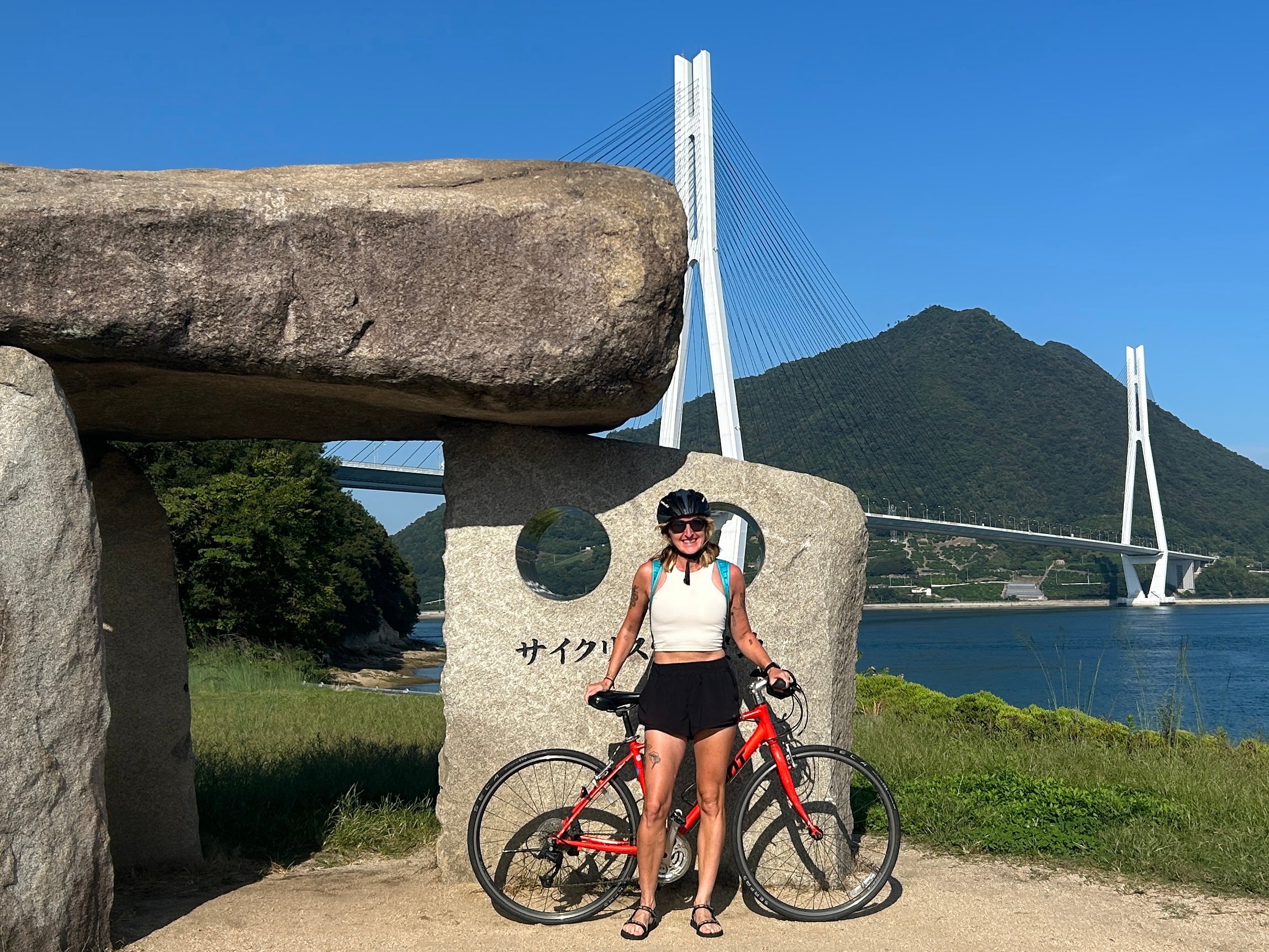
It’s been just 20 minutes since I left the bike rental shop and I find myself yelling “this is insane!” at an unsuspecting German tourist. I can’t keep it in. I’m literally squealing with delight. This might already be the best bike ride of my life … and I’ve done a few.
I’ve just pulled onto the Kurushima Kaikyo Bridge, a magnificent towering series of three bright white suspension bridges which marks the beginning of the Nishiseto Expressway in southwest Japan. Commonly known as the Shimanami Kaidō the route connects a cluster of six small islands via six spectacular bridges crossing the Seto Inland Sea.
Running between Hiroshima on Japan’s main island of Honshū to Ehime on Shikoku, the smallest of the country’s four major islands, the route guides cyclists through a breathtaking seascape of cobalt blue waters, sun-drenched fishing villages and rugged pine-clad coastline.
Starting off from Shikoku my first crossing is the majestic Kurushima Kaikyo which, when it was completed in 1999, was the world's longest bridge of its kind, spanning 4015m, or as I heard one excited Australian child exclaim: “Nearly as long as a park run!”


Pedalling over it in the first week of October, under a bright blue sky in 30C heat, with a pleasant cooling wind as Japan’s humid summer draws to a close, I’m in a state of absolute bliss. With the majority of this cycle route segregated from traffic, and a blue line painted on the road to follow the whole way, the ease of this ride is unparalleled. Unconcerned by traffic or navigation I’m completely free to relax and concentrate only on soaking in the spectacular scenery that surrounds me. This is just the first of six ocean causeways and already I'm in total awe.
I hadn’t planned on this ride. I’d heard of it and then by chance while travelling on Shikoku passed the startpoint. Arriving with no plan, no navigation, and no gear, I’m proof of just how accessible it is. Stowing my heavy luggage in a locker at Imabari Station, I’d soon rented a bike, a helmet, a lock and received a brief rundown from the very helpful tourist information. An hour later, pedalling in my short shorts and teva sandals, on an incredible high from crossing the first bridge, I’m working up a hill on Oshima island overtaking my first MAMILs. It’s an unbridled joy any female cyclist knows well, and this time it’s only made sweeter by my looking so woefully unprepared but having my quads of steel propel me past the noise of their furiously shifting gears.
I mention it here not to gloat (ok, just a little bit), but as proof that this route really is for everyone, from “serious” cyclists to clueless tourists in cute shoes.
At 70km with little significant elevation, the basic A to B ride can easily be completed in a single glorious day, but if you have the time I’d highly recommend splitting it across two, giving yourself the freedom to stop along the way without any looming deadline to reach a bike rental shop before it closes.
Read more: Why you should experience Tokyo by bike
Mid-morning on day one, on the palm-lined promenade of Hakata Beach on Hakatajima Island I’m so glad I’ve chosen to do just that, as I sit and enjoy an ice cream with my feet in the crystal waters, gazing back at the second bridge which has just delivered me here.
A few hours later I arrive on the largest of the islands – Omishima – where I stop for a hearty lunch of Bánh mì at a roadside restaurant in someone’s front room.
Hoisting myself up with a full stomach, untangling my stiff legs that have been cross-legged under me for the past hours while chatting to fellow cyclists over our feasts, it’s mid-afternoon by the time I move on. Luckily I’m already close to my accommodation for the night.
Consulting the paper map handed over with the bike, I decide then to take one of the numerous detours available for avid cyclists looking to add more mileage, more hill-climbing and to reach some even more scenic spots.
Heading east, I cling to the coast for the next few hours passing miles of picture-perfect beach, empty only for the odd heron or lone local fisherman both stalking the water for their dinners. As dusk falls and the sky glows golden, silhouetting numerous more islands against the horizon, I weave silently through mandarin and lemon orchards still pinching myself at quite how incredible a day this has been exploring rural Japan.
Read more: What it’s like to hike Japan’s ancient Kumano Kodo trail
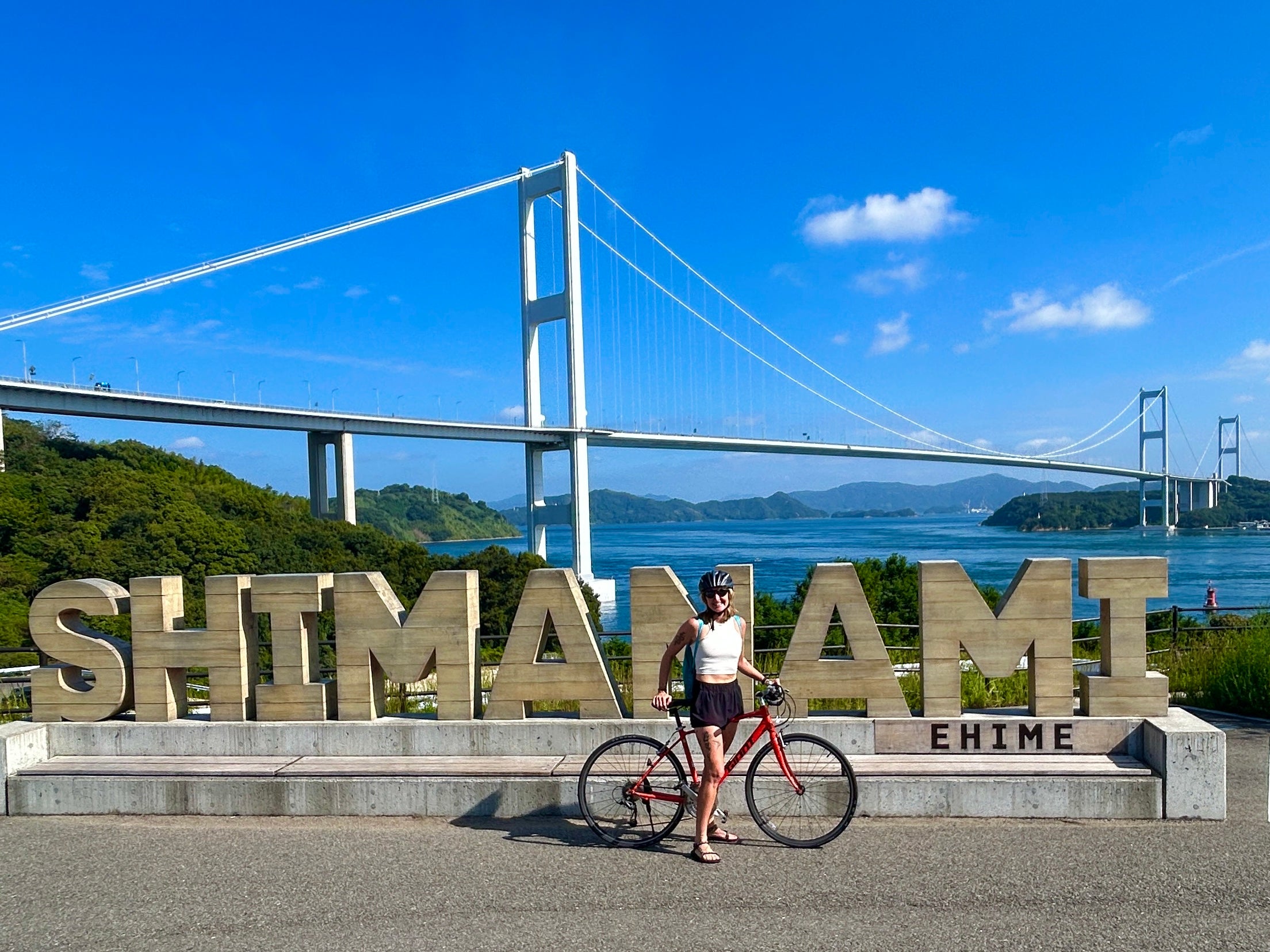
The next morning I cross Tatara Bridge, marvelling at the feat of engineering, a striking vision of modernity against a backdrop of wild untouched shores. After another breathtaking crossing I arrive on Ikuchijima, known as "Lemon Island" for its rich citrus production. Alongside innumerable opportunities to sample fresh local lemonade, lemon sorbet, and a host of lemon sweets, Ikuchijima is also home to the Shimagoto Museum. Seeking to make this entire island an art gallery, the project invited artists to create sculptures to be placed in any location of their choosing, creating an island-wide treasure hunt, with 17 pieces to be found.
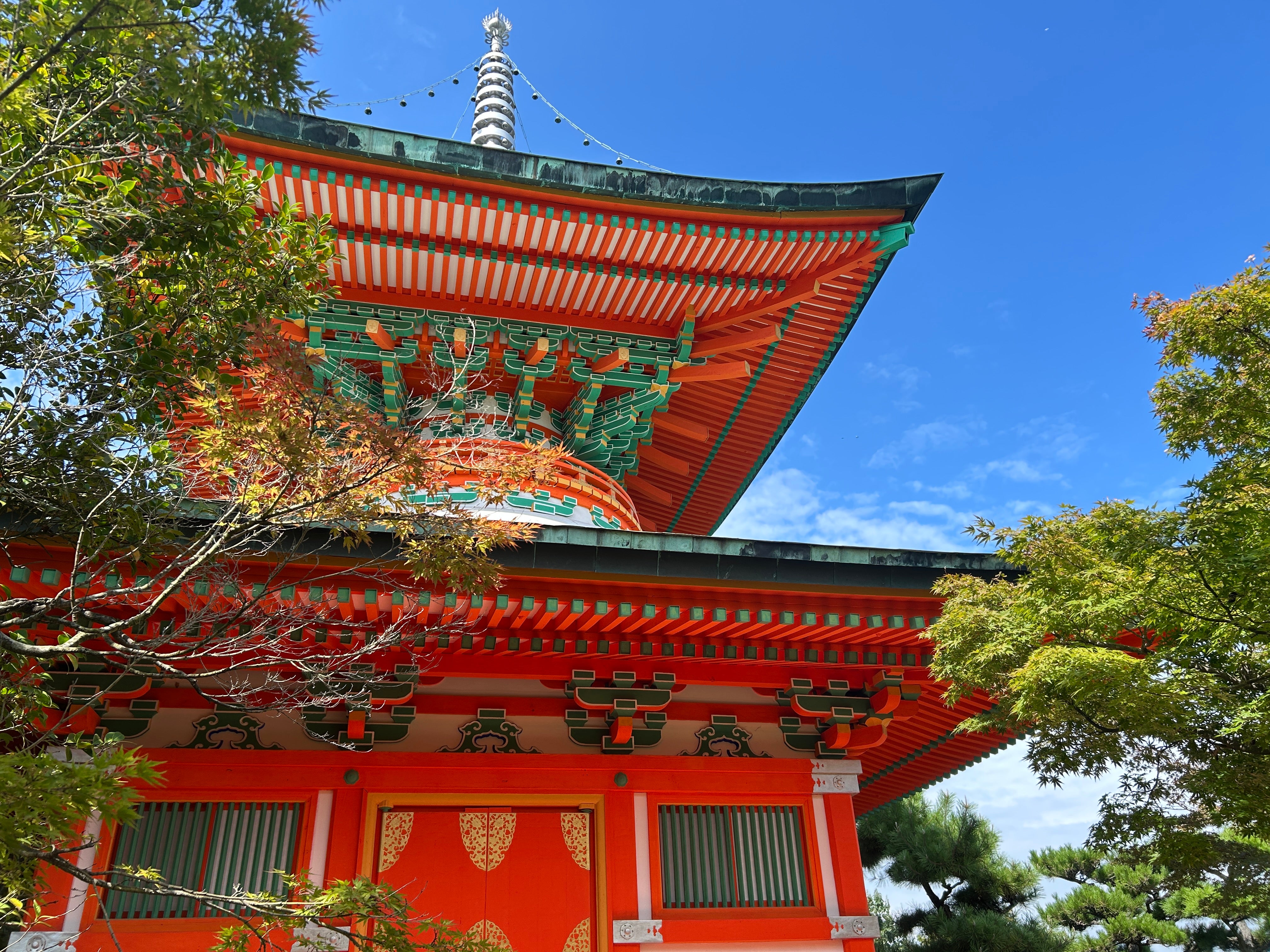
The Shiomachi shopping street is also not to be missed here, selling food, art, and souvenirs, and leading cyclists straight to the entrance of the grand Kosan-ji temple. A sprawling complex of vivid colours and elaborate carvings, I spent more than an hour here, culminating in a climb to the sublime 5000sqm sculpted white marble garden, the Hill of Hope.
As clouds descended, I raced the rain through the last section of day two, reaching mainland Onomichi just as the first heavy drops began to fall. With a beautiful covered shopping area filled with a plethora of arty independent shops, cafes, and izakayas, it’s the perfect place to spend a night and I soon set to work replenishing my spent calories with some particularly befitting lemon sour cocktails.


How to do it
Most will start the Shimanami Kaido route from Hiroshima. From the city centre take an hour long JR local train to Omonichi where you’ll find the main bike rental hub.
If you’re starting in Tokyo, it’s a four hour ride on the Shinkansen bullet train to Hiroshima, which is well worth its own stop-off.
A number of airlines fly from the UK to Japan, including British Airways, which has direct flights that take around 14 hours. Other airlines including Emirates and Japan Airlines involve a connection.
Read more: Why the ‘Hawaii of Japan’ should be your next beach holiday
Join our commenting forum
Join thought-provoking conversations, follow other Independent readers and see their replies
Comments
Bookmark popover
Removed from bookmarks