The Winter Olympics’ newest sport is entertaining - but fundamental flaws make it merely a gimmick
The peculiar new sport at Milano-Cortina saw Marianne Fatton triumph at the expense of the unfortunate Emily Harrop, with the transitions proving decisive to the outcome of the medals
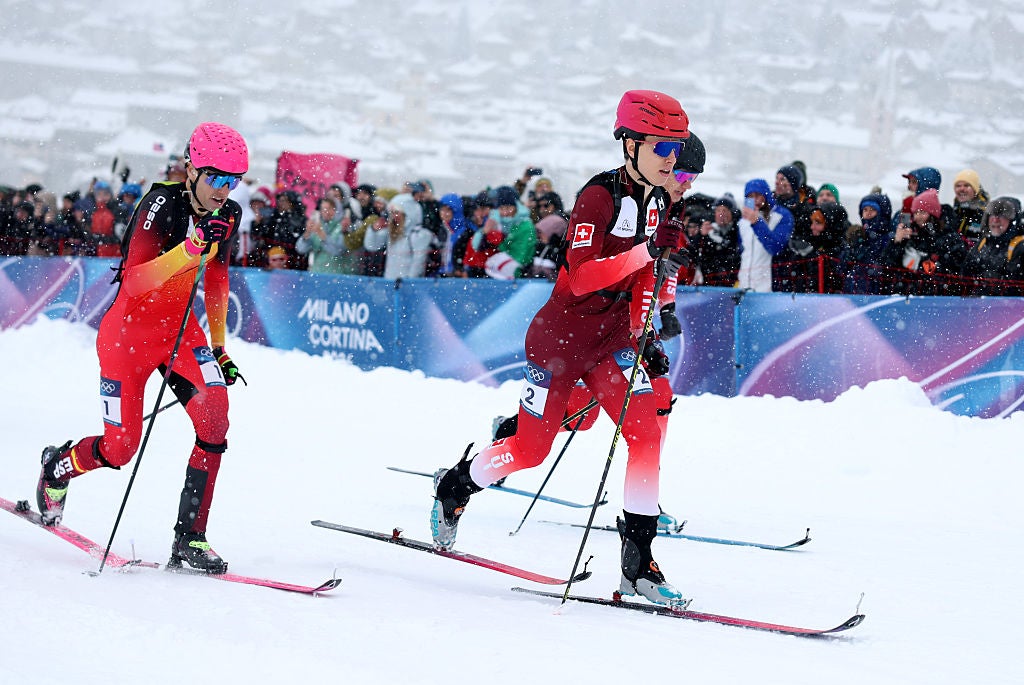
The first-ever Olympic ski mountaineering medals were handed out on Thursday, with world champions Oriol Cardona Coll of Spain and Marianne Fatton of Switzerland taking gold in the men’s and women’s races, respectively.
Ski mountaineering - skimo for short - is the first new sport added to the Winter Olympics programme since skeleton in 2002, but may not prove quite as long-lasting.
It had an inauspicious beginning as Bormio - which has also hosted the men’s Alpine skiing - was covered in a blanket of snow, with heavy snow falling throughout the competitions and the powdery conditions less than ideal for the athletes.
Heats, semi-finals and finals were all contested in a frenzied few hours on Thursday, with only 18 competitors in either men’s or women’s field and just six making the final.
Traditional ski mountaineering dates back to the 1800s, and the sport’s biggest races - known as La Grande Course - involve several thousand feet of altitude gain over a period of around three hours, on difficult, rugged off-piste terrain. Some races are staged over several days.
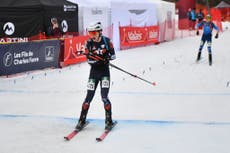
Olympic skimo feels like the T20 version: races take around three minutes, with two short uphill sections on skis either side of an on-foot section, before a technical descent on skis to the finish.
British skimo athlete Iain Innes, who did not qualify for the event, described it as the “breakdancing” of the Winter Olympics, a reference to the widely-panned breakdancing competition in Paris 2024, and compared the breakneck feel of the up-and-down race to “running like hamsters”.
It has all the symptoms of 21st century sport - gimmicky, snappy, seemingly designed for social media hits - but none of what Olympic sport is all about. And it begs the question, if the IOC must tinker with the Olympic programme, why introduce this, and not, say, allow women to compete in Nordic combined?
To an observer, Olympic skimo has something of the frenetic nature of snowboard cross or BMX, as athletes jostle side-by-side, while the uphill shuffling on skis calls to mind race walking at the Summer Games - no doubt difficult to achieve but faintly ridiculous to watch.
The whole endeavour had the urgency of hastily hoofing it to the front door to collect a takeaway. The majesty of Alpine skiing, this was not.
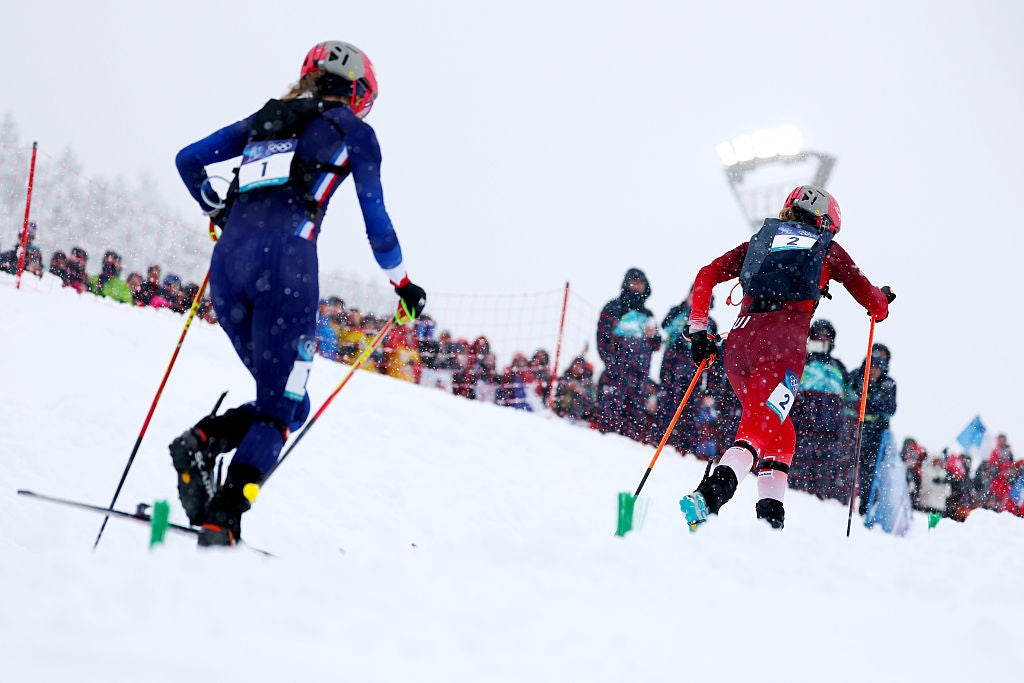
The majority of the time seemed to be spent transitioning between sections: removing skis, putting them back on, and stripping the skins off for the final descent. It was like reducing a triathlon down to 100m of swimming, cycling and running, with the inevitable result that the transitions decide the medals, rather than athletic prowess.
The women’s heats went to form, with the top six all making the final. Emily Harrop - born to British parents but raised in the French Alps and competing for France - was the heavy favourite, having dominated the World Cup circuit this season.
The 28-year-old, a former Alpine skier and British downhill champion in 2015, led from the start and accelerated emphatically through the diamonds - a section of road blocks the athletes had to ski around, like going round a roundabout.
But Harrop came unstuck in the transitions, with Fatton catching up into the bootpacking (on foot) section - up a set of snow-covered stairs like in a cyclocross race - and charging away after taking her skins off for the final, downhill section. Harrop has now been bested in two World Championships - including by the Swiss - and an Olympic Games.
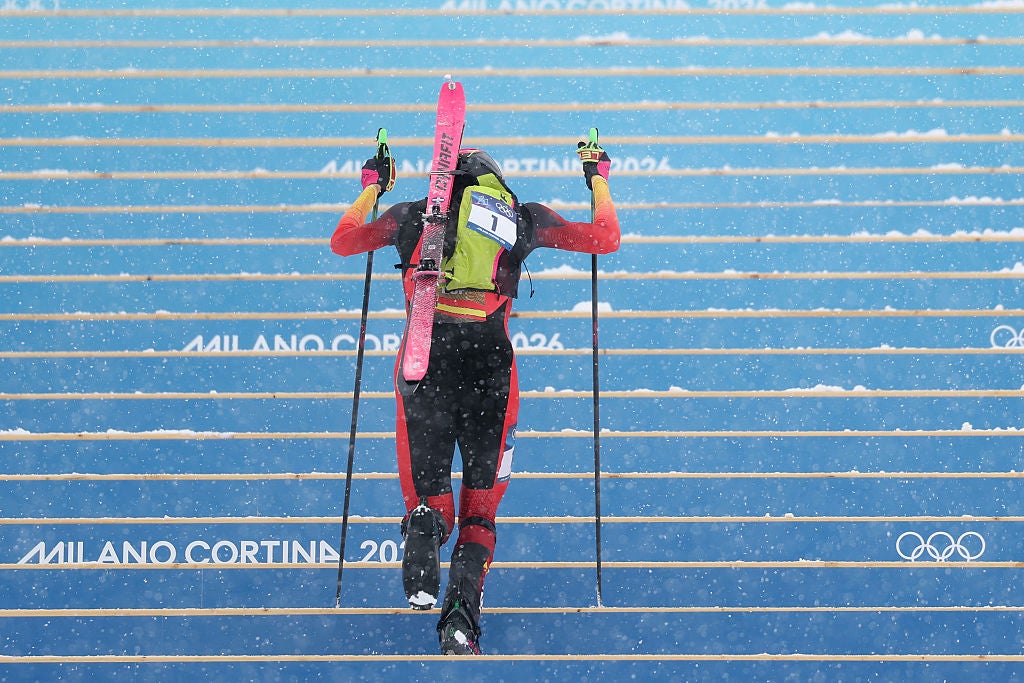
Spain’s Ana Alonso Rodriguez was third and overjoyed with her achievement; Fatton, the two-time world champion, seemed amazed at what she had done after a poor World Cup season.
The heavy snowfall in Bormio, which has seen roads out of the town blocked, turned the smooth, developed piste into deep snowdrifts and put paid to several competitors’ chances in the men’s race. The Swiss duo of Arno Lietha and Jon Kistler led the charge, but Lietha slipped on the stairs and never recovered.
Cardona Coll, the double world champion, transitioned rapidly and bounded up the stairs into an irretrievable lead, with Russian Nikita Filippov taking silver to become the first ‘neutral athlete’ of these Games to win a medal. France’s Thibault Anselmet looked out of contention early on but took advantage of the Swiss’ misfortune to take bronze.
The whole thing was over in about 10 minutes, a flash in the Olympic pan.
A mixed relay event, scheduled for Saturday, will conclude skimo’s inaugural Olympic outing. On the basis of Thursday’s events, it may go the way of ski ballet and skijoring, demonstration events at previous Games that never quite cemented themselves as classics of winter sport.
A three-hour epic of climbing and descending amid the beautiful vistas of the Italian Alps might be a better addition to the programme - a bit more reflective of what ski mountaineering is actually like, and on par with the gravitas and athleticism of proper Olympic sports.
Join our commenting forum
Join thought-provoking conversations, follow other Independent readers and see their replies
Comments
Bookmark popover
Removed from bookmarks