Mikaela Shiffrin breaks eight-year Olympic drought with brilliant slalom gold
The American went eight races without an Olympic medal before triumphing in her favourite discipline on Wednesday
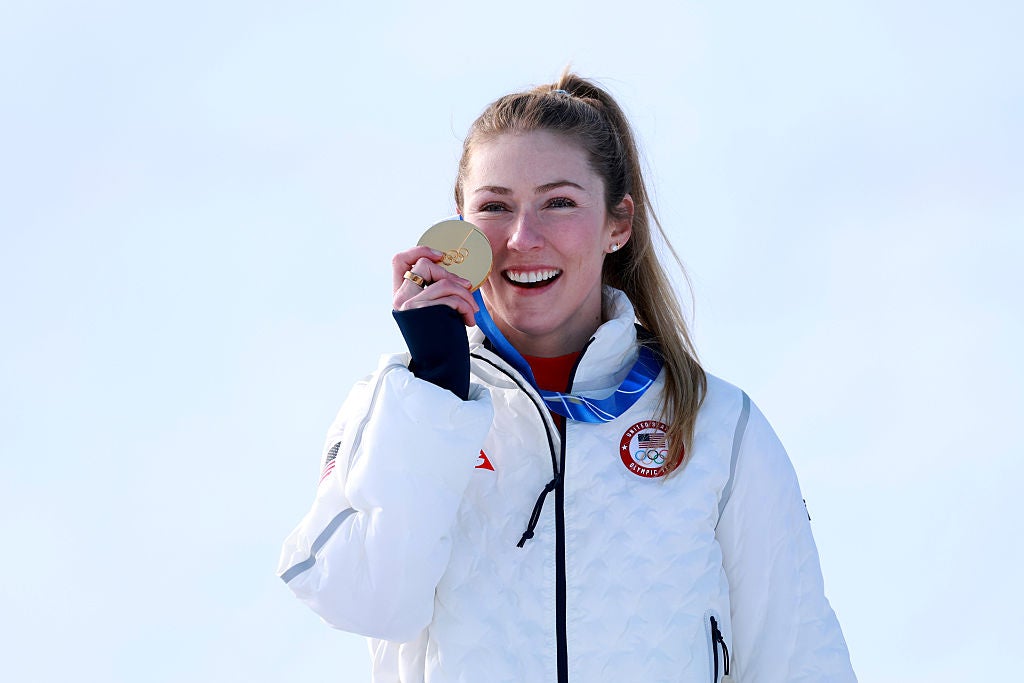
Twelve years after winning slalom gold as a teenage starlet in Sochi, the youngest ever Olympic champion in the discipline, Mikaela Shiffrin finally returned to the top step of the podium.
In those 12 years she went from an 18-year-old prodigy to the greatest Alpine skier of all time: 108 World Cup wins and counting, 71 of them in slalom, alongside nine crystal globes and four world titles in the discipline, the most technical of all Alpine events.
But her Olympic record has failed to match her dominance elsewhere. She endured a torrid time in Beijing, crashing out in three of her six events and failing to win a medal in any; in slalom, she DNF’d in her first run. She missed the slalom podium by a mere 0.08 seconds in Pyeongchang, where she took gold in giant slalom and silver in the combined.
Those remained her only other Olympic medals – until today, under blinding sunshine in Cortina d’Ampezzo.
After missing the podium in the giant slalom on Sunday, as well as only finishing fourth in the alpine combined with Breezy Johnson, she put her Olympic ghosts to rest with an imperious display on the Olympia delle Tofane slope.
She said afterwards: “I knew after the team combined that there would be some stories that would be really frustrating to look at, because it’s just not the reality of the sport. It’s a different perspective when you’re watching it and not totally understanding all the demands that go into it. That would be from the keyboard warriors and from the media as well.
“I just didn’t look at what anyone was saying, I didn't look at social media. I just talked to my team, family back home, and Alex [her fiance, Alpine skier Aleksander Aamodt Kilde] and just kept reminding myself and they kept reminding me what’s important to me is the moments between the start and the finish, and there will always be criticism, but I am here to earn the moment, and that is going to require some risks. Risk of not finishing, and also risk of being criticised, and I have to accept that. Not the easiest thing to do, but today we did that.”
She set the fastest time on the first run - 47.13 seconds, 0.82 seconds quicker than her nearest challenger - and extended her winning margin to 1.5 seconds on the second run, for a total time of 1:40.60. That 1.5 seconds was the largest gap between first and second in any Olympic alpine skiing race since 1998.
Switzerland’s Camille Rast, the reigning world champion and only woman to beat Shiffrin in a slalom World Cup this season, took silver. Sweden’s Anna Swenn-Larsson took bronze a further 0.21 seconds behind.
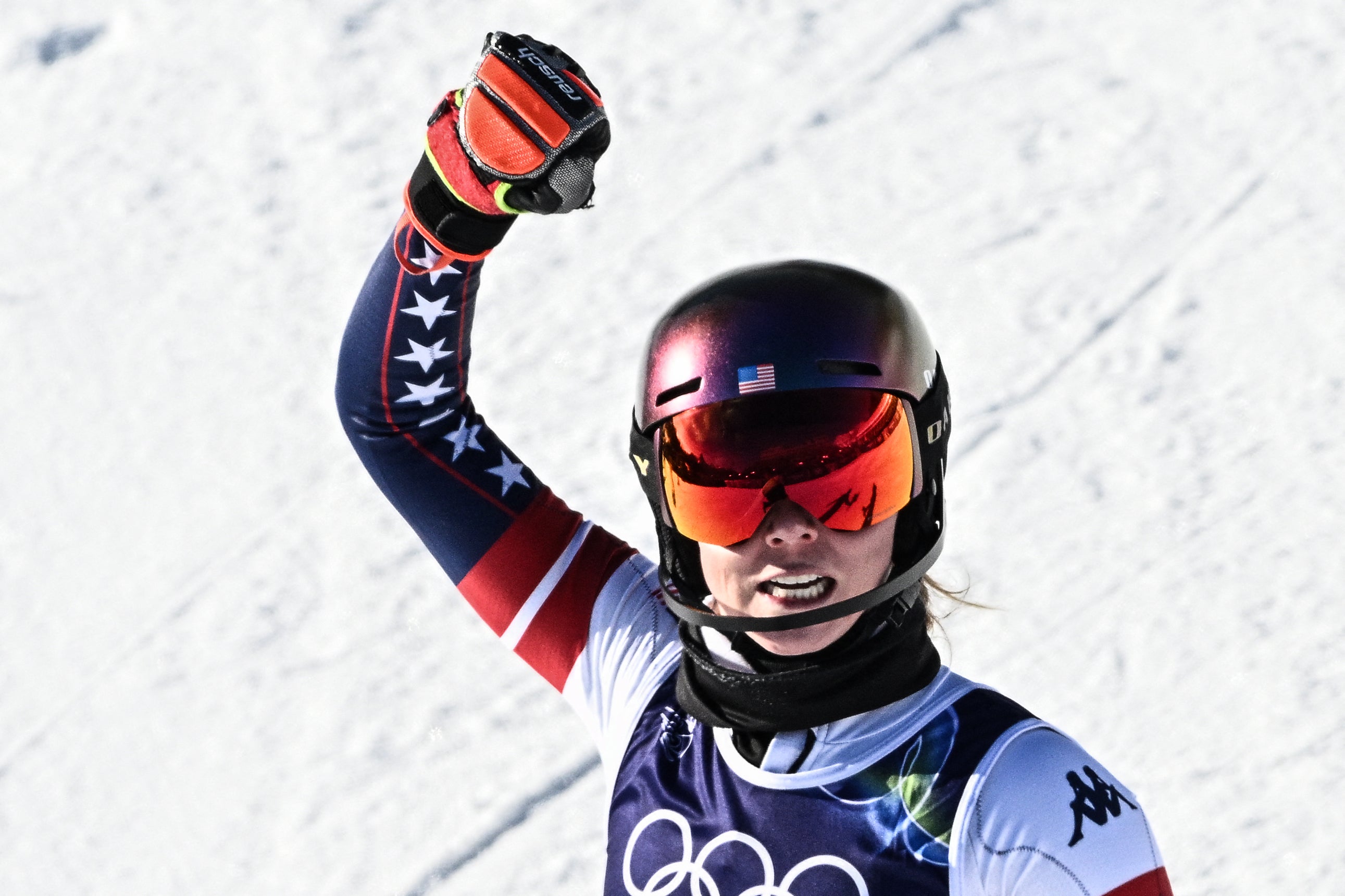
Shiffrin said: “These moments, we do build them up for sure. Everybody builds it up and I’m building it up for myself too. The biggest task for today was to simplify and to focus on the skiing.
“But I had some moments today where I could imagine doing the skiing, cross the finish line and to have this moment kind of for myself, to connect with the people who can’t be here, also the people who are here but I don’t get to see immediately, for my dad who didn’t get to see this.” Shiffrin’s father Jeff died unexpectedly in February 2020.
She continued: “This was a moment I have dreamed about. I’ve also been very scared of this moment.
“I’ve been much more externally vocal to myself than usual, normally I don’t really talk to myself in this way, but I’ve had to be loud with myself to be like, you want a big mentality, you want to earn the moment, you want to do the skiing, you want to be there. You want to be in that start gate and you want to take on the course ahead of you.”
Just like in 2014 Shiffrin was the heavy favourite in Cortina, having won seven of the eight slalom races on the World Cup circuit this season.
Like in 2014 she led after the first run, starting seventh and putting eight-tenths of a second into Germany’s Lena Duerr. It was the biggest first-run margin in an Olympic women’s slalom since 1960 – going back almost as far as the last time Cortina hosted the Games.
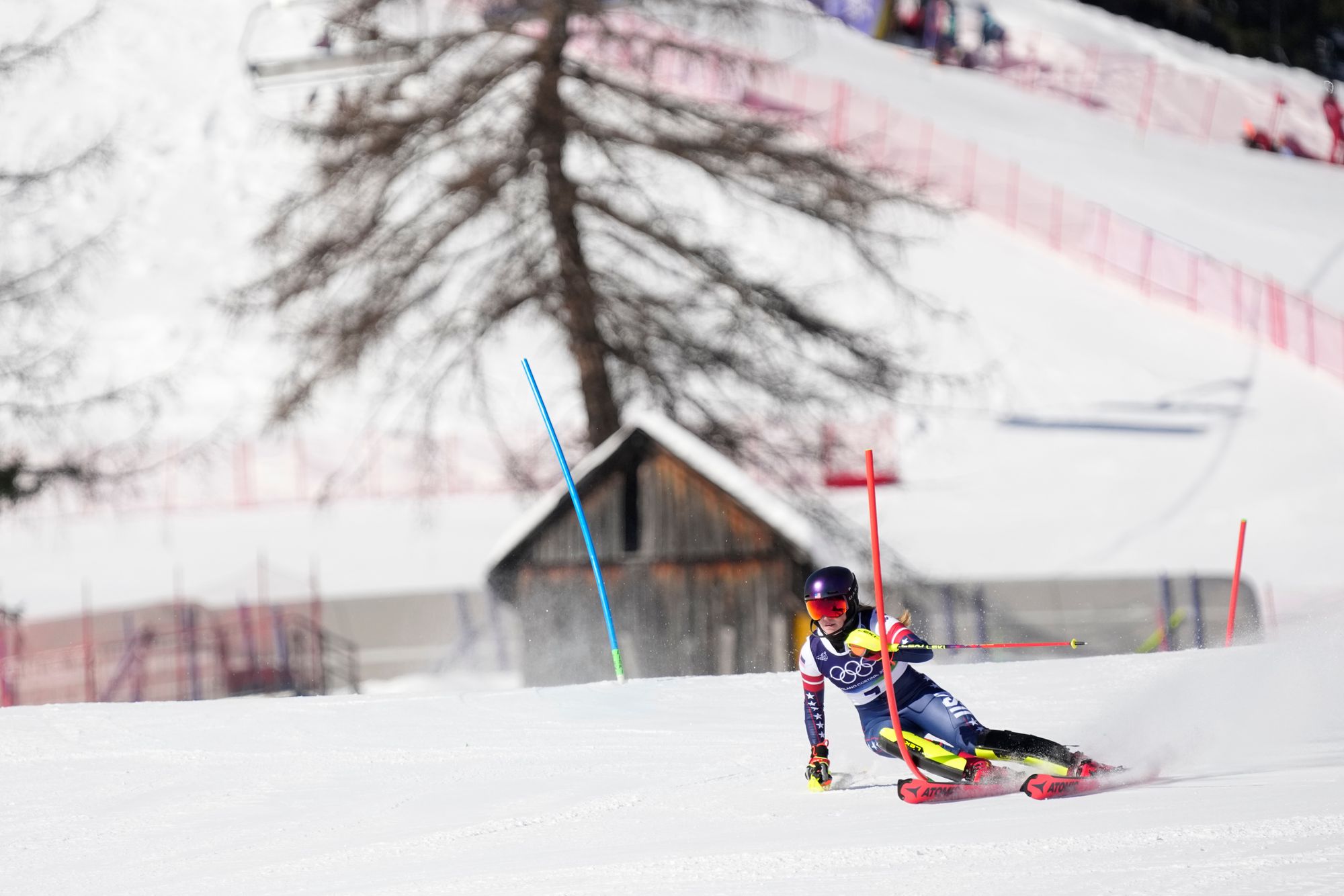
Shiffrin races slalom the same way Roger Federer played tennis: balletic, graceful, making it look the easiest thing in the world. At her best she floats down a course, the perfect balance between attack and aggression, and precision and control. It was vintage Shiffrin that emerged from the start house in the Dolomites today.
As she waited at the top a message came in from the USA team radio: “The course is just high tempo ripper all the way to the finish. Send this thing, you got it.”
Send it she did.
She carved up the Olympia delle Tofane course with ease, setting the time to beat at every marker and increasing her lead in a tricky final section of hairpins where nearly all her competitors lost further time. She fist-pumped confidently in the finish area but looked otherwise inscrutable; her coach punched the air with glee.
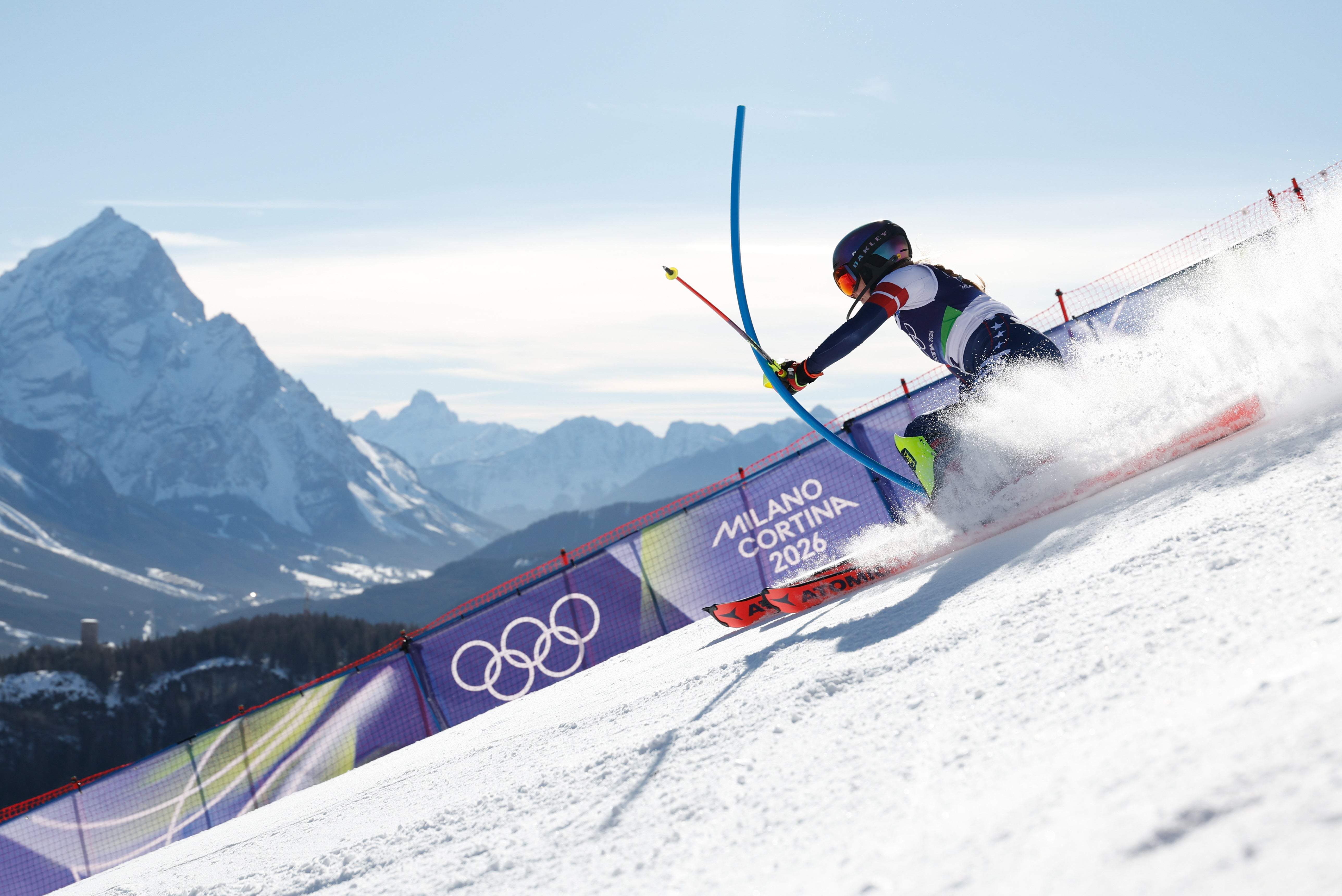
The margins are incredibly fine in slalom; racers are more likely to straddle a gate and haemorrhage time, simply rolling off the course, than crash in dramatic fashion. Too late into a turn, clipping a gate wrong, and that’s your race over. Duerr, in provisional second, suffered that misfortune as she mistimed an early gate and saw her podium chances vanish, sloping off the course in disappointment.
While Shiffrin coasted through the first run, she had to do it again. She waited at the start house, tapped her poles together, and sent it.
A roar went up as she set off, and within a few moments it was clear that she was flying down the piste to gold. There was none of the tension or hesitation she had in the Alpine combined, when she finished 15th of the 18th athletes, a whole second slower than silver medallist Emma Aicher. She raced like it was any round of the World Cup, any normal race, and not her first shot at Olympic glory in nearly a decade.
By the bottom she had nearly doubled her advantage over Rast. Two seconds separated first from fifth; less than seven-tenths of a second separated fifth from 10th. The rest of the field were miles behind.
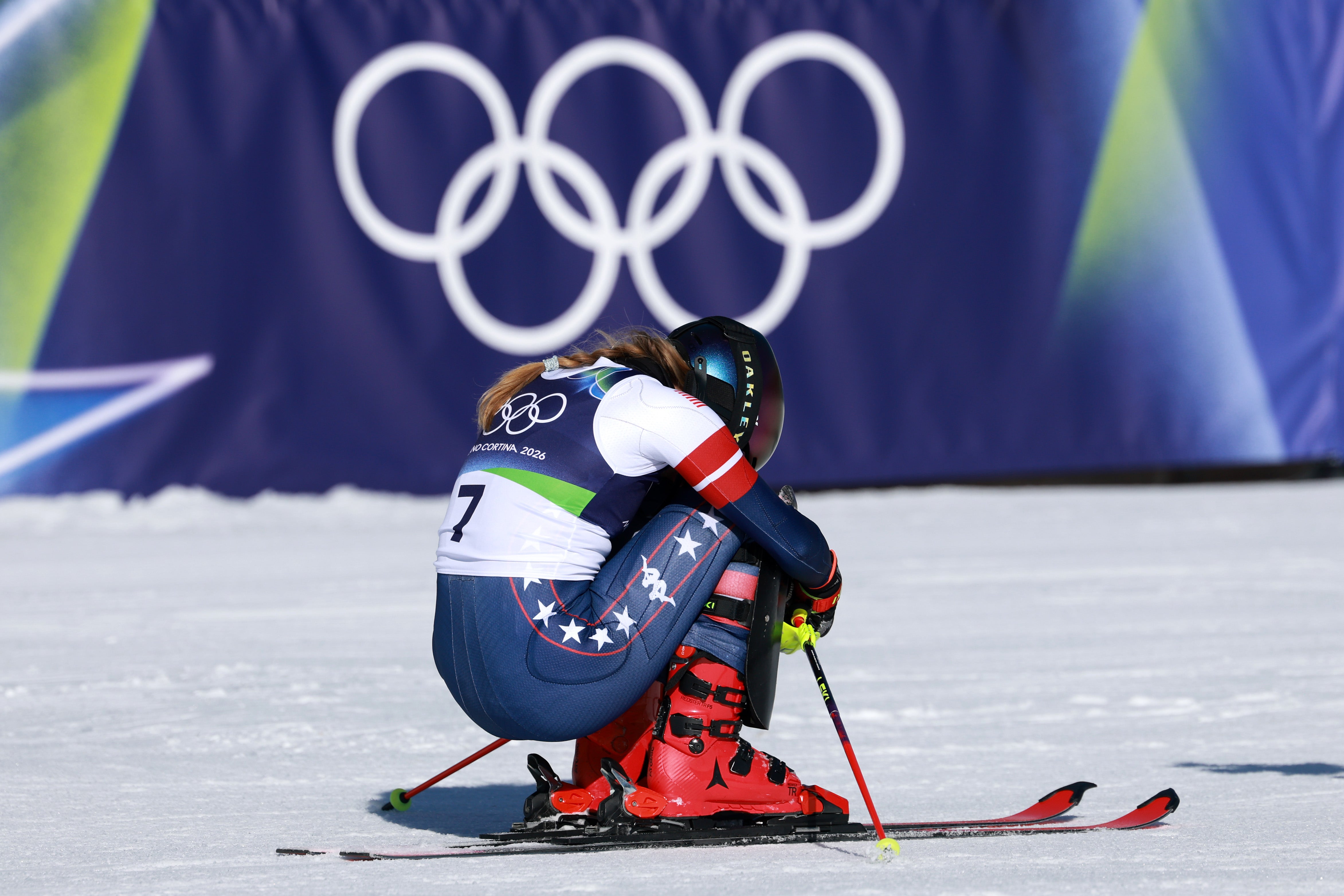
Shiffrin swung over the line and slowed to a halt. There was no punch of the air or scream of delight, as her other competitors had done going into the lead.
Instead she stood and waited, as if struggling to comprehend what had happened. Eight years of hurt over.
Her fellow medalists ran over to embrace her. Eventually it must have sunk in as the 30-year-old waved to the crowd, blew kisses, and sunk to the snow in palpable relief, greatness re-affirmed. She ran over to hug her mum, coach and confidante Eileen, who may well have been thinking of this same moment in Sochi 2014.
Shiffrin said: “My mum and I have a language of our own and sometimes it’s just the hug, actually very similar to Sochi, you just get that moment to embrace. The whole team, my coaches and everybody, the whole staff, the whole US team, we’re so grateful for the so many wonderful moments this Olympics.
“I never seem to be able to read the scoreboard – that’s my problem! I did see the green [indicating that she was in the lead] but sometimes it’s a little bit hard to believe, so it’s like, wait, are we sure, because it would be embarrassing to celebrate and have that not be real. These moments for me take years to process what that actually means. So I wanted to take that moment and communicate in my heart and in my mind with the people that have been there and thank them.”
Shiffrin has nothing to prove after a one-of-a-kind career that shows no sign of slowing down, but this was the one thing missing. 12 years after her first gold, eight years after her second, Shiffrin is an Olympic champion once again.
Join our commenting forum
Join thought-provoking conversations, follow other Independent readers and see their replies
Comments
Bookmark popover
Removed from bookmarks