‘I was in the unknown’: GB’s newest Olympic champion Charlotte Bankes on the race to make the Games
Three-time Olympian Charlotte Bankes required two surgeries to correct a collarbone injury which threatened to derail her chances of making a fourth Games. Now she is an Olympic gold medallist in the mixed team event alongside Huw Nightingale - but the road back to the top was long, as she told Flo Clifford

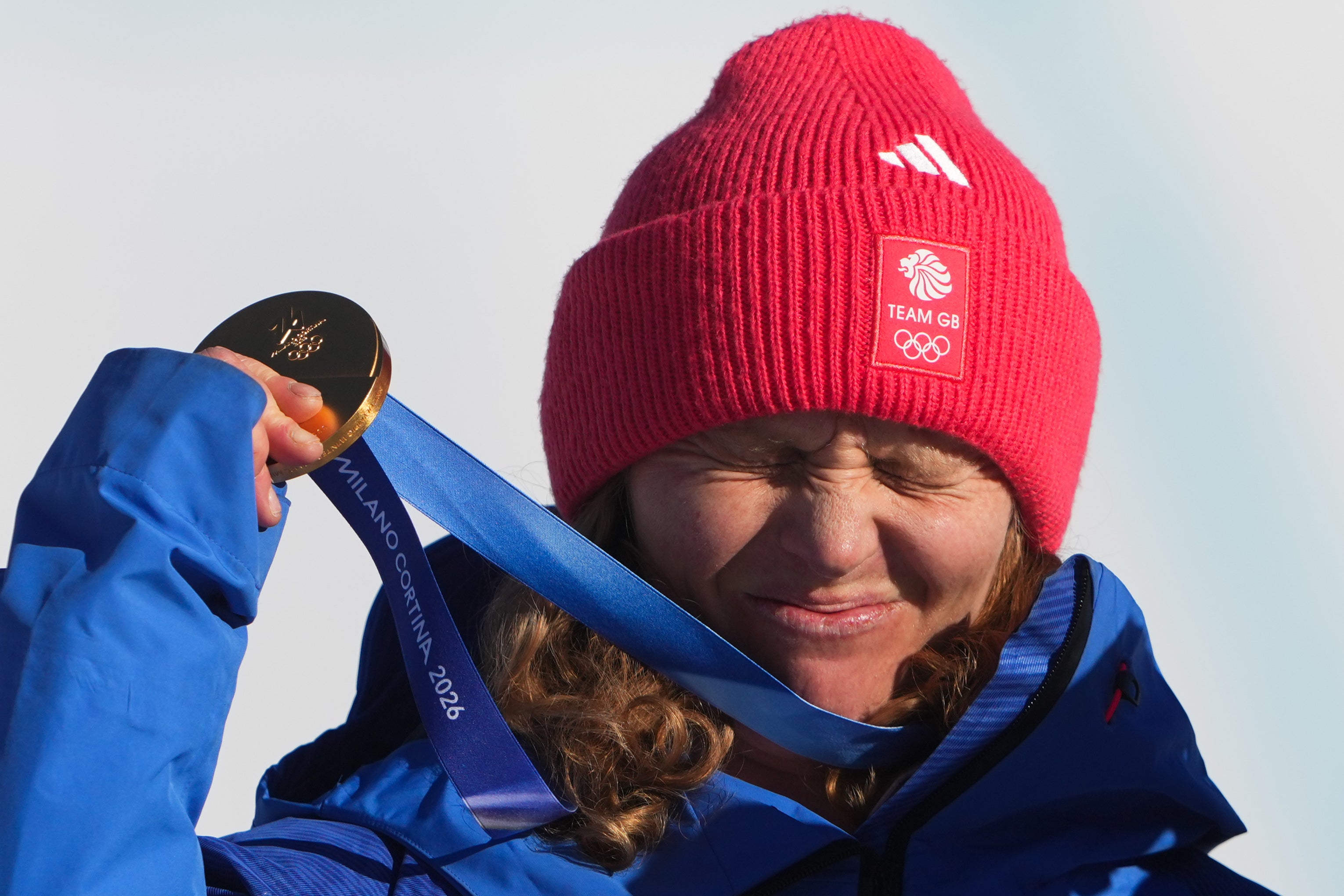
2025 was shaping up to be Charlotte Bankes’ year. By April, the snowboarder was leading the World Cup standings with five wins and had just picked up a silver medal in the World Championships, only pipped to gold by a dramatic photo finish. She was on track for a third Snowboard Cross World Cup title in four years, the ideal preparation for her fourth Olympic Games.
Then she broke her collarbone, and suddenly her Olympic year was flipped upside down.
Her recovery initially looked promising, and she was back on the snow in June, before a scan revealed the bone hadn’t completely healed. She underwent a second surgery in August, further jeopardising her hopes of making it back in time for the Games.
Eight months after the crash and slightly ahead of schedule, she returned to competition in Cervinia, Italy in early December. The 30-year-old crashed in the individual event – “just a little tumble”, fortunately – and exited in the quarter-finals. But she demonstrated not just her resilience but also why she remains one of the sport’s top competitors as she bounced back to win gold in the mixed team event, alongside 24-year-old Huw Nightingale.
“It was a good way to finish the week, that’s for sure,” she said modestly, on a call with The Independent. “I didn’t have that much expectation. I’ve done, what, 10 days on track since I’ve been back and only five where we’d really been able to push on, so we were just taking it day by day.


“I feel like I’m missing a few kilometres on the board, but luckily when I got back on snow, I was physically strong enough that everything responded quite well. I was a bit in the unknown.”
A fine run by Nightingale put the team in third spot going into the women’s leg, and fine performances in the heats against some strong teams meant the pair were confident despite Bankes’ comparative rustiness. “I hadn’t done four by four heats much at all because we hadn’t had the time, so it was just like, how do I react in that pack, can you make the right decision.
“In that final, it just seemed to all go quite smoothly. Huw put me in the right position and then it was just like, I can’t mess it up now!”
The final result was that Bankes – a very understated character – was “really quite pleasantly surprised” with how she rode. “For sure, I’d have preferred to do better [in the individual race], but also I learned a lot from that, it was probably a step that we needed to take.
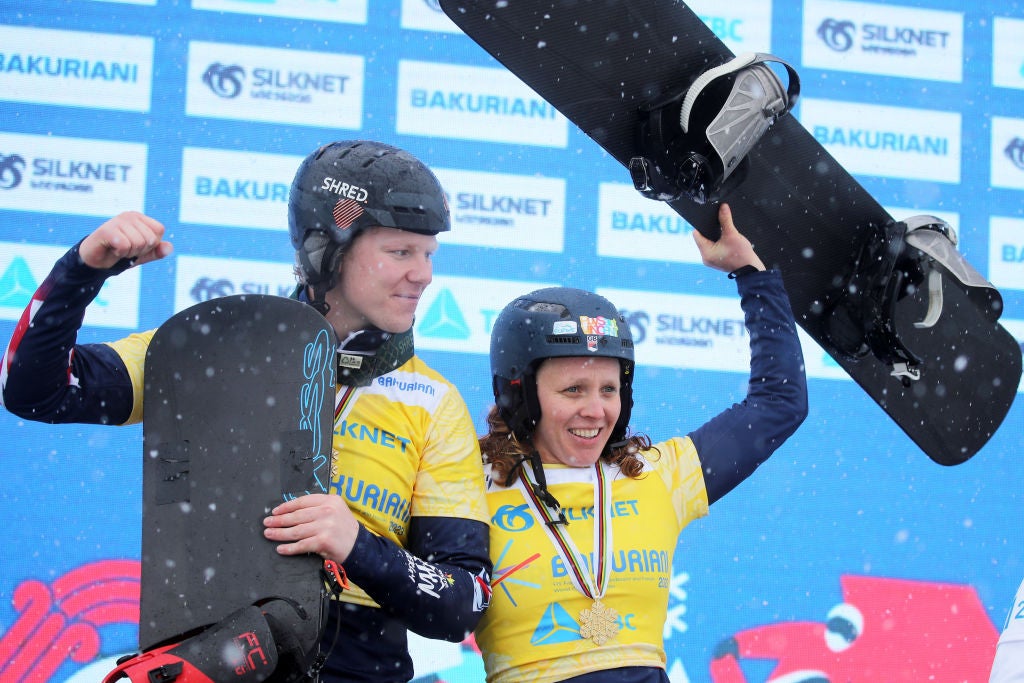
“I do have that speed, but I need to completely stay focused on myself and my riding and really attack each feature, you can’t be on the defensive at all. We saw that in training when I’m doing that, they’re fast runs and I make the right calls.”
An injury is far from ideal at the best of times, but with this one coming right before an Olympic year, it was a further blow. As a youngster growing up in Puy-Saint-Vincent in the Alps, she got the snowsport bug early, following in the footsteps of older brothers William and Thomas, and Turin 2006 was Bankes said: “It kind of put a little bit more time pressure on it. I probably wouldn’t have come back as quickly the first time [without the Olympics looming] – we didn’t think it was negative to do that – so the second time we were quite patient.”
Mentally, it was tough to deal with. She said: “At the start, it was just frustration to not be able to defend that position of leading the World Cup and to finish my season like that. But I was kind of like, at least it’s only a collarbone and I’ll be back soon.
“It was more [difficult] when it didn’t heal and I had to have a second surgery. I was supposed to be going down to South America for training, and it was kind of like, we’re going to have to completely change how I approach this season. It’s not ideal, but I think that you learn a lot of things as well.
“In an Olympic season you want to do what you know works. But that doesn’t mean that you’ll perform on the day, so kind of having to change it around… It’s lucky I’ve been really quite well-supported. It’s not been easy every day, it’s been slow, but I’m happy that we’re back on snow now and everything around the shoulder is getting stronger.”
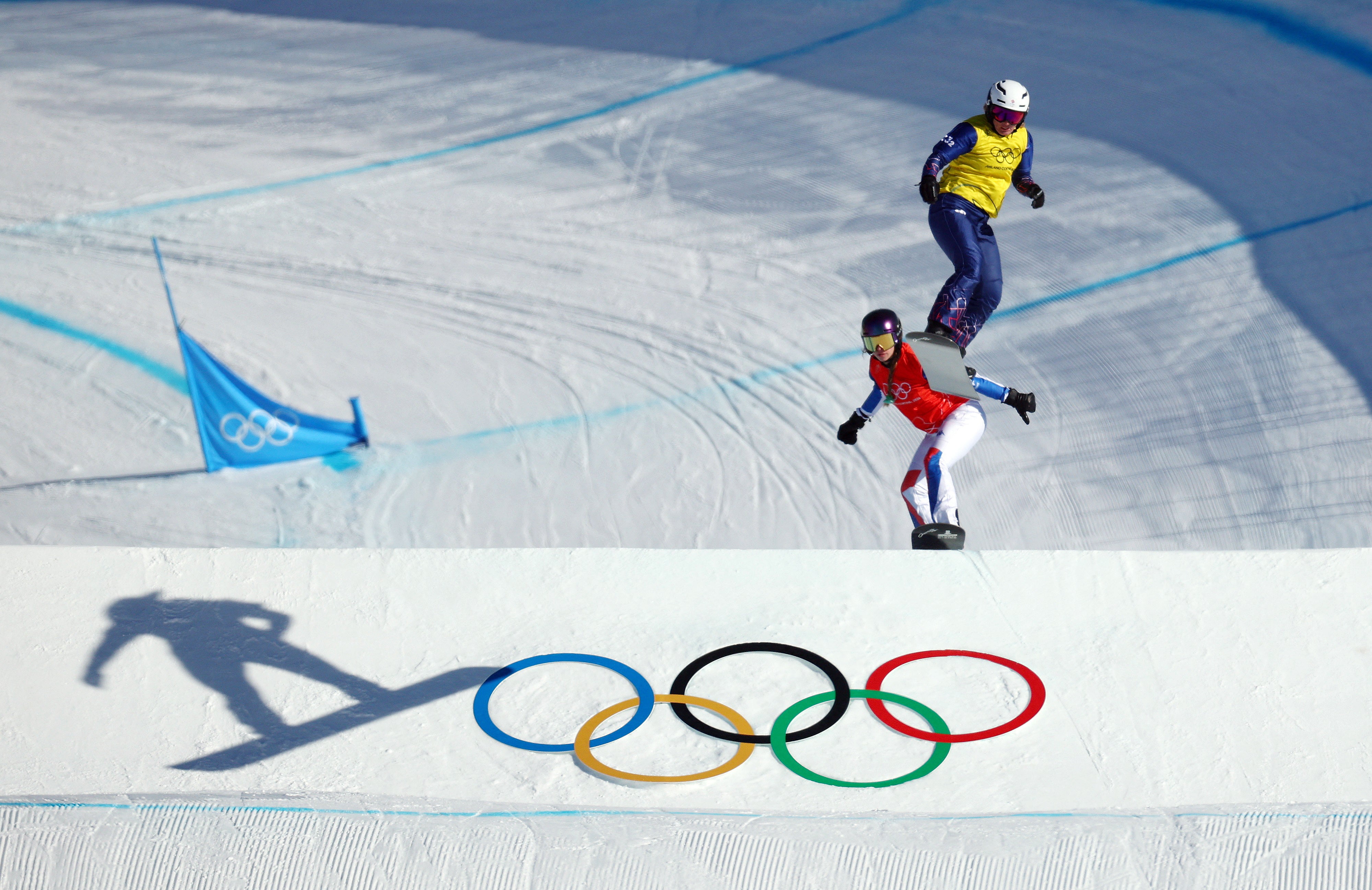
Bankes has previous experience with the struggles of performing on the day; she was the nailed-on favourite for gold in Beijing before exiting in the quarter-finals, and was among the contenders in the individual event in Livigno last week before another heartbreaking exit in the same round.
For GB as a whole, it was a comparatively disappointing Games, with just two medals. She said: “I think unfortunately it just didn’t click for anybody, and I think that was the big disappointment because we were strong going in and it didn’t work out.
“It didn’t really feel like the Games, to be honest: nobody really there to share it with, and that pressure of keeping to yourselves because you were scared of catching Covid and not being able to race. I think it probably did [affect how people performed], and it also used up a lot of energy.”
There were tears in Livigno after she lost out in the individual event. “It's nothing to do with injuries and all that,” she said of the result. “It's just a disappointing performance for me, and I'm just sorry for everybody watching, and all Team GB that supports us massively, and the team around me, because that's kind of what I feel like, I disappointed everybody like that. It could have been a great show. I mean, we're in Europe, our families are here, everything, but I didn’t manage to deliver.”
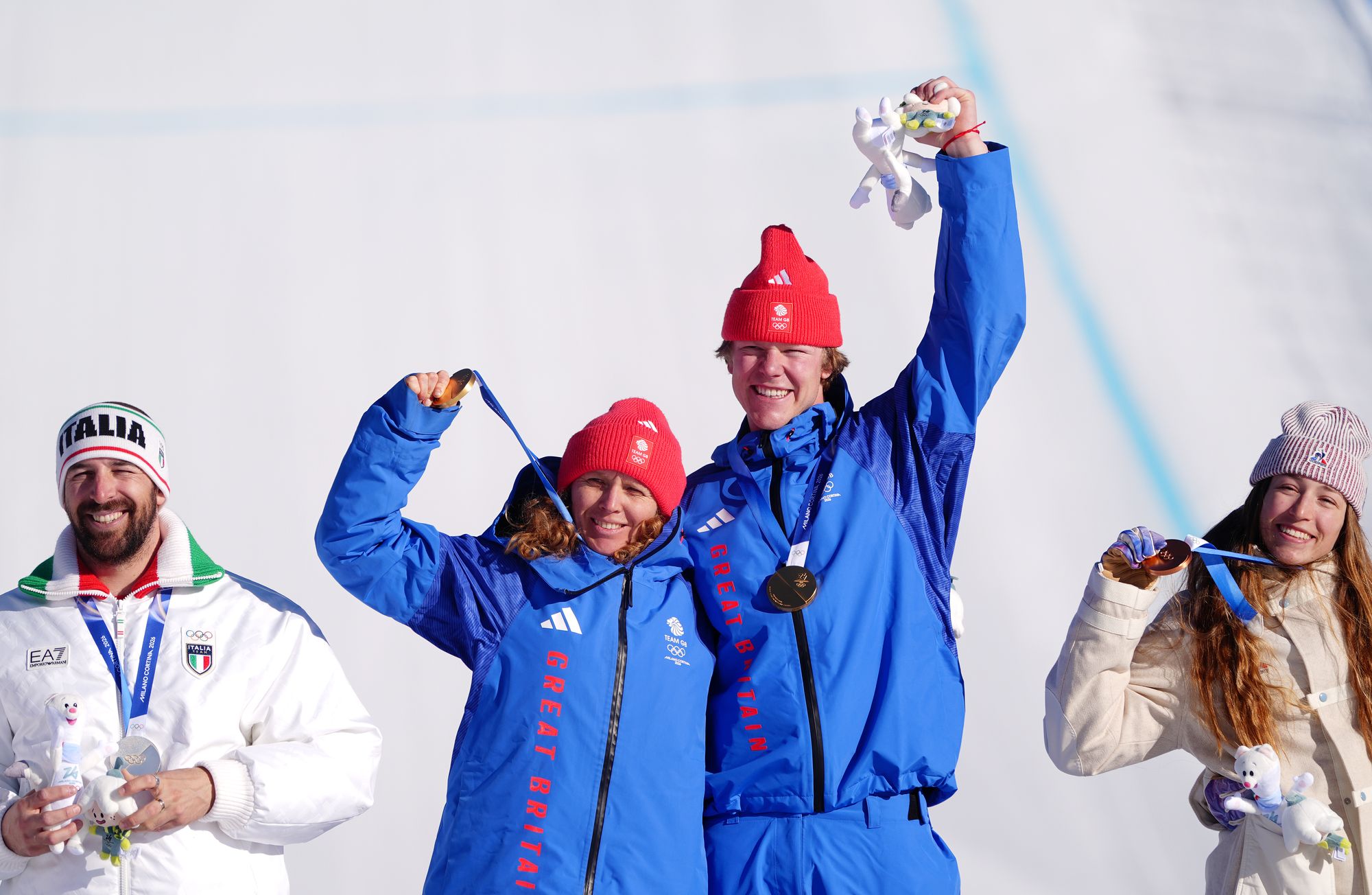
But two days later she put that crushing disappointment to one side. A series of clinical, aggressive runs at Livigno Snow Park sent her and Nightingale through to the final of the mixed team event. The pair won the world title in the discipline in 2023, Britain’s first, and withstood all the pressure to seal a glittering Olympic gold three years later.
The result was not just redemption for Bankes after three frustrating Olympics and individual heartbreak on Friday: it was an historic first-ever Olympic gold for Team GB on snow, and cemented the Milano-Cortina Olympics as Britain’s best ever Winter Games. The nation had never before won two golds at the same Games, with skeleton racer Matt Weston claiming the first with individual gold on Friday night, and the potential for more to come.
As a youngster growing up in Puy-Saint-Vincent in the Alps, Bankes got the snowsport bug early, following in the footsteps of older brothers William and Thomas. She cited Turin in 2006 – the last time the Games were held in Europe – as a key moment for her.
She was “too young to think that far ahead” in terms of becoming an Olympian, “but when I was growing up I went to watch [the Games] and it did inspire me. I think that being able to do that, inspire the general public and sporting fans into the Winter Olympics, and within that culture of winter sports – Italy is a massive skiing country – I think it will just bring in a lot more people and hopefully it’ll be a good show.”
Now she has an Olympic gold medal around her neck, and her and Nightingale’s success may well have inspired the next generation of Britain’s snowboarding stars.
Join our commenting forum
Join thought-provoking conversations, follow other Independent readers and see their replies
Comments
Bookmark popover
Removed from bookmarks