Tommy Freeman is England’s best wing – here’s why they are picking him at outside centre in this Six Nations
Freeman keeps place at outside centre to face Scotland despite return to fitness of Ollie Lawrence
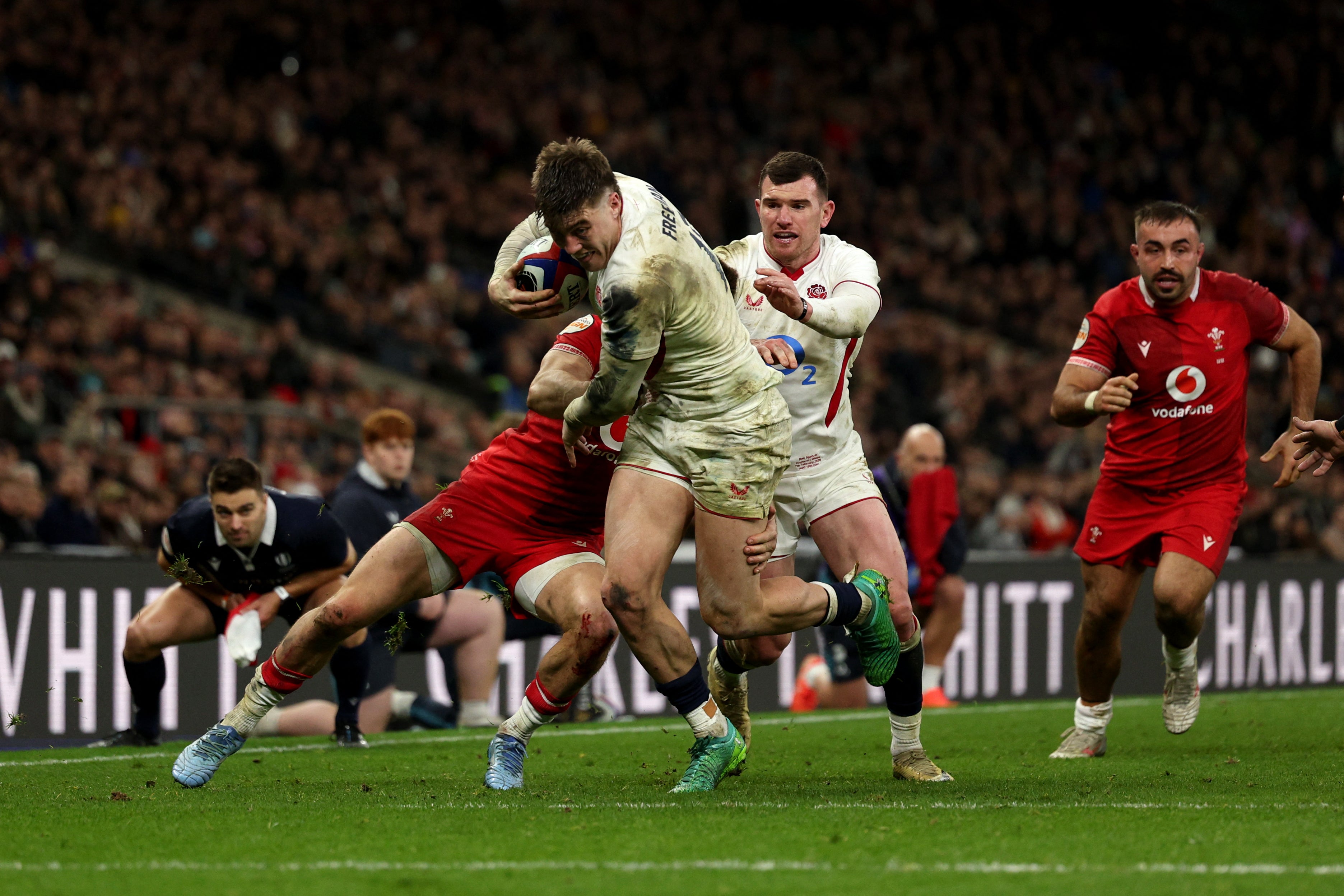
There was a curious quirk to the start of the Six Nations that relates to last year’s British and Irish Lions tour. On that trip to Australia, Andy Farrell named nine different players to start in his back three, but for the opening round of this year’s championship, not a single one of those individuals wore jerseys 11, 14 or 15 for their nation.
A couple were injured: Ireland’s Hugo Keenan and Mack Hansen. Two were benched: Darcy Graham of Scotland and England’s Marcus Smith. Duhan van der Merwe, Elliot Daly, James Lowe and Blair Kinghorn were all deemed surplus to requirements. Which leaves only Tommy Freeman as an outlier – an England starter against Wales, but at outside centre, as he extended his streak of scoring in seven consecutive Six Nations games.
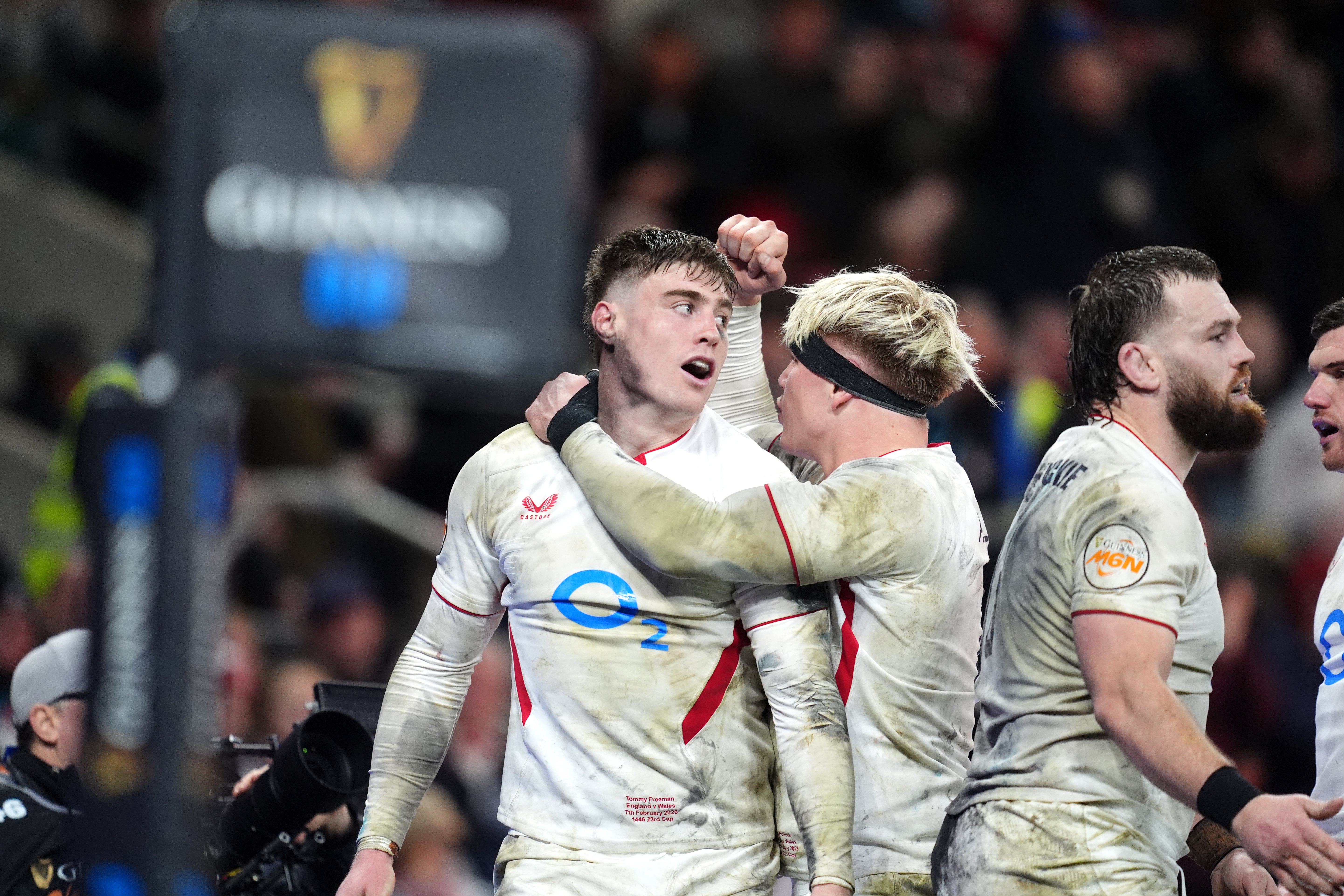
Even with Immanuel Feyi-Waboso ruled out, probably for the remainder of the tournament, and Ollie Lawrence back fit, Borthwick has resisted the urge to return Freeman to the wing and trusted him again in centre partnership with his Northampton clubmate Fraser Dingwall for the trip to Scotland. It has been a long-term project of the England head coach as he sought to rebuild his midfield options, with Freeman making his desire to play outside centre more often clear after coming back from the Lions tour in the summer. It has helped that England’s wing depth has improved, too – Tom Roebuck has emerged as a real force on the right, while Henry Arundell’s return from France has provided X-factor.
Borthwick had hoped to utilise the 24-year-old at 13 more in the autumn, starting him against Australia before injuries – first to Roebuck, then to Freeman himself – intervened. Against Wales, there were signs of real promise. One misdirected pass over the head of Roebuck on the right edge showed that there is work to be done on Freeman’s distribution, although his wing may reflect that he was too shallow and tight, with plenty of space out towards the touchline. Where Freeman excelled, though, was providing punch off the platform that England’s pack provided.

From their first set piece in the Welsh 22 early on, the intent was clear. With the maul sucking in the Welsh forwards, England run a classical shape: inside centre Dingwall steps in at first receiver, bringing his centre partner with him as a front-door carry option, while George Ford loops out of the back and Arundell trails the fly half from the blindside wing.
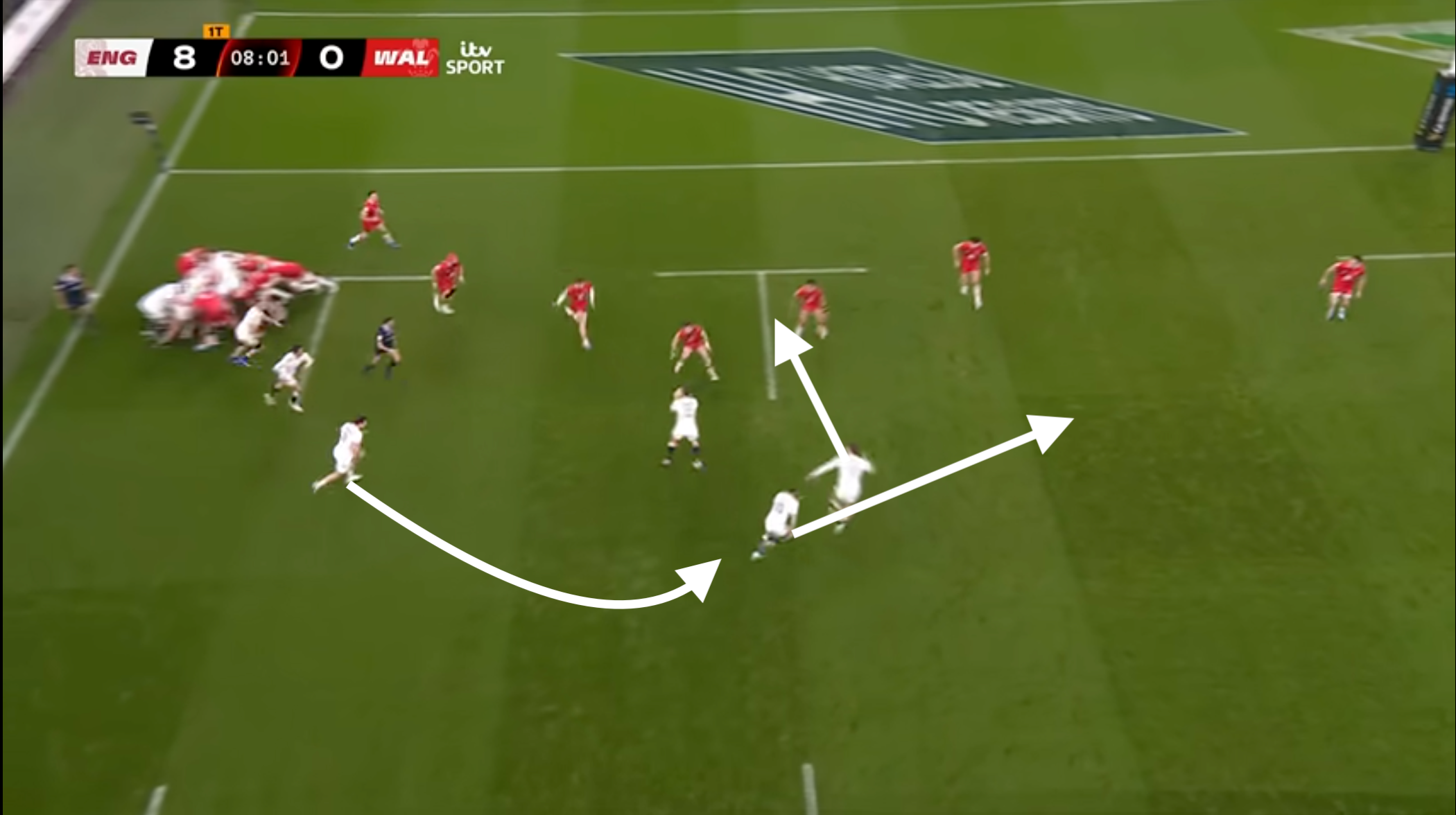
Dingwall takes the simple option, which proves effective – Freeman wins his initial collision with Wales’s Ben Thomas and keeps his feet churning, getting a helping hand from his Northampton chum to drive him to within a metre of the line. A couple of phases later, Wales infringe, drawing a penalty that Ellis Genge quick taps and leads to Arundell’s first try.
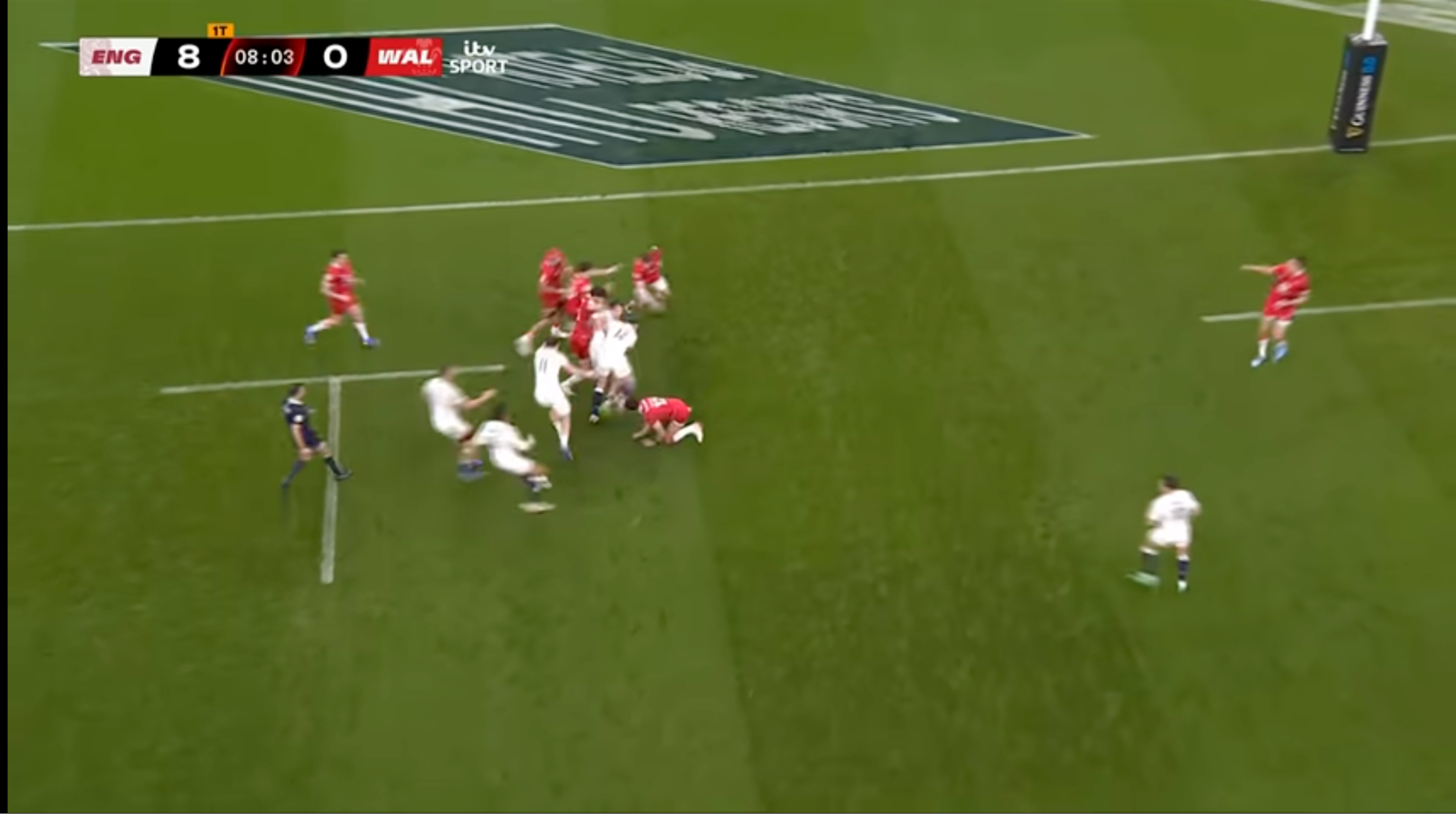
Later, with Wales slow off the line, Freeman runs right over the top of Dan Edwards and carries two more tacklers with him to again win the gainline decisively. In an amusing joint interview with the BBC before the tournament, Freeman and Dingwall had joked about how the larger of the pair often forgets his sheer size – here, he used his bulk with real effect to get 10 yards.
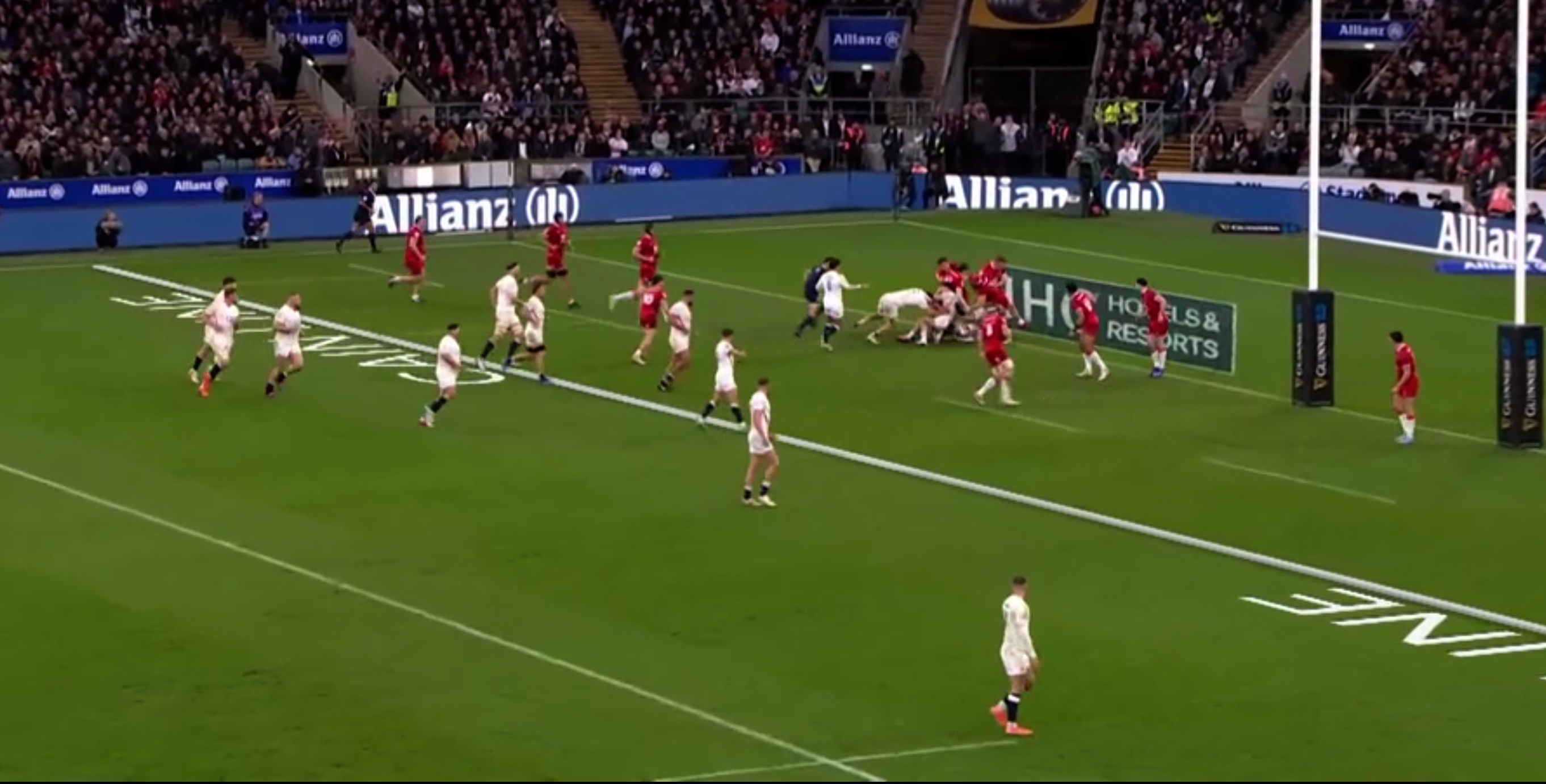
The impact of those carries could be seen in the second half. With the installation of Ben Earl adding greater intricacy and condensing the Welsh defence, Dingwall and Freeman again approach the line like a motorcycle and sidecar. The inside centre this time goes out the back, but Freeman’s hard angle forces Thomas to turn in, creating two adjacent avenues through which Ford and Roebuck can travel.
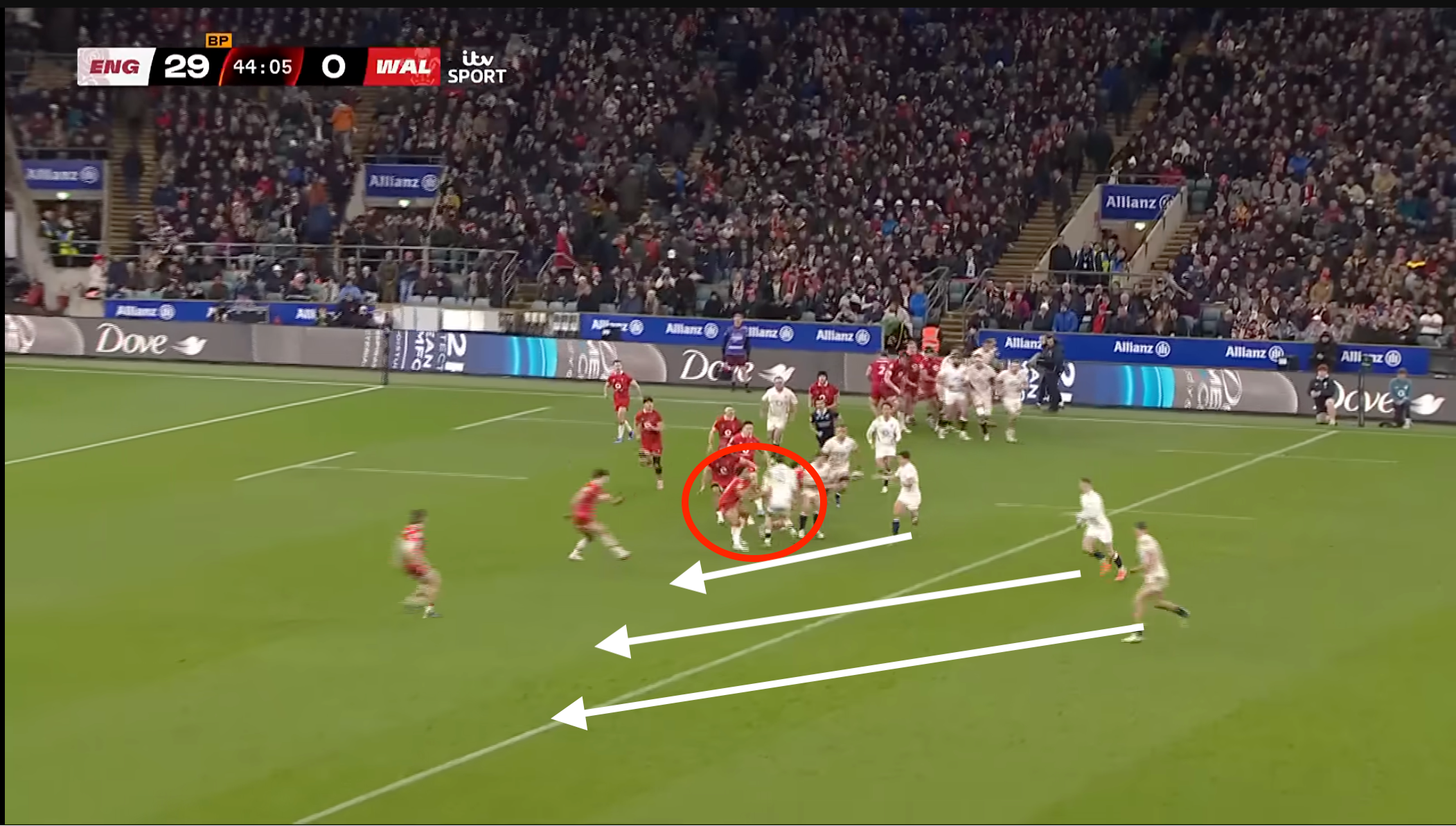
While the right wing takes the wrong option in this phase, ignoring Freddie Steward on his outside, he is back on his feet later to finish the try off.
Defensively, Freeman is regarded by the England staff as an excellent decision-maker, with his lateral mobility and high work-rate making him a preferred fit in the 13 channel. An overmatched Wales did not particularly test that aspect of his game, but Scotland certainly will, with Huw Jones such a threat on the outside arc and Kinghorn likely to be recalled as a long-striding full-back.
There is a recognition that Freeman still provides value on the wing; his superb finish for the seventh and final score showcased his prowess. The introduction of Henry Pollock for Roebuck in the 64th minute saw Earl move into midfield, and England went on to produce some creative attacking rugby against a flagging Welsh defence. It feels a risk to have again eschewed specialist cover on the bench but there is increasing trust in Earl, especially late in games.
“Ben has got such a well-rounded game that with enough organisational information given to him, he can do great things as a centre,” Dingwall explains. “It’s something we all prep for. It is slightly unfamiliar for him, so you have to double down on how much you are checking in and connecting with him as play is going on.”
Fin Smith also offers a possible 12 option among the replacements, having swapped in for Marcus Smith in the No 23 shirt, and would offer further cohesion with three of his Northampton colleagues in the starting backline. Captain Maro Itoje returns to the starting side at the expense of Alex Coles, while Jamie George, stand-in skipper against Wales, drops to the bench, with Luke Cowan-Dickie preferred as the starting hooker.
England XV to face Scotland in Edinburgh (Saturday 14 February, 4.40pm GMT): 1 Ellis Genge, 2 Luke Cowan-Dickie, 3 Joe Heyes; 4 Maro Itoje (capt.), 5 Ollie Chessum; 6 Guy Pepper, 7 Sam Underhill, 8 Ben Earl; 9 Alex Mitchell, 10 George Ford; 11 Henry Arundell, 12 Fraser Dingwall, 13 Tommy Freeman, 14 Tom Roebuck; 15 Freddie Steward.
Replacements: 16 Jamie George, 17 Bevan Rodd, 18 Trevor Davison, 19 Alex Coles, 20 Tom Curry, 21 Henry Pollock; 22 Ben Spencer, 23 Fin Smith.
Match images courtesy of ITV/BBC/Six Nations
Join our commenting forum
Join thought-provoking conversations, follow other Independent readers and see their replies
Comments
Bookmark popover
Removed from bookmarks