Who is Reza Pahlavi? Iran’s exiled prince linked to mass anti-Khamenei protests
Reza Pahlavi has pledged to be a ‘steward of a national transition to democracy’ for Iran
The self-declared shah of Iran Reza Pahlavi has claimed he is a “steward of a national transition to democracy” amid the escalating protests in Iran against the country’s supreme leader Ali Khamenei.
Pahlavi’s name is being chanted through the streets of major Iranian cities including Tehran and Mashhad, with phrases “Pahlavi will return” and “Seyyed Ali will be toppled”.
Dozens of Iranians have been killed in violent clashes with police during protests demanding regime change and a reported nationwide internet blackout. Pahlavi is the individual who has said he is bringing democracy to a country that has been under Islamic Republic since 1979.
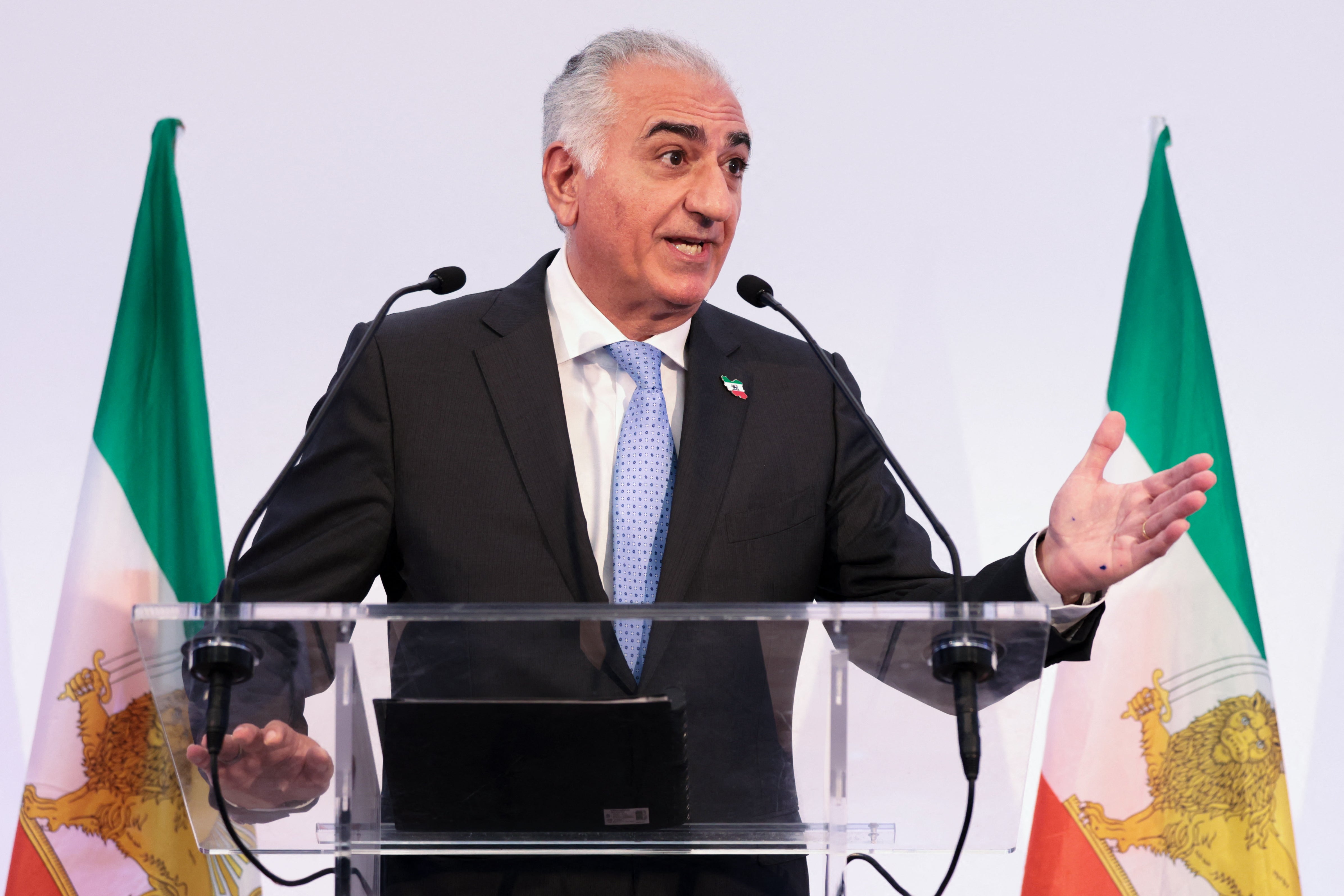
Born in October 1960, Pahlavi is the eldest son of Mohammad Reza Pahlavi, the last shah of Iran before he was overthrown and the monarchy was abolished during the Iranian Revolution led by Ruhollah Khomeini.
The family lived in exile since, as Pahlavi moved to the US the year before the revolution for pilot training at Reese Air Force Base in Lubbock, Texas. Later, Pahlavi completed a degree in political science at the University of Southern California.
Pahlavi volunteered to serve Iran’s military as a fighter pilot during the Iran-Iraq war but was declined by the regime.
“Despite being forced to live in exile, Reza Pahlavi’s commitment and patriotic duty to Iran endures,” the advocate’s website states.
“For over four decades, Reza Pahlavi has been a leader and advocate of the principles of freedom, democracy and human rights for his countrymen. He maintains constant contact with his compatriots and opposition groups, both inside and outside the country.
“Pahlavi travels the world meeting with heads of state, legislators, policy-makers, interest groups and student groups speaking about the plight of Iranians under the Islamic regime in Iran.”
Earlier this week, Pahlavi penned an opinion piece in The Washington Post saying the Islamic Republic of Iran was “weaker and more divided than at any point since 1979” and its response to dissent with mass arrests, executions and repression “shows the regime is afraid”.
“In recent days, protests have escalated in nearly all provinces and over 100 cities across Iran. Protesters are chanting my name alongside calls for freedom and national unity,” he said.

“I do not interpret this as an invitation to claim power. I bear it as a profound responsibility. It reflects a recognition – inside Iran – that our nation needs a unifying figure to help guide a transition away from tyranny and toward a democratic future chosen by the people themselves.
“I have therefore stepped toward to lead and serve in that capacity: not as a rule-in-waiting, but as a steward of a national transition to democracy.”
Pahlavi’s opinion piece and a post to X also thanked US president Donald Trump for promising to hold Iran to account, describing him as the “leader of the free world”.
Despite his compliments towards Trump, the president has ruled out meeting him as he suggested the US was not ready to back a successor if the Iranian government were to collapse.

“I think that we should let everybody go out there and see who emerges,” Trump told The Hugh Hewitt Show podcast.
“I’m not sure necessarily that it would be an appropriate thing to do.”
The self-described alternative leader for a democratic Iran is also close with Israel, which has sparked criticism.
Notably, in 2023 Pahlavi controversially met with Israeli prime minister Benjamin Netanyahu. His visit came with mixed reactions as some touted him as a bridge builder for appearing with a kippah and denouncing antisemitism.
Others argued it was hypocritical to meet with Israeli officials as the army clashed with Palestinians living in the occupied West Bank.
Join our commenting forum
Join thought-provoking conversations, follow other Independent readers and see their replies
Comments
Bookmark popover
Removed from bookmarks