Iran’s supreme leader threatens to sink US aircraft carriers sent to the Middle East – as nuclear talks continue
Ayatollah issues warning as nuclear talks under way – but president says Tehran will never abandon its enriched uranium programme
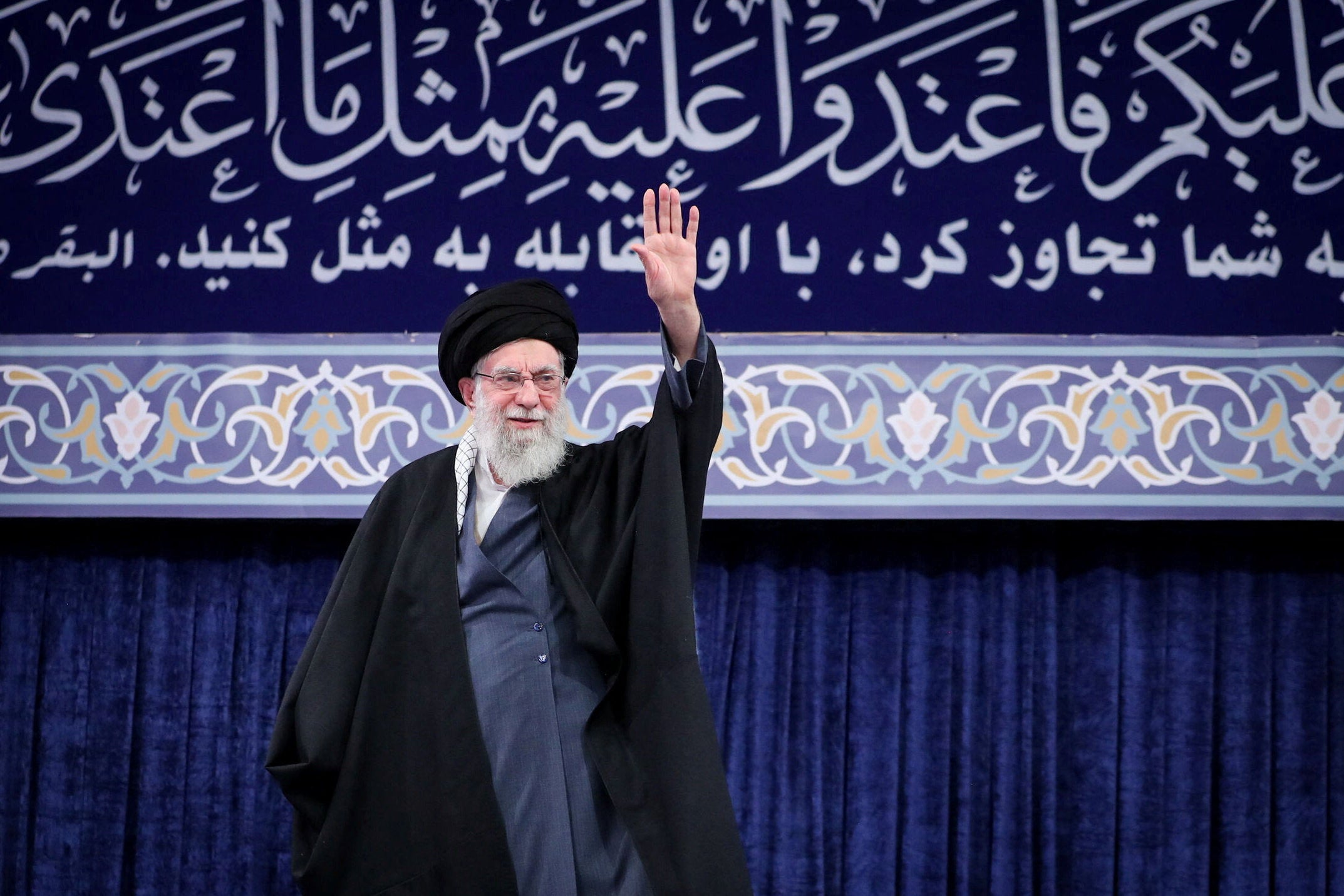
Iran’s supreme leader has threatened to sink any American aircraft carriers sent to the Middle East, as talks on the country’s nuclear build-up were held in Geneva.
Ayatollah Ali Khamenei ramped up tensions between the two countries as he told followers: “The US president keeps saying ‘our military is the strongest military in the world’; the world’s most powerful military can sometimes receive such a slap that it can no longer stay on its feet.
“They constantly say, ‘we have sent an aircraft carrier towards Iran’.
“OK, of course an aircraft carrier is a dangerous device, but more dangerous than the carrier is the weapon that can send it to the bottom of the sea.”
The world’s largest aircraft carrier, the USS Gerald R Ford, has entered the Mediterranean en route to the Middle East, where it will join the USS Abraham Lincoln and guided-missile destroyers, which have been there for more than two weeks.
The ayatollah issued his put-down as Iran’s foreign minister, Abbas Araghchi, was negotiating with US envoys Steve Witkoff and Jared Kushner over his country’s nuclear programme.
The supreme leader also warned the US that “forcing the result of talks in advance is a wrong and foolish job”.

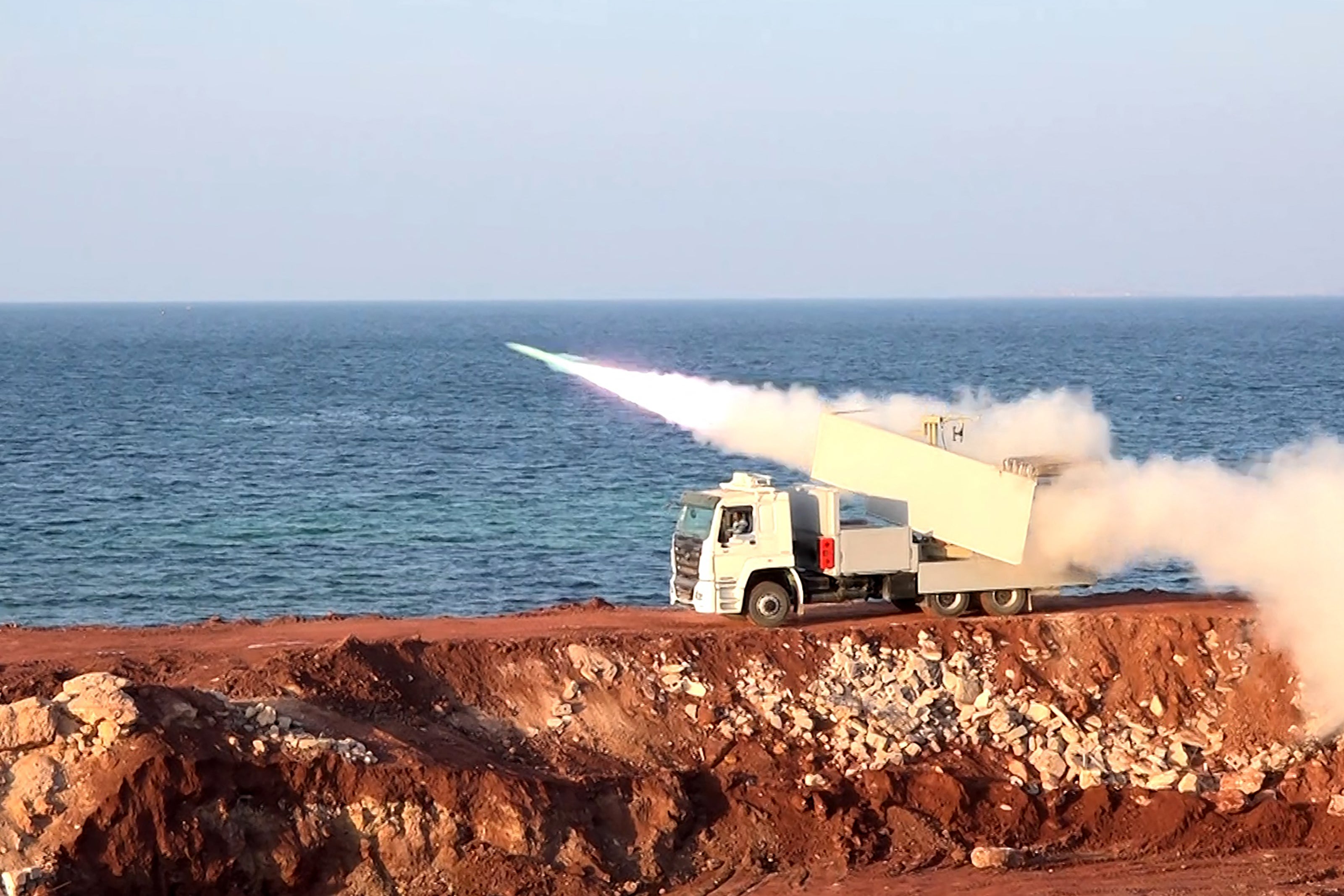
At the same time, Iran carried out live-fire drills in the Strait of Hormuz, in a show of strength.
The naval exercises, which included test missiles, warships and helicopters, were displaying the “operational readiness” of the Iranian Revolutionary Guard Corps’ (IRGC) and plans for reciprocal action in case of “potential security and military threats”.
It was the first time since the 1980s that Iran had announced the closure of the key international waterway, through which a fifth of the world's oil passes.
Mr Araghchi later expressed optimism about the talks, saying a new window had opened for reaching an agreement. But he said Iran remained fully prepared to defend itself against any threat or act of aggression, and that the consequences of any attack on Iran would not be confined to its borders.
However, the country’s president, Masoud Pezeshkian, said Tehran would never abandon its nuclear programme.
US forces shot down an Iranian drone that approached the Lincoln on the same day last week that Iran tried to stop a US-flagged ship in the Strait of Hormuz.
Gulf Arab nations fear any attack could spiral into another regional conflict.
The Trump administration is seeking a deal to limit Iran's nuclear programme and ensure it does not develop nuclear weapons.
Iran says it is not pursuing weapons and has so far resisted demands that it halt uranium enrichment on its soil or hand over its stockpile of highly-enriched uranium. Israel's 12-day war against Iran last June halted talks between the US and Iran.
The US bombed Iranian nuclear sites during that war, probably destroying centrifuges that spun uranium to near weapons-grade purity.
Before the war, Iran had been enriching uranium up to 60 per cent purity, a short step away from weapons-grade levels.
Iran is marking 40 days, the traditional Muslim mourning period, since one of the deadliest days in the crackdown on protests that swept the country last month. Activists say at least 7,015 people have been killed.
Join our commenting forum
Join thought-provoking conversations, follow other Independent readers and see their replies
Comments
Bookmark popover
Removed from bookmarks