Satellite images show Iran rapidly rebuilding key military sites amid US tensions
Washington is threatening military action if nuclear programme talks fail
Satellite images show Iran has recently built a concrete shield over a new facility at a sensitive military site and covered it in soil, experts say. This work advances at a location reportedly bombed by Israel in 2024 amid tensions with the US.
The imagery also indicates Iran has buried tunnel entrances at a nuclear site bombed by the US during Israel's 12-day war last year, fortified tunnel entrances near another, and repaired missile bases struck in the conflict.
These activities offer a glimpse of Iranian operations at sites central to tensions with Israel and the US, as Washington seeks to negotiate a deal with Tehran on its nuclear programme while threatening military action if talks fail.
Here are some images showing the changes:
Parchin Military Complex
Iran's highly sensitive Parchin military complex, located 30 km (20 miles) southeast of Tehran, has been linked by Western intelligence to alleged nuclear bomb detonation tests conducted over two decades ago.
Tehran has consistently denied these claims, asserting it has no ambition to develop atomic weapons.
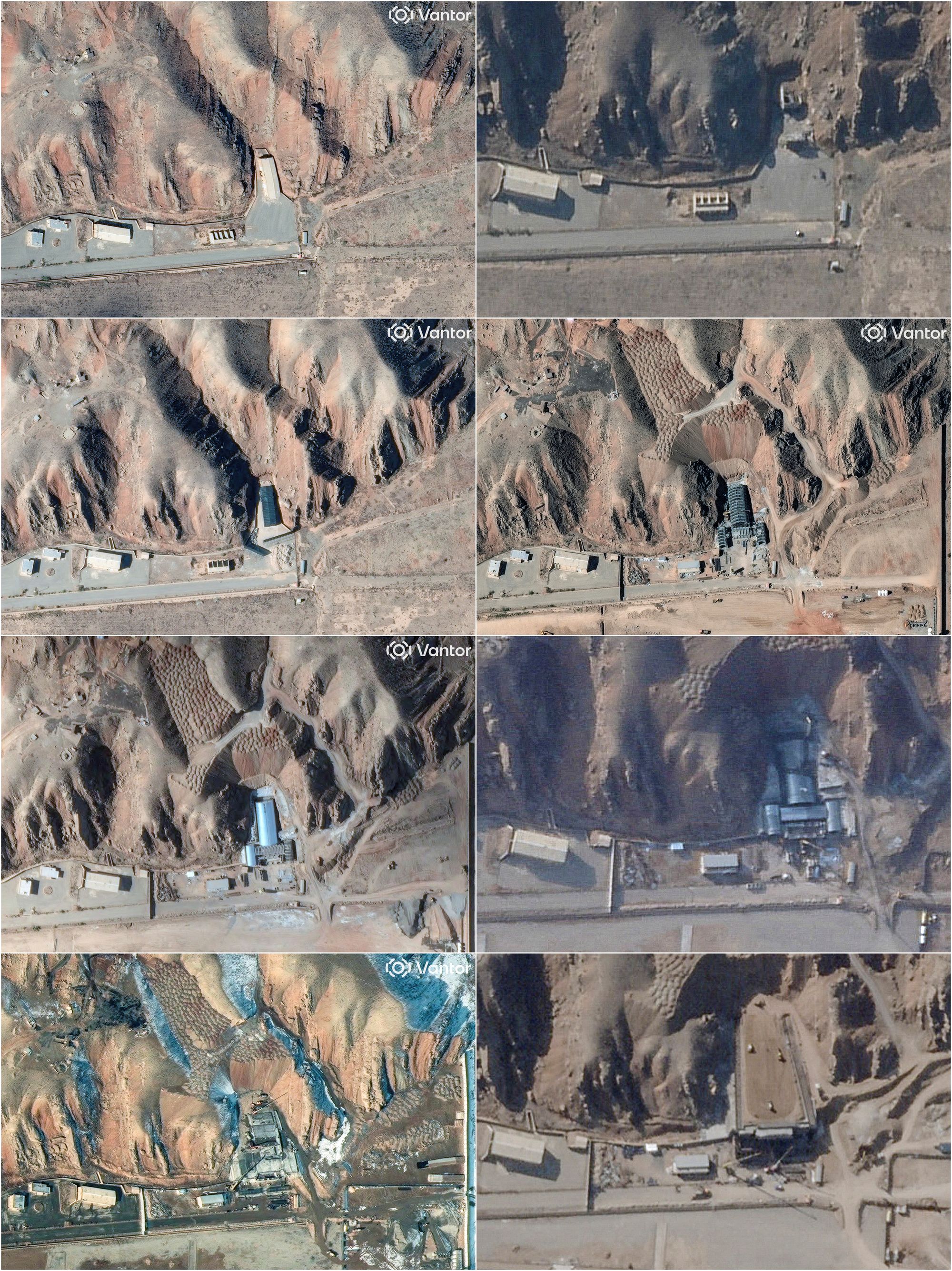
Israel reportedly struck Parchin in October 2024.
Satellite imagery taken before and after that attack shows extensive damage to a rectangular building at Parchin, and apparent reconstruction in images from 6 November, 2024.
Imagery from 12 October, 2025 shows development at the site, with the skeleton of a new structure visible and two smaller structures adjacent to it. Progress is apparent in imagery from 14 November, with what appears to be a metallic roof covering the large structure.
But imagery from 13 December shows the facility partly covered. By 16 February, it cannot be seen at all, hidden by what experts say is a concrete structure.
The Institute for Science and International Security (ISIS), in a 22 January analysis of satellite imagery, pointed to progress in the construction of a "concrete sarcophagus" around a newly built facility at the site, which it identified as Taleghan 2.
ISIS reported in November that imagery showed "ongoing construction and the presence of what appears to resemble a long, cylindrical chamber, maybe a high-explosives containment vessel, likely measuring approximately 36 meters long and 12 meters in diameter placed inside a building".
"High-explosive containment vessels are critical to the development of nuclear weapons," ISIS added, "but can also be used in many other conventional weapons development processes."
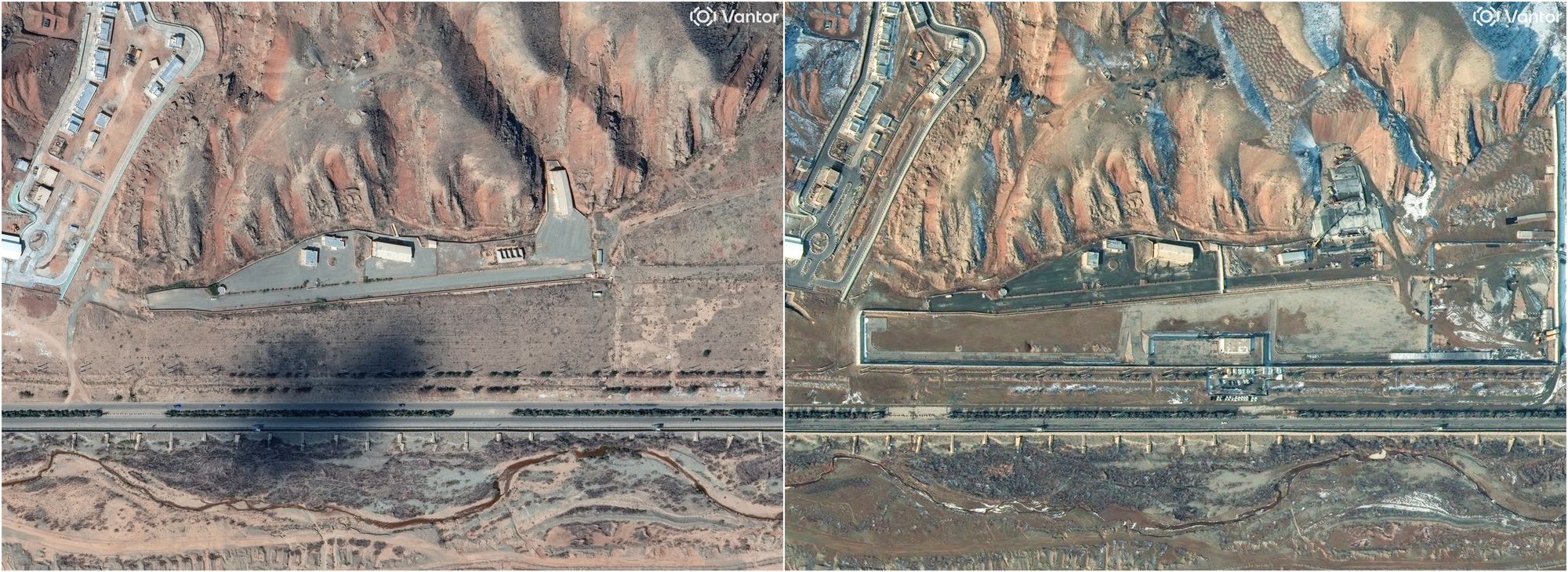
William Goodhind, a forensic imagery analyst with Contested Ground, said the roof had a similar hue to the surrounding area, adding: "It has most likely been covered with dirt to obscure the concrete colour."
ISIS founder David Albright wrote on X: "Stalling the negotiations has its benefits: Over the last two to three weeks, Iran has been busy burying the new Taleghan 2 facility ... More soil is available and the facility may soon become a fully unrecognizable bunker, providing significant protection from aerial strikes."
Tunnel entrances buried at Isfahan Nuclear Complex
The Isfahan complex is one of three Iranian uranium-enrichment plants bombed by the United States in June.
In addition to facilities that are part of the nuclear fuel cycle, Isfahan includes an underground area where diplomats say much of Iran's enriched uranium has been stored.
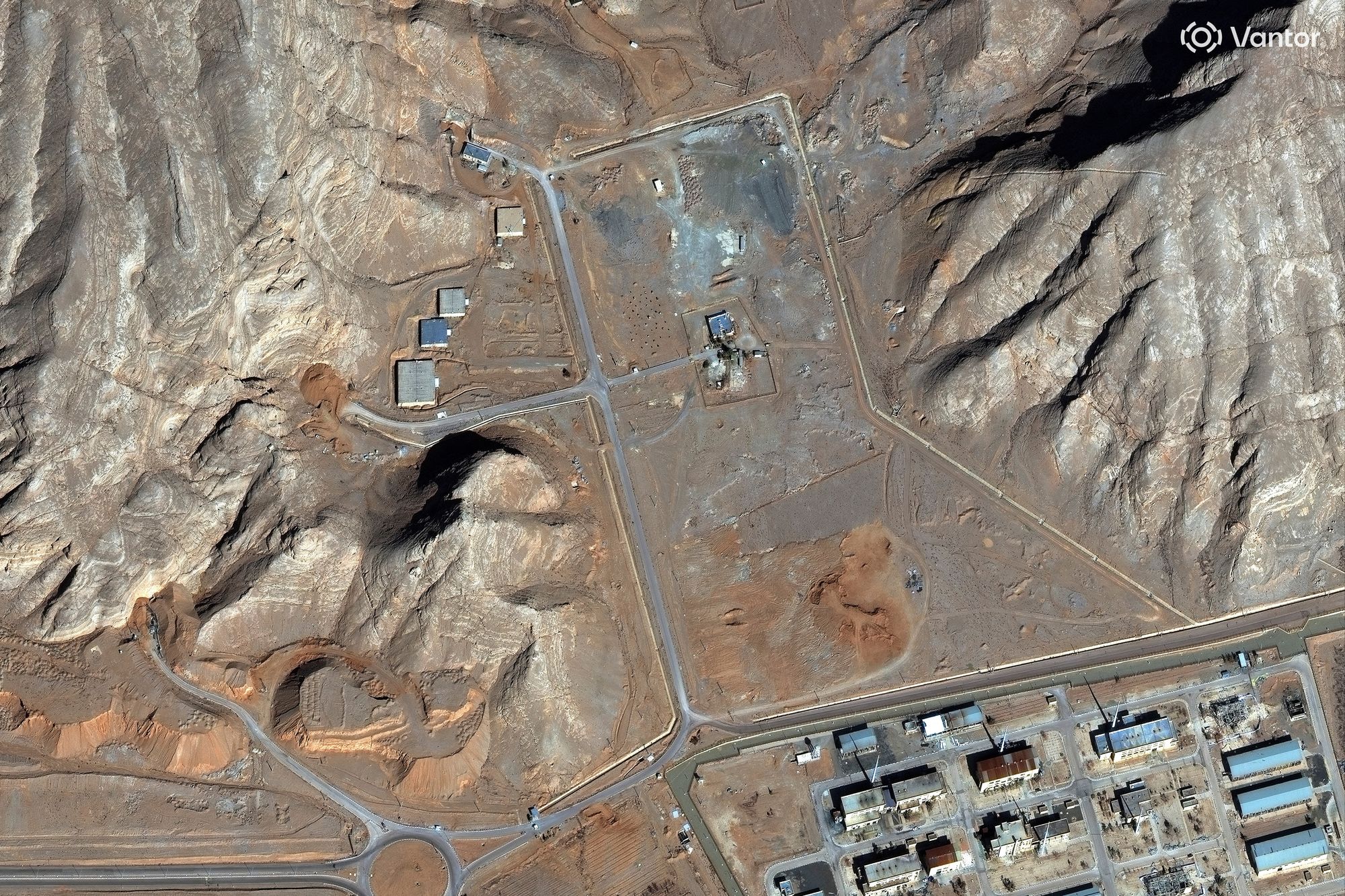
Satellite images taken in late January showed new efforts to bury two tunnel entrances at the complex, ISIS reported on 29 January.
In a 9 February update, ISIS said a third entrance had also been backfilled with soil, meaning all entrances to the tunnel complex were now "completely buried".
A 10 February image shows all three tunnels buried, Goodhind said.
ISIS reported on 9 February that "backfilling the tunnel entrances would help dampen any potential airstrike and also make ground access in a special forces raid to seize or destroy any highly enriched uranium that may be housed inside difficult".
Tunnel entrances fortified at complex near Natanz site
ISIS has reported that satellite images point to ongoing efforts since 10 February to "harden and defensively strengthen" two entrances to a tunnel complex under a mountain some 2 km (1.2 miles) from Natanz - the site that holds Iran's other two uranium enrichment plants.
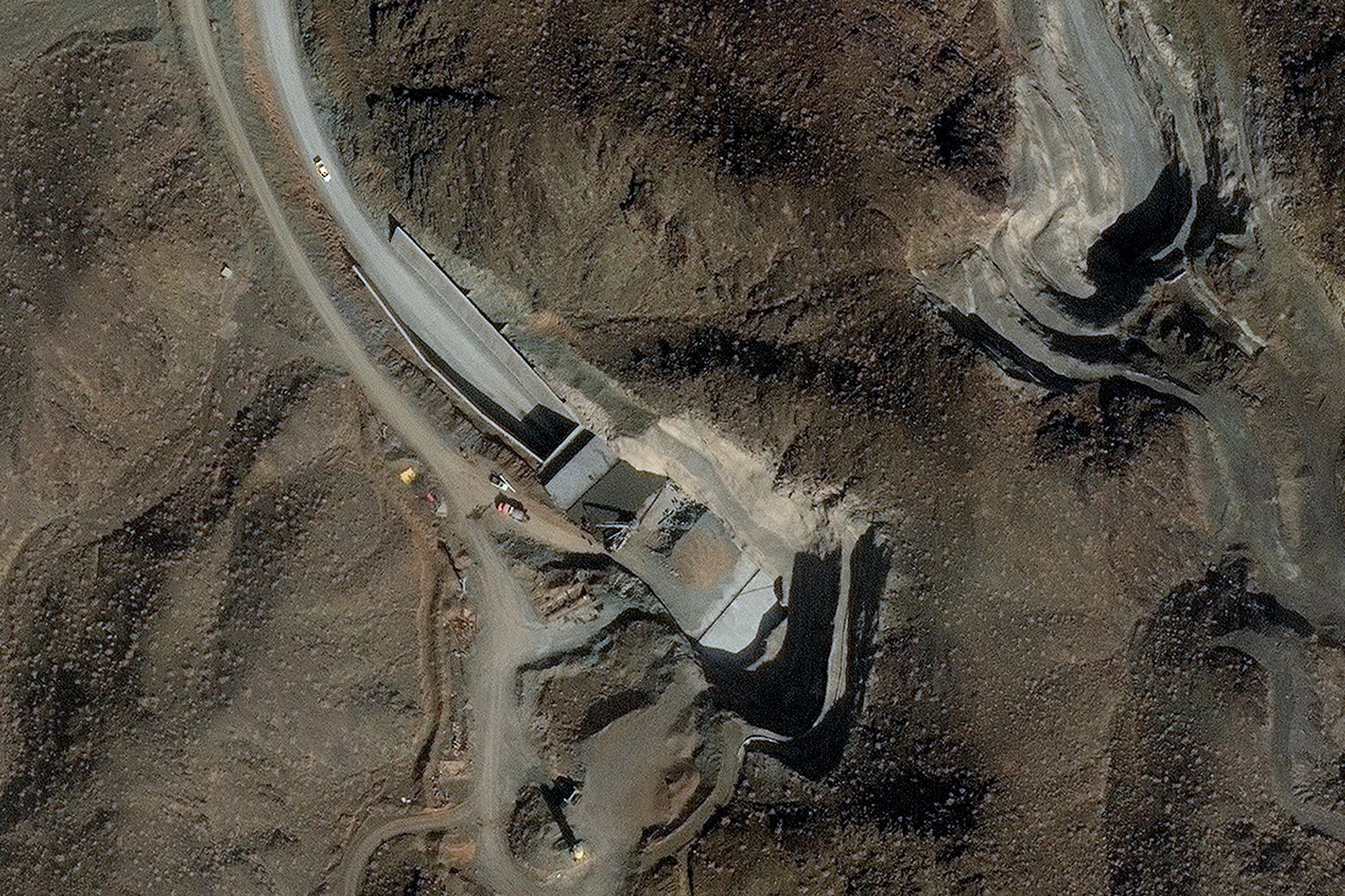
Imagery shows "ongoing activity throughout the complex related to this effort, involving the movement of numerous vehicles, including dump trucks, cement mixers, and other heavy equipment", ISIS wrote.
Iran's plans for the facility, called Pickaxe Mountain, are unclear, ISIS said.
Shiraz South Missile Base
About 10 km (6 miles) south of Shiraz in southern Iran, this is one of 25 primary bases capable of launching medium-range ballistic missiles, according to Alma Research and Education Center, an Israeli organisation.
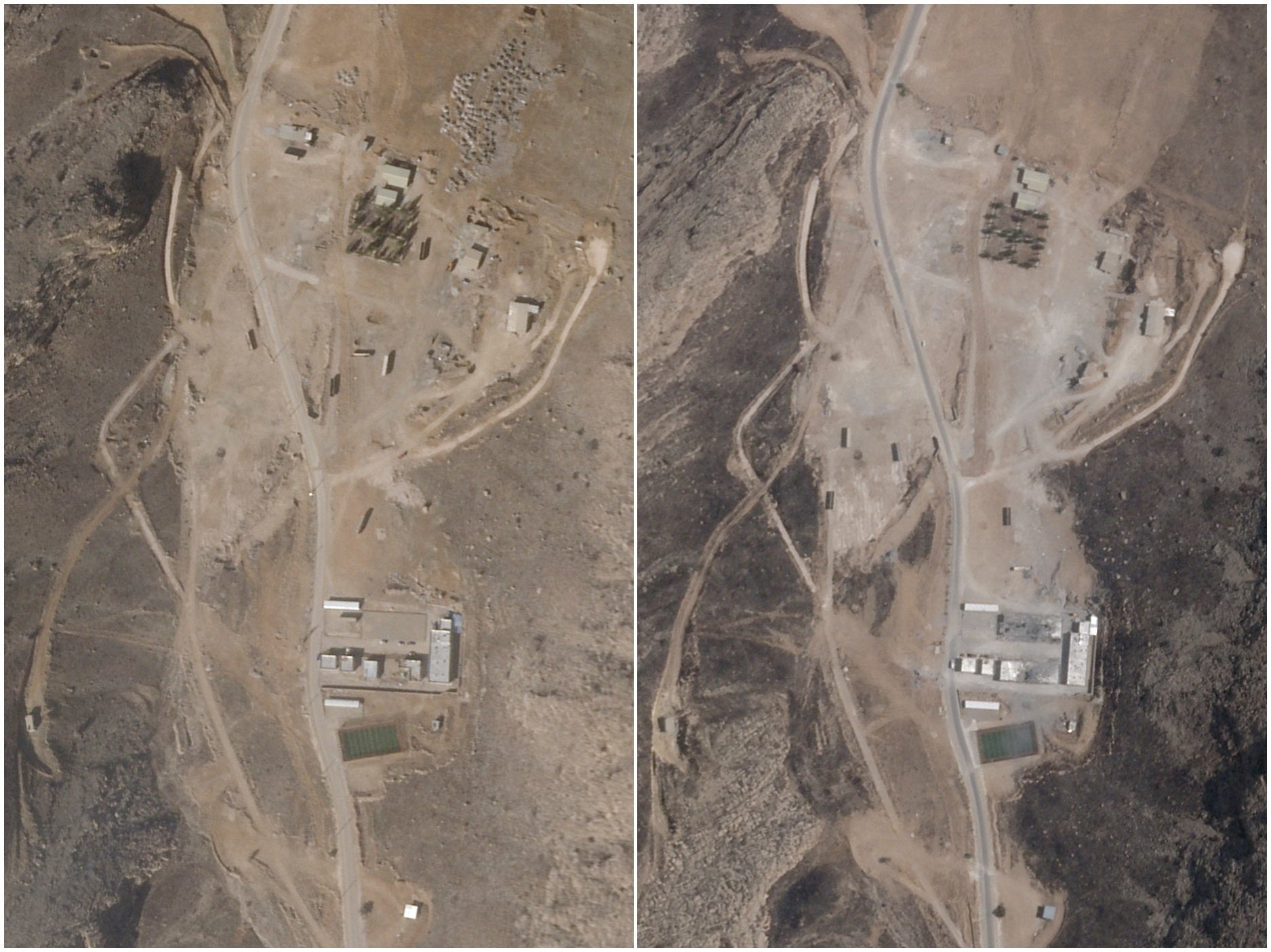
Alma assessed the site had suffered light, above-ground damage in last year's war.
A comparison of images taken on 3 July, 2025 and 30 January shows reconstruction and clearance efforts at the main logistics and likely command compound at the base, Goodhind said.
"The key takeaway is that the compound has yet to return to its full operational capacity from prior to the airstrikes."
Qom Missile Base
Some 40 km north of the city of Qom, this base suffered moderate above-ground damage, according to Alma.
A comparison of images taken between 16 July, 2025, and 1 February shows a new roof over a damaged building. The roof repairs appear to have begun on 17 November and were most likely complete 10 days later, Goodhind said.
Join our commenting forum
Join thought-provoking conversations, follow other Independent readers and see their replies
Comments
Bookmark popover
Removed from bookmarks