What caused the Spain train crash? Track fault highlighted in investigation after 41 killed
Hundreds were on board when the train derailed and slammed into another on an adjacent track. Stuti Mishra and Maira Butt report as the investigation into what happened continues
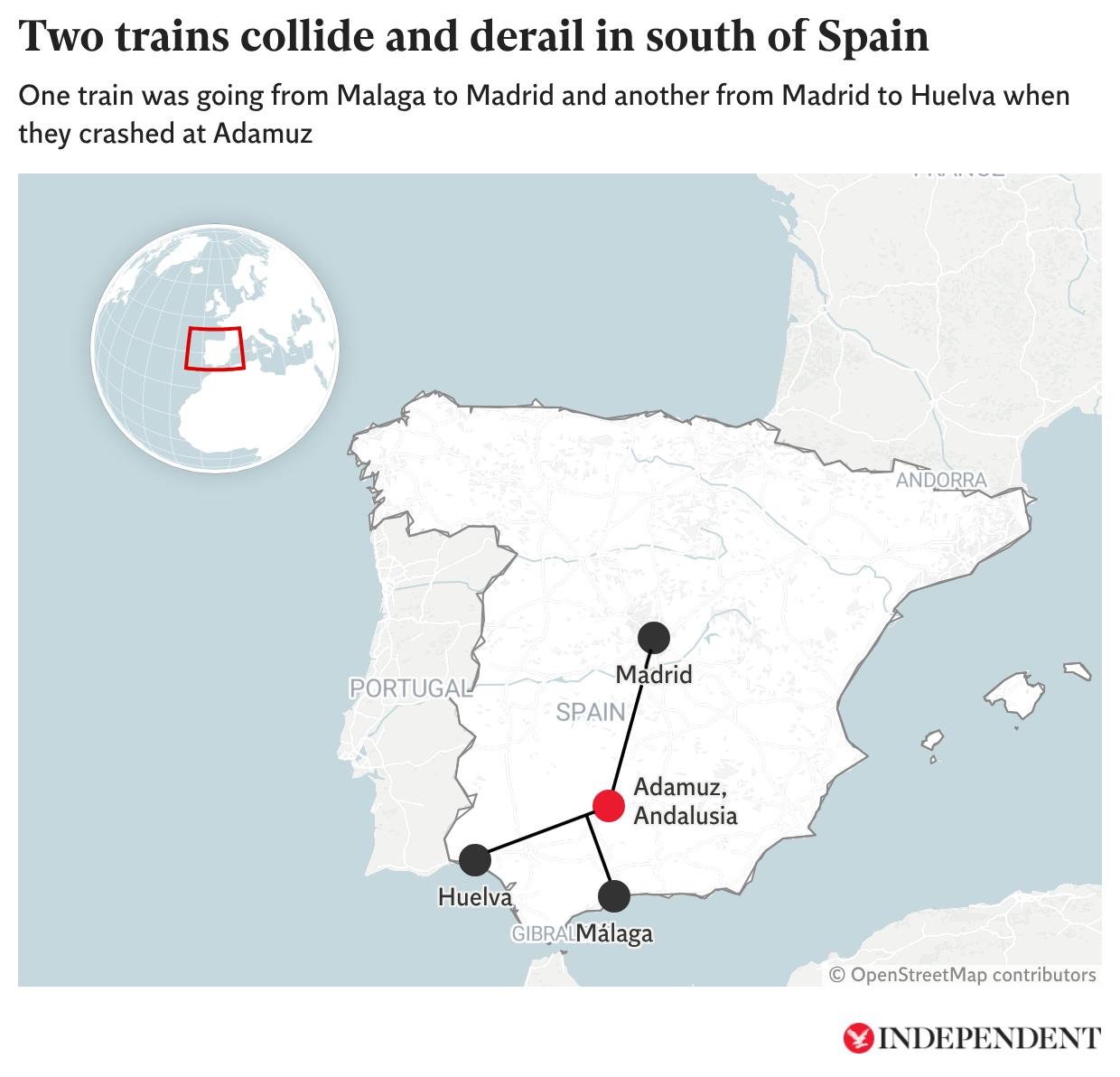
At least 41 people were killed and dozens more injured after two high-speed trains collided in southern Spain on Sunday evening.
The crash happened at 7.45pm local time near Adamuz, a town of about 5,000 people in the province of Córdoba, according to Spain’s interior ministry.
The tail end of a train run by private high-speed rail operator Iryo, travelling from Málaga to Madrid, was derailed and jumped onto an adjacent track, where it smashed into an oncoming Renfe service travelling from Madrid to Huelva, a municipality in Spain. Renfe is Spain's national state-owned railway company.
Follow the latest updates about the crash here
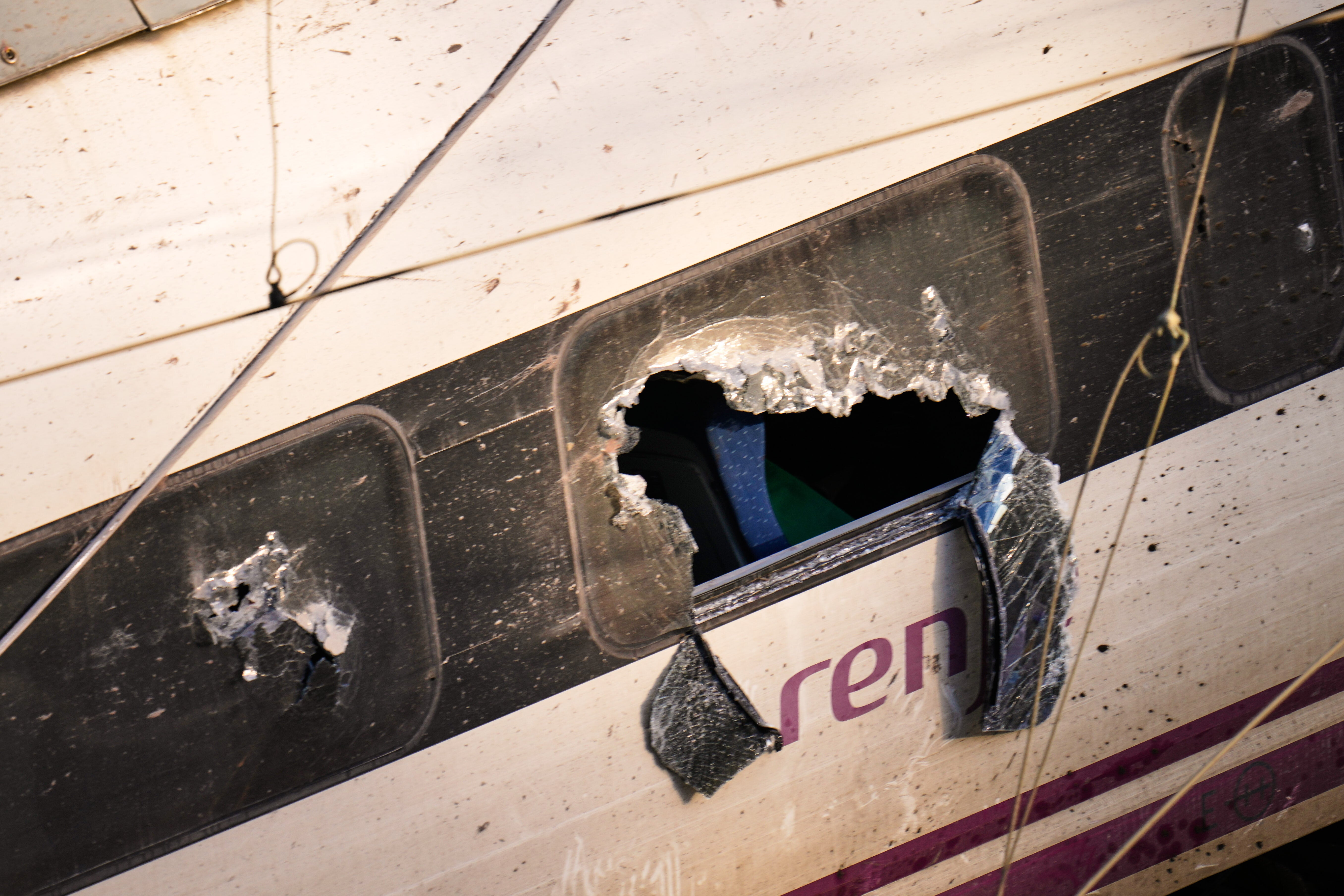
Spanish state-owned rail operator Adif said the Iryo train derailed first and crashed into the second train, pushing it off the tracks and down a railway embankment.
The death toll has climbed to 41 after another body was recovered overnight. Juan Manuel Moreno, head of the regional government of Andalusia, said that it could take another 48 hours “to know with certainty how many deaths have resulted from this terrible accident.”
Twelve remain in intensive care after the accident near Adamuz in the province of Cordoba, about 360km south of Madrid, according to emergency services.
A total of 43 missing-person reports have been filed so far at police headquarters in Huelva, Madrid, Málaga, Córdoba, and Seville, officials said.
It makes it one of the worst railway accidents in Europe in 80 years.
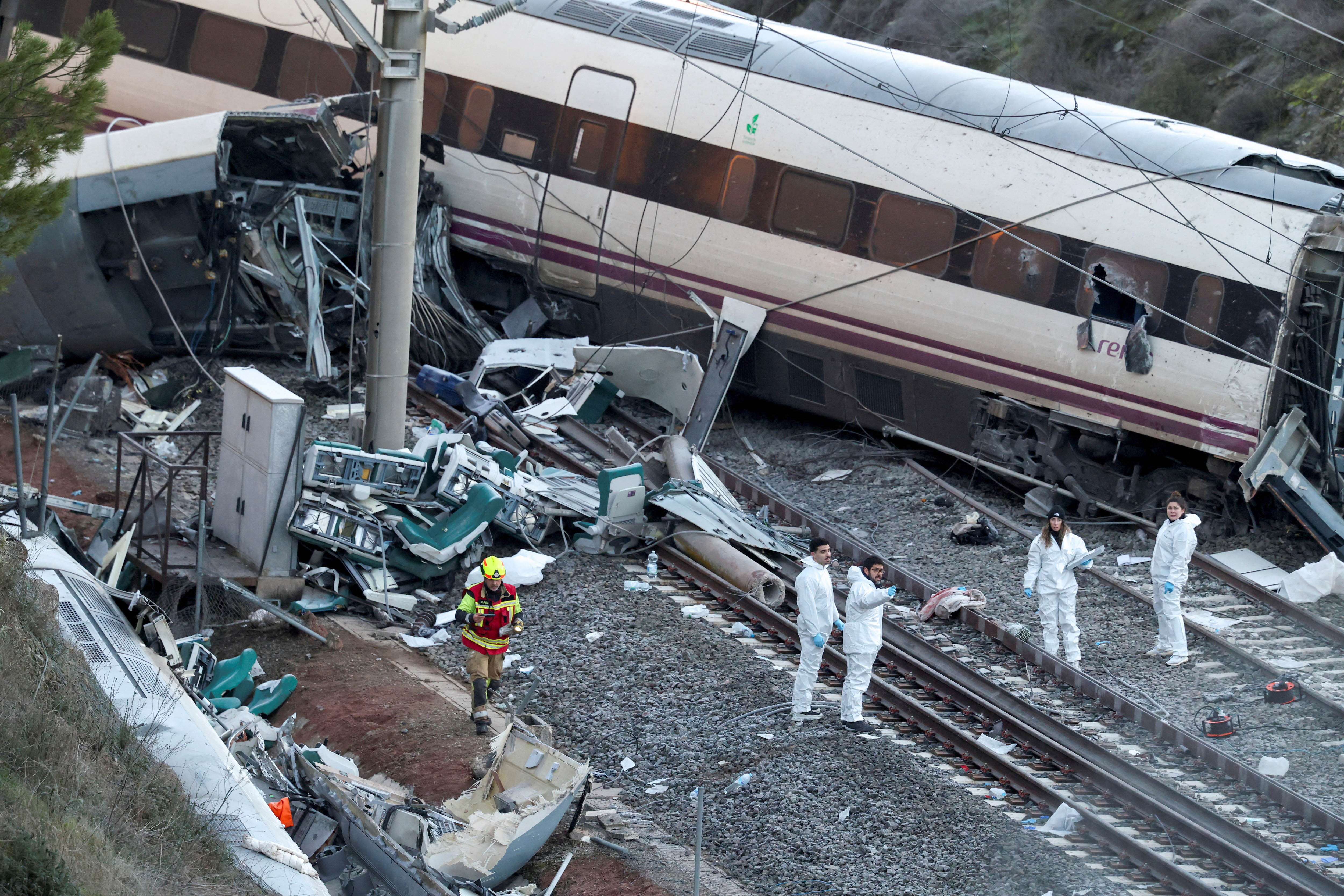
Spain’s transport minister Óscar Puente said the incident was “really strange”, noting that it occurred on a straight stretch of track that had been renewed in May.
The high-speed Frecciarossa 1000 train operated by Iryo was carrying around 300 passengers, according to officials.
The Renfe-operated Madrid-Huelva Alvia train had between 100 and 200 passengers on board, with authorities later saying the worst damage occurred in its first two carriages.
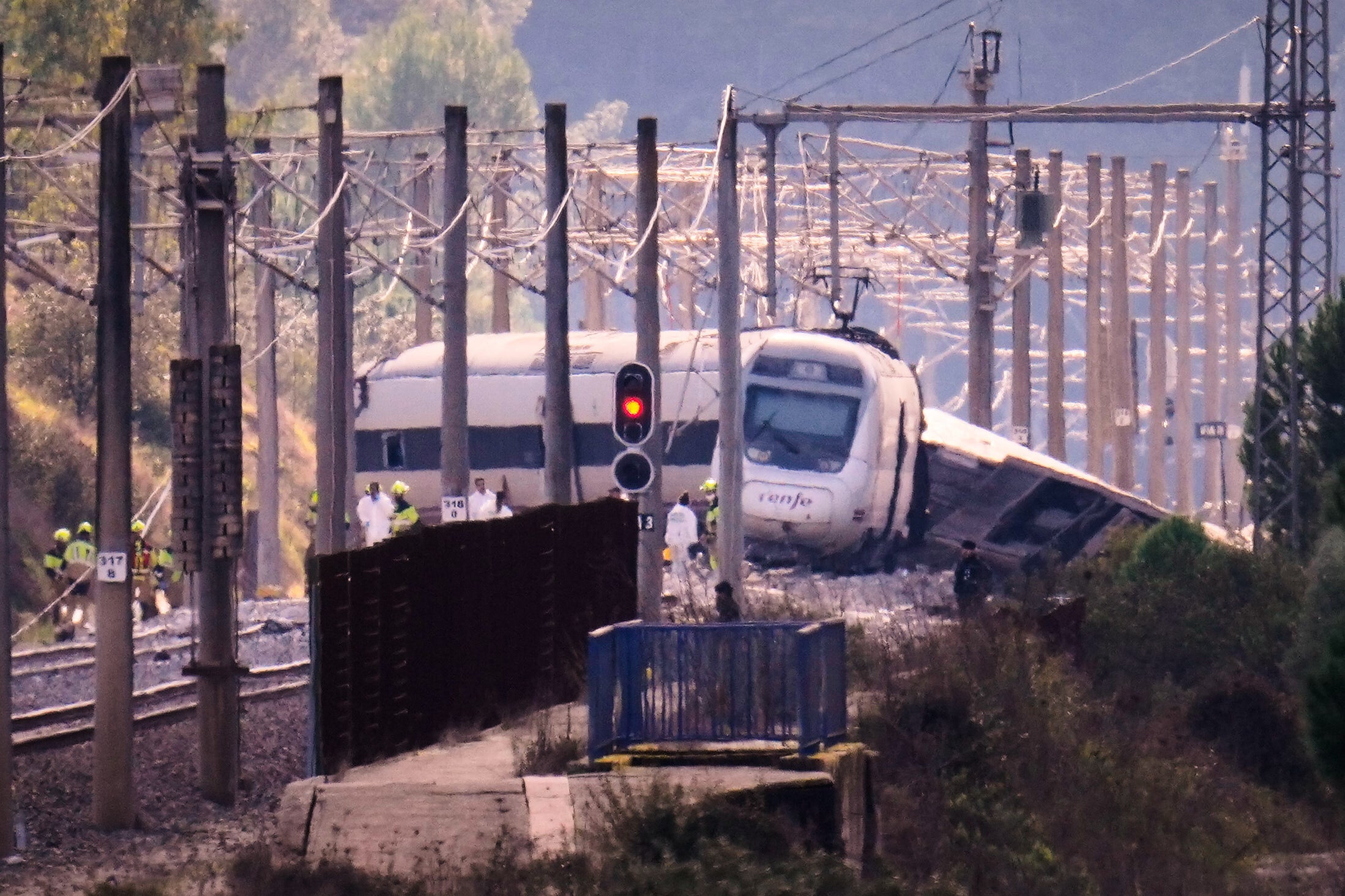
The Renfe train was travelling at around 200kmph at the time of impact, El País reported. It was unclear how fast the Iryo train was moving when the accident happened.
Mr Puente said the rear section of the Iryo train derailed, while the front section of the Renfe one took the full impact of the collision and plunged several metres down the embankment.
Experts on site identified wear on the joint between sections of the rail, known as a fishplate, which they said showed the fault had been there for some time, a source briefed on the preliminary probe told Reuters.
They found that the faulty joint created a gap between the rail sections that widened as trains continued to travel on the track, but an official reason is yet to be confirmed.
The source, who declined to be identified, said technicians believe the faulty joint and the creation of the ensuing gap is key to identifying the precise cause of the deadly incident.
It has also emerged that train drivers’ union SEMAF had written to rail operator ADIF in August to warn about “severe wear and tear” on high-speed rail tracks, claiming their concerns had been overlooked.
The union had cautioned ADIF about potholes, bumps and imbalances in overhead power lines that it said were causing frequent breakdowns and damaging trains.
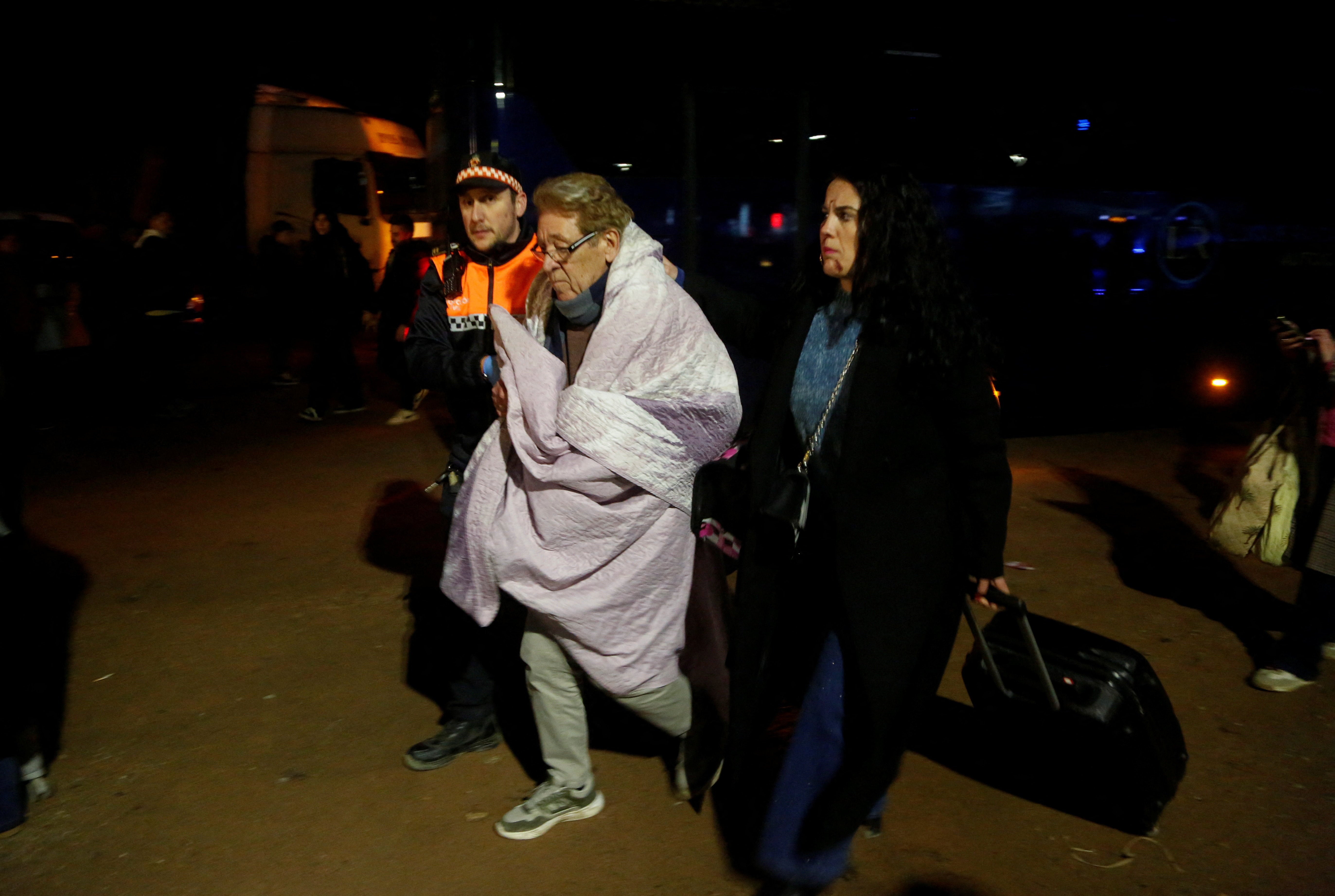
Juanma Moreno, regional president of Andalusia, said at least 75 people were hospitalised, including 15 in serious condition.
Mr Moreno warned early on that the death toll could rise as daylight allowed rescuers to fully access the wreckage.
El País reported that the 27-year-old driver of the Madrid–Huelva train was among those killed.
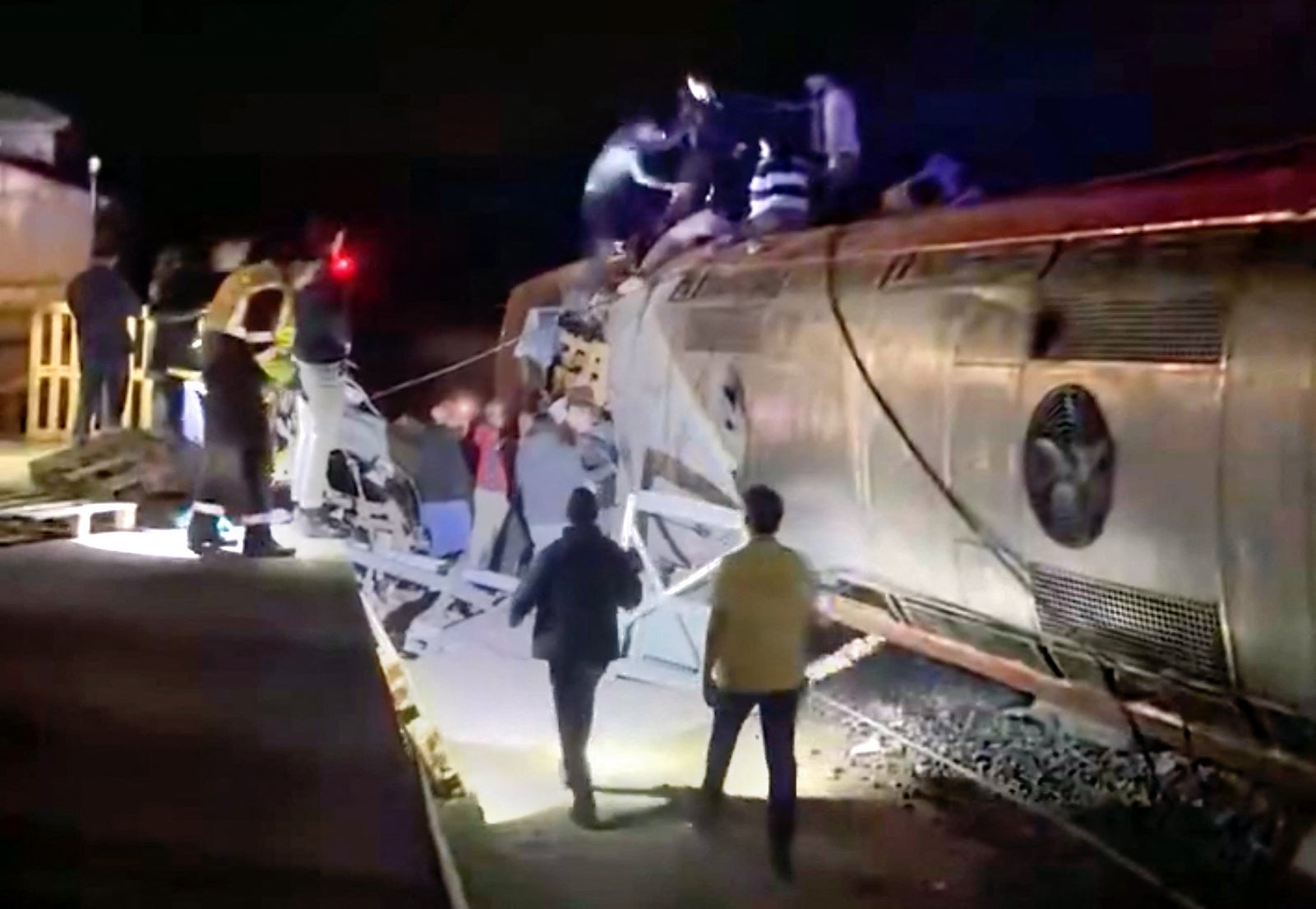
Emergency services worked through the night under floodlights in cold conditions, with temperatures dropping to around 6C.
Mr Moreno said on Tuesday that emergency crews had faced difficulties bringing in the heavy equipment needed to lift the wreckage and reach those still lying beneath it.
The train collision on Sunday occurred in a hilly, olive-growing region accessible only by a single-track road, making it difficult for ambulances to reach the area, the national emergency director at the Spanish Red Cross told Reuters.
Earlier, video footage shared on social media showed rescuers pulling passengers from twisted carriages, while others escaped by climbing through smashed windows or were wheeled away on stretchers.
Cordoba fire chief Paco Carmona said the Renfe train carriages were mangled, with twisted metal and seats making access difficult.
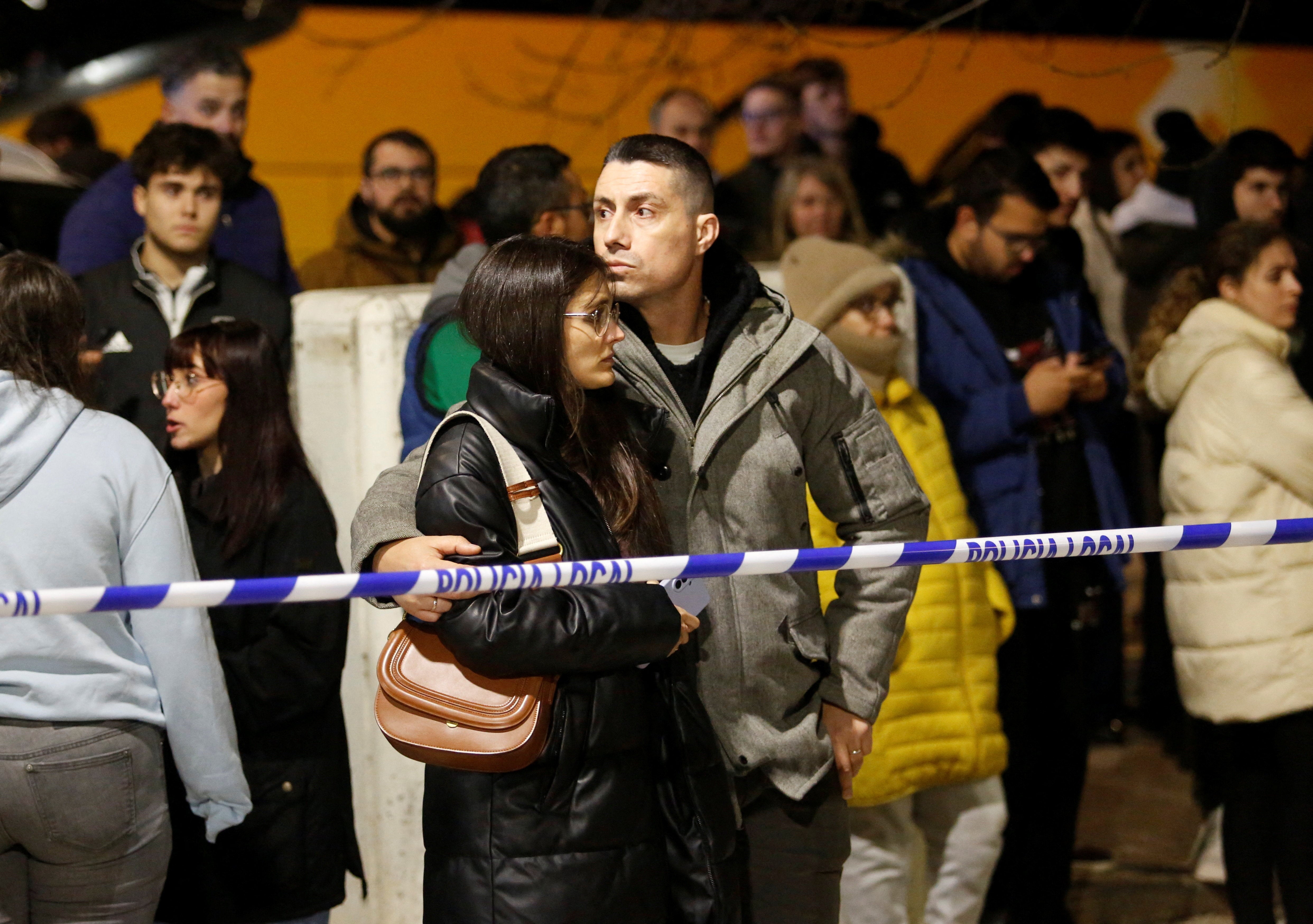
Journalist Salvador Jiménez, who was travelling on the Iryo train, said the moment of impact “felt like an earthquake”, adding that passengers used emergency hammers to break windows and escape.
Mr Puente said the cause of the derailment is not yet known, adding that an inquiry could take up to a month.
He described the crash as unusual because it occurred on flat track, not a curve, and involved a train less than four years old.
Ignacio Barron, head of Spain's Commission of Investigation of Rail Accidents, says investigators are looking into the interaction between the train and the stretch of track in question as they narrow down on the cause of the deadly crash.
Speaking to RTVE, Barron said: "What always plays a part in a derailment is the interaction between the track and the vehicle, and that is what the commission is currently (looking into)."
The president of Renfe ruled out the possibility of human error or excessive speed as the cause. The speed limit on the track is 250kmph while the trains were travelling at 110kmph and 200kmph when they collided.
Renfe said the derailment was caused by the Iryo train entering its path, while Iryo said it “deeply regretted” the incident and was cooperating fully with authorities. Rail services between Madrid and Andalusia were suspended, with Adif saying they would not resume until safety checks were completed.
Prime minister Pedro Sánchez said: “Tonight is one of deep sadness for our country.”
Spain has the largest high-speed rail network in Europe, with more than 3,100km of track, and the system is widely regarded as safe.
The country;s worst rail disaster this century occurred in 2013, when 80 people were killed after a train derailed in Galicia while travelling at excessive speed.
Join our commenting forum
Join thought-provoking conversations, follow other Independent readers and see their replies
Comments
Bookmark popover
Removed from bookmarks