La Tomatina celebrates 80 years of tomato-fuelled chaos at fruit-throwing festival in Spain
Some 120 tonnes of tomatoes were hurled across streets as crowds dredged through floods of pulped tomatoes for an hour-long battle
Thousands of people flooded the small Spanish town of Buñol to celebrate the 80th edition of its epic annual tomato food fight festival, La Tomatina, with truckloads of tomatoes rolled in for the occasion.
Around 120 tonnes of tomatoes were hurled across streets as crowds dredged through floods of pulped tomatoes for an hour-long battle.
Attendees travel from all across the world to the town where buildings are draped in tarpaulins for protection.
About 22,000 people join the food fight - many donning swimming goggles and earplugs for protection.
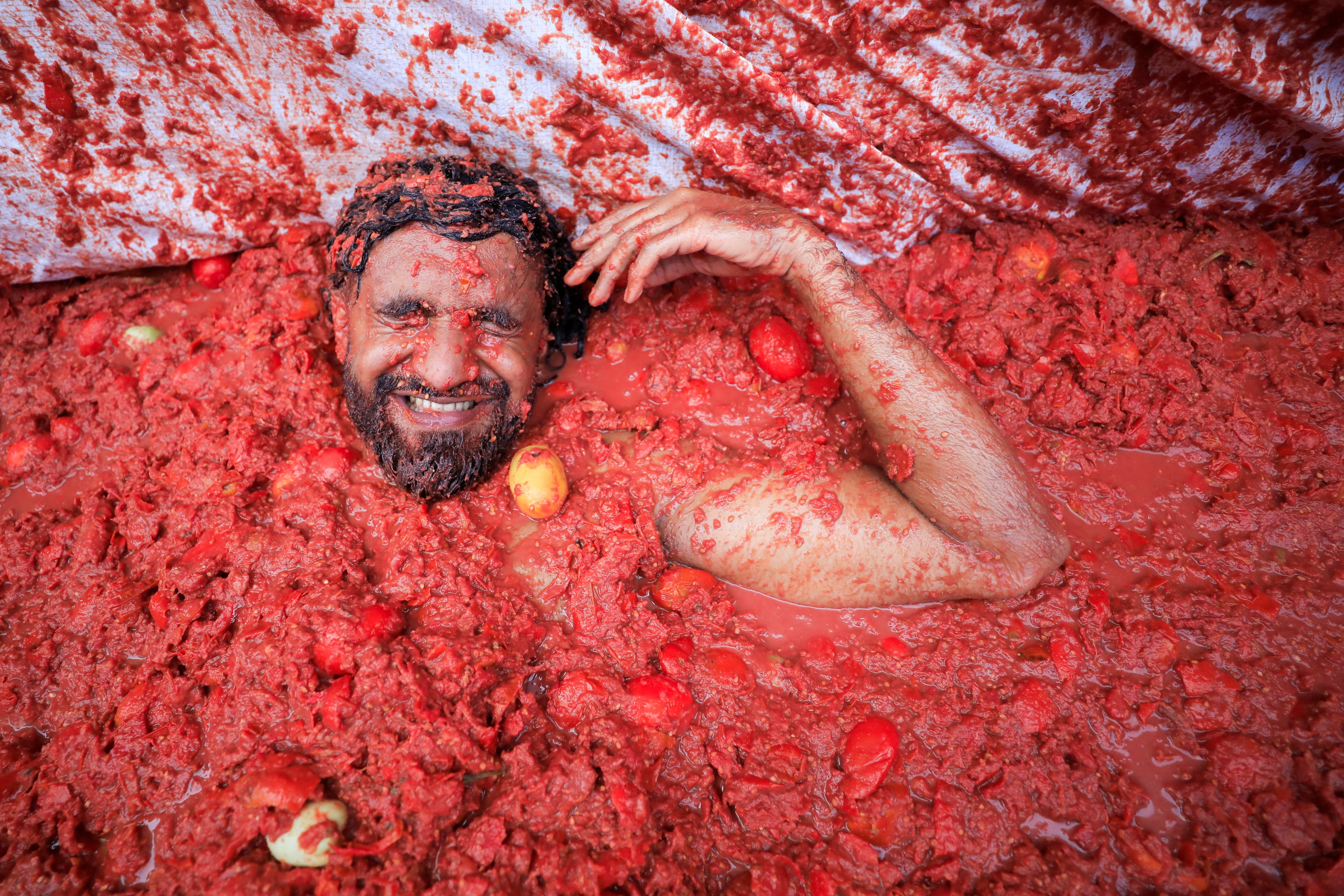
The event officially starts after a ham is retrieved from the top of a greased pole by a participant and it ends when a second shot of the warning firework is heard.
Participants then head to communal showers to wash off the thick, ankle-deep tomato puree.
“When it’s going on, it’s just a blur of tomatoes,” said Adrian Columb of Ireland, who attended in 1999. “It was a blast.”
La Tomatina’s history dates back to the last Wednesday of August in 1945 when a young boy fell from a parade and hit a vegetable market stall in a fit of rage. The commotion escalated into a full-blown tomato fight until local authorities stepped in.
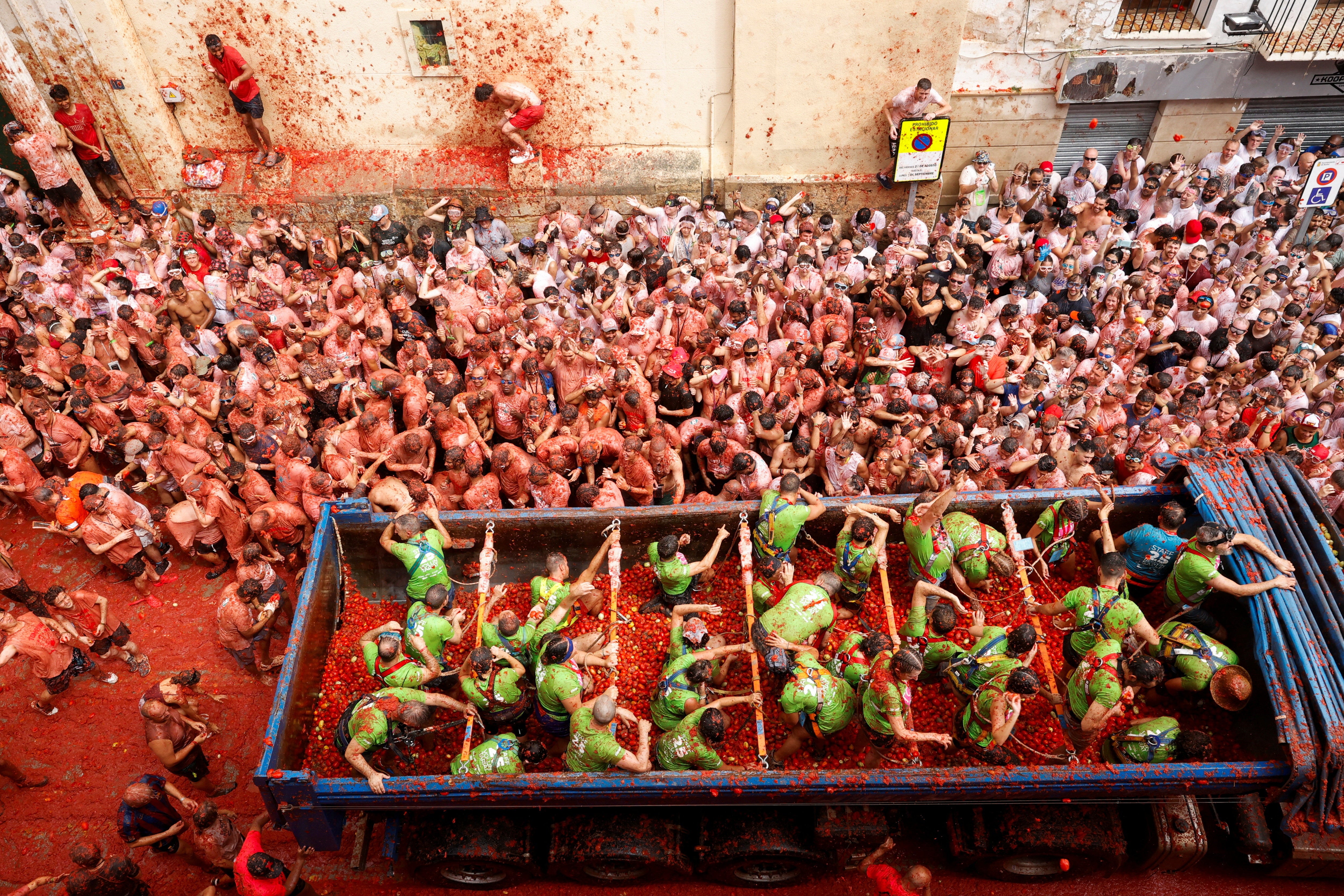
The tradition quickly became a popular tourist attraction and now includes rules, including that the tomatoes cannot be eaten and they must be squashed before throwing them to avoid injuries.
Participants are also not allowed to use hard objects, tear or throw t-shirts, and they must stay far away from lorries.
After a brief ban in the 1950s under Spanish dictator Francisco Franco triggered local protest, televised media attention in the 1980s made it a national phenomenon.
By 2002, Spain officially recognised it as an international tourism attraction and it has only been suspended twice - in 2020 and 2021 for the coronavirus pandemic.
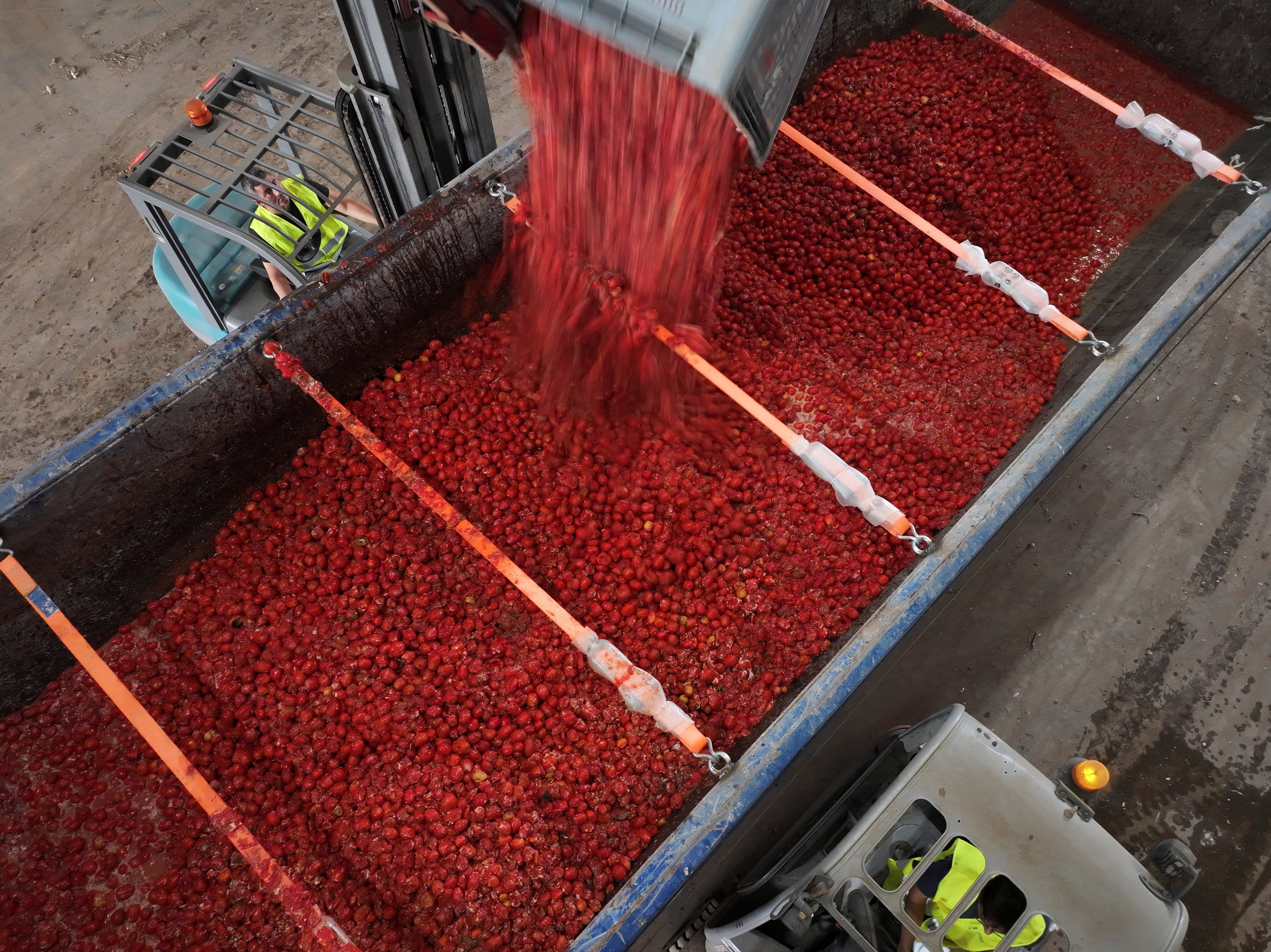
This year’s tomatoes, which are grown specifically for the festival, come from Don Benito, a town more than five hours away.
Similar festivals have taken place worldwide from Florida, Sutamarchán, Amsterdam to Hyderabad but the festival remains an integral part of Buñol’s history.
“The truth is that it’s exciting because year after year, you can see how ‘Tomatina’ grows and evolves,” the town’s Deputy Mayor Sergio Galarza said, “and you can enjoy a festival that is super wholesome.”
Just a few hours after the festival, the pavements are cleaned, with the citric acid in the tomatoes helping to act as an effective cleaning agent.
Join our commenting forum
Join thought-provoking conversations, follow other Independent readers and see their replies
Comments
Bookmark popover
Removed from bookmarks