Why Europe is losing the race to control the Arctic’s crucial resources
The Arctic has vast potential for energy, shipping, and critical minerals as sea ice melts
The Arctic, once a remote frozen periphery, is rapidly becoming a crucial strategic hub, a transformation underscored by past US-European tensions over Greenland.
As sea ice melts at nearly four times the global average, the High North is revealing vast potential for energy, shipping, and critical minerals.
This environmental shift is intensifying a global debate over control of the Arctic's future routes, rules, and resources, poised to shape international markets for decades.
While Russia and China are systematically building their influence in the region to enhance economic leverage, Western policy is only now beginning to respond effectively.
Russia’s arctic footprint
Russia dominates the Arctic due to geography and infrastructure. Roughly 80% of Arctic oil and gas production comes from Russian territory, with Arctic fields accounting for about one-fifth of Russia's oil output and a far larger share of its export growth potential, according to the Arctic Institute.
What sets Russia apart is not just scale but concentration. Russia's Arctic region holds an estimated 35.7 trillion cubic metres (tcm) of natural gas resources, nearly 75% of Russia’s total proven reserves and more than the rest of the Arctic combined.
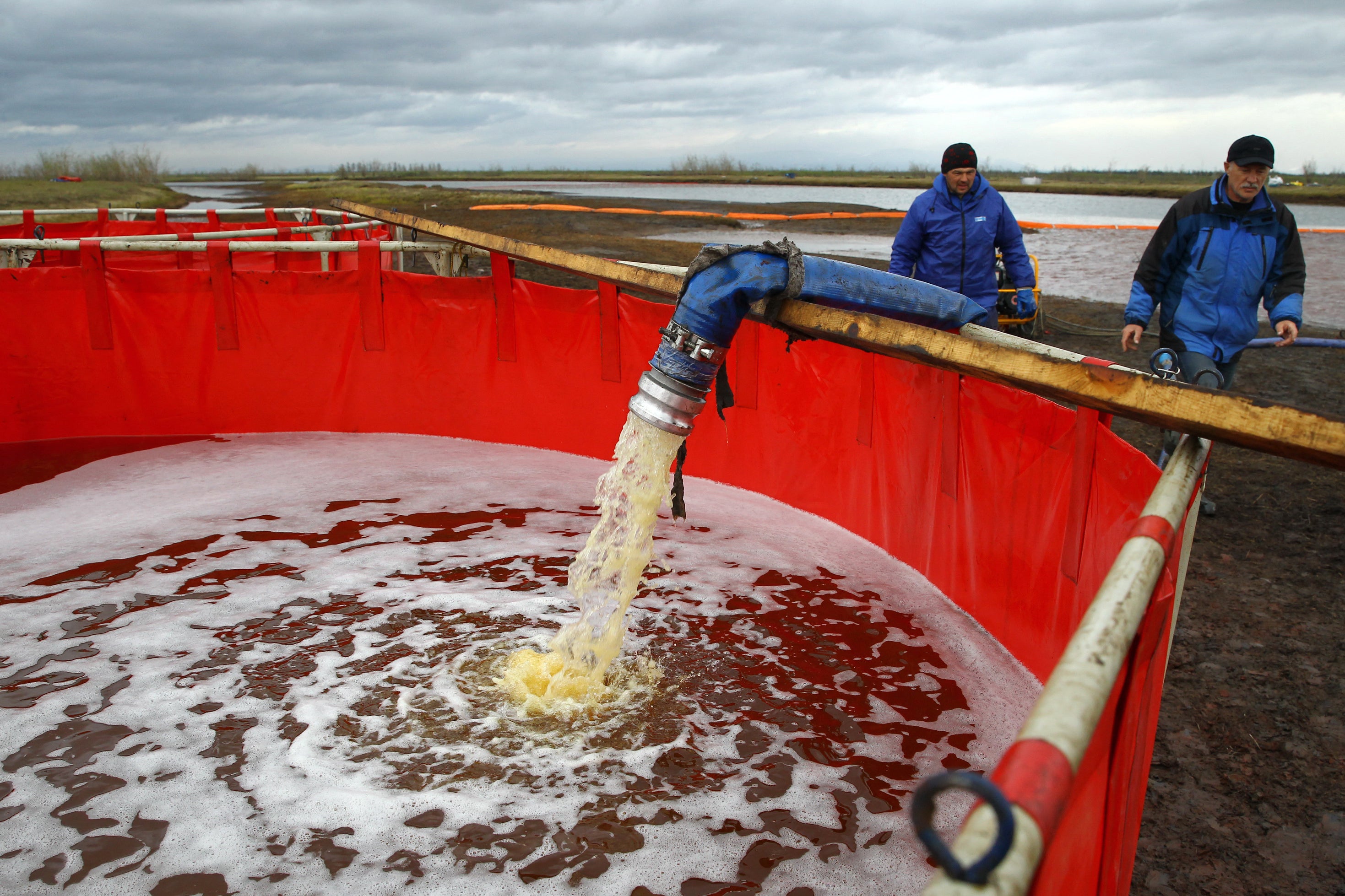
Around 95% of Russia’s platinum-group metals and roughly two-thirds of its rare earth reserves sit in its Arctic territories. Russia already produces 100% of its nickel and 92% of its cobalt in this area, according to data from producer Nornickel and government statistics.
By contrast, the West Arctic assets are significant but fragmented. Alaska holds the largest oil reserves in the region, accounting for about 3.5% of U.S. total crude output, according to the U.S. Energy Information Administration. The city of Kiruna in Sweden contains the European Union's largest rare earth deposit, which if developed, could supply 18% of the bloc's needs, says the country's state-owned LKAB.
Finland is set to become the EU's first integrated lithium producer this year. And then, of course, there’s Greenland, an autonomous territory of Denmark. It has vast critical mineral potential, but the logistical challenges involved in tapping these resources make major investments unlikely in the near term.
Northern Sea re-routing
Before Russia's full-scale invasion of Ukraine, Arctic energy flows were deeply integrated with European markets. Since 2022, however, sanctions have forced the rerouting of Russian fossil fuel exports. Arctic crude and condensate are now shipped east via Murmansk and the Northern Sea Route (NSR), often carried by a growing shadow fleet of aging tankers operating outside Western insurance regimes.
Liquefied natural gas (LNG) from the Yamal Peninsula continues to reach both Asian and European buyers, given that Russian LNG has not been fully sanctioned.
However, the EU has moved to ban all Russian LNG imports from January 1, 2027, so the NSR will become even more important for Russia as it reroutes its exports to Asia. The NSR nearly halves the voyage length between northern Europe and Asia compared with the Suez Canal, giving Moscow leverage over a trade corridor that bypasses traditional chokepoints.
The Arctic also continues to be a testing ground for sanctions evasion. Ship-to-ship transfers, opaque ownership structures and the blending of Arctic-origin oil have weakened Western measures targeting the shadow fleet and Arctic LNG projects.
China’s polar calculus
China’s footprint in the Arctic is narrower than Russia’s but strategically placed. Chinese firms own nearly 30% of the Yamal LNG project through the national energy giant CNPC and the Silk Road Fund, with policy banks helping finance the $27 billion venture. That investment secures long-term LNG supplies, exposure to polar energy technology and options on future Arctic shipping routes.
Beijing’s interest extends beyond hydrocarbons. Chinese companies have pursued stakes in Arctic minerals, including rare earths in Greenland and iron ore and nickel across the High North. These resources sit at the heart of global clean-energy supply chains, so access to them reinforces China’s dominance over low-carbon manufacturing.
For global trade, China’s Arctic ambitions are about resilience. The Polar Silk Road offers a hedge against disruptions in the Red Sea, Suez or the Malacca Strait. Even limited commercial use of Arctic routes strengthens China’s bargaining power when negotiating contracts for shipping and port infrastructure, both central to its global economic strategy.
Long-term market implications
The geoeconomic rivalry over Arctic resources and trade routes will unfold throughout the coming decades, but its structural impact on global markets is already visible. Tighter Russian control of Arctic routes has allowed the Kremlin to maintain its foothold in Asian LNG markets, undermining the strength of U.S. and EU sanctions. Looking forward, concentrated control over Arctic sea lanes may splinter trade routes, making the High North a separate corridor with different rules, costs and political risks.
Meanwhile, the Arctic is no longer distant for the EU and the U.S. It is a gateway for energy flows, data cables and shipping lanes that underpin transatlantic economies. Any disruption - whether through sanctions evasion, cyberattacks, sabotage against critical infrastructure, or heavy-handed regulation of Arctic navigation - could reverberate through global supply chains.
In short, as melting ice opens up new trade opportunities, it is also exposing a new fault line in the global economic order - one that markets can no longer afford to treat as frozen.
(The views expressed here are those of Martin Vladimirov, director of the Geoeconomics Program of the Center for the Study of Democracy (CSD), and Vanya Petrova, a senior analyst at the CSD.)
Join our commenting forum
Join thought-provoking conversations, follow other Independent readers and see their replies
Comments
Bookmark popover
Removed from bookmarks