Tariffs, ICE raids and ‘gunboat diplomacy’ ... Trump’s first year thrilled allies and shocked critics. What’s next?
Donald Trump’s trade agenda remains a point of pride for his supporters after a wild first year as conservatives cheer U.S.-China breakup, writes John Bowden. But 2026 will prove a referendum year for the MAGA lion


Donald Trump’s first year back in the White House was a tumultuous 12 months that left heads spinning as the political world tried to keep up with the lightning-fast dismantling of whole agencies via DOGE and a strikingly aggressive “America First”-oriented foreign policy.
With 2025 now in the rear-view, the president is looking towards a midterm year that will likely be a referendum on his policies. The survival of two Republican majorities in the House and Senate will depend on his ability to motivate excitement among the voters who sided with him in 2024 with the promise of two more years of a White House largely unrestricted by Democrats in Congress.
But while many of his critics ended the year fearful of new expansions of ICE presences in U.S. cities and enraged over cuts to various federal programs, the president is still getting high marks from conservatives who say that he is achieving what he set out to do on a wide range of issues. As Democrats hype themselves up for a possible blue wave, the president’s allies feel that Americans saw a positive evolution of the U.S. economy between the Biden presidency and Trump’s return to power.
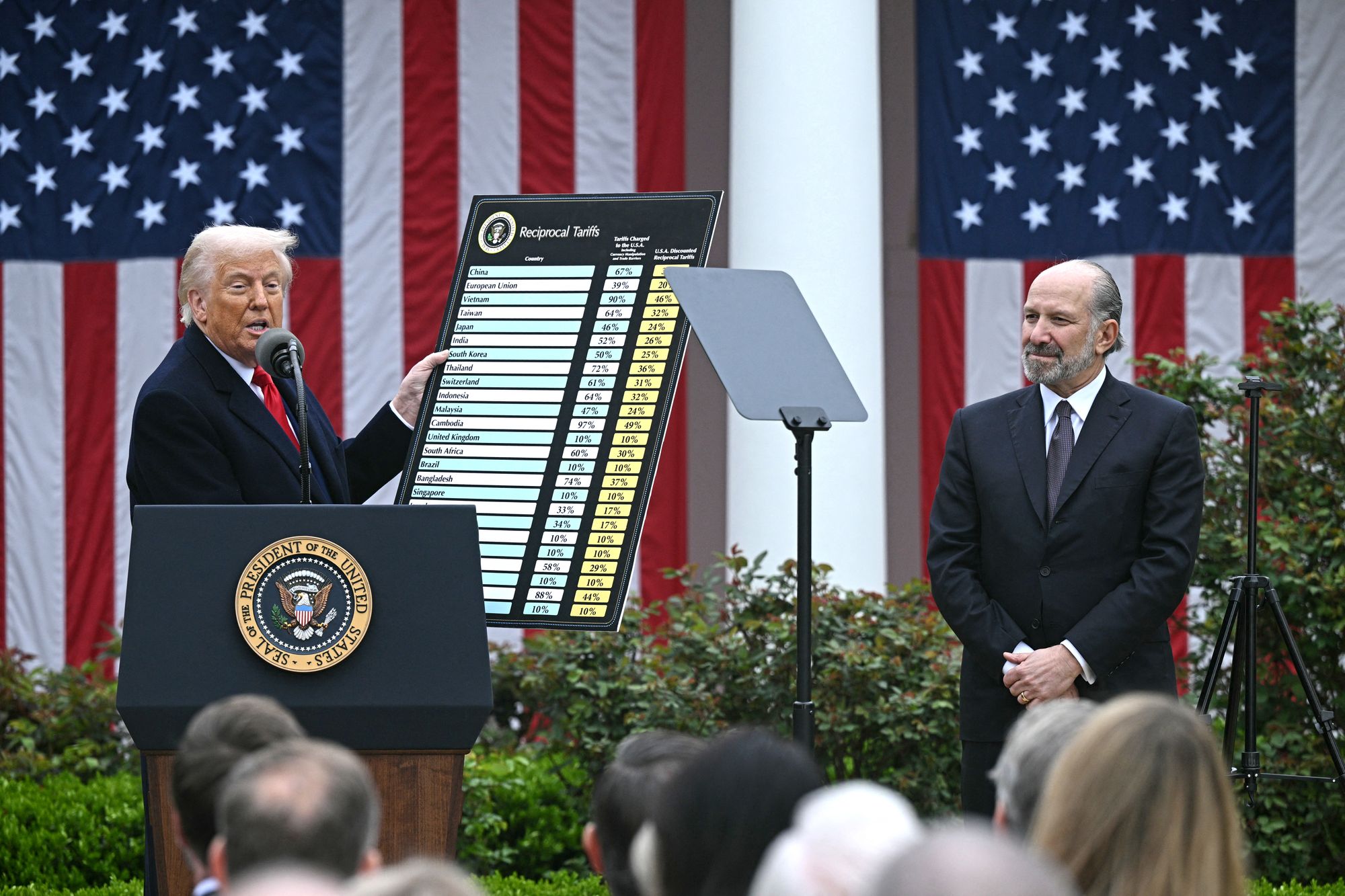
Throughout the spring and summer of 2025 the president unveiled the primary engine of that transformation: Tariffs. The White House’s “reciprocal” tariff agenda and flatline import duties sparked a trade dispute with China that threatened the U.S. soybean industry, while the president also threatened heavy tariffs on Canada, the European Union and other trading partners.
Trump’s supporters argue that the outcomes still speak for themselves, as the president has used tariffs to resolve other issues.
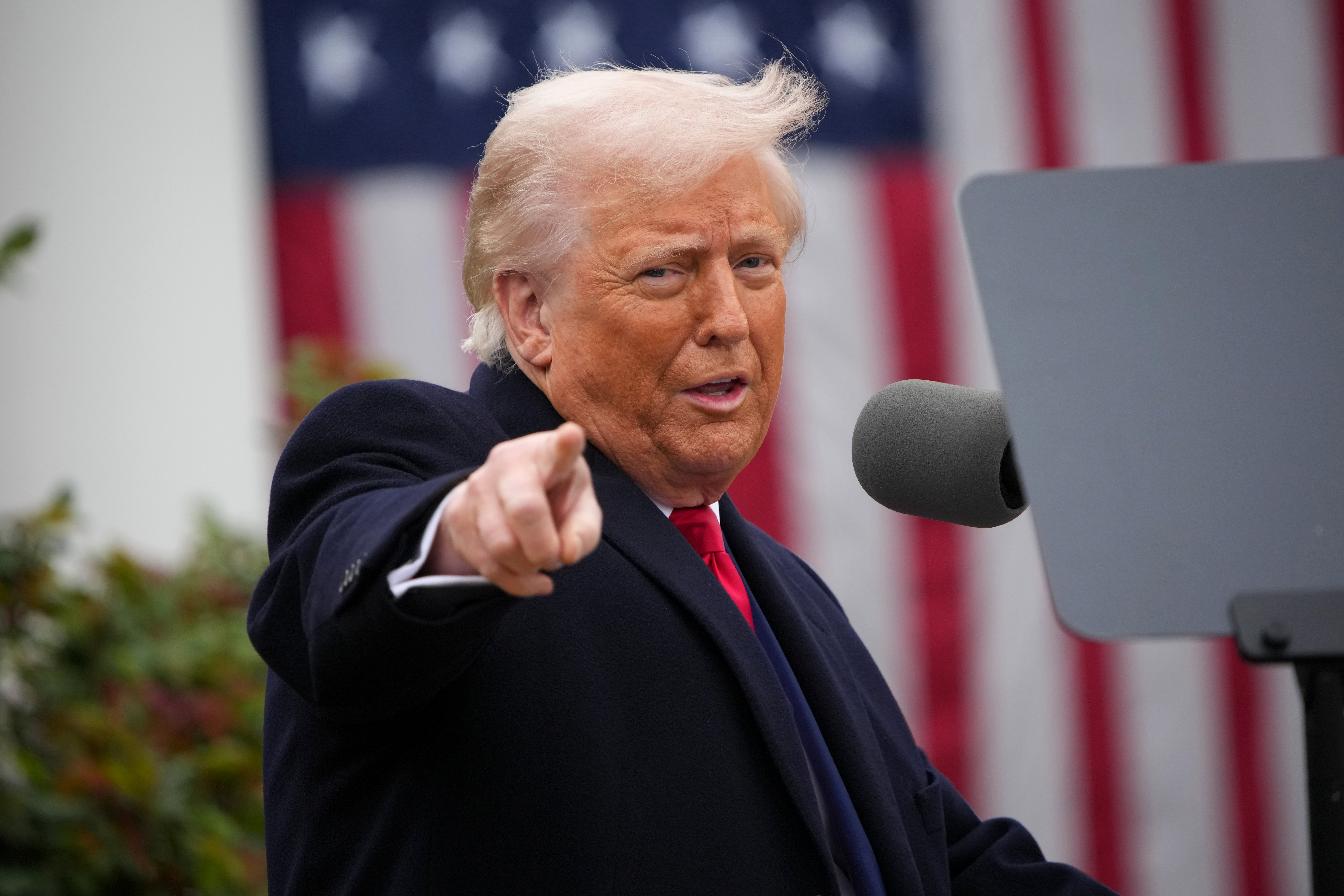
“It looks like after a year of hyperventilating on the trade stuff, Trump’s tariffs...look way more like a success than they did six months ago,” said Curt Mills, executive director of American Conservative magazine, in an interview with The Independent. Proponents of what he called a “nationalist” economic agenda would have looked “pretty silly” if the tariffs led to an economic crash and significant drop in GDP.
“I think it looks pretty far from that right now,” said Mills.
“This trade deficit with China narrowing is a big deal,” Mills contended. “I don’t want to be the right-wing ‘experts got dunked on’ guy. But the experts kind of got this wrong.”
All eyes are now on the Supreme Court, which is due to determine if the president has the authority to levy tariffs under an authority allowing him to bypass Congress. Even if the president is constrained by the Court, his allies say the U.S. under Trump has already achieved a major goal: Decoupling the economy from reliance on China as a trading partner.
“It's just important not to be depending so much on a country that's not friendly to us,“ said Diana Furchtgott-Roth, a Herbert and Joyce Morgan fellow at the Heritage Foundation who served in senior roles at the Treasury and Department of Transportation during Trump’s first term. “I think detaching ourselves from China is a worthwhile foreign policy and economic goal.”
“Decoupling from China is going to take some effort,” she continued. “It’s not costless. And I don’t think that anyone has said that it’s costless. But we do think that it is worth doing.”
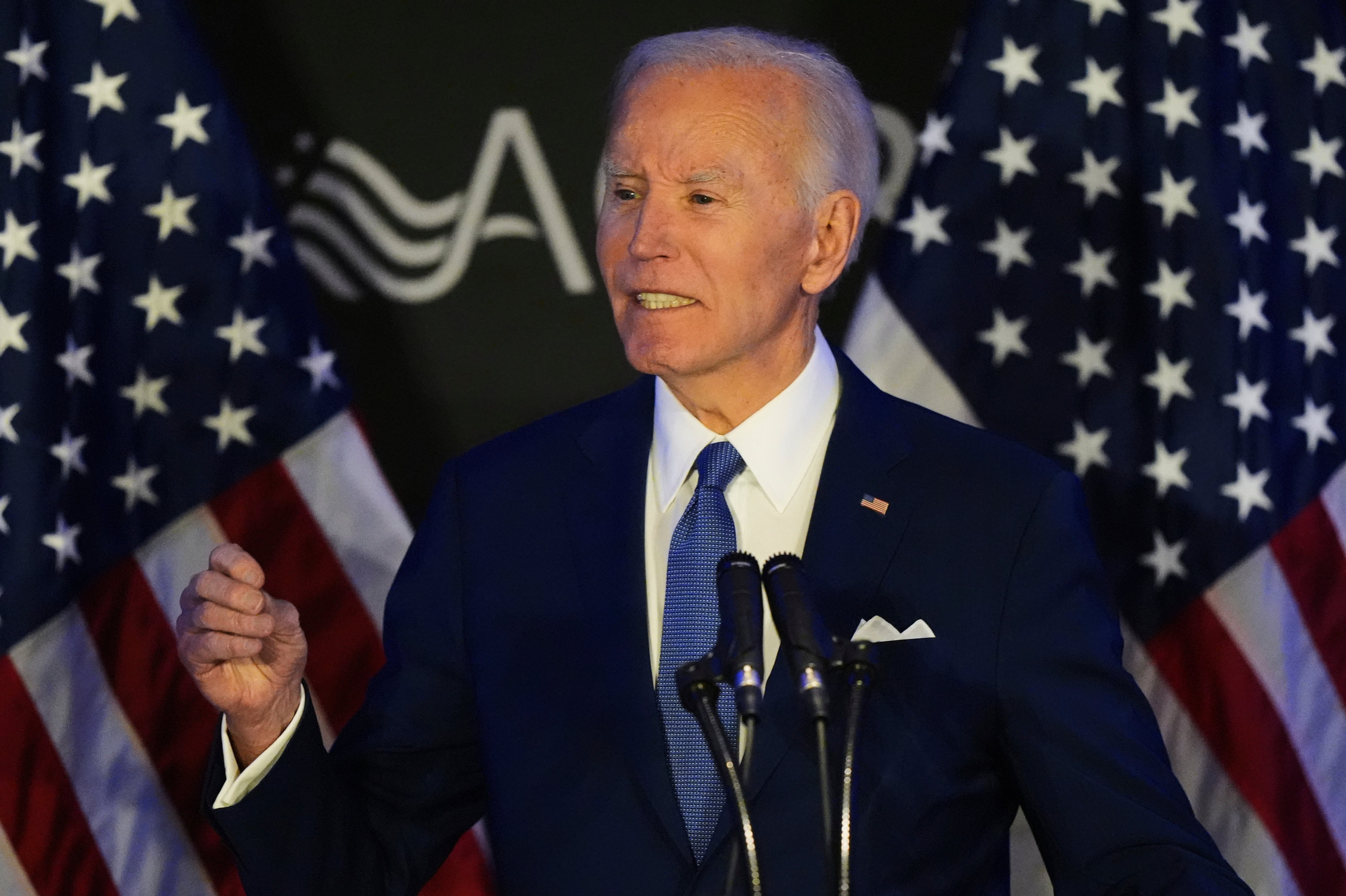
The president’s allies have long touted Joe Biden’s decision to leave on some of Trump’s first-term tariffs against China when the Democratic president returned to the White House in 2021. Biden used tariffs to challenge Beijing on the issue of semiconductor manufacturing while also pushing to block Chinese electric vehicles and EV parts from U.S. markets.
Trump took a different approach in his second term especially, and proved that the threat of significant tariff action could be used as a cudgel to enforce U.S. interests in the short term. Against China he has used tariffs to pressure the government to do more about fentanyl exports and more broadly used it to achieve other foreign policy goals. Furchtgott-Roth also suggested that the expansion of U.S. energy exports also allowed the Trump administration to generate both revenue and global influence.
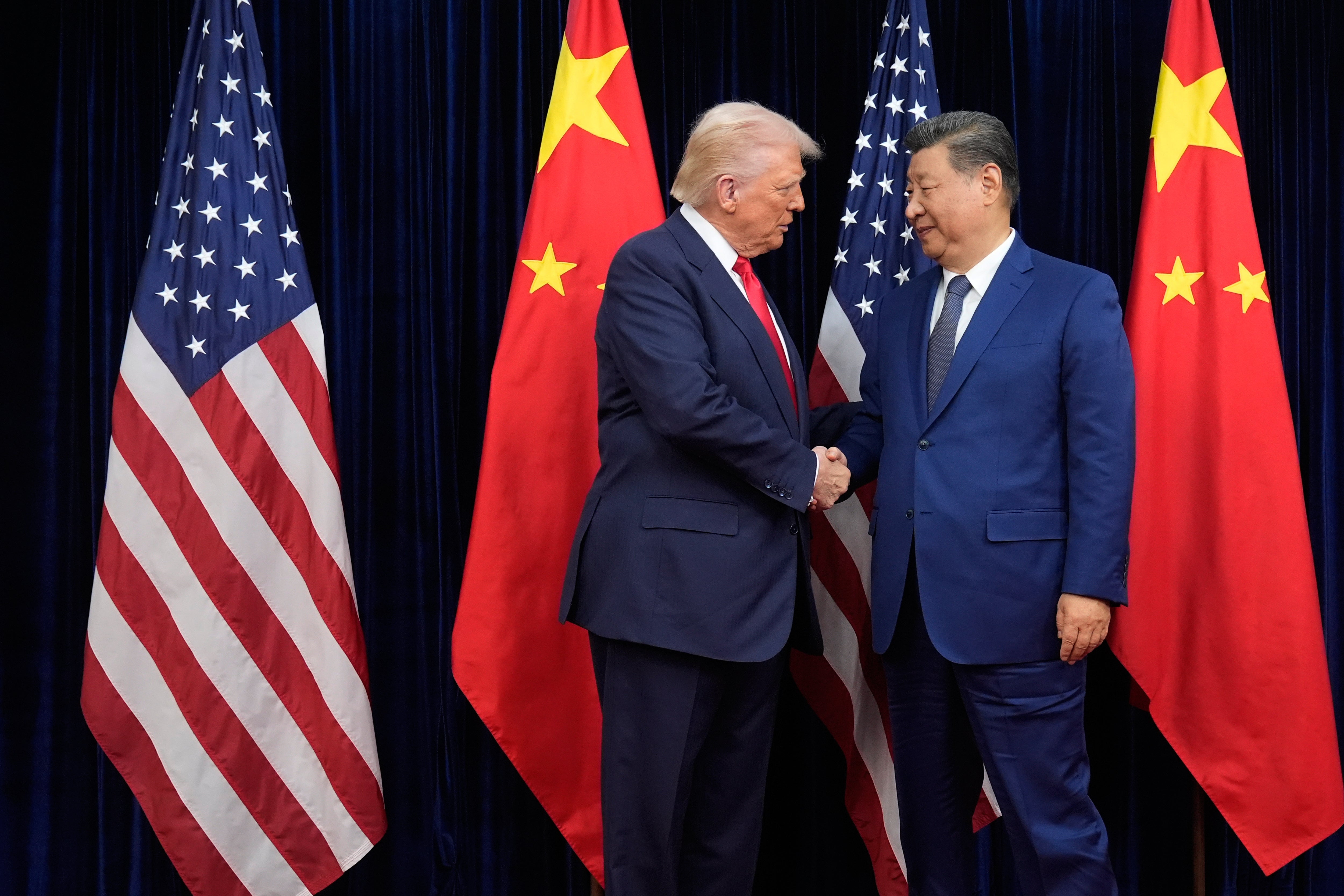
In late October the administration announced its latest trade agreement with China, after months of back-and-forth punitive tariffs mounted by Washington and Beijing. Trump announced that the U.S. would regain access to exports of Chinese rare earth minerals while the Chinese government would also redouble its efforts to crack down on the fentanyl trade.
“You remember Biden continued a lot of Trump's approach on China and on trade, and I think that sort of speaks to what could be the real legacy of Trump, all the other noise aside,” said Mills. “The fact that they were able to do the tariffs without crashing the equity markets, without crashing the bond markets, and apparently while growing the economy.”
Furchgott-Roth added: “He has certainly accomplished [decoupling] without any economic damage.”
On the domestic side, the main focus of the president’s agenda has become mass deportation, in large part due to thin congressional majorities that make passing partisan legislation impossible.
ICE raids and the killing of Renee Nicole Good by an ICE agent currently dominate the headlines as the 2026 election season nears, as enraged and shocked crowds return to the streets in protest across the country. But among Republicans, Trump’s job performance numbers on immigration and border security remain high as many in the president’s base link the expulsion of immigrants to better economic conditions yet to come.
Mills contended that the Trump administration had achieved a notable victory: Proving that Democrats were wholly unserious in their own efforts, during the Biden administration, to deal with illegal border crossings and alleged abuse of asylum.

“They basically non-controversially closed the border, in terms of illegal crossings,” he said. “I think the Biden thing looks like a scandal now, that they allowed that level of crossings. It looks like, I don’t want to say intentional policy, but it was astonishing.”
Apart from the tactics of ICE raids largely dictated by Kristi Noem at the Department of Homeland Security, Mills said that the president had managed to control illegal crossings essentially with bipartisan support on the Hill.
For Mills, who is a frequent skeptic of the Trump administration’s foreign interventions that called Trump’s strike against Venezuela “dispiriting,” the main frustrations around the second MAGA presidency have to do with warmaking. The president has repeatedly spurned the likes of “America First” isolationist Republicans like Steve Bannon and former Rep. Marjorie Taylor Greene as he has taken an active role in the Ukraine-Russia peace process, the Israel-Gaza peace process, and now instigated the capture of Venezuela’s leader, Nicolas Maduro.
But while that has dismayed some it has thrilled others on Capitol Hill, including even some Democrats who found a rare opportunity for some bipartisan praise of the operation to oust Maduro, whose government was opposed by subsequent U.S. administrations. It continues to poll poorly with Americans, however: Nearly six in 10 Americans oppose the idea of the U.S. dictating Venezuelan policy, what Trump’s critics have derided as “gunboat diplomacy.”

As Trump enters the new year, his party’s focus will be on retaining their House and Senate majorities. It is unclear whether the president’s focus will be the same.
It was reported that the GOP president has no plans to endorse in three remaining Senate races where GOP incumbents are running, including for two seats that represent some of the Democrats’ clearest opportunities to win a Senate majority in the fall.
As House Republicans grumble about Mike Johnson’s leadership and a potential incoming electoral disaster, the White House is delaying if not actively undermining efforts on the Hill aimed at finding a way to shore up the Affordable Care Act, which moderates say is key to their political survival this year.
Between a total rewriting of America’s trade policies, a stunning campaign of immigration enforcement and deportations, and the rapid transformation of federal agencies at the hands of DOGE, however, Donald Trump may not need Congress for the last two years of his presidency as he’s proven that the occupant of the West Wing can sculpt a wide-ranging legacy all on their own.
Join our commenting forum
Join thought-provoking conversations, follow other Independent readers and see their replies
Comments
Bookmark popover
Removed from bookmarks