DOJ wants to turbocharge deportations by swiftly dismissing immigration court appeals
Trump administration’s proposal to eliminate Board of Immigration Appeals hearings takes a ‘sledgehammer’ to due process, critics fear
Donald Trump’s administration wants to make it easier for Immigration and Customs Enforcement to deport tens of thousands of people with pending immigration court cases.
A proposed rule change from the Department of Justice would force the Board of Immigration Appeals to dismiss most of them, unless a majority of the board agrees to hear them.
“Summary dismissal” will be the “default judgment” in most cases, according to the Justice Department. Officials have “reconsidered” whether the Board can even function as a court at all, according to the proposal.
Over the last decade, the Board of Immigration Appeals has seen its caseload explode from roughly 37,000 pending appeals in 2005 to more than 202,000 in 2025, according to the Justice Department.
“The Board is at a point where, even [if] were it to have additional resources and better management, without significant reforms, it would not be able to keep up with incoming filings while tackling the backlog in any meaningful way,” according to the proposal.

“The Board cannot — and does not need to — adjudicate every case on the merits with the tools at its disposal,” the filing states.
Mandating dismissal in virtually every case “will allow the Board to focus its limited resources on adjudicating the more than 200,000 pending appeals and, going forward, on selecting decisions for review that present novel issues warranting the Board’s attention,” according to the Justice Department.
The proposal takes a “sledgehammer” to due process, according to Aaron Reichlin-Melnick, senior fellow with immigration advocacy think tank American immigration Council.
“The goal is clear; mass deportations over due process,” he wrote.
The rule change is set to go into effect in 30 days unless it’s blocked by court order from any potential legal challenge.
Unlike federal district courts, the immigration court system functions under the Justice Department at the direction of Attorney General Pam Bondi.
There are roughly 3.5 million pending cases in the country’s 74 immigration courts. Last year, the Justice Department instructed the roughly 600 immigration court judges to dismiss most of the cases that appear before them — making immigrants immediately vulnerable to arrest and “expedited removal” removal from the country with “mandatory detention.”
That strategy has generated scenes of masked federal agents patrolling courthouse hallways and hauling away immigrants the moment they leave their hearings.
Those decisions can be appealed to the Board, but fewer than 10 percent of immigration judge decisions over the last two years have been appealed.
Board of Immigration Appeals judges do not typically hear cases but review and make decisions based on the record in immigration courts. Those are decided by individual members of the 19-member Board — 12 of whom were appointed by Bondi.
Trump’s Justice Department has moved to shrink the size of the Board to just 15 members.
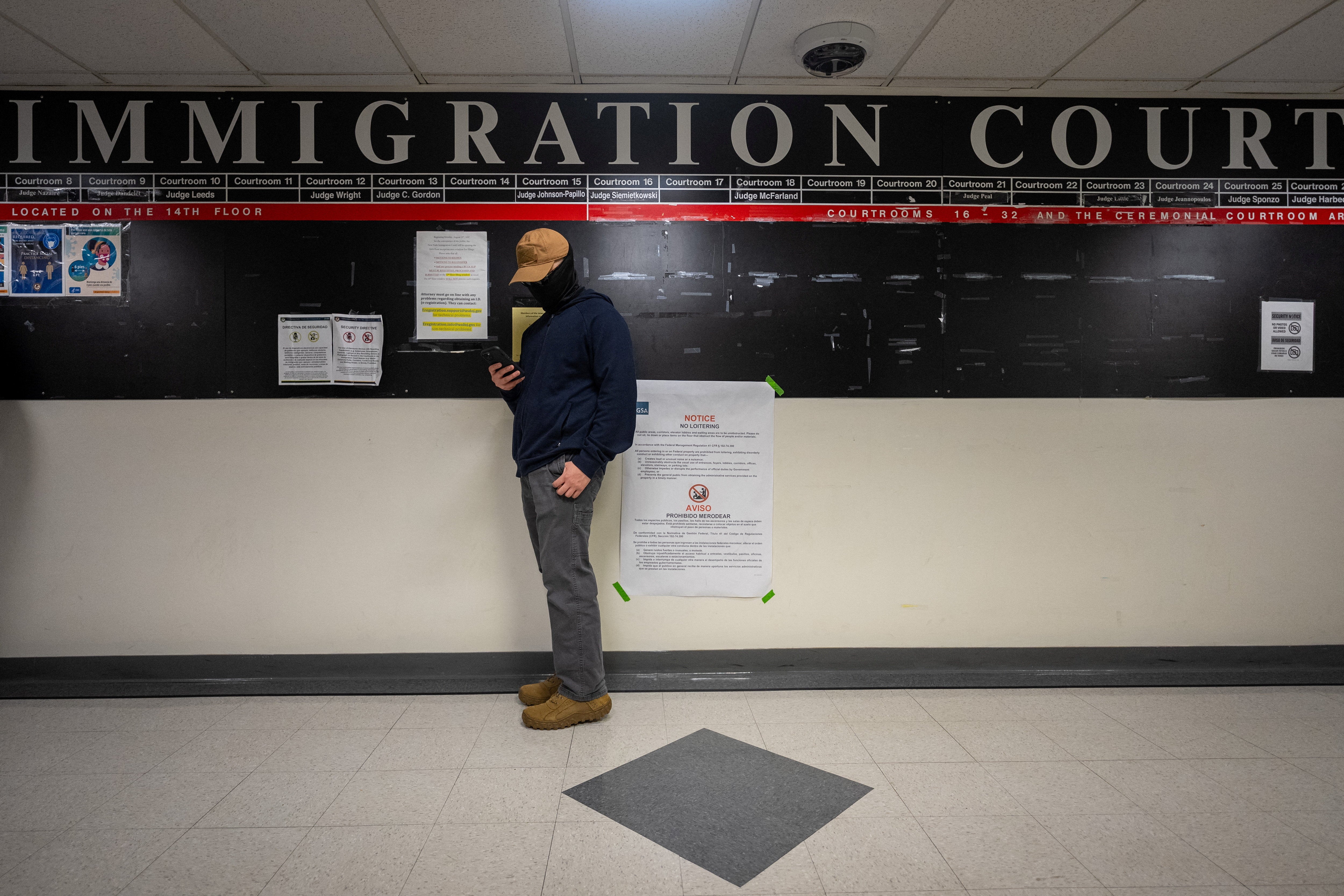
Last year, the Trump administration issued a memo designating virtually everyone who is in the country without legal permission subject to mandatory arrest and detention — a policy that has invited an avalanche of legal challenges from immigrants fighting for their release.
Immigrants and their lawyers are increasingly turning to the federal court system to allege violations of their constitutional rights in an effort to fight their arrest and detention, a process that is overloading courts across the country as the Trump administration tries to deport tens of thousands of detainees.
In December, a federal judge struck down the Trump administration’s policy to deny bond hearings to immigrants in custody.
A top immigration court judge, however, told colleagues last month that they are not bound by the ruling.
Roughly 70,000 people are locked up in immigration detention centers across the country at any given time. More than 70 percent of those detainees have never been convicted of a crime, making it more likely they will prevail in a bond hearing for their release.
Without enough detention space and to avoid months- or years-long court battles, the Trump administration has instead tried to get immigrants to leave on their own, or “self-deport,” with $3,000 to $5,000 cash incentives for those who take up the offer.
The latest moves follow a radical overhaul of the immigration court system under Trump, with more than 100 immigration judges fired or forced out of the job since the president took office, including more than a dozen within the final weeks of 2025 alone.
Join our commenting forum
Join thought-provoking conversations, follow other Independent readers and see their replies
Comments
Bookmark popover
Removed from bookmarks