How fast will airports and flight schedules get back to normal after government shutdown ends?
Sunday marked the worst day for air travel yet amid the ongoing shutdown, with nearly 3,000 canceled flights nationwide
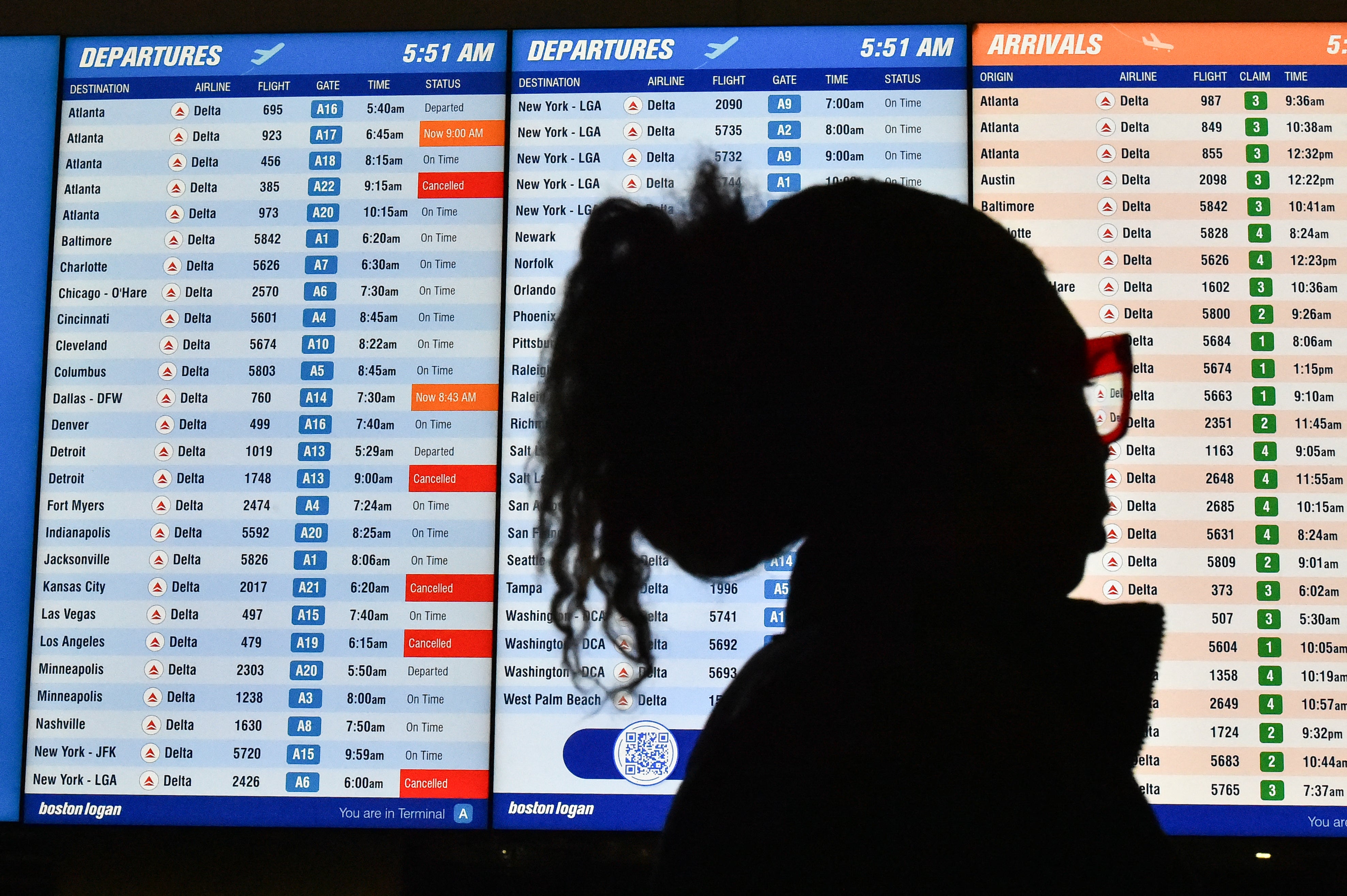
Travel delays and disruptions are piling up this week as the Federal Aviation Administration cuts flights at major airports and air traffic controllers go without pay because of the federal shutdown.
The FAA announced last week that airlines at 40 major airports must cut 4 percent of their flights starting Friday. That requirement could rise to 6 percent by Tuesday, and 10 percent by Friday.
But an end to the shutdown could be in sight, after eight Democratic senators supported a Republican plan to reopen the government over the weekend. However, the measure still needs final Senate approval. It’ll also need approval from the House of Representatives — and President Donald Trump’s signature — before it becomes law.
It’s unclear how long this will take.
But air travel won’t go back to normal immediately after the shutdown comes to an end, according to Transportation Secretary Sean Duffy and other aviation experts. Here’s what you need to know:
Air travel could take ‘days, if not a week,’ to return to normal, Duffy says
Transportation Secretary Sean Duffy said it could take “days, if not a week,” for flights to return to full capacity after the shutdown ends.
"The problem is the airlines have to then put those flights back out for booking again, and so it's going to take some time for the airlines to respond," Duffy told Fox News’s America Reports on Friday.
"So once we see more controllers in the towers, then airlines have to respond to that, so it can be, you know, days, if not a week, before we get back to full-forced flights when the shutdown ends,” he added.
Ahmed Abdelghany, an associate dean for research at Embry-Riddle Aeronautical University’s David B. O’Maley College of Business, told USA Today the shutdown will have lasting impacts on air travel.
“Even if the government reopens, recovery will still take time. Some passengers will have to be refunded and removed from the system because capacity simply cannot absorb everyone. The severity and duration of this reduction will determine how long recovery takes,” Abdelghany said.
Thousands of flights canceled and delayed across the country this weekend
More than 2,700 flights into, out of, or within the U.S. have been delayed so far on Monday, while more than 1,600 flights have been canceled altogether, according to FlightAware.
Sunday marked the worst day yet for air travel amid the shutdown, with more than 11,000 delays and nearly 3,000 cancellations, FlightAware’s data shows. On Saturday, 7,545 flights were delayed and 1,566 flights were canceled.
Air traffic controllers have missed one paycheck so far, and are set to miss their second paycheck on Tuesday, Duffy said on Friday.
“The controllers have said, most of the controllers can navigate missing one paycheck, virtually none of them can navigate missing two paychecks,” he told Fox News.
What rights do travelers have as flights are delayed and canceled?
The Department of Transportation updated its policy last week regarding refunds on canceled or delayed flights. Passengers are entitled to a refund if the airline cancels a flight, “regardless of the reason, and the consumer chooses not to travel,” the policy states.
In the event of “significant delays,” a passenger is entitled to a refund if they choose not to travel, according to the Transportation Department. A “significant delay” is defined as a three-hour delay domestically, or a six-hour delay internationally.
In the event of a “significant delay,” passengers can be compensated for “certain expenses and/or amenities if the delay was due to something in the airline’s control and causes a long enough inconvenience during travel,” according to the department’s policy. But if a passenger still chooses to take the delayed flight or an alternative flight, they aren’t entitled to a refund.
Join our commenting forum
Join thought-provoking conversations, follow other Independent readers and see their replies
Comments
Bookmark popover
Removed from bookmarks