Artist accuses Homeland Security of stealing his work for meme that promotes deporting one-third of the country
Trump administration repeatedly comes under fire for appropriating artists’ work to promote anti-immigrant agenda
Kristi Noem’s Department of Homeland Security promised “the peace of a nation no longer besieged by the third world” in the agency’s New Year’s Eve message imagining the removal of 100 million people from the country.
Attached to the post on the agency’s X account was a painting from Hiroshi Nagai’s Beachcomber series, showing a classic American car parked on the beach as a massive wave hurls towards the shore.
The agency also added text to the image: “America After 100 Million Deportations.”
The administration’s outrageous suggestion that nearly one-third of a country made up of more than 340 million people could be deported swiftly drew outrage. Nagai, meanwhile, became the latest artist to accuse Donald Trump’s administration of lifting work and adapting it to spread a political message without permission.
“The image is being used without permission,” the 79-year-old Japanese artist wrote to his followers on the social media platform. “What should I do about this?”

In response to a request for comment about the artist’s complaint, a spokesperson for Homeland Security told The Independent that the agency “will continue using every tool at its disposal to keep the American people informed as our agents work to Make America Safe Again.”
The Independent has requested comment from representatives for Nagai.
Nagai is among several artists, publishers and media personalities — from Sabrina Carpenter to Thomas Kinkade — who have bashed Homeland Security and the Trump administration in recent months for unauthorized adaptations of their work.
In July, Kinkade’s family foundation lamented Homeland Security's “unauthorized” use of his Morning Pledge and “the sentiment expressed in the post and the deplorable actions that DHS continues to carry out.”
DHS also used a painting from Morgan Weistling depicting a white frontier family to tell Americans, “remember your homeland’s heritage.”
“Attention: The recent DHS post on social media using a painting of mine that I painted a few years ago was used without my permission,” Weistling wrote on his website in response.
In the months that followed, federal agencies using artists’ work without permission received similar complaints from podcaster Theo Von, Pokemon, the band MGMT, country singer Zach Bryan and the publishers of Franklin the Turtle children’s books, among others.
“This video is evil and disgusting,” Carpenter wrote on X after the White House used her song “Juno” to promote the president’s anti-immigration agenda. “Do not ever involve me or my music to benefit your inhumane agenda.”
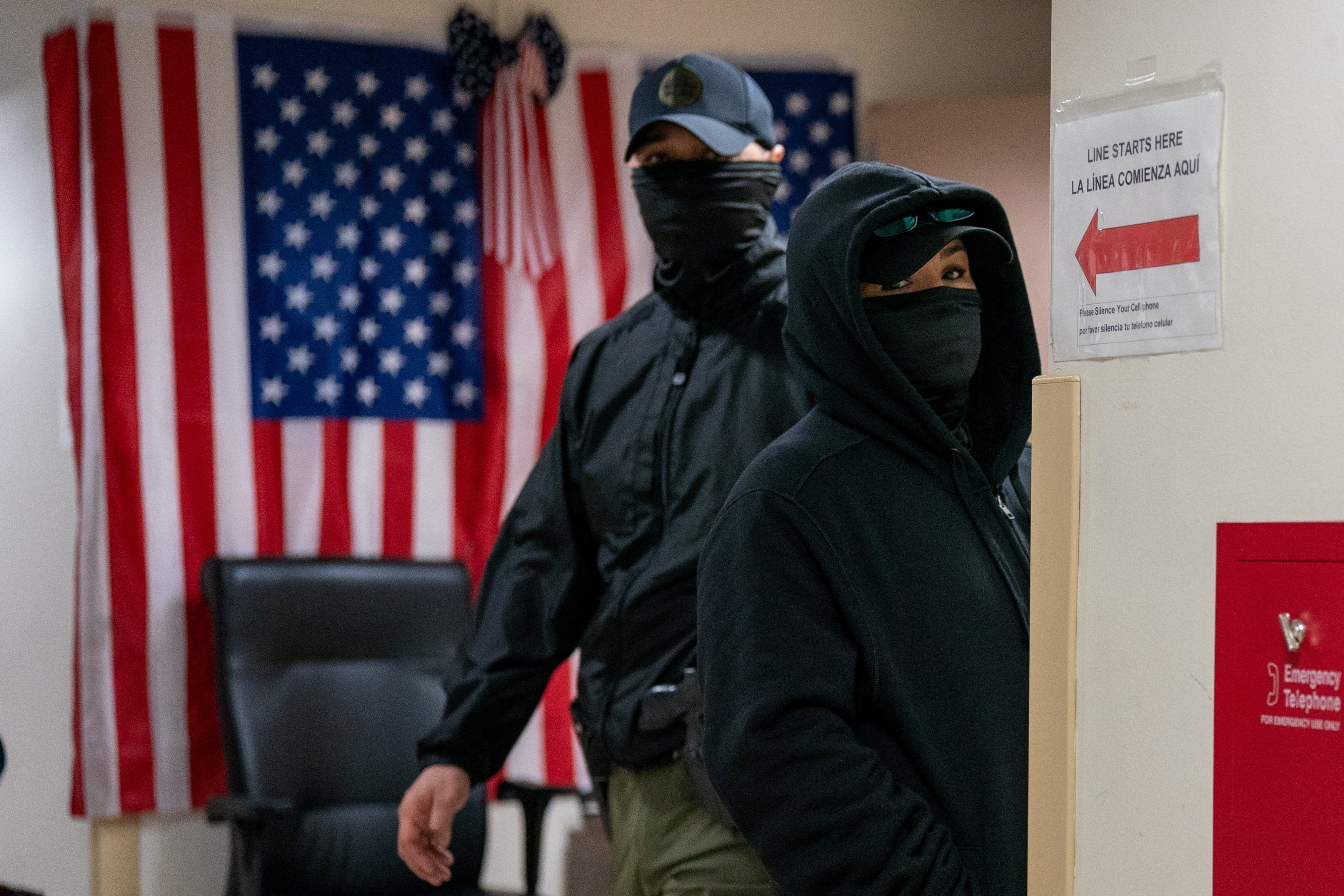
The administration’s aggressive use of memes and generative AI material to promote mass deportations on official government social media accounts has adopted “edgy” Gen Z humor by pulling from a wide array of memes and material from far-right and Christian nationalist corners of the internet.
That includes remixed versions of Japanese pop art by artists like Nagai and memes scored by Japanese city pop, which has seen a recent resurgence among younger online audiences for its nostalgic and synthesizer-driven sounds.
Homeland Security and other agencies have tapped into that “nostalgia” with videos scored by city pop and featuring American themes that critics argue lean into white supremacist tropes.
Before Christmas, DHS shared the message “we are blessed to share a nation and a Savior” with an 85-second video with rapidly cut-together American Christmas imagery with a cassette-like filter, scored by the 1993 song “Christmas Eve” by Tatsuro Yamashita.
“DHS in particular is trying to use Twitter [and Instagram] as a form of not just recruitment but also promotion,” Joan Donovan, assistant professor at Boston University and the coauthor of Meme Wars: The Untold Story of the Online Battles Upending Democracy in America, told Wired last year. “And the kind of promotion that they’re doing is targeted toward, I would say, young men in their teenage years or twenties.”
Join our commenting forum
Join thought-provoking conversations, follow other Independent readers and see their replies
Comments
Bookmark popover
Removed from bookmarks