Mystery as another socialist South American leader vanishes without a trace
Bolivia’s ex-leader Evo Morales disappeared from public view just days after the capture of his close ally – former Venezuelan President Nicolas Maduro
Bolivia's towering socialist icon, Evo Morales, has been conspicuously absent from public life for nearly a month, sparking alarm among his supporters and fuelling online speculation. His disappearance follows the recent US seizure of assets belonging to his close ally, Nicolás Maduro, the former Venezuelan leader.
The former leader missed a traditional ceremony on Monday, usually attended by him, to welcome students back from their summer break. This past Sunday marked the fourth consecutive week Morales failed to appear for his long-running political radio show, which he has hosted without interruption for years.
Since early January, he has also reportedly skipped planned meetings with members of his coca-leaf growing union in Bolivia’s remote Chapare region, while his previously consistent stream of social media updates has all but ceased.
Although Morales has spent the past year evading an arrest warrant on charges of human trafficking, his fugitive status hasn't stopped the firebrand union leader from speaking at rallies, receiving supporters, giving interviews, posting on X — or even running an unconventional presidential campaign last year — all from his political stronghold in the Chapare.
Morales rejects the statutory rape allegations as politically motivated.
The question of Morales’ whereabouts has set off furious speculation as the Trump administration imposes its political will in South America through sanctions, punitive tariffs, electoral endorsements, financial bailouts and military action.
Explanations range from dengue to exile
Morales' close associates have privately declined to provide an explanation for his absences while publicly telling supporters that the former president has been recovering from dengue fever, a mosquito-borne viral illness with symptoms that typically last no longer than a week.
“We have asked our brother Evo Morales to rest completely,” said Dieter Mendoza, vice president of an body of farmers known as the Six Federations that runs the coca-leaf trade in the tropics, declining to elaborate.
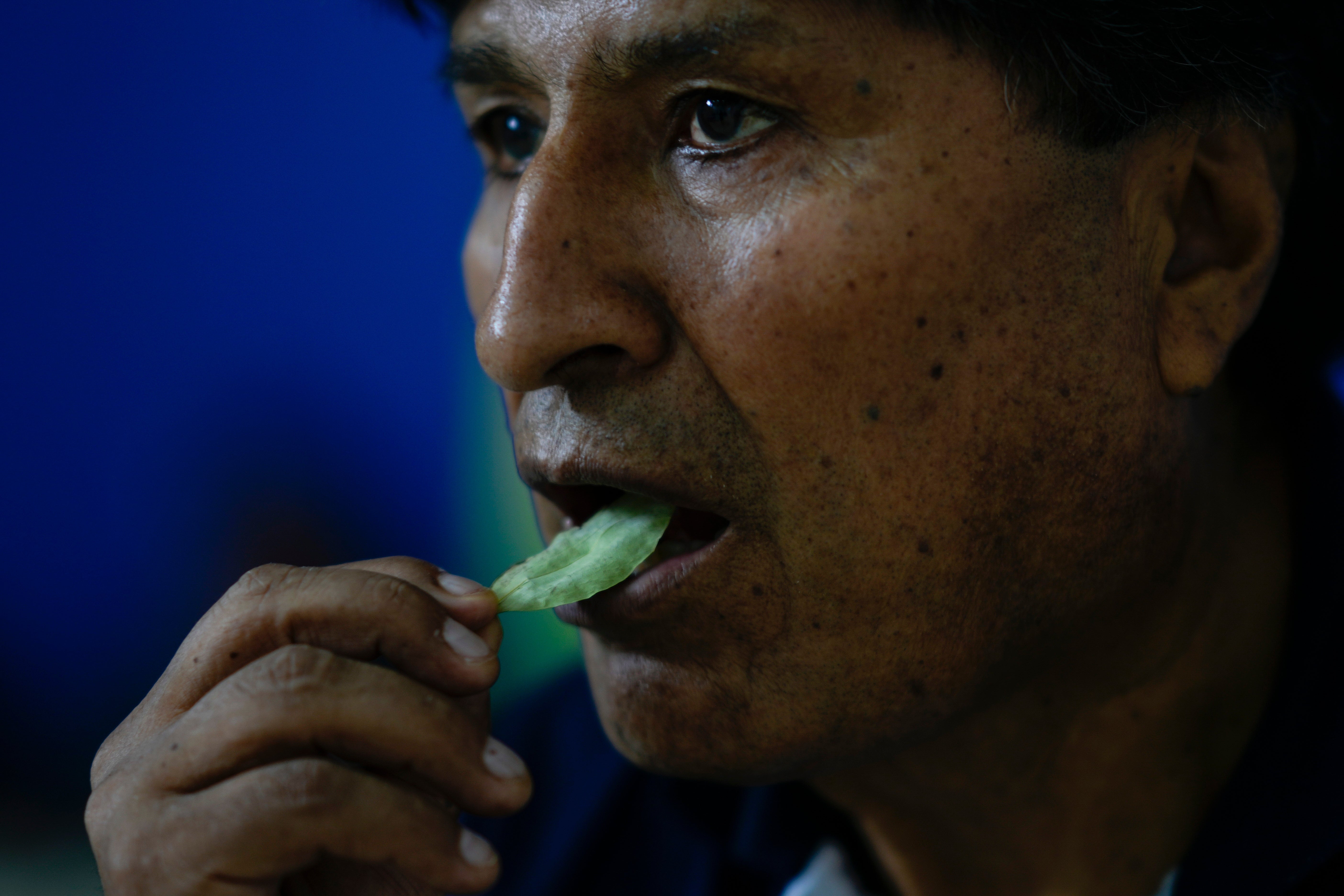
For Morales' rivals, the mystery has stirred resentful memories of 2019, when he resigned under pressure from the military after his disputed bid for an unconstitutional third term provoked mass protests. Morales fled to Mexico then took refuge in Argentina, only to return home when Luis Arce, his former finance minister, took the presidency in 2020.
“Evo Morales is in Mexico,” declared right-wing lawmaker Edgar Zegarra, offering no evidence but demanding that the government prove otherwise. “He has not appeared, not even at political events, and they don’t know how to justify it.”
Security officials within Bolivia's first conservative government following almost 20 years of dominance by Morales’ Movement Toward Socialism, or MAS, party, have been cryptic.
“The former president has not left Bolivia,” said Police Commander Gen. General Mirko Sokol, “at least not through any official channels.”
WhatsApp messages and calls to Morales went unanswered Monday.
Morales withdraws as Bolivia veers to the right
Bolivia's election of centrist President Rodrigo Paz last October came as part of a wider ideological swing across Latin America, where U.S. President Donald Trump has become increasingly entangled in regional politics.
In the last two years, right-wing would-be saviours have come to power in countries wracked by economic crisis like Argentina and consumed by fears of violent crime like Chile. Costa Rica's election of a right-wing populist Monday reinforced the trend.
Like Maduro and his mentor and predecessor, the late Hugo Chávez, Morales was openly hostile to the United States and cozied up to its political foes during his 14 years as Bolivia's first Indigenous president from 2006 to 2019.
In 2008, Morales expelled the U.S. ambassador and counternarcotics officials for allegedly conspiring against his government. Russia poured money into Bolivia’s energy and lithium mining sectors. Chinese companies won contracts to build highways and dams. Iran offered the country its drone technology.
Now Paz is trying to reverse the political direction. His government has scrapped visa requirements for American tourists, held talks with U.S. officials on securing loans to rescue Bolivia's economy and paved the way for the return of the Drug Enforcement Agency to Bolivia, a regional cocaine-trafficking hub.

The prospect of the DEA’s reappearance has rattled the Bolivian tropics still scarred from an aggressive U.S.-backed war on drugs in the late 1990s that forced coca farmers to eradicate their crops. The plant is the raw material of cocaine but it also holds deep cultural and spiritual significance in the country.
Coca farmers in the Chapare say they haven't seen Morales since Jan. 8, as panic about a rare overflight by a Super Puma helicopter gripped the jungle region. Deputy Social Defence Minister, Ernesto Justiniano, later explained it was a data collection mission in coordination with foreign agencies, including the DEA, but had nothing to do with Morales.
“State surveillance should not be a threat to anyone," he said.
Government critics join the frenzy
Right-wing contenders in last year's presidential election campaign — including ex-President Jorge Quiroga, who ultimately lost the runoff to the more moderate Paz — vowed that if elected, they'd yank Morales from his hideout in the Chapare and lock him up.
Now, they're seizing on unverified rumours of Morales' escape to ratchet up the pressure on Paz.
“He’s playing hide-and-seek, he’s making a mockery of the state,” Quiroga said of Morales. “The country cannot speak of legal security when an arrest warrant is not executed.”
Bolivia's judiciary, with its history of tacking where political winds blow, has already freed right-wing opposition figures and pursued cases against former officials, detaining former President Arce just weeks after Paz's inauguration.
But unlike Arce, Morales retains a strong, albeit small, base of support. Loyalists protecting him from arrest have vowed to resist with guerrilla tactics if security forces invade the Chapare.
Morales could appear at any time and quash the speculation about his status.
But for now his inner circle appears content to leave things a mystery.
“Our brother president is doing very well,” said Leonardo Loza, a former senator and close friend of Morales. “He is in a corner of our greater homeland.”
Join our commenting forum
Join thought-provoking conversations, follow other Independent readers and see their replies
Comments
Bookmark popover
Removed from bookmarks