More Americans will die than be born in 2030 - meaning immigration will be the only form of population growth, study says
Without immigration, the population will start to decline by 2030

Deaths are soon expected to outpace births in America – meaning that immigration may become the driving force behind population growth.
Starting in 2030, the total number of deaths reported across the country each year will surpass the number of children being born, according to the Congressional Budget Office’s Demographic Outlook.
While Americans are having fewer children, slowing immigration is also to blame for the stalling population growth. Net immigration – or the number of people who migrate to the U.S. minus the number who leave – will be increasingly important to keep the population growing, CBO says.
“Starting in 2030, declining fertility rates are projected to cause births to fall short of deaths. Over time, the negative net contribution of births and deaths increasingly offsets the positive contribution of net immigration, until population growth slows to zero in 2056,” the report says. “The population is expected to shrink thereafter.”
Congressional forecasters have lowered their projection of population growth for the next decade by 7 million people, in response to President Donald Trump’s aggressive immigration crackdown and falling birth rates.
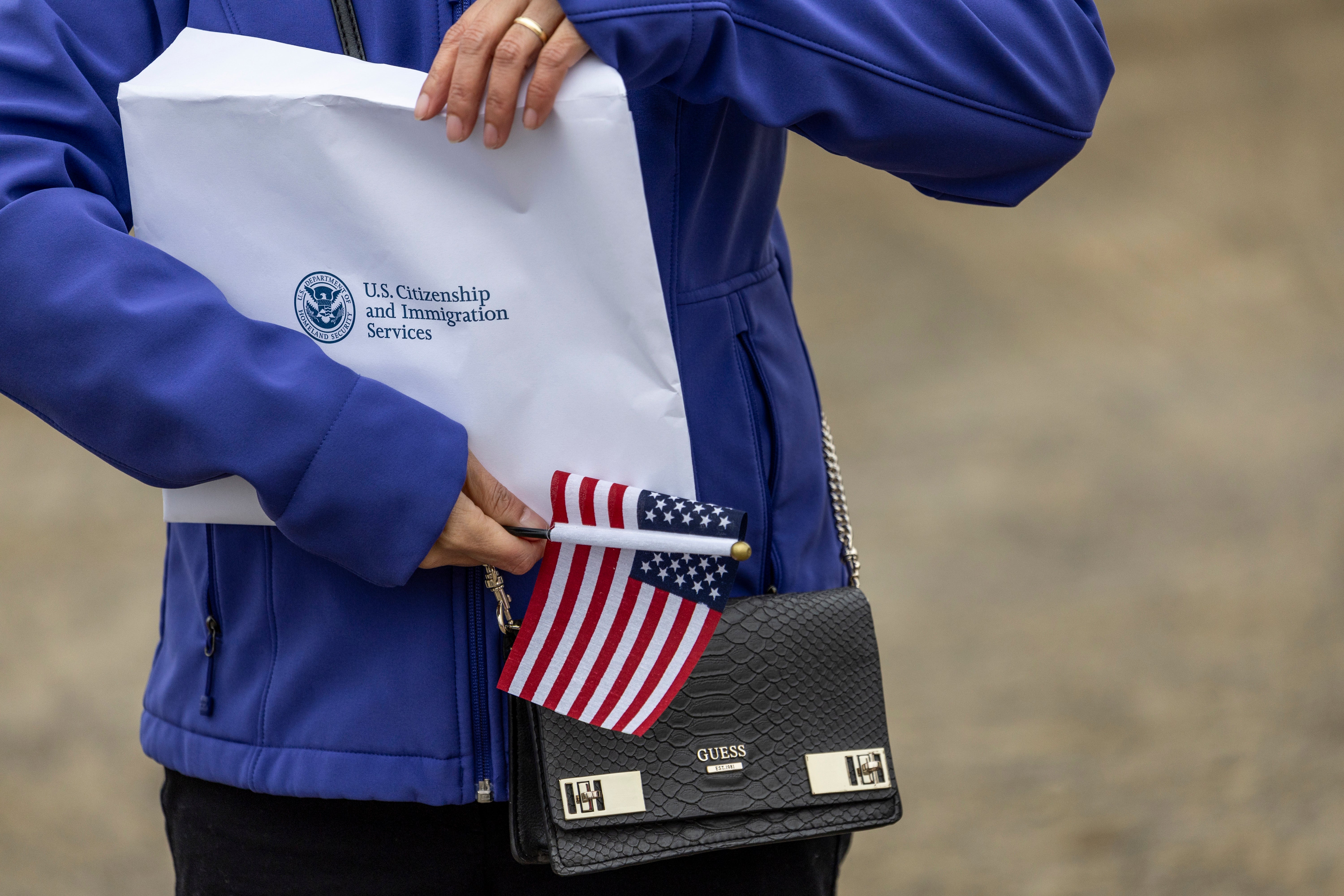
Since taking office last year, Trump and his administration have vowed to set off the “largest deportation operation in American history,” sending droves of immigration agents into major U.S. cities to conduct raids at places known to employ people without legal status.
Over 2.5 million immigrants without legal status left the U.S. last year, according to White House data. Of those, 605,000 were deported, and over 1.9 million chose to self-deport, officials claim.
“For the 2025-2035 period, changes since last January in projections of net immigration were the largest factor causing CBO to reduce its projection of the size of the population,” the CBO report says.
“Those changes were largely driven by administrative actions taken since January 20, 2025, and to a lesser extent by immigration enforcement practices in the 2025 Reconciliation Act,” it added.
Immigration helps bolster birth rates, as foreign-born women have more children, on average, than women born in the U.S.
Without immigration, the population will start to decline by 2030, according to the report.
The recent changes in immigration policies combined of a declining fertility rate and an aging populace are what prompted the CBO to move forward the timeline for when the U.S.’s population will ultimately stall from the late 2030s or even early 2040s, the report says.
The analysts have also lowered their expectations for the total fertility rate, dropping it down to just 1.53 births per woman in 2026— a figure well below the 2.1 “replacement rate” needed to ensure a steady population.
The fertility rate of native-born women is expected to continue dropping to 1.50 in 2032, where forecasters predict it will stay through 2056. Meanwhile, foreign-born women have a fertility rate of 1.79 this year, though it is expected to drop to 1.66 in 2036, and stay at that rate through 2056.
At the same time, more older Americans are entering age groups with higher mortality rates. With the population growth expected to slow over the next 30 years, according to CBO, the number of deaths will eventually outpace the number of births in the country.
The economic impacts of a stalling – and potentially shrinking – population will be tremendous.
As the number of retirees grows, the number of workers funding their social safety net and providing their old-age care will shrink.
The number of Americans receiving Social Security is set to increase from 349 million people this year to 364 million in 2056. But the number of people who are employed, as well as the size of the population over the age of 65, affects the number of Social Security and Medicare beneficiaries, CBO says.
“The segment of the population age 65 or older is projected to grow more quickly, on average, than younger groups, causing the average age of the population to rise,” the report says.
The analysts cautioned that their forecasts of births, mortality and net immigration are highly uncertain, and small changes in any of those factors could drastically affect the population.
Join our commenting forum
Join thought-provoking conversations, follow other Independent readers and see their replies
Comments
Bookmark popover
Removed from bookmarks