Starmer vs Burnham: How Keir plans to take back control of the red wall
As Andrew Gwynne’s resignation opens up a path for Andrew Burnham to make a leadership challenge against the prime minister, Colin Drury says the time has come for Keir to stand up for the north of England as much as he does for the Northern Alliance


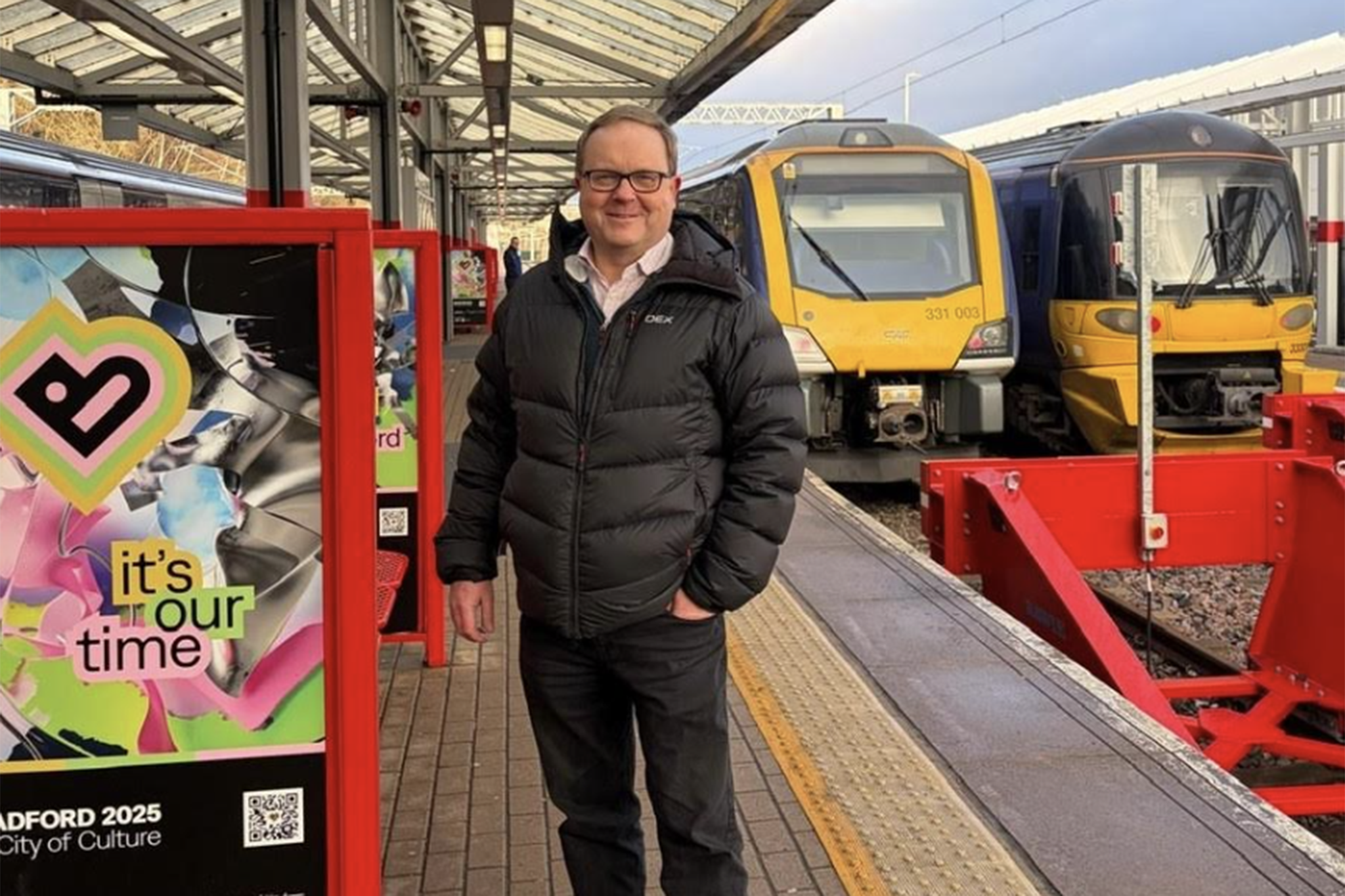
It’s Friday morning at Bradford Forster Square train station, and lawyer Graham Sweeney shudders when he thinks of some of the rail journeys he’s had to endure over the years. “We have offices here, Huddersfield and Leeds, and we do a lot of work in Manchester, so, as a business, we’re travelling a lot,” the 53-year-old says. “And every time I know I’ll be on the train, I dread it.”
Among his own personal horror stories – every commuter in the North has them – are regular cancellations, constant delays and more time than he cares to remember standing on freezing platforms. Trains don’t have wifi and, more often than not, there aren’t enough seats. Even when everything runs smoothly, it still takes an hour to get from Bradford to Manchester – a distance of just 35 miles.
“You have to plan for things to go wrong,” the father of three says. “If you have a meeting at 3pm, you make sure you’re on a train that gets you in at 1pm – because there’s every chance there will be a cancellation. It is extraordinary how poor it is.”
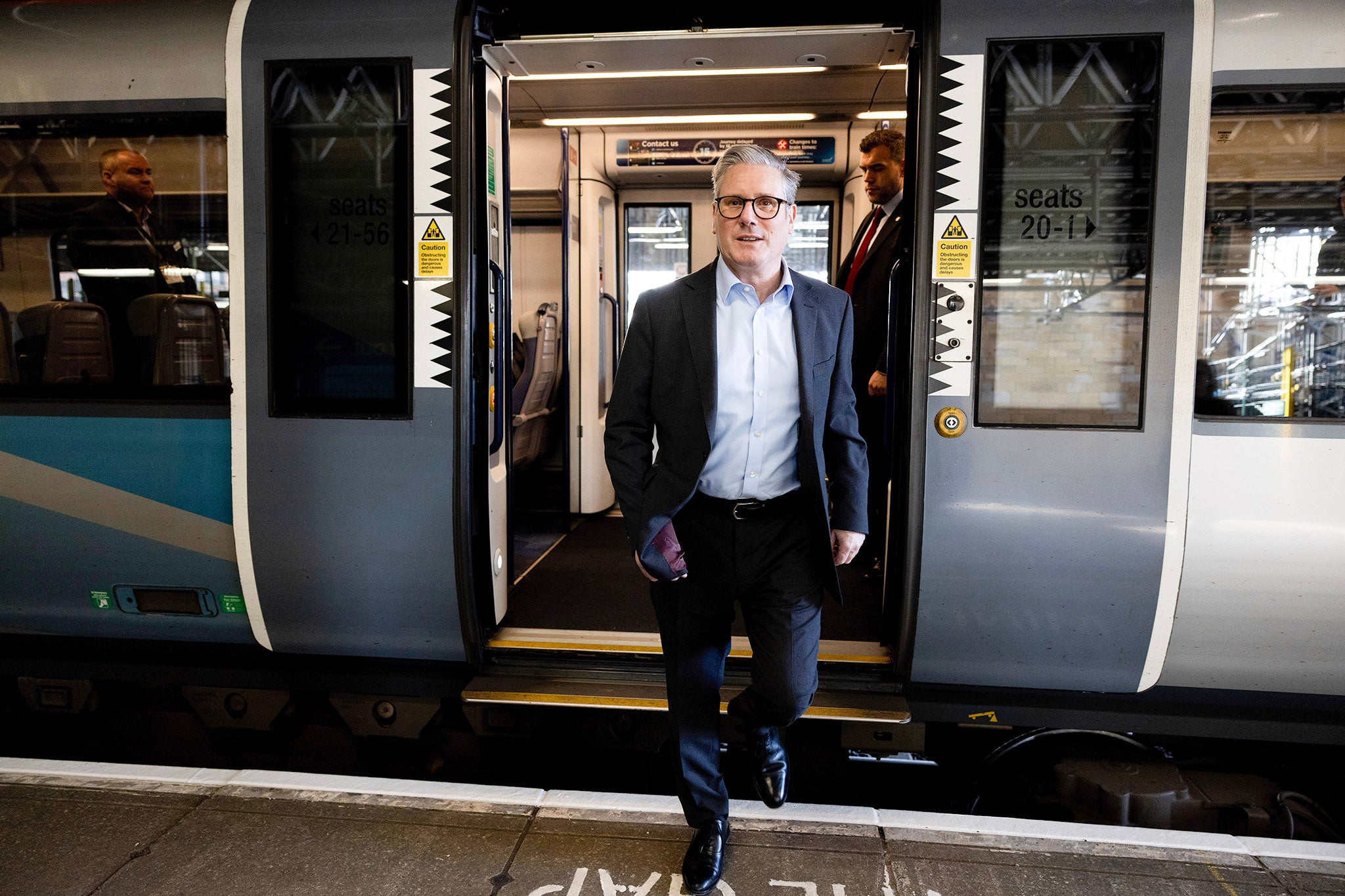
Things may be set to change – if last week’s announcement by Sir Keir Starmer is to be believed. A proposed £45bn scheme, Northern Powerhouse Rail, will, according to the government, transform train travel across the north.
It very much feels like a move straight out of Andy Burnham’s playbook. Bold infrastructure projects are increasingly seen as one way to win support among those who have come to feel abandoned by Westminster. Labour’s northern mayors, notably Burnham, mayor of Greater Manchester, were quick to understand that this was one thing that could turn the tide on the surging support for Reform in the red wall.
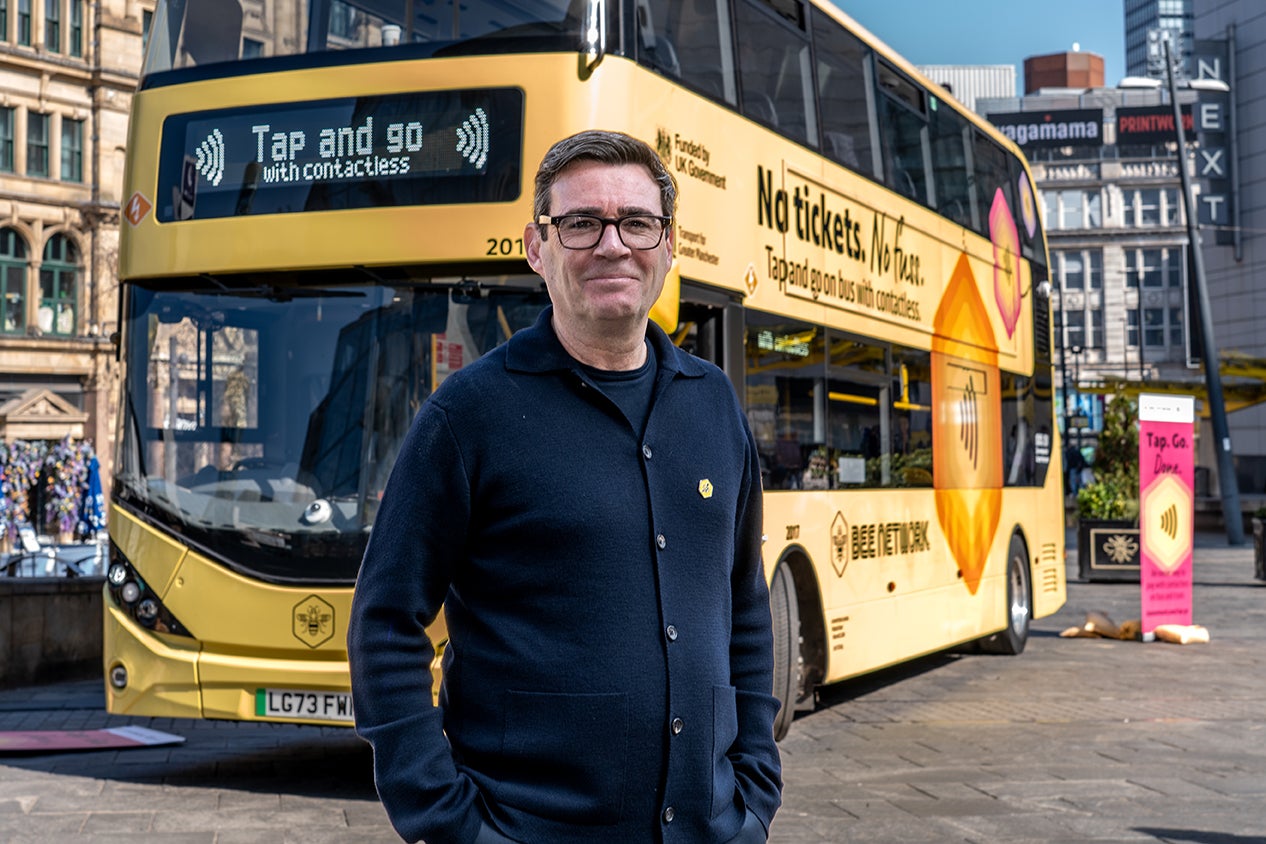
It is a strategy that has delivered a popularity that has seen Burnham cast as Starmer’s prince across the water. Under Burnham’s watch, the region’s buses have been taken into public ownership as part of the Bee Network. Since it launched in 2023, journeys have become more reliable, better connected and easier to understand. Underused routes have been saved from the axe, more night buses have been introduced, fares have been capped and, perhaps as a result, user numbers in 2025 were up by 14 per cent. The network will take two train routes under its control later this year, a sign of its success.
As history tells us, getting trains to run on time should never be underestimated as a political power play. In terms of affecting change that people can feel in a real way on the ground, it is a vote-winner.
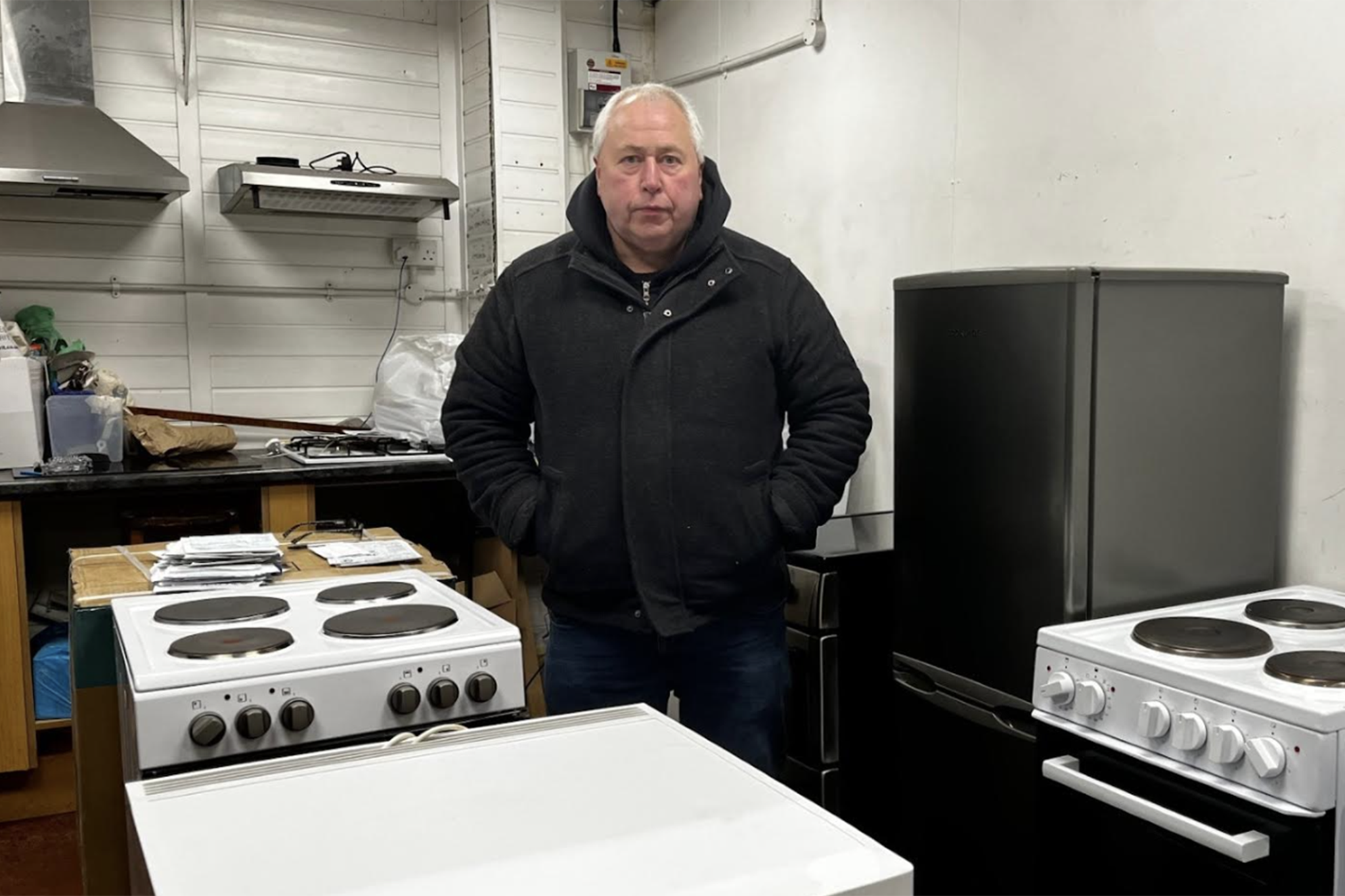
Martin Little is typical of Labour’s problem – and potential. He runs the Don Little Domestic Appliances unit at Leeds Kirkgate Market but lives over in Greater Manchester. After a lifetime with the mainstream parties, the 60-year-old feels he’ll go for Farage next time out. “Something needs to change,” he sighs.
But one thing, it seems, might persuade him to vote Labour: Burnham himself. He commutes every day but prefers to drive rather than take the train – “because, otherwise, I’m stood there for an hour with my face in someone’s armpit”.
But Burnham, he says, “has done a terrific job”.
“You use public transport in Manchester now and you notice the difference. But what I like most about that is he said he was going to do something and then he actually delivered on it. He’s shown he isn’t all talk. I would happily see him as prime minister.”
And Burnham’s path to Westminster has just opened up. The departure this week of Andrew Gwynne, the MP for Gorton and Denton, creates a route for Burnham to make a Commons comeback that would allow him to challenge Sir Keir Starmer’s position if he stood in the upcoming by-election. If successful, Burnham could return to parliament just as the prime minister reaches his lowest ebb, with Scottish and Welsh elections and English council elections in May expected to be disastrous for Labour.
As depressing as Burnham’s popularity is for Starmer, it also points to a way out of the prime minister’s dire polling. While Starmer has excelled on the international stage, it is in the English provinces where his real political fortunes lie. If he gets this right and people feel real change in their everyday lives, he could reinvigorate his political stock and see off the threats from Burnham and Nigel Farage.
The recent rail announcements will occur over three stages: lines connecting Leeds, Bradford, Sheffield, York and Manchester will be upgraded and electrified; completely new stations will be built in Bradford, Warrington and Rotherham; and a new line will be constructed connecting Liverpool and Manchester. If all goes to plan, a further new line linking Birmingham to the North West will also be built.
“No more paying lip service to the potential of the North, but backing it to the hilt,” thundered Starmer. “We’re doing this properly and doing this right,” added chancellor Rachel Reeves.
The slight catch, though? While the proposals have been split into three separate timeframes, not even the earliest of the improvements will come into existence before – mark your calendars – the mid-2030s. The Manchester–Birmingham line has been slated for the 2040s. And commuters here in the North have heard all this before. Multiple times.
Northern Powerhouse Rail was first mooted by the then chancellor George Osborne in 2014 (at Manchester’s Museum of Science and Industry, incidentally). Since then, it has been held up, delayed, cancelled, pared down and rescheduled more often – so goes the apocryphal joke – than the 8.15 to Liverpool Lime Street.
Needless to say, Starmer’s recent announcement has been met with not just a pinch of salt but an entire train truck’s worth. “If it goes ahead, it will be an absolute game-changer,” says Sweeney. “The connectivity that a faster and more reliable rail service will provide would be a revelation. What you’d be doing is making it easier for people to live, for instance, in Huddersfield and work in Manchester – in the same way it’s now easy to live in Reading and work in London. And if you do that, all the evidence shows the economy booms.”
He notes that last year, Bradford got a six-times-a-day service to London. It is, he says, reliable, comfortable and reasonably inexpensive. And, as a result, his firm – Schofield Sweeney Solicitors – is starting to find itself looking more towards London than Manchester. “How can that be right?” he asks. “How can that be good for our region or for the North?”
As he stands at Forster Square, 30 miles away at Leeds train station, Chris Hay and David Appleyard are waiting to travel in the opposite direction.
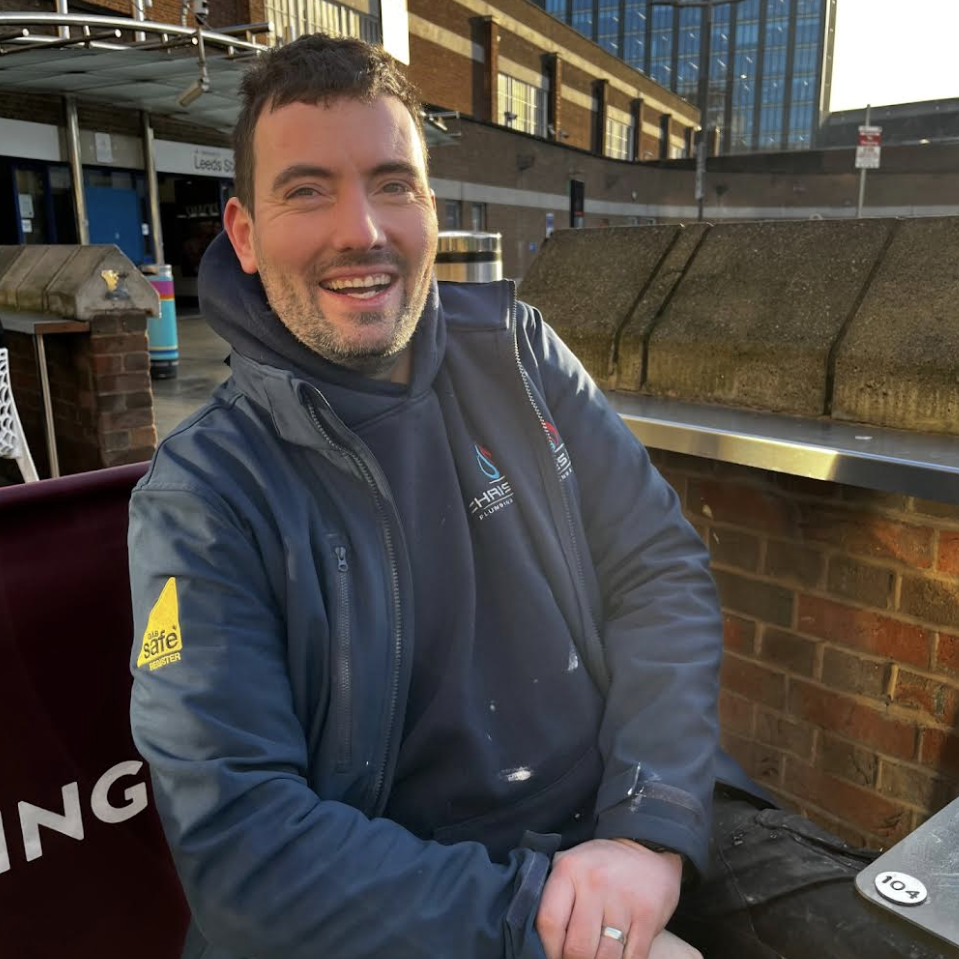
Their train has been – guess what? – cancelled. And since they’ve both got the day off, they’ve decided to pass the time with a quick drink in the station’s Wetherspoon. “I should be billing Northern Rail for this pint,” says Hay ruefully.
The 37-year-old is a plumber and doesn’t use the trains much as a general rule, but is frustrated at the state of them nonetheless. He has two children in their early teens and worries that the difficulties they will soon face in getting around will impact their whole lives.
“One of them wants to go to Oxford,” he says. “But you look at how hard it is to get there – how long it takes – it makes it seem like another world away.”
His friend Appleyard, a 26-year-old builder, considers the 2035 target date for the earliest NPR improvements. “That means five years of talking about it, doesn’t it?” he half-splutters. “Five years of talking about it before it gets cancelled anyway because it now costs too much.”
Such frustrations are widely expressed by the commuters, business owners and workers in West Yorkshire I speak to on a wet Friday morning. Very few people appear to have much faith that the changes will happen – and certainly not on time or on budget. Which is why it makes sense for Starmer to double down on this as a priority. It would not only help his personal rating but also help him deliver on the national growth he so desperately needs.
Better transport links would help drag the north’s productivity up to the UK average. If that were the case, it would – according to government estimates – inject £40bn a year into the British economy. A 2021 calculation by Transport for the North suggested NPR could, in the long term, help create 74,000 jobs in the region.
Perhaps of equal importance to the current government, meanwhile, are the political benefits. As Reform continues to surge, this is a way for Starmer to show he can stand up for the North as much as he can stand up for Nato.
“We need to invest more and tap into this amazing potential and amazing talent that is here,” says Mandy Ridyard, finance director at ASG Produmax, a 120-staff aerospace engineering company based in Baildon, a town on the outskirts of Bradford.
The 59-year-old herself regularly flies for business. “It takes me longer to get from Bradford to Manchester airport than it takes me to get from Manchester to Schiphol,” she says. “That’s off-putting for me, so what are our potential international customers thinking when they see that travel time? It means our ability to realise our potential is being limited.”
She believes the changes will come – because there is increasingly little alternative.
Yet whether this transformation comes in time to stop Labour’s haemorrhaging support ahead of the next election remains to be seen. “It’s still Reform for me,” says Hay at one point. “There’s nothing the others could do to change that now.”
The rail announcement, then, was the easy part. Making people believe the trains will one day exist – and then run on time – will be far harder. But as a strategy, Starmer is on the right track.
Join our commenting forum
Join thought-provoking conversations, follow other Independent readers and see their replies
Comments
Bookmark popover
Removed from bookmarks