Detectorist uncovers what could be Wales’s biggest treasure hoard buried in a muddy field
David Moss slept with the coins in his car for three days before passing them on to experts
A detectorist has said he was left with “goosebumps” after he uncovered what could be Wales’s largest haul of treasure.
David Moss, 36, was out in a “virtually untouched” area of north Wales with his metal detector when he came across two clay pots containing around 15,000 Roman coins.
Terrified of the coins being stolen, he slept in his car with them for three days before handing them over to experts at the National Museum in Cardiff.
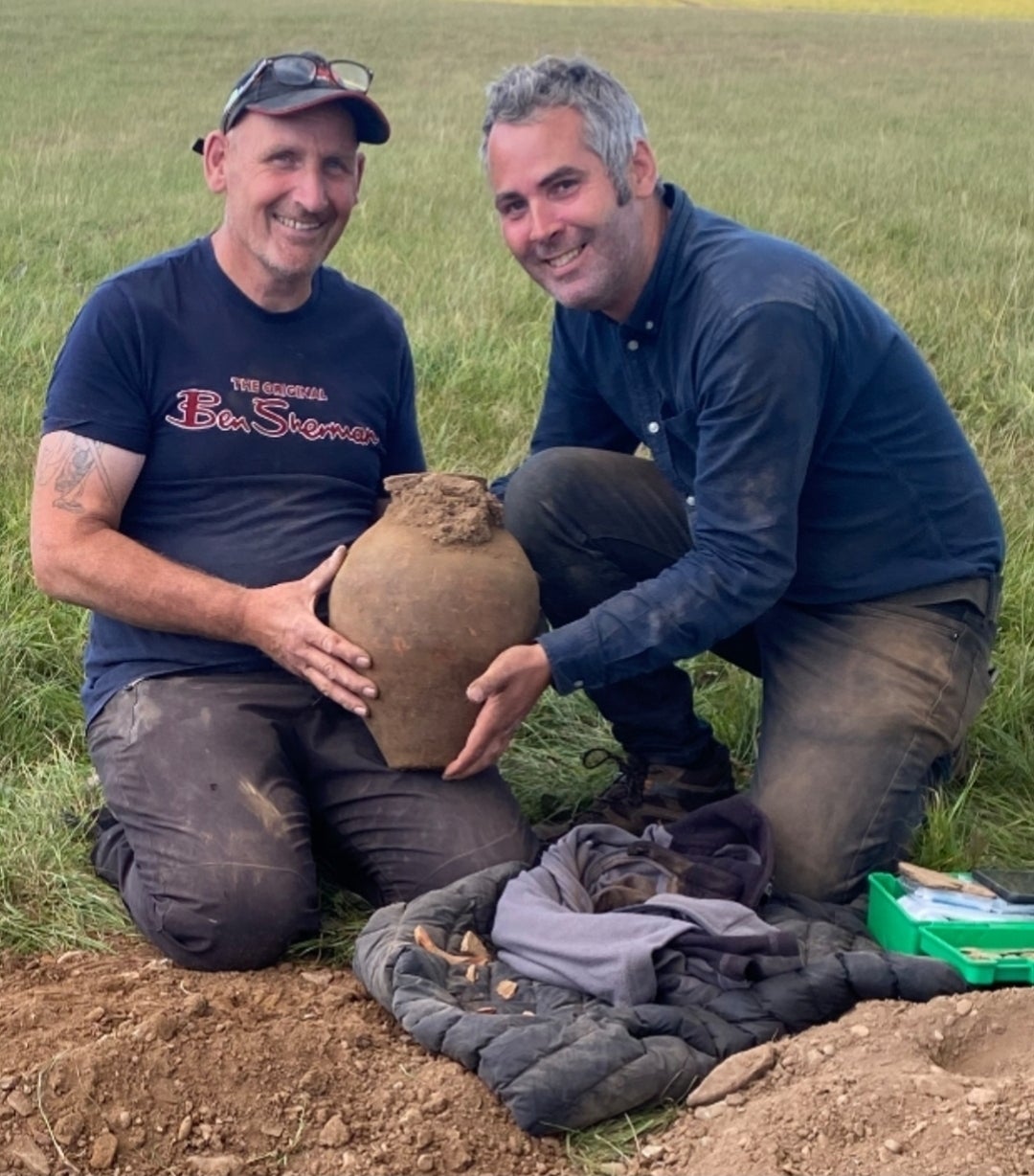
The haul, which reportedly weighs more than 60kg and is still being studied by experts, could be the largest collection of treasure ever uncovered in Wales.
“A rainbow appeared minutes before the signal was found,” Mr Moss told the BBC. “I couldn’t believe it.”
After around six and a half hours excavating, Mr Moss and his friend Ian Nicholson had unearthed the two pots containing the hoard.
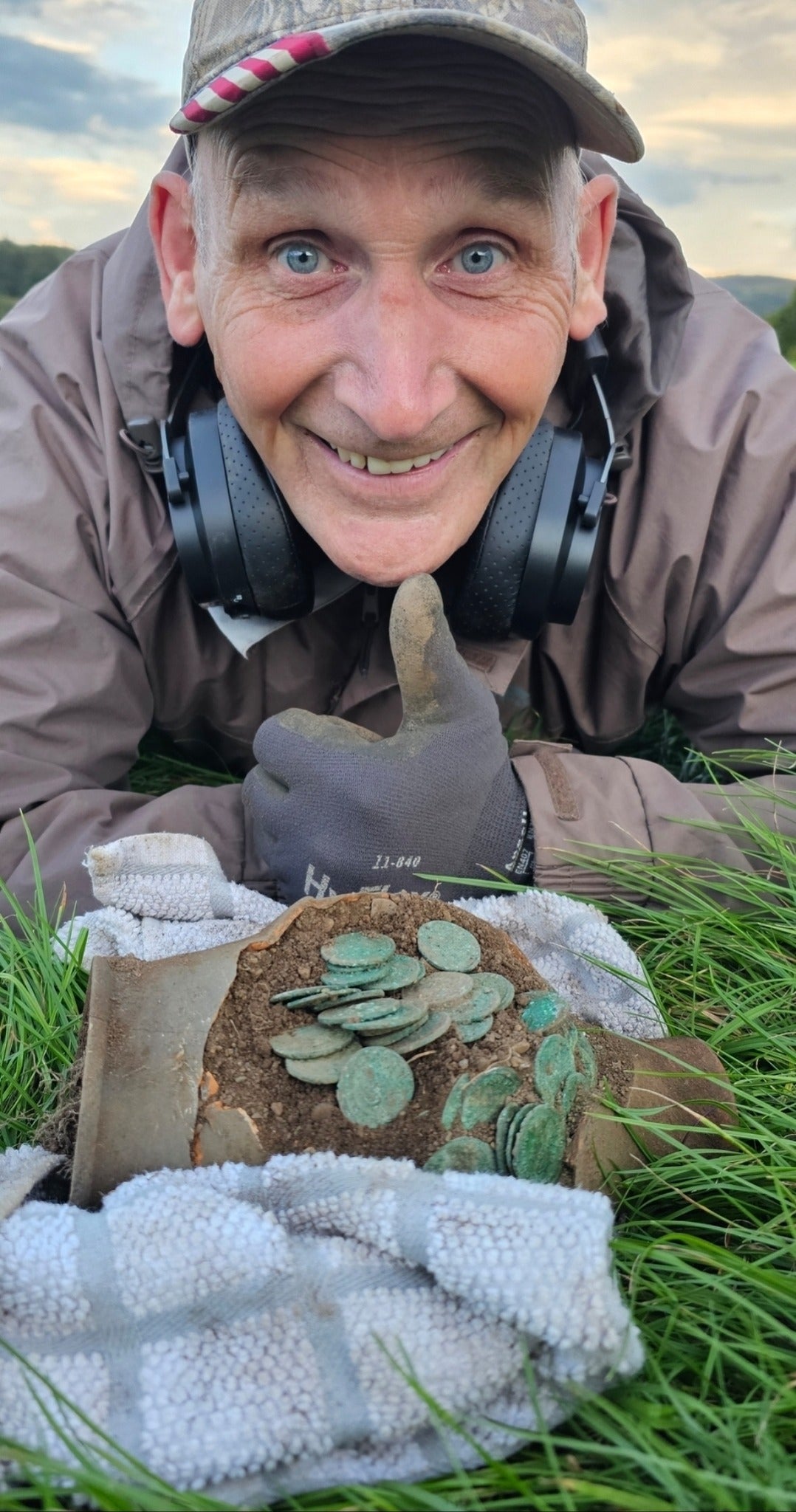
“It truly felt like a sign,” he said. “Persistence paid off, and what we uncovered was beyond anything I ever dreamed.”
Mr Moss took the coins back to his home in Cheshire, and slept with them in the car because he “didn’t want to let them out of my sight”.
The chair of the South Wales and Monmouthshire Numismatic Society, Anthony Halse, told the BBC he believed the find could be the biggest ever uncovered in Wales.
He explained how experts at the museum will date the coins, saying: “They’ll clean them, and then, since it’s such a large hoard, they will apply to the British Museum to see if they can keep them.
“Then they’ll go to the board and make the finder an offer. He’ll get half the money, and the landowner will get the other half.”
A number of significant historical finds have been made in Wales over recent years. In 2008, around 6,000 coins were found buried in a field in the Vale of Glamorgan, and more recently, two detectorists were jailed after they failed to declare a haul of Viking treasure worth millions.
Laws dictate that when you find buried treasure you must declare it to the coroner within 14 days and hand it over to the state. It is then valued and bought by a museum, and the proceeds are shared between the finder and the owner of the land.
Join our commenting forum
Join thought-provoking conversations, follow other Independent readers and see their replies
Comments
Bookmark popover
Removed from bookmarks