Fake AI images stoking anti-immigration protests outside hotels
A study has found that social media posts containing visual depictions of racist conspiracy theories were amplified about 30 per cent more than others
AI-generated images portraying Muslims as a threat are helping to stoke anti-immigration protests outside hotels in Britain, research published by MPs has suggested.
A submission to the House of Commons home affairs committee, which is investigating new forms of extremism, found far-right accounts have been spreading manipulated images online that reinforce racist stereotypes. These included depictions of Muslims carrying guns or wearing suicide vests.
Researchers said the rise of AI-generated material, combined with the way social media algorithms reward divisive content, is accelerating radicalisation and making extremist ideas more visible.
The riots in Southport last year followed waves of misinformation about the attacker. Analysts said the same networks that helped spread false claims during those disturbances have since relied heavily on AI-created images to normalise negative stereotypes of Muslims and drive opposition to migrants.
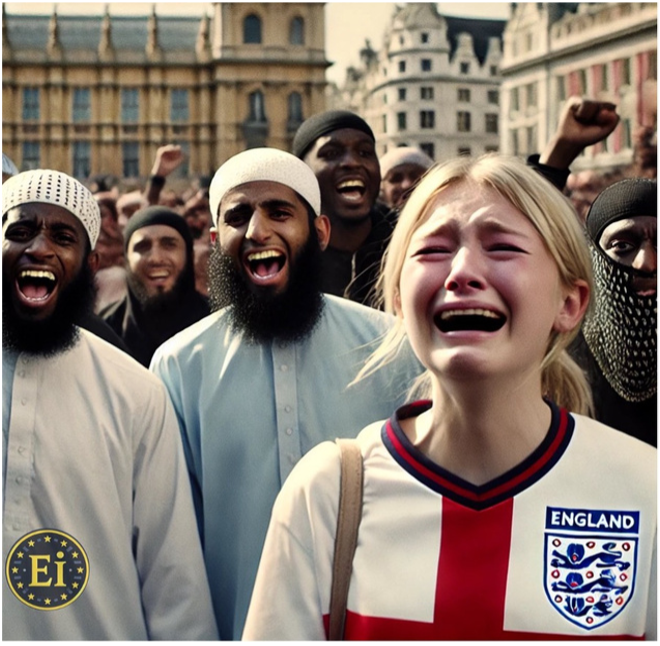
One study of 622 posts by the London School of Economics showed that those containing visual depictions of racist conspiracy theories were amplified about 30 per cent more than others. The research focused on groups which promote the so-called “great replacement” conspiracy theory, which is the idea that white Christian people are being deliberately displaced by Muslim migrants.
Examples cited included a fabricated image of a woman in an England football shirt crying outside parliament as Muslim men jeered, and another showing a woman in Paris beneath the Eiffel Tower surrounded by Muslim men with litter on the ground.
It found the images were normalising negative connotations about Muslims and leading to more people taking part in anti-migrant protests.
Dr Beatriz Lopez, who has studied how algorithms spread extremist narratives, said: “Our research reveals that biases embedded in these systems can have serious real-world consequences when amplified across social media platforms.
“These tools consistently reproduce harmful stereotypes, associating black, brown, and Muslim people with criminality and deception while portraying white western individuals as morally superior.
“When biased generative-AI-created images spread online, they don’t just reinforce prejudice, they can inspire violence by positioning white western men as righteous defenders of their communities and families.”
She added: “The most concerning finding is how normalised these stereotypes have become.
“Racist and Islamophobic imagery generated by AI appears so routine that it circulates widely without raising alarms. This invisibility makes the problem worse, as negative portrayals of minority communities become embedded in everyday digital content.”
Join our commenting forum
Join thought-provoking conversations, follow other Independent readers and see their replies
Comments
Bookmark popover
Removed from bookmarks