Why more than 30,000 oysters have been planted on a Belfast coast
The move marks a crucial step in plans to restore vital oyster reefs
Thousands of native oysters have been introduced into Belfast Lough in a significant effort to restore the species, which vanished from the waterway over a century ago.
Nature conservation charity Ulster Wildlife spearheaded the initiative, deploying 2,000 adult European oysters (Ostrea edulis) and more than 30,000 juvenile oysters, known as spat, cultivated on scallop and mussel shells.
This marks a crucial step in the charity’s plans to restore vital oyster reefs.
These underwater habitats are essential for supporting the recovery of this threatened species and are expected to deliver wider ecological benefits for both people and the marine environment.
The European oyster population disappeared from Belfast Lough due to overfishing, pollution, and habitat loss.
The discovery of a small, surviving population by researchers in 2020 provided the impetus for Ulster Wildlife to establish a network of protected nurseries in Bangor, Glenarm, Belfast Harbour, and Carrickfergus, aiding the native species' restoration.
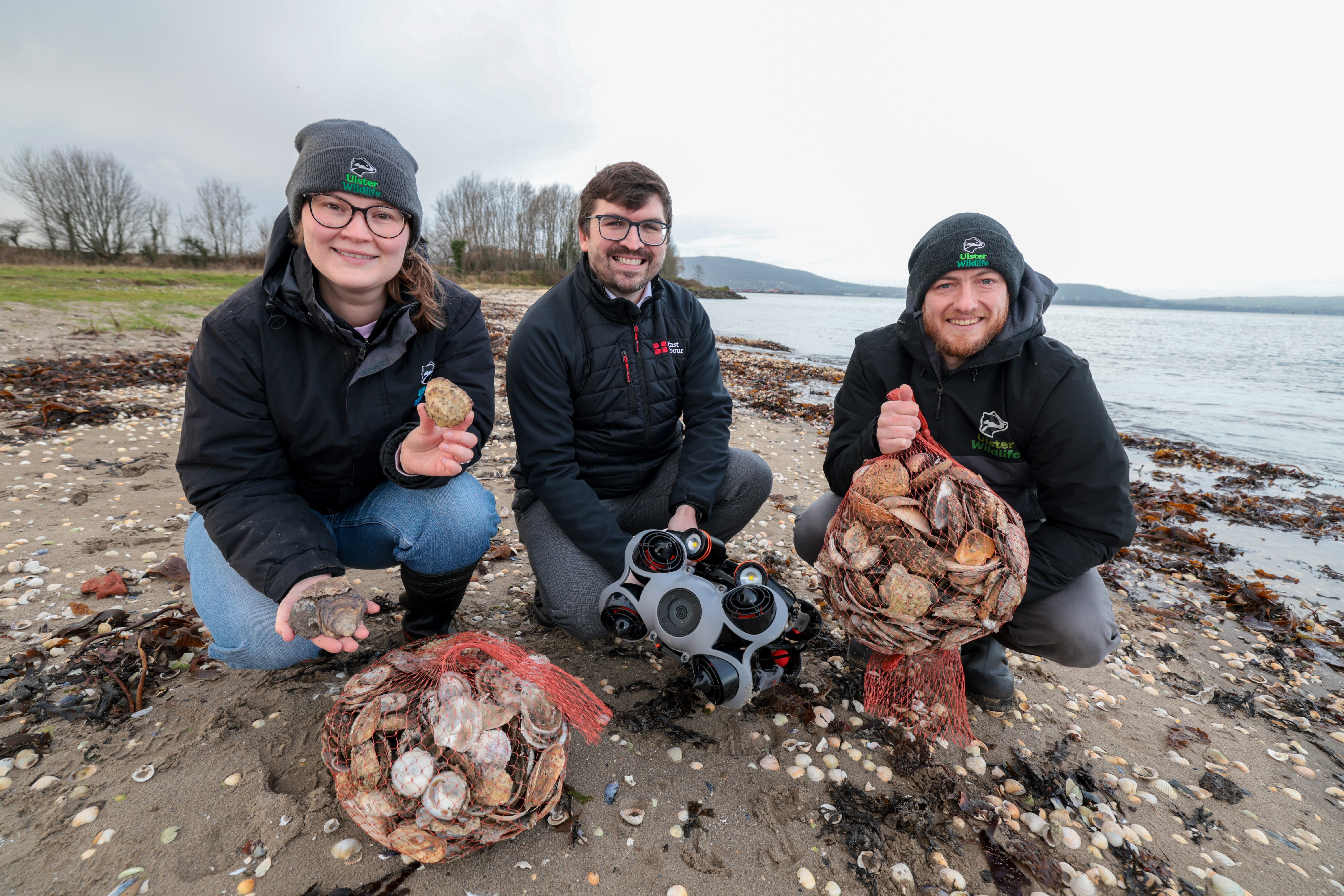
This pilot project has garnered support from Ulster Wildlife members, Belfast Harbour, and the Department of Agriculture, Environment and Rural Affairs, with funding via the Carrier Bag Levy to scale up wild populations.
It is envisaged that as the oysters grow into adults, they will form a vital reef habitat supporting the health of our seas.
European oysters, and other shellfish, have been found to help improve water quality, as each adult oyster can filter up to 200 litres of water a day removing nutrients and, in time, helping to provide coastal defences and vital habitat for juvenile fish.
Dr Nick Baker-Horne, marine conservation manager with Ulster Wildlife, described a “huge step forward in helping to restore this small but mighty ocean superhero”.
“Over the past four years, our nurseries have thrived, and we have learned so much about these fantastic ecosystem engineers,” he said.
“Deploying them onto the seabed is the next step to restore our lost oyster reefs and, alongside our nurseries, we hope the population will grow and create thriving habitats for all sorts of marine life.
“I’m excited to watch the oysters develop and use what we learn to guide even bigger deployment projects in Belfast Lough in the future.”
The oysters, delivered from The Oyster Restoration Company (TORC) from Scotland, were cleaned, screened and measured before being deployed onto the seabed by a team of staff and volunteers from the local nature conservation charity.
Regular checks are to be carried out to assess their survival and growth.
Simon Gibson, Marine, environment & biodiversity officer at Belfast Harbour, said the project is a first for Northern Ireland.
“The seabed deployment is an exciting expansion of the current drive to restore European oysters within Belfast Lough,” he said.
“This project, a first for NI, will support Belfast Harbour’s sustainability ambitions by promoting improved water quality and bolstering marine biodiversity.
“We are proud to play our part in this pioneering project.”
Bookmark popover
Removed from bookmarks