Newly unearthed fossil gives scientists unprecedented look at dinosaur skin
Extensive areas of skin have survived on the 125-million-year-old fossil
A remarkably preserved fossil unearthed in China has offered scientists an unprecedented glimpse into the true appearance of dinosaur skin.
The newly identified species, Haolong dongi, an iguanodontian, has skin preserved at a cellular level, alongside distinctive spikes never before observed in dinosaurs.
While the Iguanodon is set to mark its 200th anniversary in 2025 and is among the most thoroughly documented dinosaurs, researchers say that its broader family continues to yield new discoveries.
An international team, in a recent study, detailed Haolong dongi, a juvenile iguanodontian, whose remains date back approximately 125 million years from north-eastern China.
Extensive areas of its skin have survived, with the microscopic tissue structure still visible, providing unparalleled insight into dinosaur biology.
Nicknamed the “spiny dragon”, the juvenile dinosaur was not only protected by large overlapping scales along its tail but was also covered in spikes of varying sizes across its body.
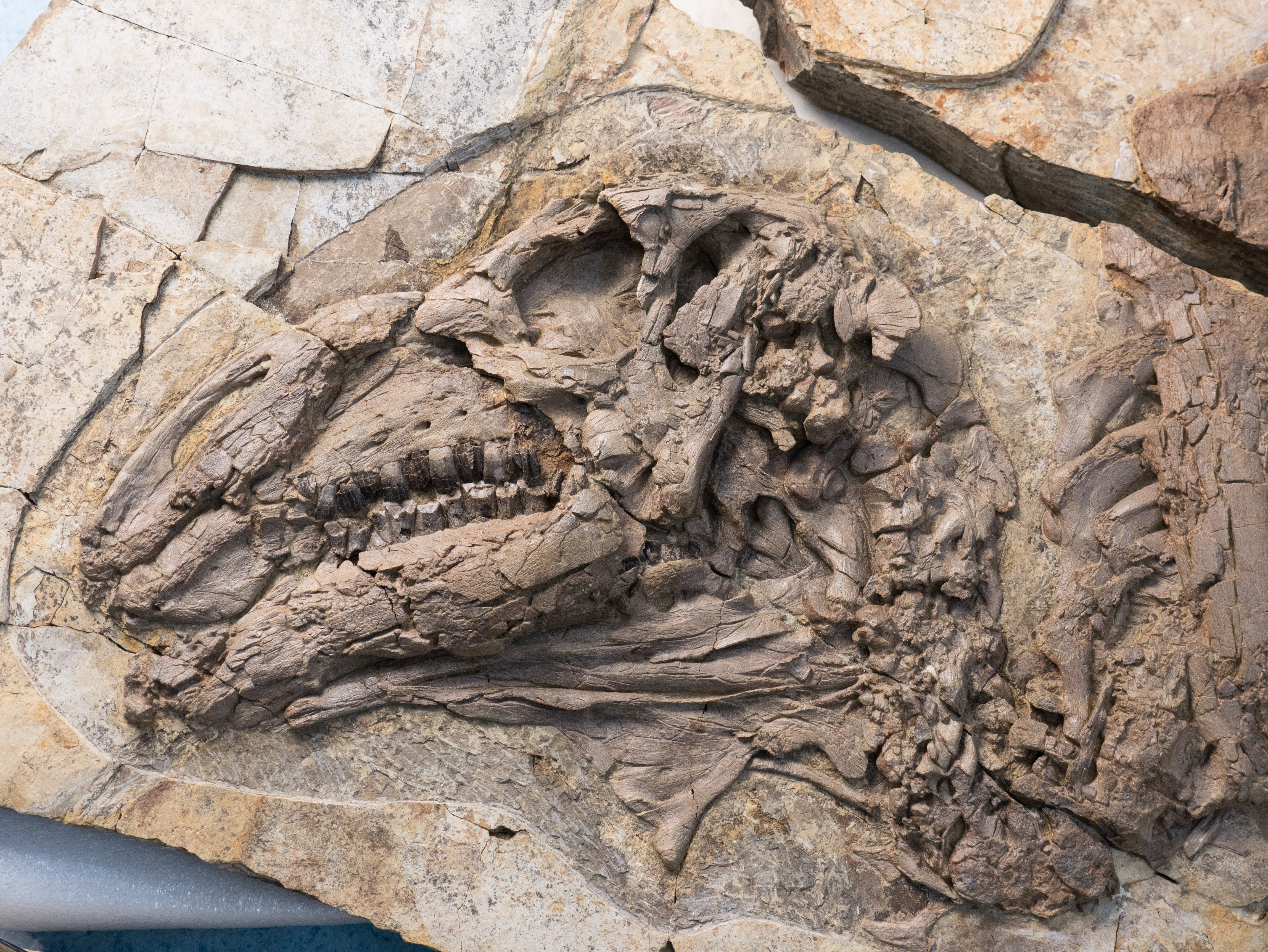
These structures had never previously been documented in any dinosaur species.
Using advanced imaging techniques and histological analysis, researchers found that the spikes were cornified – made of hardened keratin and preserved down to the level of individual keratinocyte nuclei.
“Finding skin preserved at the cellular level in a dinosaur is extraordinary,” said Pascal Godefroit, senior author of the study and a palaeontologist at the Institute of Natural Sciences.
“It gives us a window into the biology of these animals at a level that we never thought possible.”
 Fossil hunters discover region’s youngest dinosaur tracks
 Experts discover baby long-necked dinosaurs were ‘perfect snack’ for predators
 The National Park Service just uncovered a long-necked dinosaur
 Thousands of dinosaur footprints found near Winter Olympics venue
 It took the fearsome T rex 40 years to reach its full size, study finds
The researchers believe the spikes may have acted as a deterrent to predators, making Haolong more difficult to swallow for the smaller meat-eating dinosaurs that shared its environment.
They may also have played a role in regulating body temperature or in sensory perception.
“This discovery shows that even well-studied groups like iguanodontian dinosaurs can still surprise us,” says Huang Jiandong, director of the research department at the Anhui Geological Museum and lead author of the paper.
“The complexity of dinosaur skin is far greater than we imagined.”
The species was named in honour of Dong Zhiming, a pioneering figure in Chinese dinosaur research.
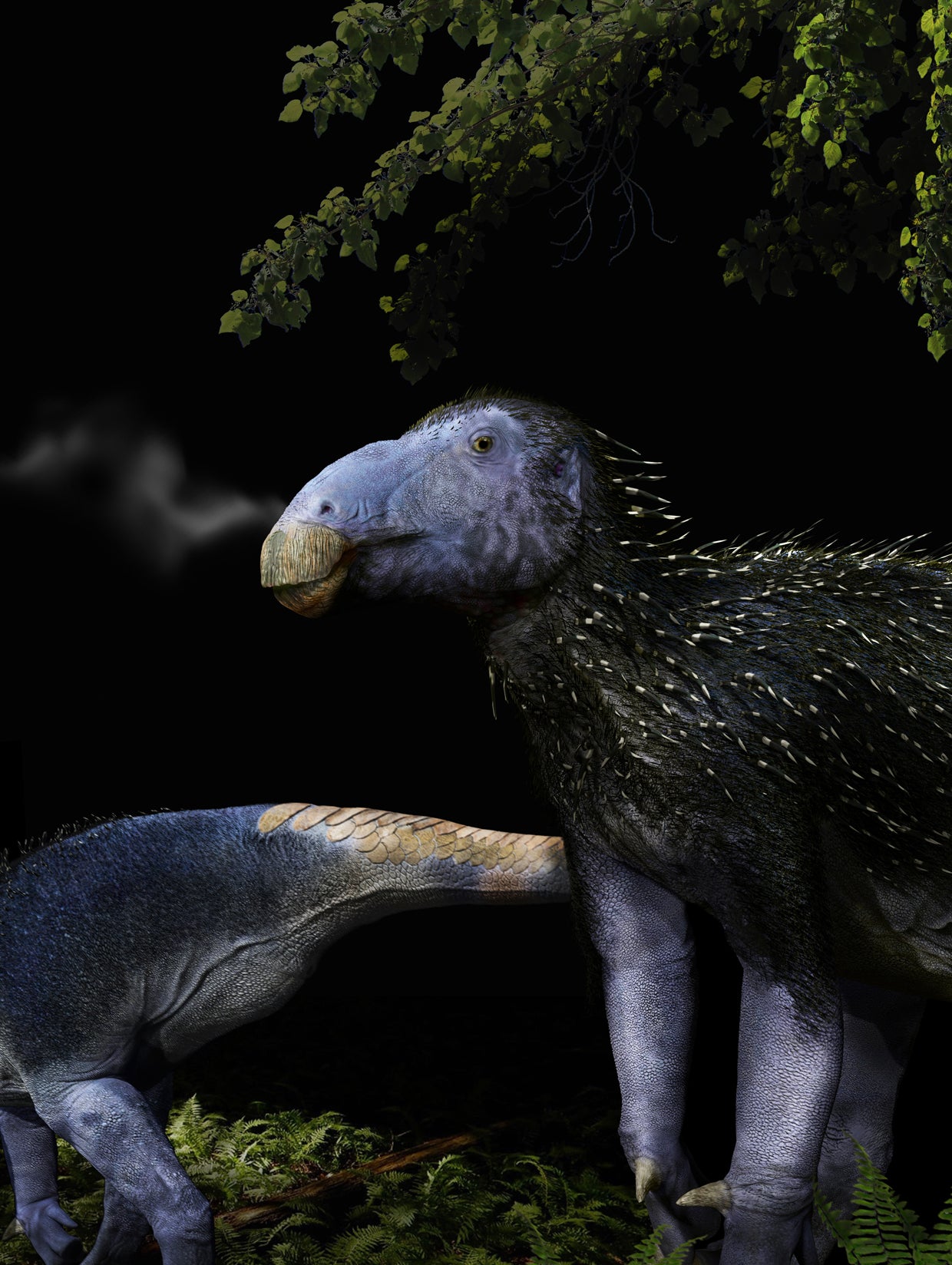
Scientists say Haolong dongi occupies a basal position in the evolutionary line that later led to hadrosaurs, the well-known duck-billed dinosaurs.
Its unusual skin structures, they add, highlight the evolutionary experimentation seen among dinosaurs and underline the importance of continued fossil exploration.
“Two centuries after the naming of Iguanodon, we are still rewriting the story of these iconic herbivores,” says Wu Wenhao, a co-author from Jilin University who first noticed the unusual structures in the fossil.
“This fossil reminds us that nature’s experiments often leave behind spectacular traces.”
The study has been published in the journal Nature Ecology & Evolution.
Join our commenting forum
Join thought-provoking conversations, follow other Independent readers and see their replies
Comments
Bookmark popover
Removed from bookmarks