The National Park Service just uncovered a long-necked dinosaur
Park workers excavated 3,000 pounds of fossil and rock
National Park Service employees may have just uncovered one of the longest dinosaurs on Earth.
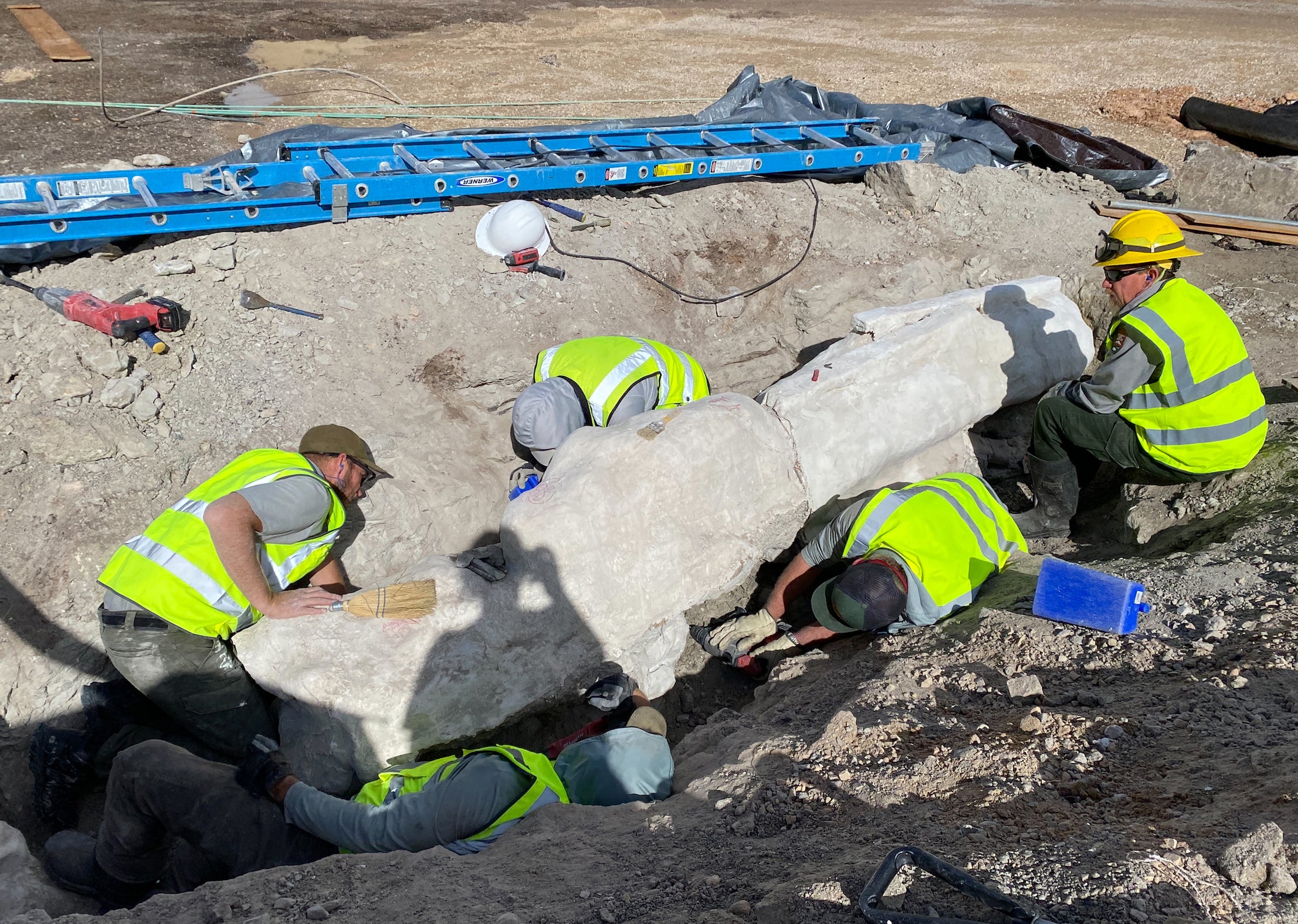
Crews working on construction at the Dinosaur National Monument’s Utah parking lot last September stumbled upon the first fossils uncovered at the site in more than a century.
The staff believe that the fossils belong to a long-necked dinosaur. Most likely, it’s a Diplodocus, which is common in the area and lived during the Late Jurassic period 150 million years ago.
After finding the fossils, construction crews, paleontologists, volunteers and the Utah Conservation Corps worked together to remove them from the sandstone.
“Roughly 3,000 pounds of fossils and rock were removed during the new excavation between mid-September to mid-October,” the agency said in a statement.
A historic find at an important site
The site had not been excavated for fossils since 1924, when historic excavations were held by the University of Utah.
Work is now in process to clean and study the fossils at the Utah Field House of Natural History State Park Museum in Vernal, Utah.
But fossils from the excavation are also being displayed at the museum and the monument’s Quarry Exhibit Hall, which is near the parking lot.
The Dinosaur National Monument was established in 1915 and now spans some 210,000 acres between Utah and Colorado.
Previous excavations were led by the Carnegie Museum and the Smithsonian National Museum of Natural History.
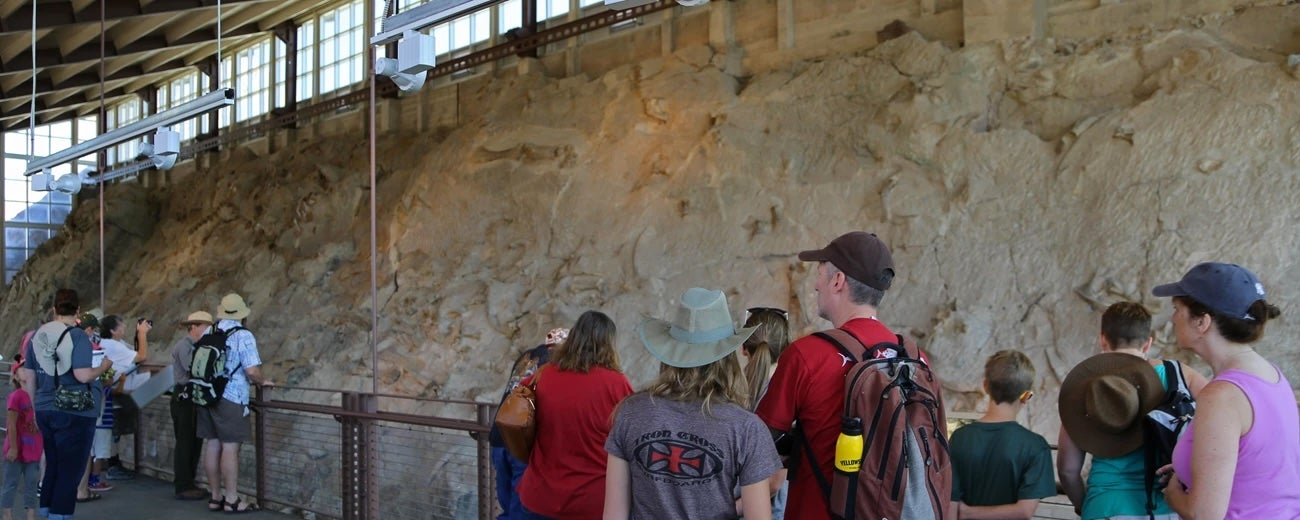
Today, visitors to the monument can see more than 1,500 dinosaur fossils exposed on the cliff face inside the Quarry Exhibit Hall. The fossils include species such as Allosaurus, Apatosaurus, Camarasaurus and Stegosaurus.
Sitting over a preserved section of the historic Carnegie dinosaur fossil quarry, the hall is also known as the “Wall of Bones,” and is the most popular area to visit at the monument.
A Diplo-what?
There are just a handful of species of known Diplodocus.
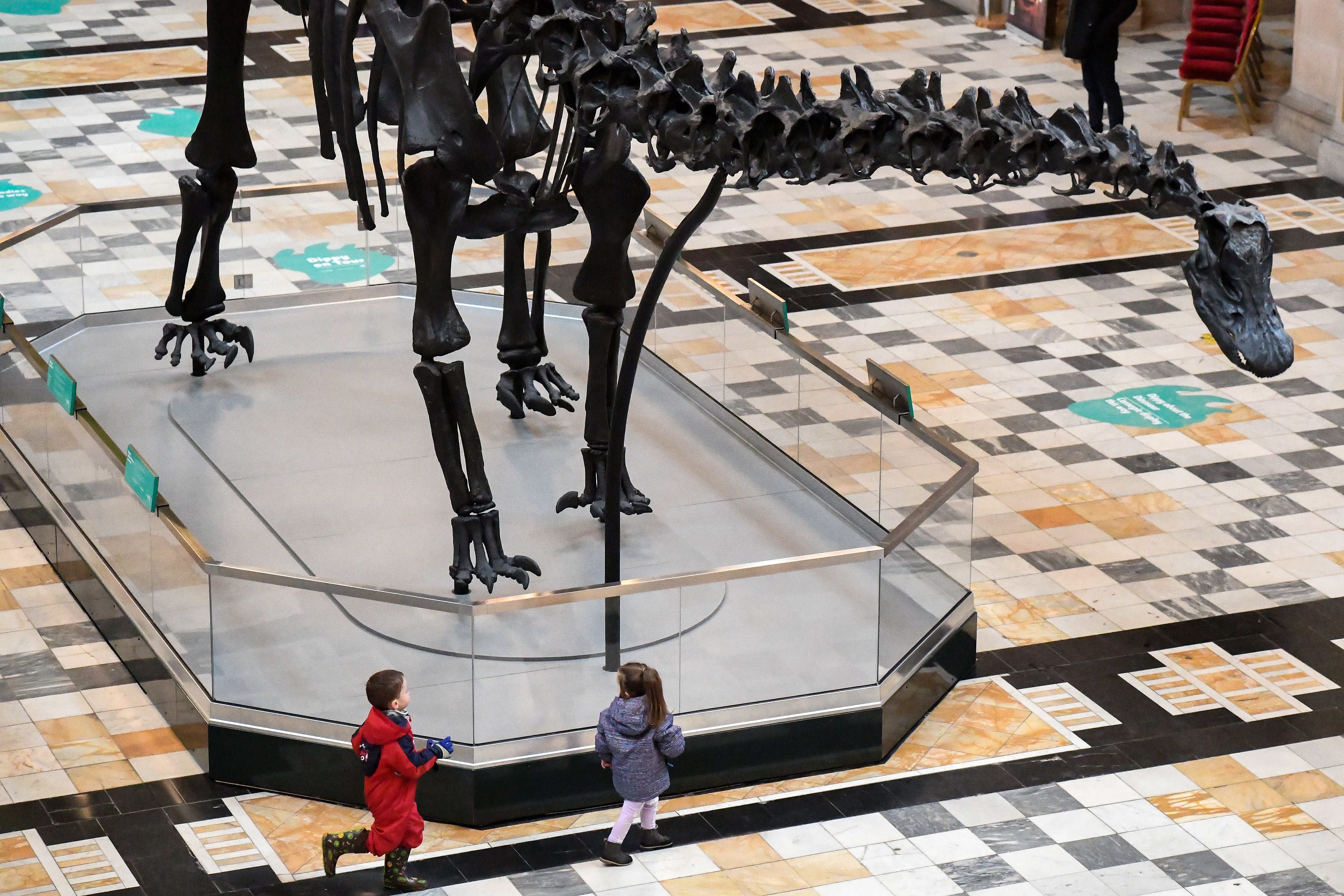
Diplodocus longus was a very long dinosaur – the longest found in the Carnegie Quarry, according to the Park Service.
The sauropod species could reach up to 92 feet long and had pencil-like teeth to strip leaves off of low-growing plants.
The name Diplodocus means "double beam" in Greek, and was named for the two parallel protrusions that appear on the bottom of its tail vertebrae.
It was made up of 300 bones, but nearly a third were just its tail.
The Carnegie Quarry already had three of the most complete Diplodocus skeletons ever found.
Join our commenting forum
Join thought-provoking conversations, follow other Independent readers and see their replies
Comments
Bookmark popover
Removed from bookmarks