Advanced CTE quadruples risk for dementia, new study shows
Boston researchers say CTE should now be considered a cause of dementia
Chronic traumatic encephalopathy (CTE) has long been known as a degenerative condition suffered by some of America’s top athletes.
Previously identified by researchers as the consequence of repeated concussions and head trauma, the brain disorder has been shown to result in memory loss, mood disturbances, poor muscle coordination and suicidal thoughts - although scientists are still working to understand its causes, including whether it’s driven by head injuries.
While diagnosis is only possible after death, many former NHL and NFL players have been posthumously diagnosed with CTE, including Junior Seau, Frank Gifford, and Ken Stabler.
Former NFL star quarterback Brett Favre has said he wonders if he is also affected. Favre was diagnosed with Parkinson’s disease last year.
Now, a new study from researchers at the Boston University CTE Center - the largest of its kind - provides the clearest evidence of a link between CTE and the risk of dementia to date.
People with the most advanced CTE are 4.5 times more likely to develop dementia during their life than people without CTE, the researchers found. The center says these findings indicate that CTE should be known as a cause of dementia.
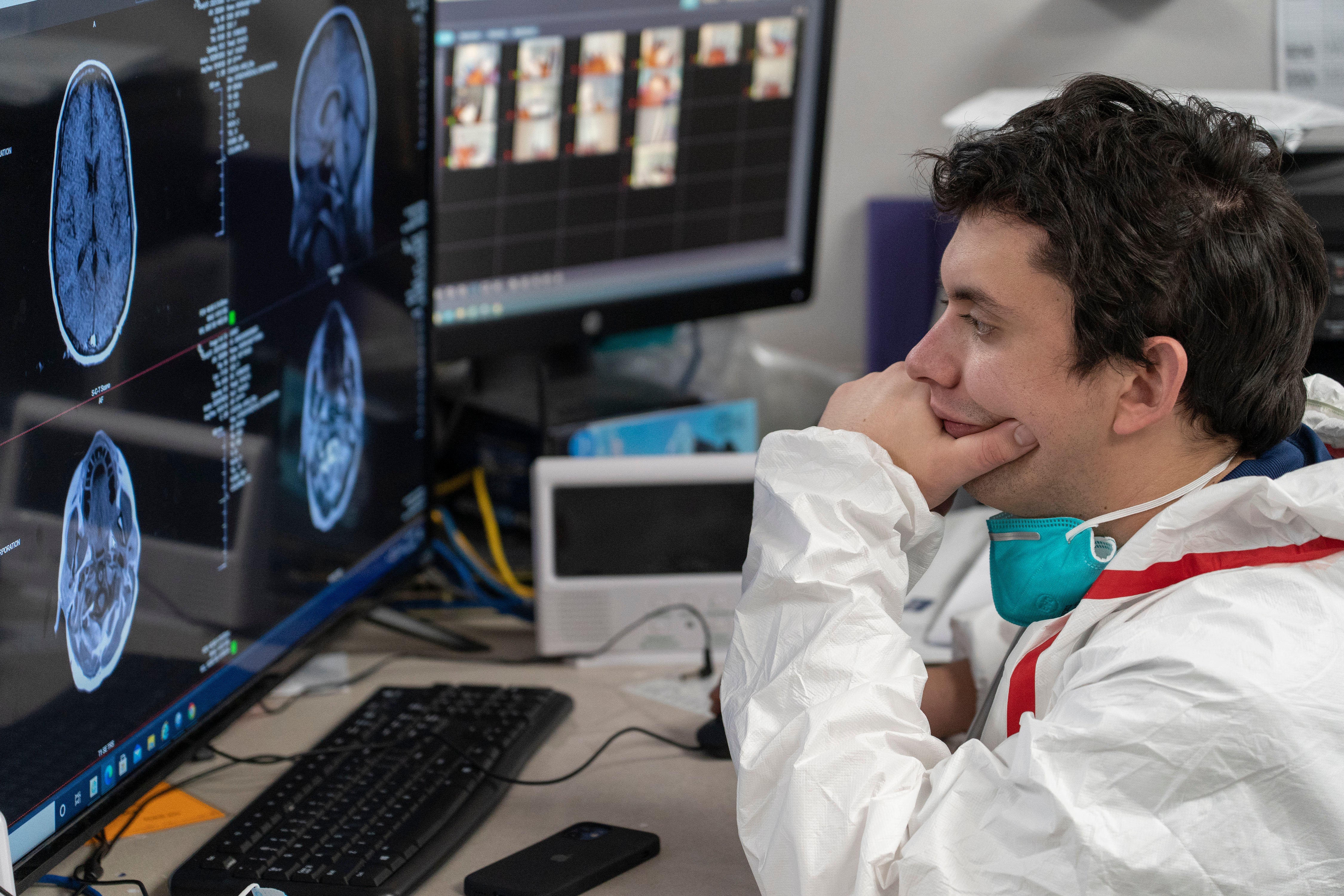
“This study provides evidence of a robust association between CTE and dementia as well as cognitive symptoms, supporting our suspicions of CTE being a possible cause of dementia,” said Dr. Michael Alosco, an associate professor of neurology and co-director of clinical research at the BU CTE Center.
“Establishing that cognitive symptoms and dementia are outcomes of CTE moves us closer to being able to accurately detect and diagnose CTE during life, which is urgently needed.”
Hundreds of brains
The researchers reached these conclusions by studying the brain tissue of more than 600 donors, the majority of whom were men.
The donors, who were primarily contact sport athletes, had known exposure to repetitive head impacts, but none of them had Alzheimer’s disease, Lewy body disease, or frontotemporal lobar degeneration: three of the most common neurodegenerative diseases that cause dementia.
The researchers found that 366 male donors had CTE.
After examining the donor brains, they calculated the odds of those donors developing dementia during their lives, starting from the lowest Stage I cases through the most advanced Stage IV.

Donors with the two worst stages of CTE - stages III and IV - had the worst cognitive and functional symptoms, regardless of a person’s age or history of substance use treatment.
However, the lowest stages of CTE were not found to be associated with dementia, cognitive impairment or functional decline.
The researchers were also unable to find any link between less severe CTE and changes in mood or thinking, suggesting that observed changes may come from other effects of repetitive head impacts or from unrelated medical or environmental factors.
“Understanding which brain changes drive cognitive decline is essential,” Dr. Richard Hodes, director of the National Institute of Health’s National Institute on Aging, said.
“This study shows that only severe CTE has a clear link to dementia, which provides an important distinction for researchers, healthcare providers and families.”
The study was funded by the NIH.

The Alzheimer’s association
The study also revealed that dementia due to CTE is often misdiagnosed as Alzheimer’s disease, the most common form of dementia.
Both Alzheimer’s and CTE are marked by the buildup of abnormal tau proteins in the brain, impacting blood vessels - although the tau in each condition is different.
Of the donors with CTE who had received a dementia diagnosis during their lifetime, 40 percent were told they had Alzheimer’s disease, but did not show any evidence of the disease during their autopsy.
And an additional 38 percent of donors’ loved ones were told their dementia’s causes were “unknown” or could not be specified.
Join our commenting forum
Join thought-provoking conversations, follow other Independent readers and see their replies
Comments
Bookmark popover
Removed from bookmarks