Why are Britain’s schools turning into ‘prison camps’
An increasing number of headteachers are turning to the ‘no-excuses’ high academic approach for their schools. But, for some they are going too far and it is alienating parents as well as pupils and even teachers. With school refusals at a record high, is it time to rethink how we are educating our children, asks Chloe Combi
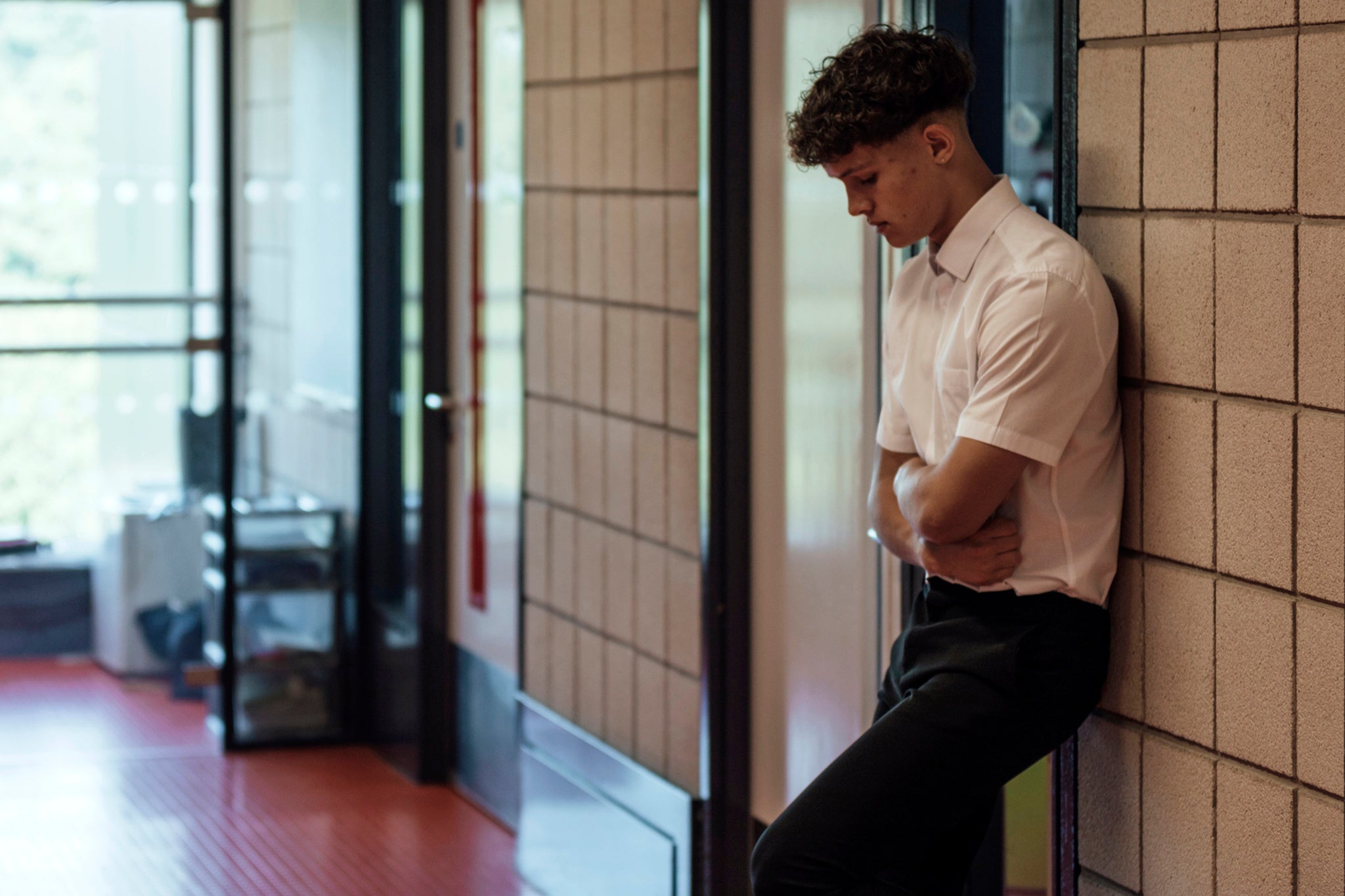
The return to school after the summer holidays can be hard. But this year, for many, it was harder – and not just for the pupils.
Take this example from a parent’s social media post:
“My daughter tried to leave via the normal exit but was stopped, yelled at, and told she was going the wrong way.” “My daughter Bella* got behaviour points for wearing Nike socks – she’s worn them since Year 7. Apparently, if you walk down the stairs the wrong way, you now get behaviour points.” “In *Tom’s school, if a boy’s hair isn’t at least three inches long, they have to face a brick wall for an hour.” “My daughter had to sit in her wool blazer while it was 25 degrees outside. The teachers were in short sleeves. The rules are so strict that she hates school now. I’m thinking of homeschooling.”
These parents are responding to stricter rules that have been newly introduced at their children’s schools, part of a growing trend happening across the UK. A typical school rulebook will often include: pupils must move between lessons in silence, often in single file; no stopping to look over balconies; no going to the lavatory between lessons; no gathering in large groups; and no walking on the “wrong” side of a corridor.
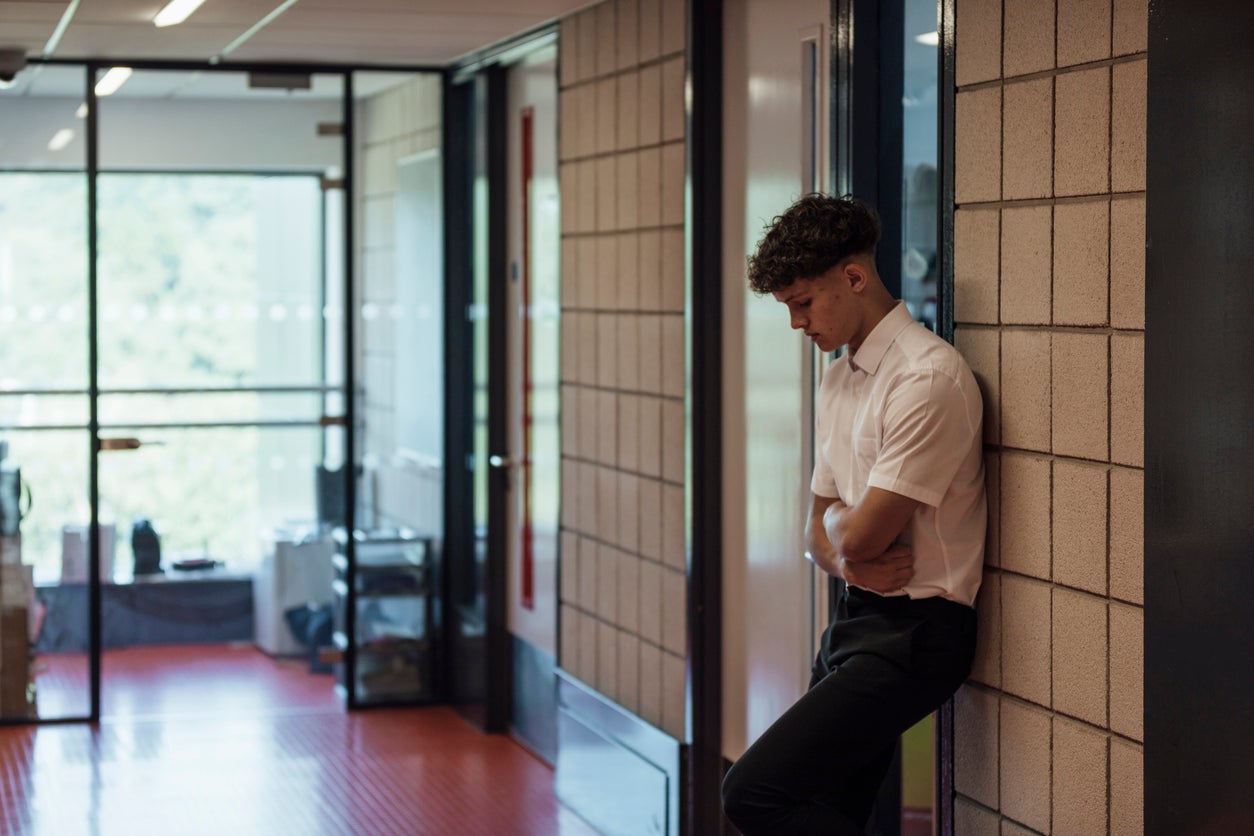
There are often punishments for behaviours deemed unacceptable, including “tutting,” rolling eyes, or hesitating before following an instruction. Strict uniform and appearance codes require shirts to be tucked in, ties straight, and no underclothing (thermals or vests) visible. Internal isolation regimes, punishment blocks and exclusion orders are par for the course. It has left many wondering how the language of “prisons” and the atmosphere of military academies have slowly crept into our mainstream education system.
These schools are often dubbed “no-excuses” schools, where strict policies are introduced under the guise of “raising standards”. Their headteachers are frequently invited to write newspaper columns or appear on Question Time and Good Morning Britain, where they proudly embrace titles like “Britain’s Strictest Headteacher”.
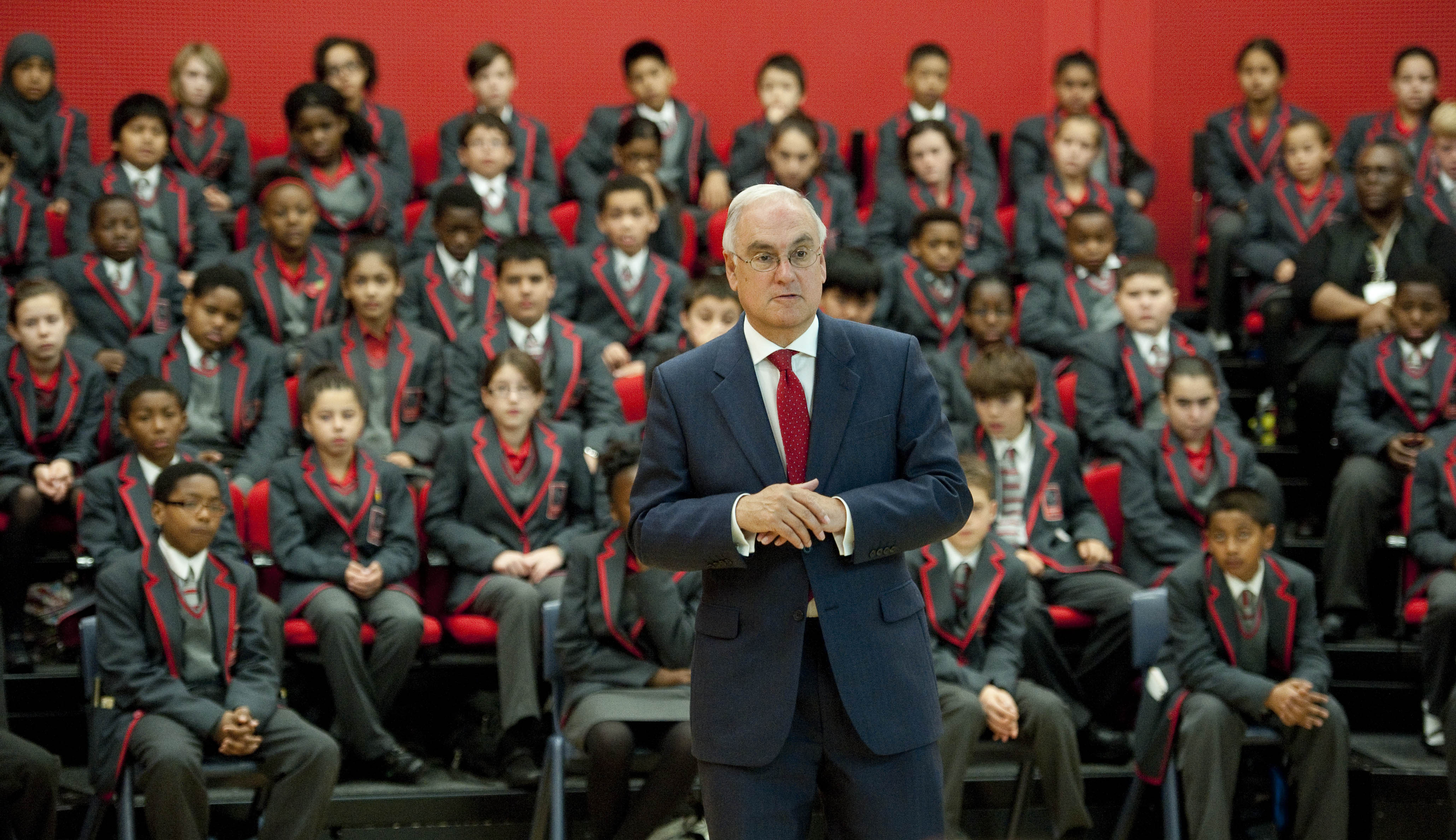
The growing trend towards uncompromising rules is said to be grounded in academic merit. Michaela School’s Progress 8 scores place it among the best in the country for non-selective schools. A-level students in its selective sixth form, where applicants must meet minimum entry requirements, leave with results that rival some of the best private schools.
Headteacher Katharine Birbalsingh’s ferocious commitment to accountability and success has created a model many schools now seek to emulate. But it is also becoming a cause of increasing concern. Critics argue that super-strict approaches stifle independence and creativity, and can exclude pupils who don’t fit a narrow model of success. Others question whether such rigidity isn’t discriminating against less academic pupils, or those with additional needs. Some are asking whether these rules are even appropriate in a new era of AI, when creativity and critical, independent thinking and the confidence to challenge, are going to become more valuable than ever.
The Mossbourne Academy schools in East London have come under fire recently for their hard-line approach and are currently subject to an independent safeguarding review after hundreds of upset parents reported children distressed by harsh discipline regimes, raising real anxiety about going to school.

While Mossbourne Community Academy and Mossbourne Victoria Park Academy have strong academic records, both consistently ranking in the top 1 per cent of schools, parents are saying this has come at a terrible price for some children and spoken out about “systemic” and “lasting” emotional harm stretching back two decades at the Hackney schools.
A dossier of allegations shared with The Observer and sent to the education secretary, Bridget Phillipson, included claims that Mossbourne teachers were trained in fostering “healthy fear” and sometimes screamed “centimetres apart” from children’s faces. Reports include children fainting in line-ups while being shouted at, and pupils with special educational needs and disabilities (SEND) being unfairly punished or pushed out. Some former students said they suffered long-term mental health issues caused by being afraid at school.



Another review has been commissioned by the Mossbourne Federation itself, alongside the ongoing safeguarding review, with the stated aim to examine what can be done to improve processes at Mossbourne schools and to increase public confidence in the management of complaints and safeguarding concerns.
The row has provoked a passionate debate about what we want our schools to be. Supporters of the tough approach argue that while stress and anxiety are undeniable, this discipline-oriented system teaches discipline, resilience, and offers a ticket to a better future. Strong results, especially for children from disadvantaged backgrounds, can unlock opportunities otherwise closed to them.
Detractors argue that good results mask a wider issue: children in the UK are failing to thrive. School refusal rates are now the highest in Europe. In the autumn term 2024/25, the persistent absence rate was 18.7 per cent, and the severe absence rate was 2.04 per cent.
Critics also argue that extreme “no-excuses” rules underestimate the harm inflicted on the wellbeing and creativity of children who don’t respond well to tightly controlled environments. They say these schools prioritise league-table performance over the needs of children. And many parents and students I spoke to worry that this national trend towards disciplinarian schools disadvantages – and even discriminates against – sensitive children, creative children, those who struggle academically, or those with SEND.
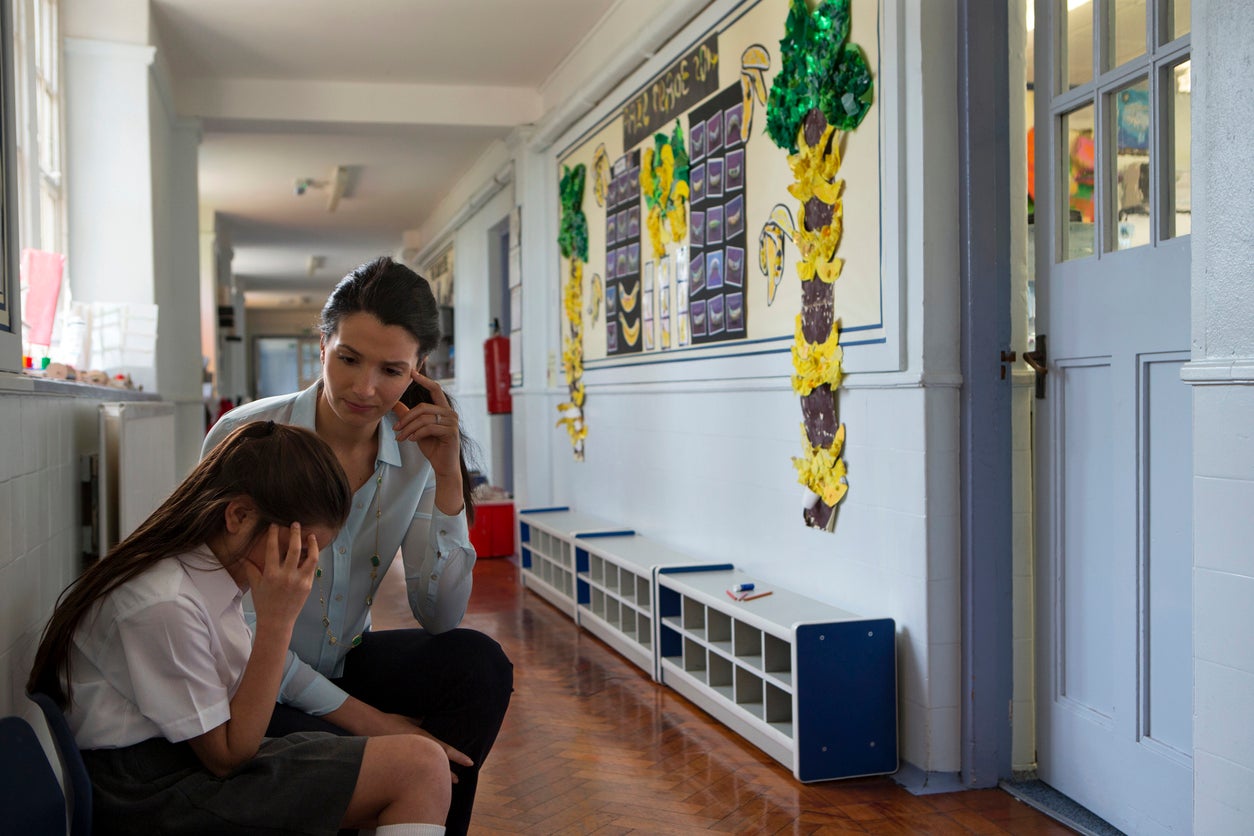
One mother of two, with children at Mossbourne Community Academy and Mossbourne Victoria Park Academy – both rated outstanding in all areas – explained: “My eldest son responded well to the really strict approach and got good A-Level results, but my daughter is less academic and miserable. She’s so stressed it’s affecting her attendance. There are tears every day before school.”
Her point is that children shouldn’t feel bad simply because they are not seen as clever. “That’s how my daughter feels. She’s disengaged. Many other parents say the same – and it’s even worse for children with SEND.”
With school budgets slashed and classes increasingly diverse, teaching is already challenging. But some parents say draconian rules exacerbate rather than alleviate these challenges. A daily grind of sanctions for children who aren’t wilfully disobedient is backfiring on pupils and schools alike.
One mother of three boys, whose son attends another good-rated school with a newly uncompromising regime, told me:
“My son has ADHD and often struggles to remember rules – not out of naughtiness, but because it’s genuinely difficult for him. While the SENDCO team tries to make reasonable adjustments like shorter detentions, these often don’t happen. The behaviour management policy discriminates against children with additional needs.
“Many of my son’s detentions are for not tucking his shirt in or forgetting equipment. He’s in detention nearly every day – it’s demoralising and pointless. If they get more than 10 points in a week, they’re placed in a reintegration room for a whole day. More than 120 points in a year means being sent to a different school for up to 10 days – incredibly unsettling, especially for children with additional needs.”
The suspicion that strict schools encourage “inconvenient” pupils to self-select out is widely held. With homeschooling and absenteeism rising, the “don’t like it, go elsewhere” stance leaves many students and parents adrift, unable to fit into these schools but with few alternatives.
Another parent, whose daughter attends an academy chain in the Midlands (rated as Good in all areas), feels the strict uniform policy – skirt-length checks for girls, a ban on leggings in PE (but oddly, cycling shorts are allowed) – shows the school prioritises Ofsted data over children’s wellbeing.
“They told me to bring my daughter in when she was unwell, but said it was fine to take her home again afterwards. That makes me feel like attendance matters more to them than her being OK.”
Vic Goddard, former headteacher and current executive principal of Passmores Academy in Harlow, Essex, became known as the compassionate leader in Channel 4’s Educating Essex. His six schools, including two secondaries, serve their local community with an ethos of inclusion and empathy. Passmores educates more than 100 pupils with EHCPs (Education, Health and Care Plans).
He explains that some schools practise “selection by compliance”, signalling to parents that they don’t cater for SEND pupils, especially those with behavioural challenges. “The net result,” he says, “is that surrounding schools take the overspill, while no-excuses schools become beacons of ‘miraculous’ academic success.”
He acknowledges the costs of inclusivity: “We’ve got young people from dysregulated homes. Some don’t have the tools to regulate. We could yell at them about buttons and lateness – they’d tell us to f*** off and leave. Instead, we have a regulation space – fully staffed – where they learn to breathe, manage emotions, and regulate. I choose not to exclude them. But that choice costs me £500,000 a year in staff.”*
Does this harm academic results? Not necessarily. Vic says: “We took on a struggling school last year. It’s now in the top 10 for most improved in the country, serving a predominantly white working-class demographic. We added three-quarters of a grade to every pupil’s score last year.”
In a climate where inclusivity and academic excellence are often seen as mutually exclusive, perhaps it is time to rethink how high expectations and a child-centred approach can still coexist.
Until then, no talking at the back.
* denotes where the name has been changed
Join our commenting forum
Join thought-provoking conversations, follow other Independent readers and see their replies
Comments
Bookmark popover
Removed from bookmarks