Downton snobbery: Why Meghan’s biggest crime was always going to be that she’s an American
As the new Downton Abbey film opens, Anna Pasternak reflects on anti-US feelings paraded by Lady Mary and her chums – prejudice still very much alive and kicking among today’s ‘upstairs’ classes (just look at the way they’ve treated the Duchess of Sussex...)


As the curtain comes down after 15 years of Downton mania with the release of Downton Abbey: The Grand Finale, there is a striking sense of end-of-an-era poignancy. The film, set in 1930, captures a fast-vanishing world before it dissolves into modern uncertainty. Yet, along with sepia-edged nostalgia for a bygone age of dignity and old-fashioned formality, there is also one area where little has changed during the last century.
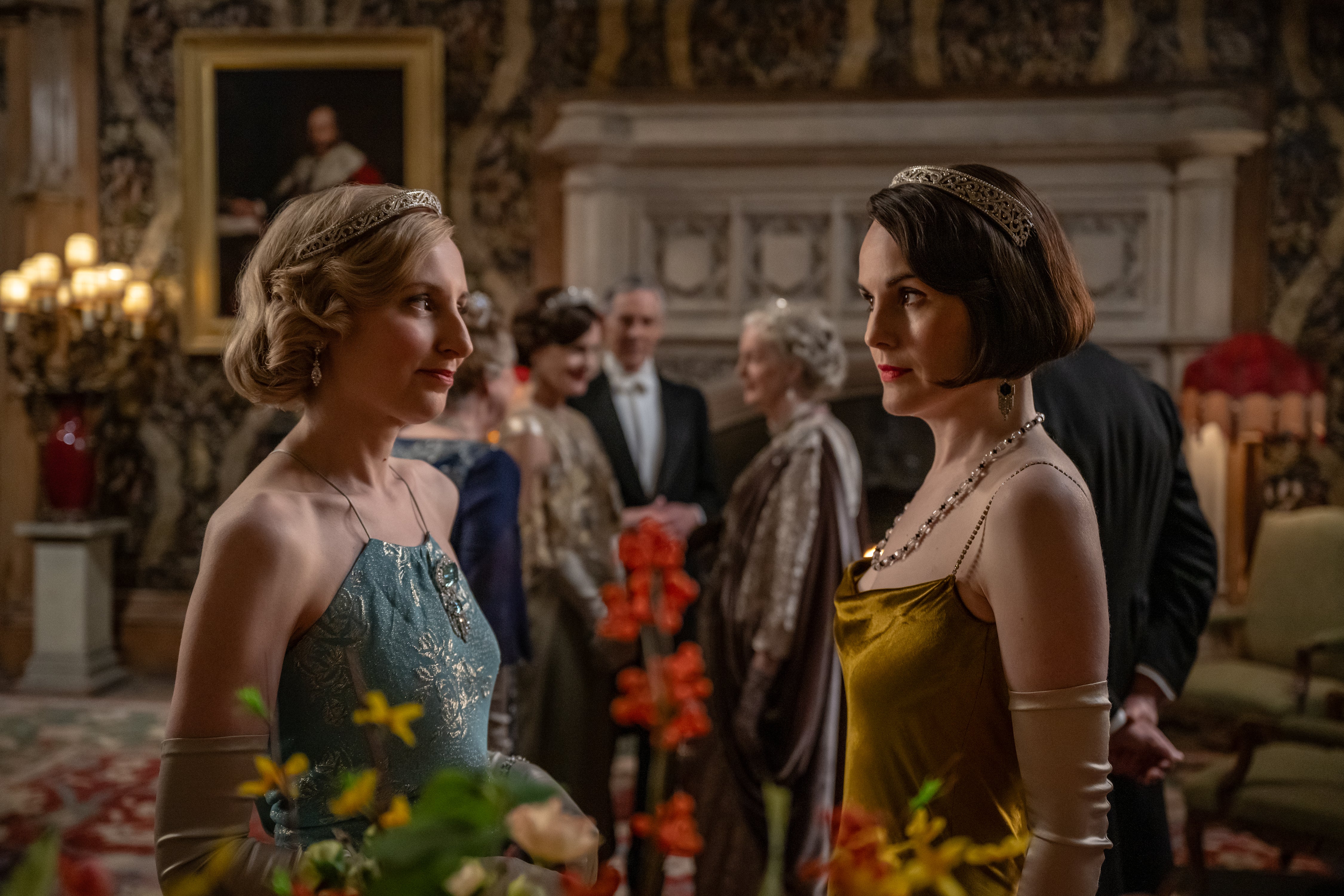
The film is steeped in anti-American sentiment among the “upstairs class”, which holds true today. At one point, Lady Mary, now a divorcee, exclaims: “Golly, a house full of Yanks and I’m the one keeping everyone away.” She has been told that an intended dinner party at Downton can not go ahead, as no one will come, knowing that she is divorced.
Amid the aristocracy, twas ever thus. Being American, which, to the faded grandeur of the old English monied classes, screams being brash, flash and vulgar, has always been socially less acceptable than being a divorcee.
The British upper classes continue to hold their noses at the stench of “new money” while often marrying wealthy American heiresses to fund their crumbling castles and stately piles. (Which is exactly what happens in Downton Abbey – Lord Grantham married an American heiress, Cora Levinson, to secure his stately home.)
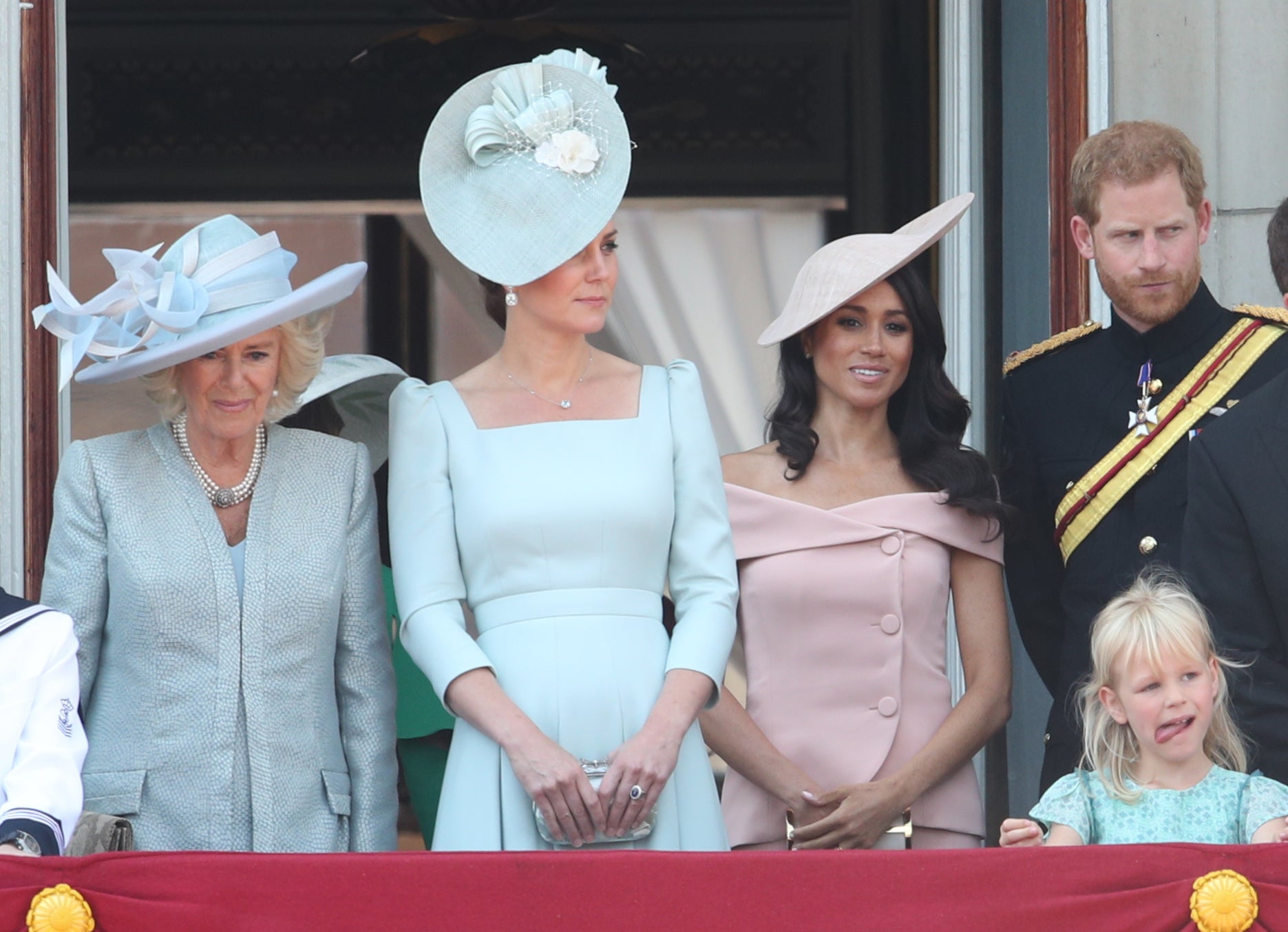
Cash for cachet is somehow still seen as a respectable social contract, however archaic. Unless you are American. Then it is merely regarded as “cashing in”. Which is what our American duchess, Meghan Markle, stands accused of by using her British title to promote her As Ever brand. Although she denies using the HRH for commercial gain, she has a vast lure in that department.


It is almost impossible for an American to grasp how profoundly the British frown on their sunny commercialism, their gusty “can-do” attitude and freedom of spirit. When Meghan said in her engagement interview with Prince Harry about getting stuck in her work and being “excited to just really get to know more about the different communities here”, you could almost hear the sucking in of breath across inherited land.
Understandably, she could not grasp that her enthusiasm was not welcome. To the laconic upper classes and rigid, rule-bound royal family, anything that smacks of being pushy, or God forbid, self-serving, is in unforgivable bad taste.
By Meghan’s own analysis, she explained in a magazine interview to The Cut that she believed her problems stemmed from being an American and “not necessarily a Black American”.
As much as we may want to pretend that Britain is a progressive, classless modern culture, entrepreneurialism is still viewed as gauche in the upper classes, built on a system which depends on birthright. Nowhere has the lip curling snarl of the British towards American women been more apparent – and hurtful – than to our American Duchesses. Both Meghan Markle and her predecessor, Wallis Simpson, who became the Duchess of Windsor, (King Edward VIII abdicated in 1936 in order to marry her), have experienced unprecedented vilification at the hands of an unrelenting public and monarchy.
What Wallis referred to as her “American independence of spirit” counted far more against her than any perceived character default. As Prince Harry returns home to England next week, we are reminded of his wife’s ostracism as he travels alone. Even if he is welcomed back by his father, it is unlikely the same olive branch will be extended to his wife.
After the abdication in 1937, when the world turned on Wallis, she wrote to Edward that the previous night she had cried herself to sleep. “I really can’t continue to carry on with all of England taking cracks at me and no decent society speaking to me.”
The society designer Nicky Haslam, who knew Wallis in New York in the 1960s, said of her social ostracism: “It was never about her being a divorcee. It was always about her being an American. That is why she was not accepted in English society.”
Even Edward VIII was derided among his own family for being a fan of all things American. His father, King George V, deplored his son’s love of American modernity – fast cars, jazz music and American women. He asked Edward in 1932 if he had ever thought of marrying “a suitable well-born English girl”. Edward had not. According to historian Hugo Vickers, Edward “liked these married women and he loved Americans. The prince loved golfing pros and tycoons. He thought that English girls were boring and thought that zinging cocktail girls were what he liked.”
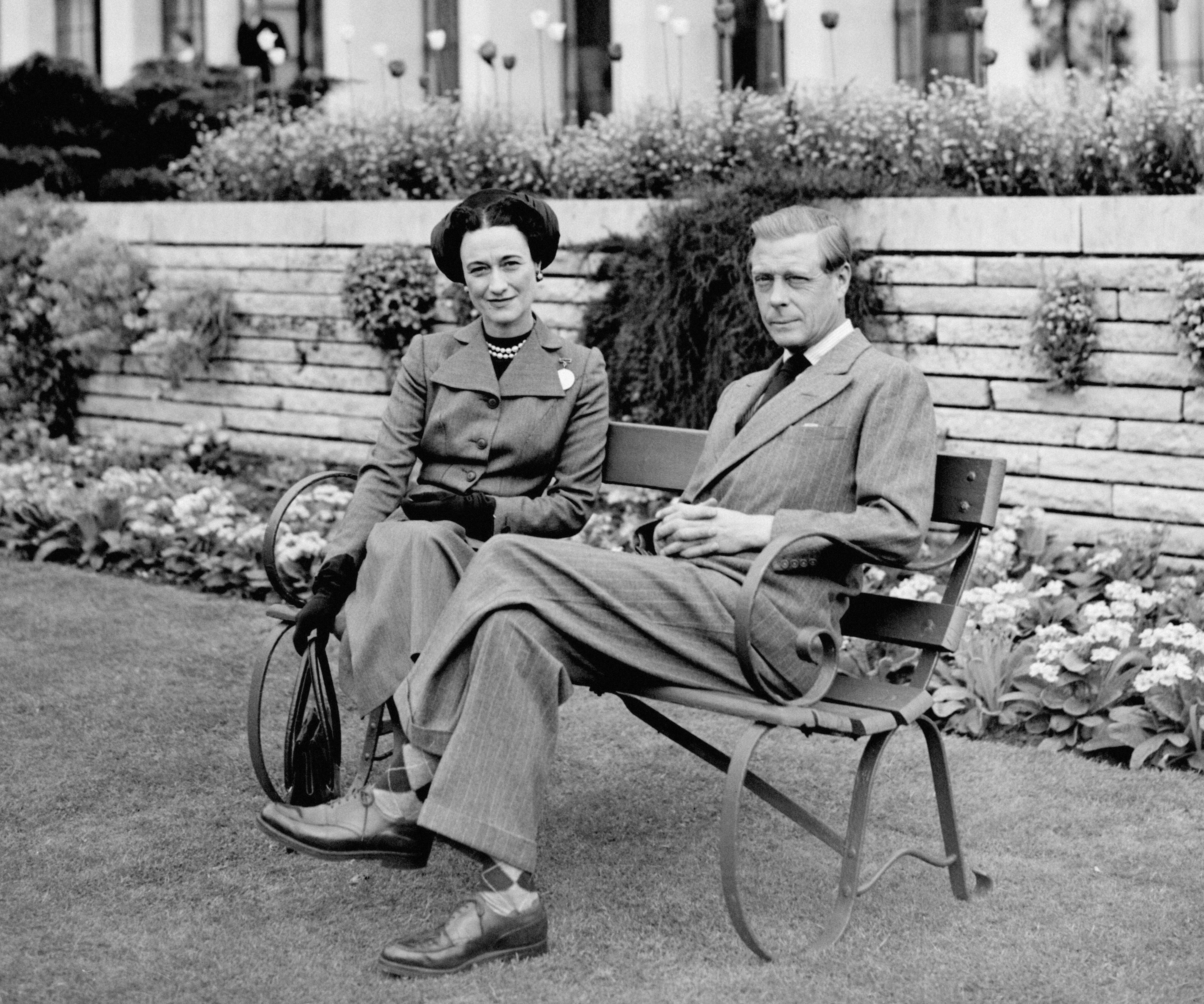
It was considered equally singular when, in the spring of 1936, as King Edward bought an American station wagon, a car almost unheard of in England. One afternoon, he suggested to Wallis that they drive to visit his brother, Bertie (then the Duke of York) and Bertie’s wife, Elizabeth (the Queen Mother).
Marion Crawford, the Scottish governess of the York’s children – our late Queen Elizabeth and her sister, Princess Margaret – witnessed this visit to Royal Lodge in Windsor Great Park, where Prince Andrew now lives. Of Wallis, Crawford wrote with biting understatement: “She was a smart, attractive woman, already middle-aged, but with that immediate friendliness that American women have. She appeared to be entirely at her ease; if anything, rather too much so.”
Wallis later said: “I left with the distinct impression that while the Duke of York was sold on the American station wagon, the duchess was not sold on David’s other American interest.”
It is almost impossible for an American to grasp how profoundly the British frown on their sunny commercialism, their gusty ‘can-do’ attitude and freedom of spirit
If Wallis and Meghan had been British, who knows how history might have played out? We only have to look at how Queen Camilla, also a divorcee and once reviled by the British public, has become a much-respected national treasure. Like Simpson, Camilla was also the mistress of a tenacious Prince of Wales who refused to give her up. Like Camilla, Wallis displayed iron-clad loyalty to her royal husband, yet their legacies could not be more different.
George Bernard Shaw famously said, “England and America are two countries separated by the same language.” Given the experience of the last century, it seems unlikely that we will be speaking the same language any time soon.
“There is reverse snobbery in the US against Brits like me”, writes Flora Warshaw, who lives and works in New York.
“While the stereotype of American exclusion in English society still rings true, I will say the same goes for British exclusion on the other side of the pond.
“Having lived in New York for over a year now – moving for graduate school and to work in the media – I am pretty settled. I possess not only a social security number, but American friends and an American boyfriend, much to my mother’s chagrin. Yet while America doesn’t grapple with the complex class system in the same way the UK does, there is still an air of superiority in their constant need for me to say ‘water bottle’.
“The English snobbiness over an American accent makes sense: it’s all we have to lord over them. So why, a year on, am I made to feel a constant sense of ostracism in a classless society that doesn’t need the mocking upper hand like we do?
“Oddly, Americans feel the need to justify to me the beauty of their monarch-free republic, coupled with bragging of their triumphant Declaration of Independence in 1776, because let’s be honest, when tallying up who is the more successful counterpart in our special relationship, the Brits don’t stand a chance, even if we do have the Beatles, Beckham, and better chocolate.
“To the average American, I am still the 24-year-old equivalent of Mary Poppins. Yet I find my Englishness diminishing by the day, either through subtle codeswitching demonstrated in elongating my R’s, referring to it as a restroom – God forbid I say ‘loo’ – and biting my tongue when all I want to do is apologise.
“But I refuse to allow Americans to claim the moral superiority that they are above the social exclusion that the Brits pride themselves on. To mock a Brit in America is the cultural equivalent of a ‘get out of jail free’ card. While technically foreign, our Westernised nature leaves us exempt from real prejudice, so Americans can use this card to their full advantage.”
Join our commenting forum
Join thought-provoking conversations, follow other Independent readers and see their replies
Comments
Bookmark popover
Removed from bookmarks