Hang on, £15 salads – when did eating lunch at your desk become so expensive?
Pret, Farmer J and atis are selling £15 salad bowls to hybrid workers who want to eat well at lunch. But are these mega salads genuinely healthy, or just bigger, pricier versions of a meal deal? Hannah Twiggs examines how lunch lost its limits

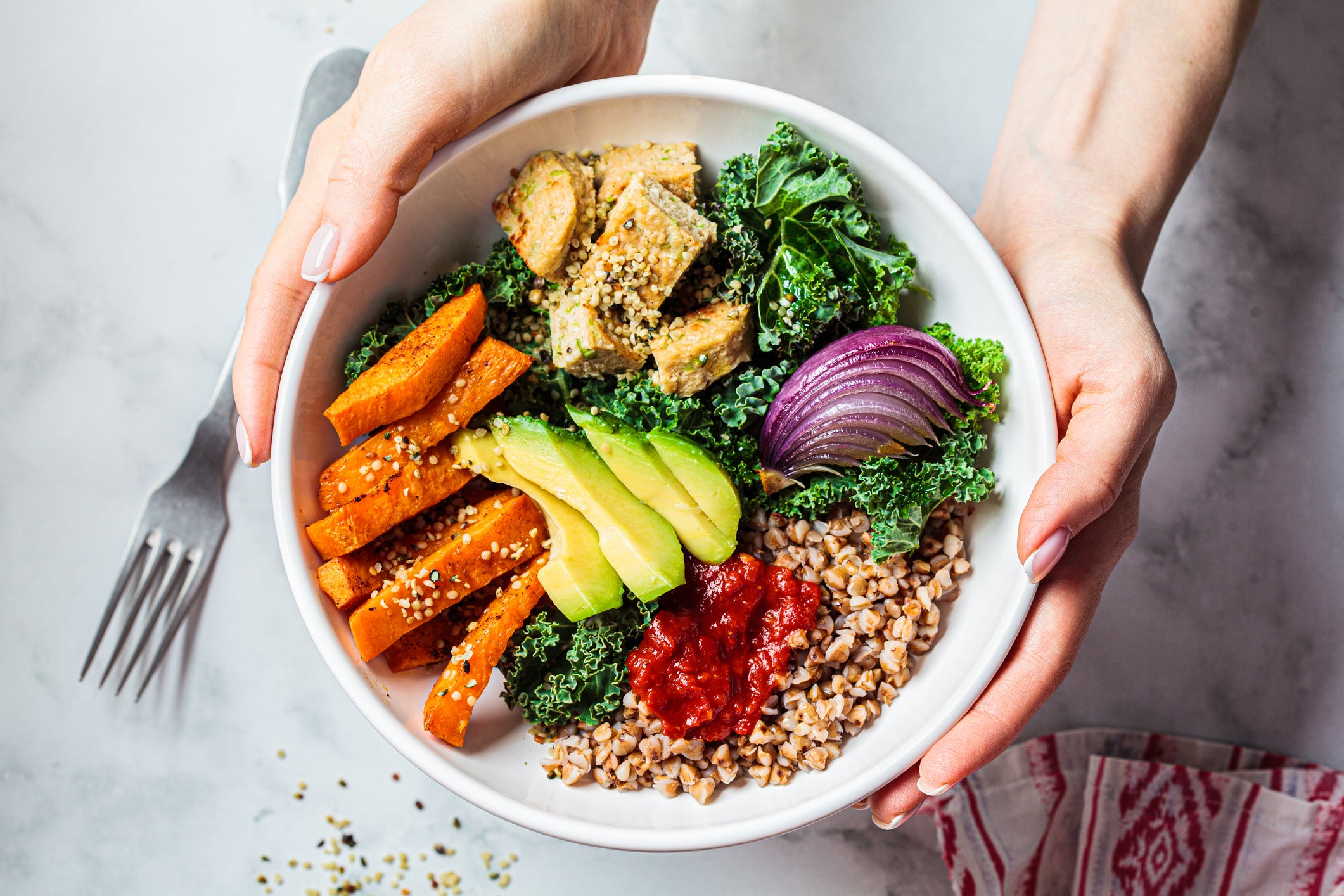
Does anyone remember sub-£3 meal deals? A sandwich, crisps and a drink for less than the price of a fancy coffee. Not good food, necessarily, but comprehensible food. Cheap, filling, forgettable. Lunch: done.
I was in a Pret a Manger the other day and found myself staring at an array of large salad bowls hovering around the £15 mark. Fifteen. They looked virtuous, they looked plentiful, they looked like something you could eat and feel pleased about. But 15 pounds? On lunch? With no drink, no snack, no polite nod to the idea that this is meant to be a functional meal in the middle of a working day? What, exactly, happened here?
This isn’t just another Pret problem. An atis has opened near my office, drawing in the hedge-fund-adjacent crowd from nearby buildings, bowls in hand. Honest Greens has made its London debut. Farmer J has turned school-tray dinners into something approaching chic. Even Robuchon – Robuchon! – now has a deli bar. Whole Foods has long offered a build-your-own salad bar at £2.40 per 100g, which sounds reasonable until you realise how quickly 400g becomes 600g, becomes £14, becomes a small internal reckoning at the till. The Salad Project, which launched in London in 2021 and now has seven sites, reportedly sells around 4,000 salads a day, some of which cost up to £20, with queues snaking around the corner.
This is not a niche operation for the health-curious. That is an economy.
Something has gone slightly awry if the best-value salad bar in central London now lives in the basement of Fortnum & Mason, where £10 will still buy you a veritable pile of roast meat, grains and vegetables – wellness, but with change from a tenner.
There is something unmistakably treatonomics about all of this. I’m of the Millennial cohort that was once scolded for £5 flat whites and avocado on toast, as if those two things alone brought the housing market to its knees. Even so, this new era of £15 lunches gives me pause. Fifteen pounds a day, five days a week, is edging towards £4,000 a year on lunch alone. “Treat days” used to be occasional; now they’re the default. “Cheat days”, meanwhile, have been rebranded into something quieter and more polite: protein-rich, fibre-forward, dressed with cold-pressed oils and moral reassurance.
To be clear, salads have changed. This is not the era of limp leaves and a mournful, overcooked chicken breast. Today’s bowls are roasted, spiced, seeded, dressed. Beans here, chia seeds there. Sweet potatoes caramelised. Kale massaged to within an inch of its life. According to Waitrose’s Food & Drink Report for 2025, there has been a wholesale rehabilitation of fibre, a redemption arc for fat, a comeback tour for carbohydrates.
In that context, £15 salads start to look less deranged. People would rather invest in their health than spend the same money on pints in the pub or fast fashion that dissolves after three washes. And yet – ever the sceptic – I can’t help asking how healthy these lunches actually are.
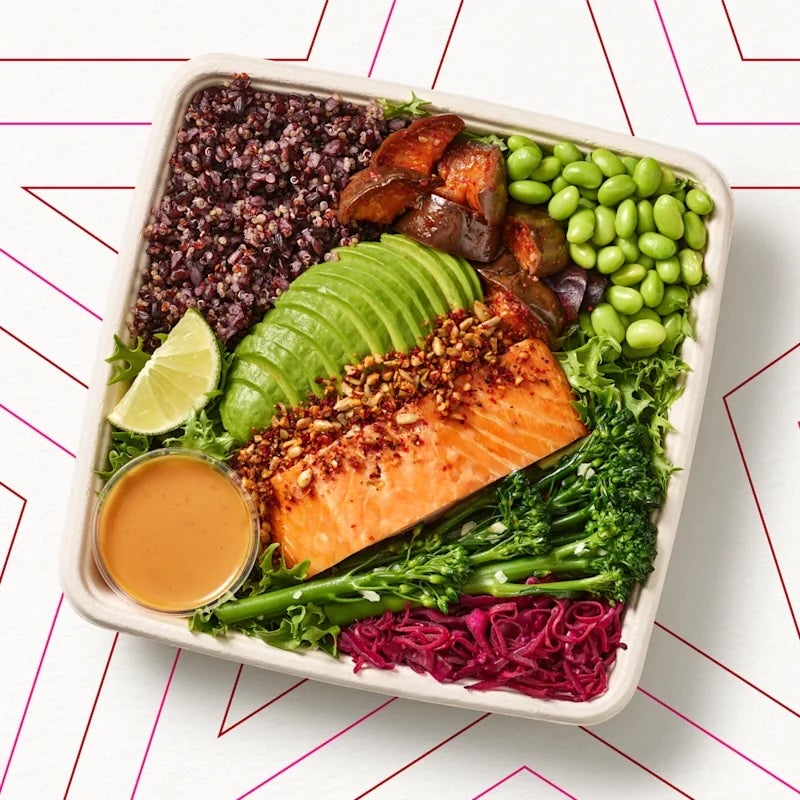
Take Pret’s miso salmon salad bowl. It costs £14.95 and includes roasted salmon, Tenderstem broccoli, avocado topped with Japanese togarashi-spiced seeds, chilli aubergine, edamame beans and Pret’s miso and orange dressing. On paper, it sounds impeccable. Nutritionally, it clocks in at 761 calories per serving, with 47.1g of fat, 43.4g of carbohydrates (16.5g of which is sugar), 12.8g of fibre and 36g of protein. For anyone who grew up in the low-fat, low-carb years, that reads like a heart attack disguised as a salad.
The High Steaks bowl from atis doesn’t look much lighter. Garlic-butter steak, roast new potatoes, zero-waste greens, broccoli, spinach and chimichurri come in at 735 calories, with roughly 40g of protein, 33g of carbs and close to 50g of fat. These are not dainty lunches. They are heavy, dense, serious meals, built from vegetables we’ve collectively decided are good.
According to nutritionist Jo Travers, that distinction matters. “Calories coming from beans, lentils, nuts, seeds, olive oil and things like that are definitely going to be much, much better than just going and getting fried chicken.” Even if calorie-for-calorie, it’s more expensive.
The problem, she argues, isn’t that these bowls exist, but that their scale has become warped. “A lot of the time, we are fed massive portions that we don’t really need. Portion sizes have been getting bigger and bigger over the decades. What we actually need versus what we’re offered is now quite distorted.”
That distortion helps explain the familiar 3pm slump. “It really depends on what the portion size is made up of,” she says. “If it’s made up of vegetables, that’s going to be very different from if it’s made up of grains or pasta or potatoes or bread.” Vegetables, she says, are rarely the issue. “If it’s coming from things like lettuce, it’s not really a problem, because to get any nutrients from lettuce, you need to eat quite a lot of it.” Hence, the death of soggy salads.
Carbohydrates are a different story. Not because they’re bad, but because they quietly multiply. Travers suggests a simple rule of thumb: a fist-sized portion of grains is usually plenty for a meal. “What can happen, because they’re cheap and filling and people like them, is that you can end up with two fists. That’s when blood sugar starts to spike, and then it crashes.”
This is where the health halo becomes slippery. These salads are built almost entirely from whole foods, with little or no ultra-processing, which gives them a powerful aura of goodness. Travers doesn’t dismiss that outright. “If what you see is mainly food in an almost natural state, that’s a really good indication.” Where the halo fades is when foods stop resembling themselves. Protein bars full of extruded pea protein may wear the language of health, but, as Travers puts it, “the protein comes from pea protein, which is nothing like a pea. The health halo starts to lose its glow.”
Salad bars, in her view, generally sit on the right side of that line. They offer variety, different fibres, micronutrients, and polyphenols that support gut health. Even if the bowl is oversized, it’s still a better nutritional bet than a packaged sandwich. “If you’re getting a meal deal sandwich, there’s not a great deal in that,” she says. “It’s way better to go to a salad bar.”
Hybrid working is often cited as the rationale. Fewer days in the office mean fewer bought lunches, which in turn means people are willing to spend more when they do show up. On paper, the maths works. But it also removes the natural constraints that once kept lunch in check. When you’re not buying it every day, there’s no reason for it to stay small, cheap or forgettable.
That’s how lunch ends up costing £15 and weighing half a kilo. Not because people are greedy or naive, but because health, value and indulgence have collapsed into the same thing. Bigger feels better. More nutrients justify more calories. More calories justify more money.
Pret once faced a backlash for selling a £7.13 “posh” cheddar and pickle baguette, and for scrapping its £30 coffee subscription. Now, it’s confidently pushing £15 salads and is rumoured to be considering a stock market float. Clearly, salad economics are doing something right.
Salad used to be the nadir of lunchtime options: joyless, punishing, eaten because you thought you should. Today, it has swung to the opposite extreme – aspirational, oversized, nutritionally impressive and faintly absurd. In fixing the problem of bad lunches, we may have created another one. What’s disappeared isn’t the meal deal, but the idea of a normal lunch at all: affordable, filling, healthy enough – and over without needing to check the macros, have a lie-down or fork out £15.
Join our commenting forum
Join thought-provoking conversations, follow other Independent readers and see their replies
Comments
Bookmark popover
Removed from bookmarks