European car giants issued warning over electric vehicles: ‘We saw what happened to Blockbuster’
Octopus boss Greg Jackson said European manufacturers should be prepared to compete with EVs from China
European car giants risk becoming obsolete like Blockbuster unless they fully embrace battery electric vehicles (EVs), the boss of green energy firm Octopus has warned.
This caution comes as lobbying by carmakers in Europe has led to Brussels watering down plans for the transition to electric vehicles.
Octopus boss Greg Jackson said European manufacturers should be prepared to compete with EVs from China.
He added that wider EV adoption would help address storing renewable energy from intermittent sources like wind, as "power could be drawn from electric car batteries when they are not in use”.
The UK government has pledged to outlaw sales of new petrol and diesel cars from 2030, with only zero-emission models permitted from 2035.
In December, the European Commission watered down its total ban on the sale of new petrol and diesel cars from 2035, with the UK government under pressure from critics to follow suit.

The new plan for the EU is for 90 per cent of new cars sold from 2035 to be zero-emission.
Mr Jackson told the Press Association: “What’s happening in Europe is you’ve got a small number of very powerful companies that are not very good at making EVs.”
He warned: “Unless Europe gets with the plot and really accelerates its capabilities on battery electric vehicles, we won’t have a car industry, because the reality is the Chinese cars are not cheap because of subsidies or because of cheap labour, they’re cheap because they’ve invested in the research and development and the modern manufacturing.
“And we saw what happened to Blockbuster, to Borders books, to Kodak. We don’t want that to happen to the car companies, but they have to save themselves. Nokia – I remember when Nokia saw the iPhone, instead of working out how do they build an equivalent, they kept trying to tell us that buttons were more important.
“The reality is, these technologies are out there. The genie is out of the bottle for these technologies and Europe has to get to grips with it, because they can’t stop it. They will do a lot better by trying to compete than trying to deny.”
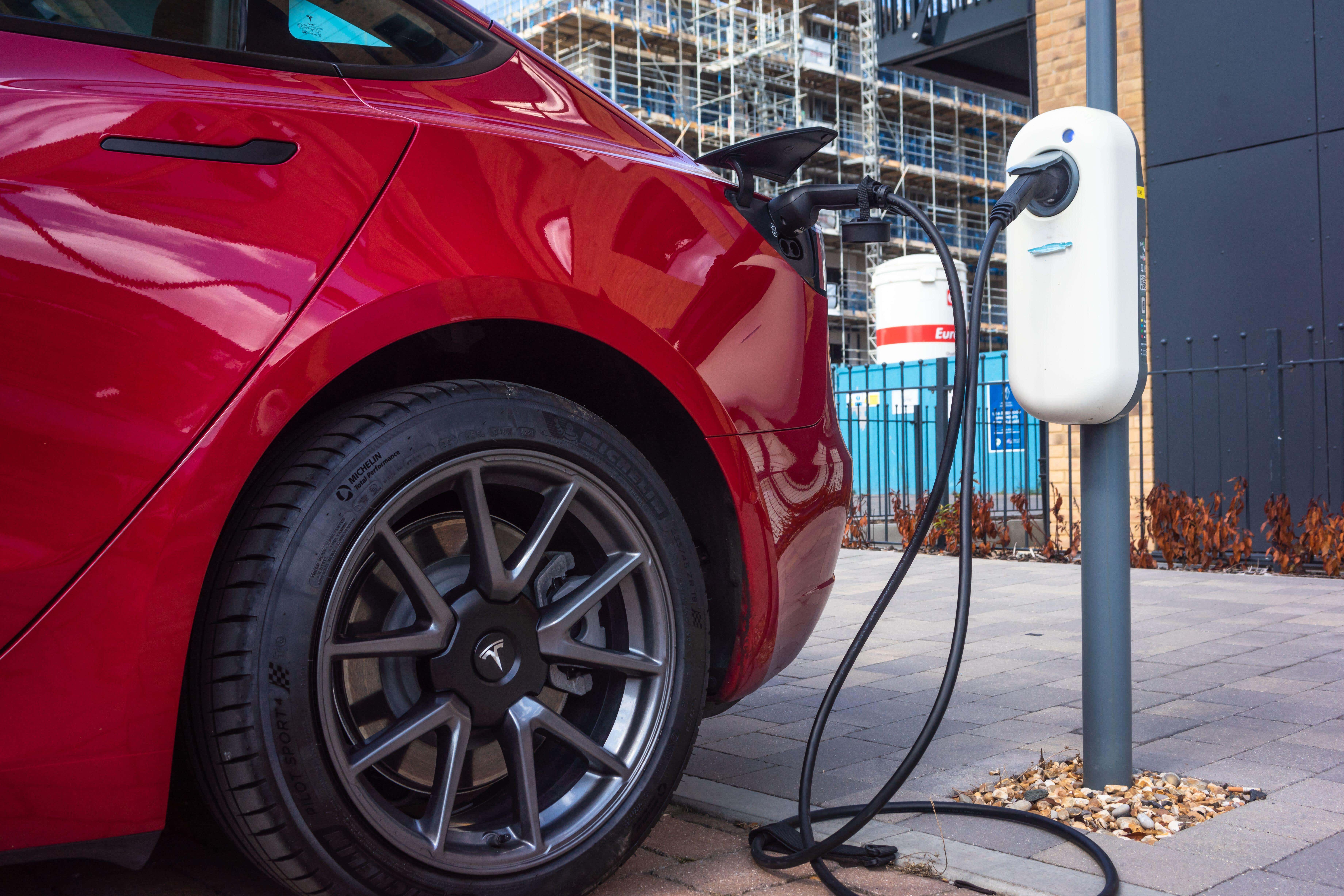
Mr Jackson said plans for the UK energy grid did not take account of the falling cost of batteries to store power generated by renewable technologies such as wind and solar farms.
“The cost of grid-scale batteries is plummeting,” he said. “Our UK grid plans don’t take account of that, which is why we could replace an awful lot of the planned new infrastructure with cheap batteries.
“Even better than that, electric vehicles contain a battery that’s big enough to power a house for the best part of a week. The more electric cars we get, the more we can soak up that generation when it’s cheap.
“Octopus alone has about two-and-a-half gigawatts of storage in electric cars that we can shift to grab that cheap power. The UK is a 50 gigawatt system, so you’re already at the point where a significant proportion of our existing system can do this, and electric cars are only 5 per cent of cars.
“When they get to 100 per cent you’ve literally got an entire system’s worth of storage for free.
“The problem is too many of our grid plans spend money because they’re not taking account of that, and the job now is to urgently reassess all of those plans and stop spending money, except where we really, really need to.”
In the UK, registrations of pure battery EVs were up 23.9 per cent year-on-year to 473,348 in 2025, a market share of 23.4 per cent of new cars.
Bookmark popover
Removed from bookmarks