Male friendship: ‘We met a year ago. Now we say I love you to each other’
This Valentine’s Day, research from mental health charity Calm shows that over half of men have never said ‘I love you’ to a mate. Tom Stroud breaks that taboo by talking to Radhika Sanghani about his ‘beautiful friendship’ with his friend and business partner, Dan Shrigley
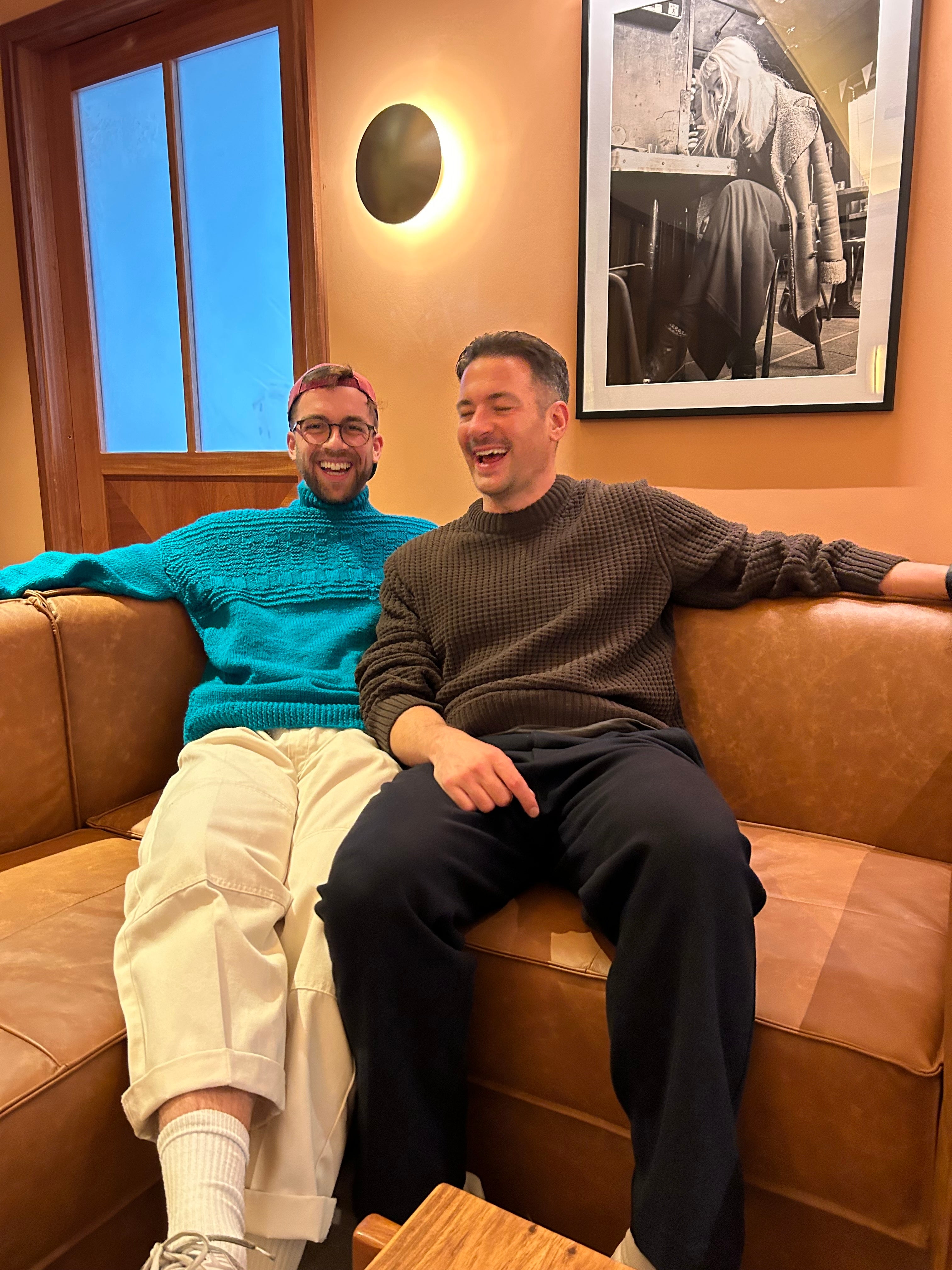
Growing up, I had an absent father who wasn’t around for me, and male role models who were supposed to care for me but weren’t able to do that. My mum raised me alone, and she was amazing, but it created a difficult environment for me to trust men in my childhood and teenage years – and it took me a long time to make male friends. It took me even longer to make friends I could really open up around and be vulnerable with. Friends like Dan.
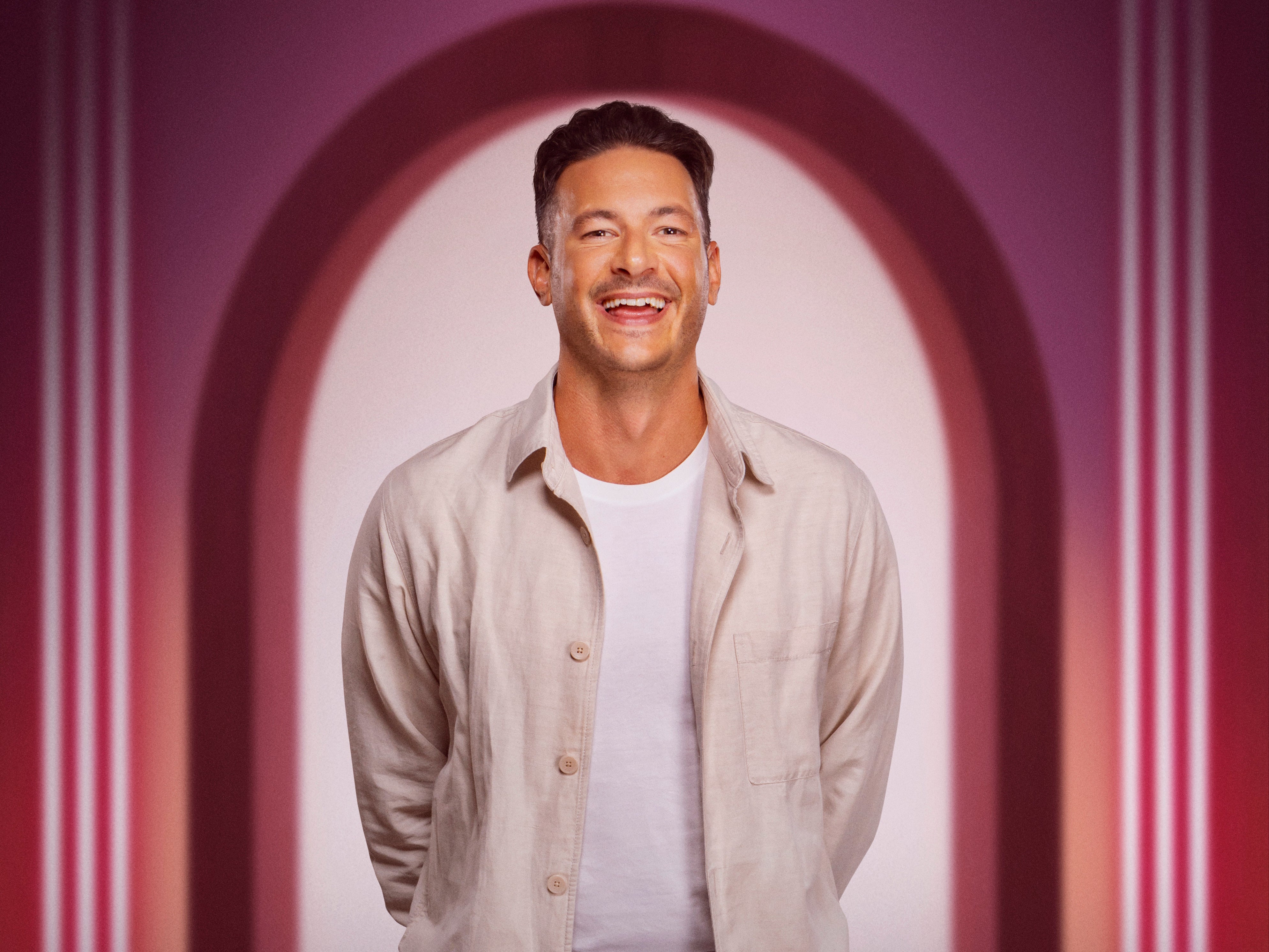
Dan Shrigley and I met over a year ago, after I’d been on Love Is Blind: UK. He saw a clip of me on the show where I was asked about being raised by a single mum and how a lot of men were saying I have feminine qualities. My response was that I’m proud of my qualities that are seen as traditionally feminine, like having empathy and being emotionally intelligent.
That was when Dan sent me a DM. He told me how much he resonated with what I’d said and how it takes a lot of bravery for a guy to say that, then suggested we meet for coffee. It felt a bit weird because there is a stigma around a guy meeting another guy for a coffee. But I could see from his content that he was a lovely guy. He only had a few hundred followers at the time – he now has more than 25,000 – and was sharing about male mental health, which I’m really passionate about.



There was an age gap because I’m now 40 and Dan’s 28, which was in itself slightly strange for me. But what he was doing was awesome, so I agreed to meet him.
We spent the whole afternoon talking about why men in the media are either showing their strength in a very negative way, like toxic masculinity influencers, or men demonstrating strength through aggression. We both felt we’re strong in a different way. It feels really hard to find other men who think the same thing, so we connected quickly. Men like us don’t stick our heads above the parapet – we’re quietly getting on with our lives with our values of things like respect, authenticity and wanting to grow.
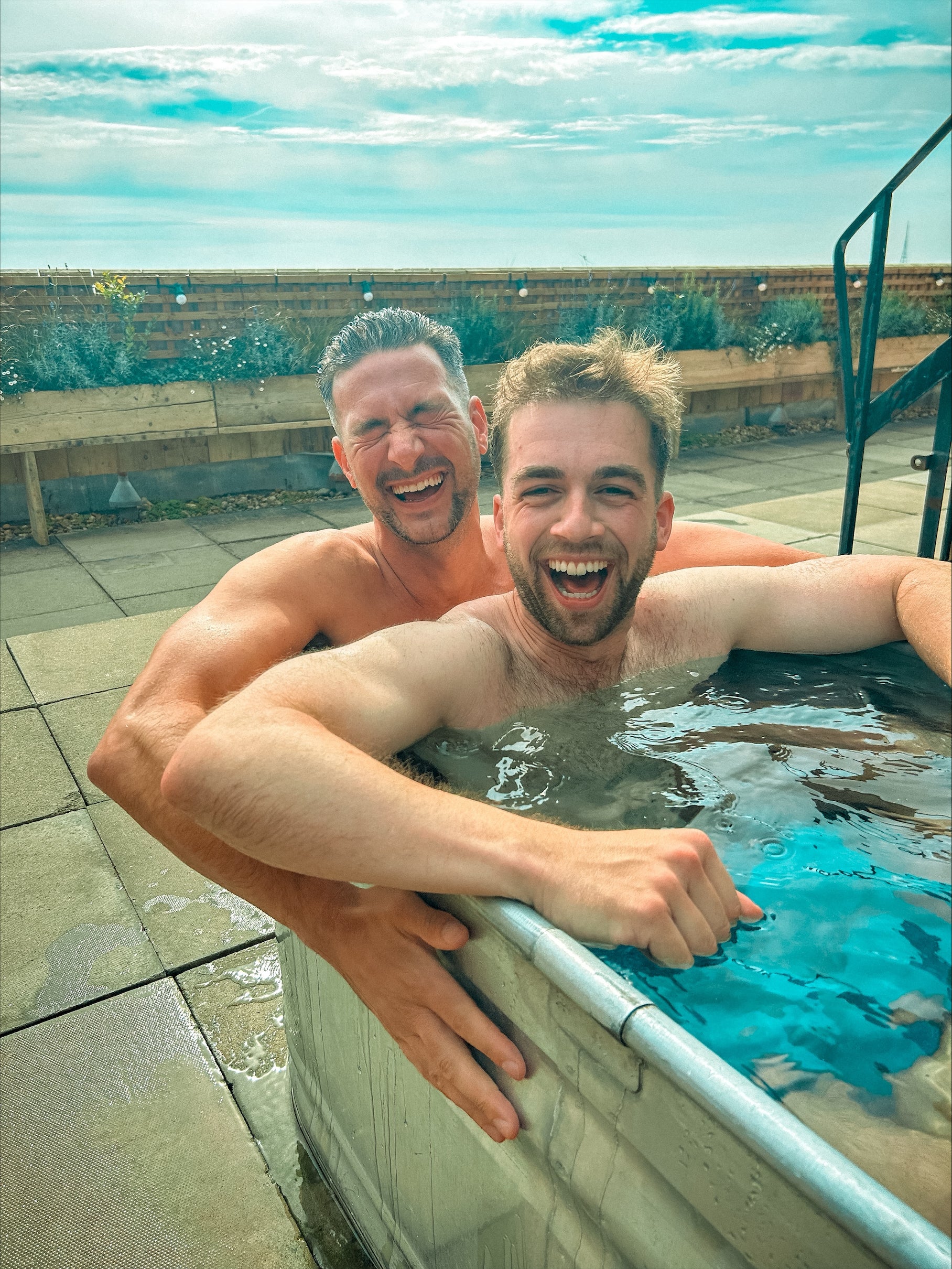
Over a year later, Dan and I have a really beautiful friendship. Our relationship is unique because it’s not traditional. Dan is very different to the men I would have socialised with back in my twenties, when the most important things to me were doing really well in my career, going out drinking and trying to pull women. That was it. I didn’t have a huge amount of depth to me back then, and I’d try to find men with similar interests.
Dan is an evolved human being. He’s incredibly sensitive, deep and has a level of empathy I never had at that age. In the past, I would have looked at a 28-year-old lad and thought, no way am I being friends with him, but Dan’s made me realise young people have a lot to offer. He refers to me as his older brother, and it makes me feel very emotional when he says that. As a guy who struggled to build male relationships throughout my whole life, it feels really validating.
New research from UK suicide prevention charity Campaign Against Living Miserably (Calm) and London brewery Beavertown has found that 62 per cent of men have never said “I love you” to their mates. This Valentine’s they’re launching a campaign to get British men to say “I love you” to a male friend.
Dan and I said “I love you” to each other a couple of months ago, and it was the first time we said it. It felt really lovely. We were having a moment of looking back at all that we’ve achieved together and were like, “I f****** love you, man”. It was a really beautiful moment.
My friendships have changed a lot as I’ve got older. Men will often find they have these very close bonds as children and teenagers, but they end up dissipating over time for a number of reasons – you end up moving away, your friends have families, and partners. Or a big trend is that you just grow up and end up valuing different things in your life. You have moments of going to see your supposed best friends and have nothing in common with them except history, and end up feeling isolated, like “no one knows me”.
I’ve seen it happen in my own friendships. I barely see my old school friends now, not because I don’t love them, but we’re just different humans. I left Brighton for London when I was 25, but most of them still live there, doing the same things they were doing 15 years ago. I find a lot of scepticism on their part when they look at my life.
Dan has the same challenge with his uni friends. There’s a sense that to be part of the tribe you have to follow the same behaviours the tribe are exhibiting. And there aren’t many environments in which to make friends. Women are excellent at setting up these environments, but the third spaces that men used to have, like pubs and working men’s clubs, don’t really exist in the same way.
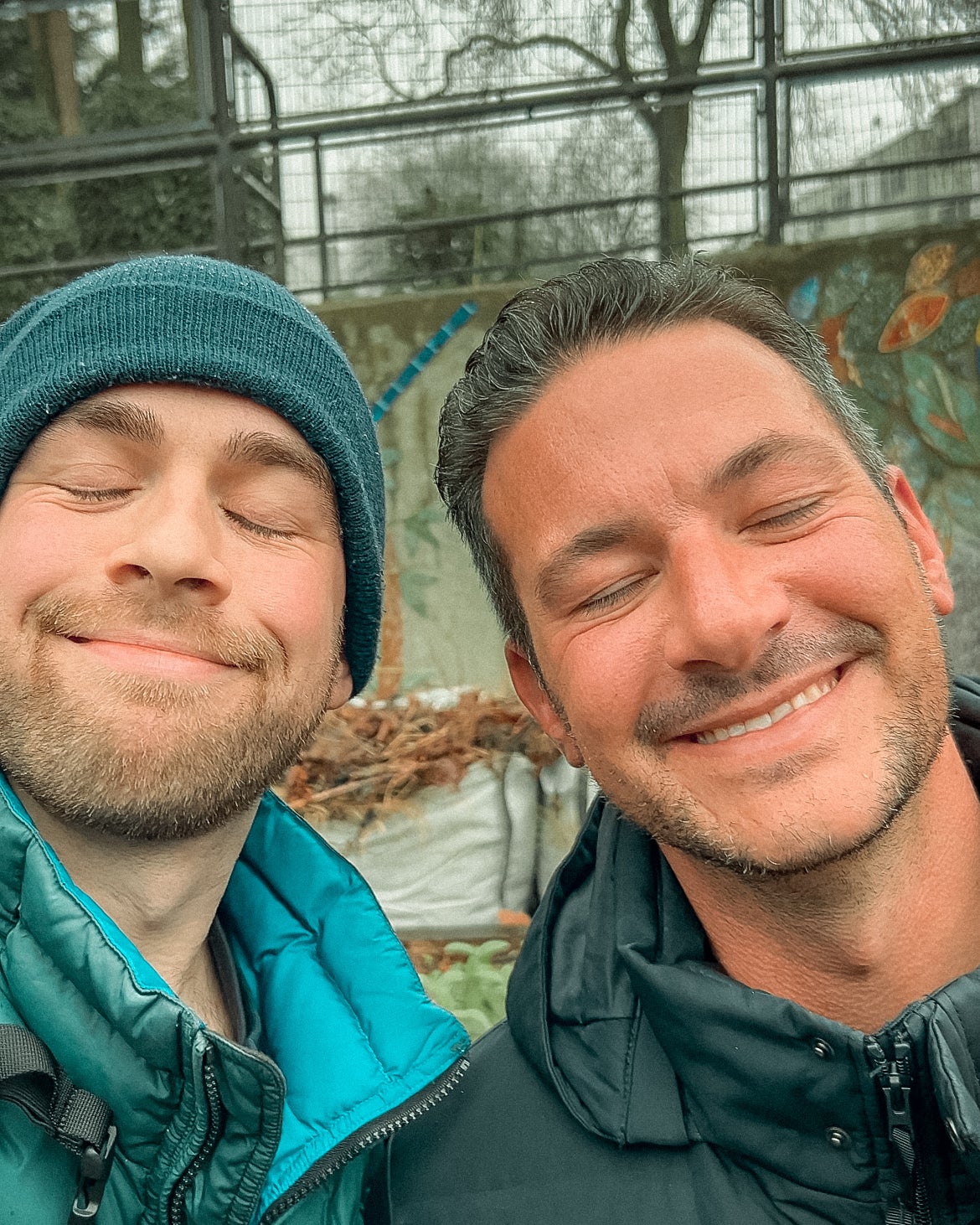
So Dan and I decided to do something about it. We put on a walk advertised on our socials for men to join and build connections with other guys. About 10 men turned up, and because of the values we’d communicated, the men were really open to talking about the things they struggled with. We’ve kept doing those ever since, and it’s now transformed into Shoulder to Shoulder, the fastest-growing men’s community in the UK. We now have around 80 guys on each walk, and do multiple events each month.
Dan and I both quit our jobs within the last year, so we can focus on it, and he’s moving in with me in March, so we can cut down on costs while we work on the business. It’s not a mental health support group, but indirectly, it supports everyone’s mental health. I can’t explain how nourishing it has been for me. A bunch of the men came to my last birthday party, and I now count a number of them as close friends.
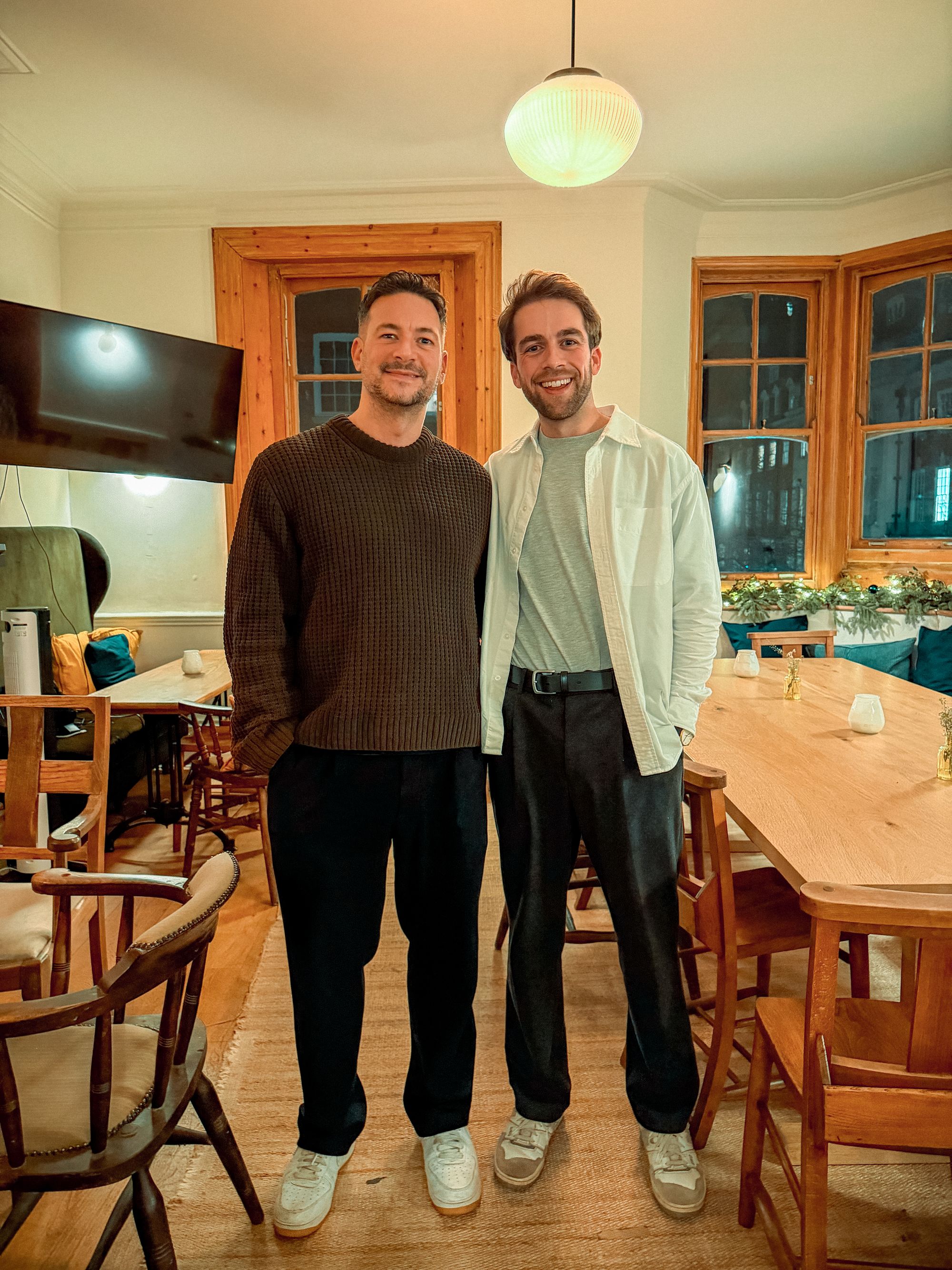
My friendship with Dan has changed me measurably. It’s made me a lot more open-minded when it comes to age-gap dynamics in friendships, and it’s given me a different model of friendship to the dynamics I have with uni friends, where we show up and have a great laugh, but nobody ever says they’re struggling.
Whereas Dan and I are very vulnerable with each other. He told me he’s feeling burnt out today, so I said, let’s jump on a call and he does the same for me. If I wasn’t feeling OK, Dan would be the first person I’d go to.
I’d love to say we’ll be friends forever, but everything I’ve learnt about friendship thus far tells me you can’t guarantee that. You have to treat friendships the way you treat romantic relationships; you might grow apart, and that’s OK. People develop in different ways. The important thing is to be able to talk about it.
As told to Radhika Sanghani
Join our commenting forum
Join thought-provoking conversations, follow other Independent readers and see their replies
Comments
Bookmark popover
Removed from bookmarks