The Independent's journalism is supported by our readers. When you purchase through links on our site, we may earn commission.
Inside the ultra-processed home: The everyday items making it more toxic than you think
From ‘forever chemicals’ to microplastics, Radhika Sanghani is shocked to discover the hidden pollutants in her home and learns how to detoxify her environment without going to extremes


Every new year, there’s an influx of advice on how to detoxify yourself and your body. But this year, I’m more inclined to turn my attention to the toxins in my flat.
Like many, I’ve become more aware of “forever chemicals” – a class of manmade chemical toxins known as PFAS, which stands for per- and polyfluoroalkyl substances – that have been used for decades in everything from non-stick cookware to waterproof clothing.
PFAS are so common in Britain that they are now present in nearly everyone’s blood, to varying degrees. The problem is that new studies show they’re linked to serious health conditions, such as cancer, infertility and cardiovascular mortality.
And they’re not the only toxins lurking in our homes either. BPA (Bisphenol A) is a chemical used in hard plastics and epoxy resins, commonly used in food packaging and drink cans. It is now classified as a hazardous chemical in the EU due to its ability to damage fertility and cause eye damage, skin reactions and respiratory irritation. While many products claim to be BPA-free, this only means they are free of Bisphenol A; they still may contain other bisphenols.



Phthalates, a group of synthetic chemicals used to make plastics more flexible and transparent, are also increasingly present in our homes, showing up in everything from household cleaners to fragrances and personal care products. They have been proven to disrupt hormone systems, and some studies have linked them to birth defects.
Then there are microplastics,which we all know have been harming sealife for years – and are now being shown to harm us humans, too, with possible links to cancer and reproductive health.
The list seems endless, and when I think about the contents of my bathroom cabinets and my kitchen cupboards, it all feels overwhelming. But if I spend so much time worrying about what I am putting in my body in terms of ultra-processed food, it does make sense to be concerned about how the toxins in the home could be affecting me, my partner and my cat.
It’s why I’ve enlisted the help of Dr Jenny Goodman, a qualified medical and ecological doctor, and the author of Staying Alive in Toxic Times: A Seasonal Guide to Lifelong Health and Getting Healthy in Toxic Times. She’s dedicated her career to exploring the toxins present in our lives, as well as researching all the best toxin-free alternatives available.
So I invite her around to my flat to find out just how toxic it really is – and what I should and could be doing differently.
Kitchen
Before we begin the official assessment of my flat, I proudly offer Dr Goodman a glass of filtered water from my jug, confident this is one thing I’m doing right. She gently points out that while it’s great that I’m taking measures to filter my drinking water, it’s not ideal that my filter jug is plastic.
“Plastic particles are getting into our bodies through packaging and products like this,” she explains. “And they contain phthalates, which are endocrine disruptors, implicated in fertility issues, cancer of the reproductive organs and fertility issues.” Instead, she recommends I buy a glass version of the same jug, so I can avoid my water potentially absorbing plastic nano-particles.

Plastic shows up as another issue when she spots my cooking utensils, particularly a black plastic potato masher. “New studies are showing black plastic is made with all sorts of nasty stuff, even though it’s recycled, so be wary of that,” she warns. “And if you can, avoid using plastic utensils in hot food because that can cause the plastic to melt and contaminate your food.” She recommends using wooden utensils instead. They’re not perfect – they need to be dried thoroughly to ensure they don’t go mouldy – but they’re a much better alternative to plastic.
Saucepans are another minefield. She praises our stainless steel saucepans for being free of aluminium, which is a toxic metal that has been implicated in Alzheimer’s disease, autism and breast cancer. But she does point out that stainless steel is 14 per cent nickel, and if we’re cooking something acidic like tomato sauce or apples, the nickel can transfer into food. It’s a particular issue for diabetics as nickel is implicated in abnormal sugar metabolism.
Our non-stick pans, however, are an instant no. “Those have to go,” she says. “They’re a real hazard, as they contain PFAS that are much more worrying. They accumulate in all our organs and are linked with cancer, polycystic ovary syndrome, thyroid problems, and doubtless many more diseases to be uncovered.”
Luckily, we’ve just started using a non-toxic pan from Our Place, a new brand that creates chic cookware free from PFAS. “Brands that use sand and diamonds to create a non-stick effect are much safer,” says Dr Goodman, “or you can use cast-iron pans, which can be expensive, but you only need one, and it can last decades.”
Then we move on to packaging. Our air fryer is deemed acceptable – so long as we don’t put the food directly onto the surface but place it in a ceramic dish to heat up instead. But keeping our cheese in plastic containers in the fridge is not a good idea. “It will keep fine in a ceramic butter dish – you don’t want it getting moist inside plastic,” says Dr Goodman, warning of toxins entering our food. She suggests immediately recycling all the plastic takeaway containers we’ve amassed, and buying glass or ceramic dishes with bamboo tops instead.
“The most important thing is for your food not to touch the plastic,” she explains, whether that’s in a container with a plastic lid, or when using clingfilm. “Cling film contains phthalates, so don’t use it to wrap sandwiches in. You can use paper bags or baking paper from brands like If You Care for that. But it’s okay if you use cling film to cover a bowl where it doesn’t touch the food.”
Then we get to cleaning products. Expecting some brownie points, I show Dr Goodman the glass bottles I regularly refill with eco washing up liquid and eco cleaning sprays from my local shop. She’s pleased with the former, but urges caution with sprays, no matter how eco, “anything you spray is going right into your lungs. It’s better to use cream cleaners instead.”
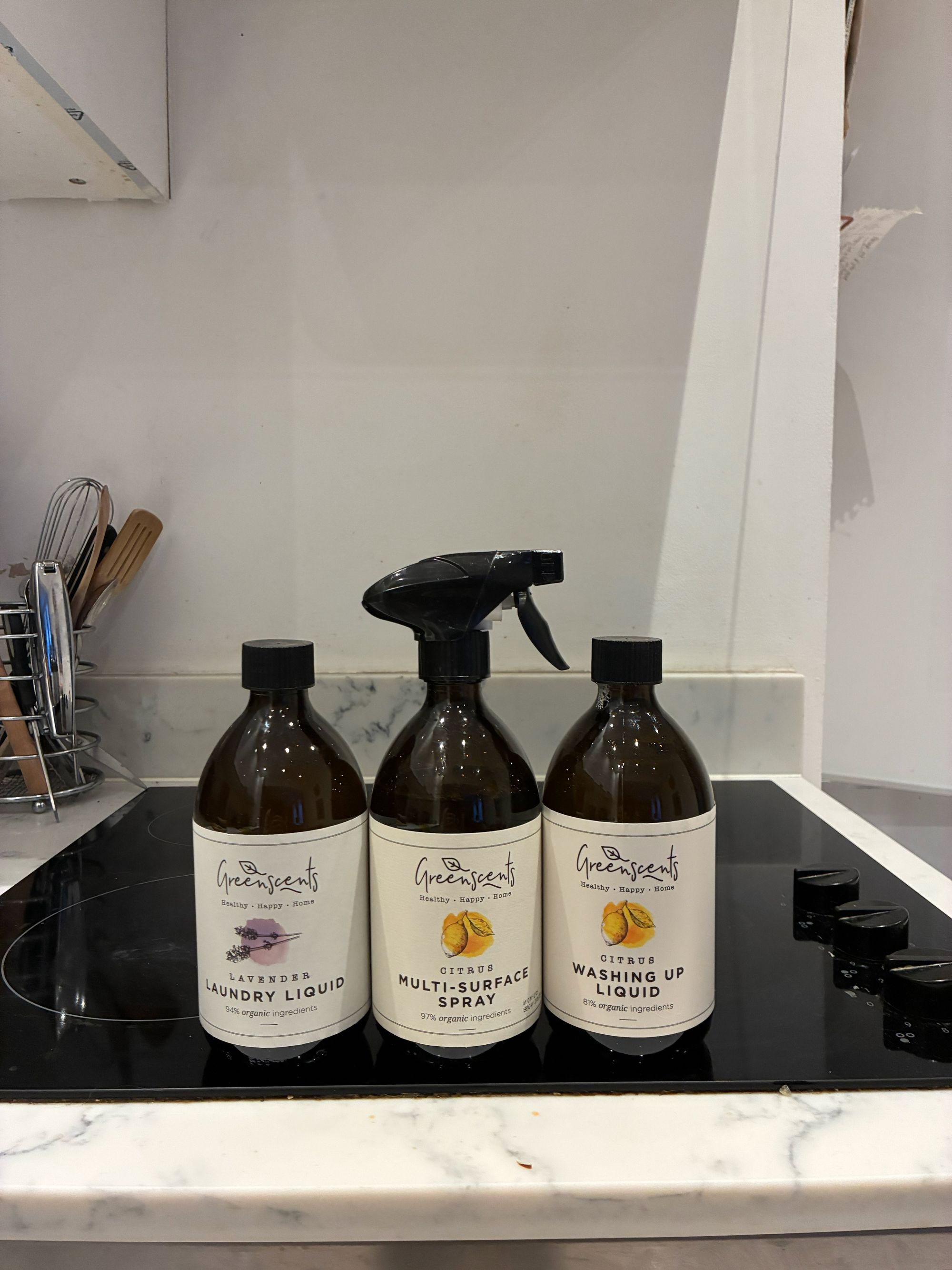
When it comes to our dishwasher, she concedes that the plastic-free tablets we’re using are the “least bad” out there, and suggests simply washing by hand when we can to avoid toxins. For laundry, our liquid detergent makes Dr Goodman wince: “In my experience, standard products are associated with eczema in children.” Instead, she recommends Greenscents’ organic natural products for laundry (I instantly fall for their lavender laundry soap) as well as their surface cleaner, which is surprisingly effective given the lack of chemicals.
Bathroom
“The main hazard in the bathroom is not chemicals, but mould,” explains Dr Goodman. My bathroom doesn’t have windows, which is an immediate warning sign to her, but the extraction fan seems to be doing a good job, as the bathroom is reassuringly mould-free. If any small patches do show up, she suggests cleaning them with borax powder.
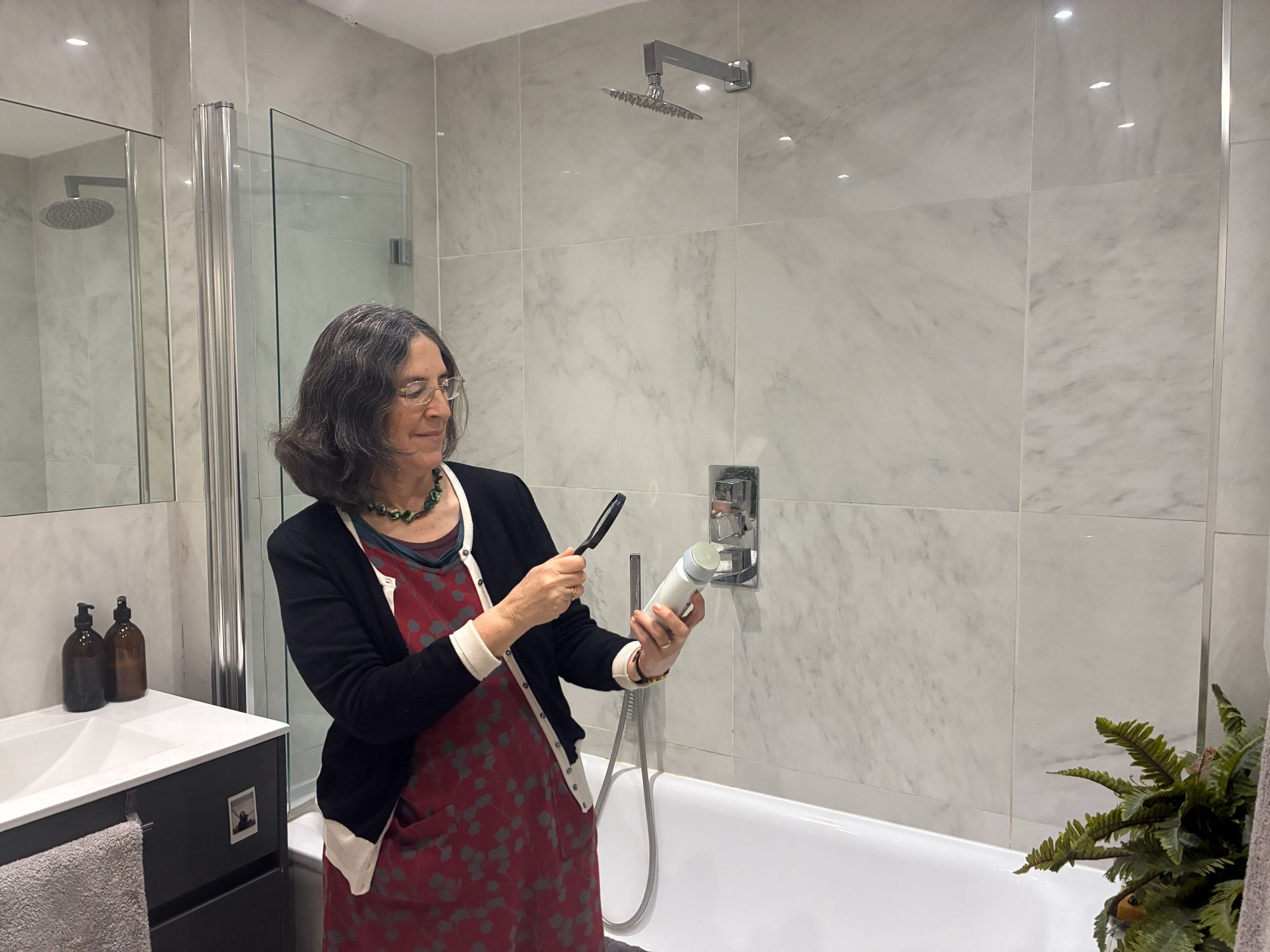
Our antibacterial wipes, however, are dumped straight into the bin after she inspects the ingredient list with a magnifying glass and only discovers a website link – “it’s not a good sign if they don’t write the ingredients on the back.” When we visit the suggested URL, we find the wipes are full of disinfectants, detergents and synthetic fragrances, which are toxins derived from crude oil that can be absorbed straight into the skin. Instead, she recommends using a damp cloth to clean, along with bicarbonate of soda or vinegar, or, if we really want a cleaning product, look for something organic.
Then we get to the bathroom cabinets and all the skincare and beauty products inside. My partner’s Sukin skincare products are deemed “excellent, as good as it gets”, but my allegedly “natural” shampoo and conditioner are found to contain synthetics, as do the Korean skincare masks I use weekly. “The best thing to do is check the ingredients for herbs, minerals and no chemical names,” urges Dr Goodman. “The shorter the ingredient list, the better.”
The real issue in the bathroom, however, is dental care. I still use a plastic retainer nightly, to keep my teeth straight post-Invisalign, but Dr Goodman suggests I stop using it. “Plastic retainers have only been around for a couple of decades, and we still don’t know the long-term effects. Plus, absorbing plastic into your mouth all night can mess with your hormone levels.” It’s a big ask to give up my perfectly straight teeth to be toxin-free, but it’s one I’m now seriously considering.
Bedroom
The biggest issue in bedrooms is typically the mattress and pillows. “Most mattresses contain all sorts of synthetic chemicals, including VOCs – volatile organic compounds,” explains Dr Goodman. “These chemicals ‘outgas’ while you sleep, and get into your body via inhalation and the skin.” She recommends buying natural mattresses and also pillows, made from materials like wool and cotton instead of synthetics, though she points out there are “fewer nasties” in synthetic pillows than in synthetic mattresses.
VOCs are present in many everyday materials, from paint to furniture and, as I now know, our bedding. Though the amount present in these items does meet safety standards, studies show that indoor VOC concentrations are frequently higher than outdoor levels, which raises the danger of exposure. Prolonged exposure to VOCs has also been associated with respiratory irritation, neurological effects, and an increased risk of chronic diseases.
My mattress is definitely not natural or organic, but the good news is that I bought it eight years ago, and the “outgassing” process lasts around two years, so it’s as toxin-free as I can hope. I try not to think about those two years when I was breathing in air-polluting chemicals every night.
Dr Goodman is not pleased, however, with the moth prevention products I have hanging in my wardrobe. “They’re full of para-dichlorobenzenes, a toxic insecticide,” she explains. “We need to stop using them, especially as you can kill and prevent moths just as easily by using essential lavender oil on your clothes.”
Her other piece of advice for the wardrobe is to be wary of dry cleaning. “Dry cleaning chemicals are the most carcinogenic in the world. Some things have to be dry-cleaned, so do it in the summer, and if you have a garden, hang them on the washing line for a week, then bring them in. Don’t bring them in straight away because they contain class B carcinogens.”
Most dry cleaners use chemicals such as perchloroethylene (perc), which the Environmental Protection Agency (EPA) has classified as a “likely human carcinogen” at high or prolonged exposure levels. While clothing returned from professional dry cleaning meets safety standards, trace residues can linger initially, which is why Dr Goodman suggests allowing them to air outdoors to reduce any remaining chemical exposure.
Living room
In living rooms, the biggest issue is normally carpets, which can contain the same sort of toxins found in mattresses. Dr Goodman is happy about the wooden floors in my apartments, but does point out that the soft furnishings carry problematic chemicals and flame-retardants, which contain bromine. So again, if you’re buying new, it’s best to try to buy natural products. “All synthetic furnishings – made of nylon, polyester, etc – have to be impregnated with flame retardants by law,” she explains. “Whereas natural materials like wool and cotton are naturally flame-resistant.”
Other than that, my living room passes the toxin test, especially as I always keep the window slightly ajar, which helps with ventilation, to avoid any damp or mould. But the rest of my flat needs a lot of work to be fully toxin-free.
Of course, everything in my flat has passed a certain safety standard, so the cause-and-effect links between these everyday synthetics and health issues are still largely unknown. But a lot of these chemicals – just like ultra-processed foods – aren’t tested for a cumulative effect, so it’s unclear what the damage over a lifetime of exposure could look like.
It’s also important to be realistic. As with food, not everything we eat has to be organic, but trying to cut out as much ultra-processed food as possible is always going to help. In the same way, cheap packaging and products might not be doing us much good, so it’s worth investigating where we can buy good-quality products that last.
Instead of trying to implement all the changes at once, Dr Goodman suggests starting slowly, making the changes that feel easiest (using ceramic dishes for storing food, throwing away non-stick pans) before moving on to the harder ones (changing my skincare products for toxin-free ones, and cleaning the house with bicarbonate of soda).

It doesn’t mean I’ll ever be 100 per cent toxin-free, but according to Dr Goodman, that’s OK. “If you do 80 per cent of it, that’s enough,” she says. “There’s no need to be purist about this. We’re trying to make you better, not perfect. We live in a polluted world and none of us are uncontaminated, but most of us are OK most of the time, so just do what you can, and try not to worry about the rest.”
The five ingredients to avoid
When you’re looking at the back of a packet, whether it’s for cosmetics or cleaning products, it’s not always easy to know what to look for – and what to avoid. So here are five of the most toxic chemicals to avoid in your everyday products:
1. Phthalates
These chemicals – and endocrine disrupters – are typically found in cosmetics, plastics, laundry detergents and air fresheners. Not only are they proven to disrupt hormone systems, but some studies have linked them to birth defects. While low doses can be safe, consistent high exposure can be risky.
It’s best to avoid any ingredient that has the word “phthalate” in it, or any vague “fragrance” labels.
2. Parabens
Parabens are a group of chemicals widely used as preservatives in cosmetic and body care products to increase the shelf-life of products. The problem is they’re also hormone disruptors that can harm fertility and reproductive organs, affect birth outcomes, and increase the risk of cancer. They can also cause skin irritation.
3. Formaldehyde or formaldehyde-releasers
This known carcinogen can cause skin irritation and trigger contact dermatitis, but it can show up in low doses in hair and nail products. Formaldehyde-releasers, meanwhile, such as DMDM hydantoin, diazolidinyl urea, imidazolidinyl urea and quaternium-15, slowly release small amounts of formaldehyde over time to prevent microbial growth. Watch out for any of those chemicals in your skincare products.
4. VOCs (volatile organic compounds)
These chemicals are found in everything from cleaning products to textiles and furnishings. Studies show that indoor VOC concentrations are frequently higher than outdoor levels, which raises the danger of exposure. Prolonged exposure to VOCs has also been associated with respiratory irritation, neurological effects, and an increased risk of chronic diseases. VOCs are rarely labelled directly in ingredients, so it’s best to avoid aerosols, or any labels of “fragrance” or “parfum”, which can legally hide dozens of undisclosed VOCs.
5. PFAS
PFAS – or “forever chemicals” as they’re known – often show up in products designed to be waterproof, stain-resistant or long-lasting. That can mean non-stick cookware or cosmetics and cleaning products. Studies show they’re linked to serious health conditions, like cancer, infertility and cardiovascular mortality.
To avoid, buy products that are PFAS-free, and watch out for any ingredients that contain “fluoro,” “perfluoro,” or “polyfluoro”. Even when the ingredient list is vague, PFAS are commonly used in products marketed as water-resistant or long-wear, so be particularly careful with makeup.
Join our commenting forum
Join thought-provoking conversations, follow other Independent readers and see their replies
Comments
Bookmark popover
Removed from bookmarks