I was brought up by a toxic parent – this is how I broke the destructive cycle
After growing up in an emotional conflict zone where she often felt trapped between her parents, Tanith Carey promised she’d bring her children up differently. But it took years of unpicking intergenerational trauma to fully heal. Now a parenting expert, she explains what it takes to really break free of a destructive family pattern


There’s just one photograph of my father on show in my home, sitting on a shelf in my living room. It’s a black and white portrait of a sweet, smiling boy of around seven years old, in his school uniform. Why? An image of him as a grown man would be too painful a reminder of the chaos he caused during my childhood through his many infidelities, until he died 28 years ago from a muscle-wasting disease.
After growing up in an emotional conflict zone – my father would take me on long drives at the age of 11 or 12, for relentless inquisitions in which I was forced to choose who I loved more, him or my mother – I had just one guiding philosophy when I became a mother myself: to give my two children a happier, more stable childhood than I ever had.
When my daughter Lily was born 23 years ago, I didn’t yet have the phrase “cycle-breaking” to describe what I was trying to do. But now the idea of intergenerational trauma has entered the mainstream, more parents are beginning to understand this as a powerful, bigger-picture way to bring up emotionally healthier children.
Cycle-breaking is about looking at any patterns being passed down in your family, and consciously choosing not to pass them on. There are signs that it’s fast becoming a favourite new parenting philosophy. A recent survey of 2,000 parents with young children, commissioned by early learning company Kiddie Academy, found that 41 per cent are leaning towards this approach.
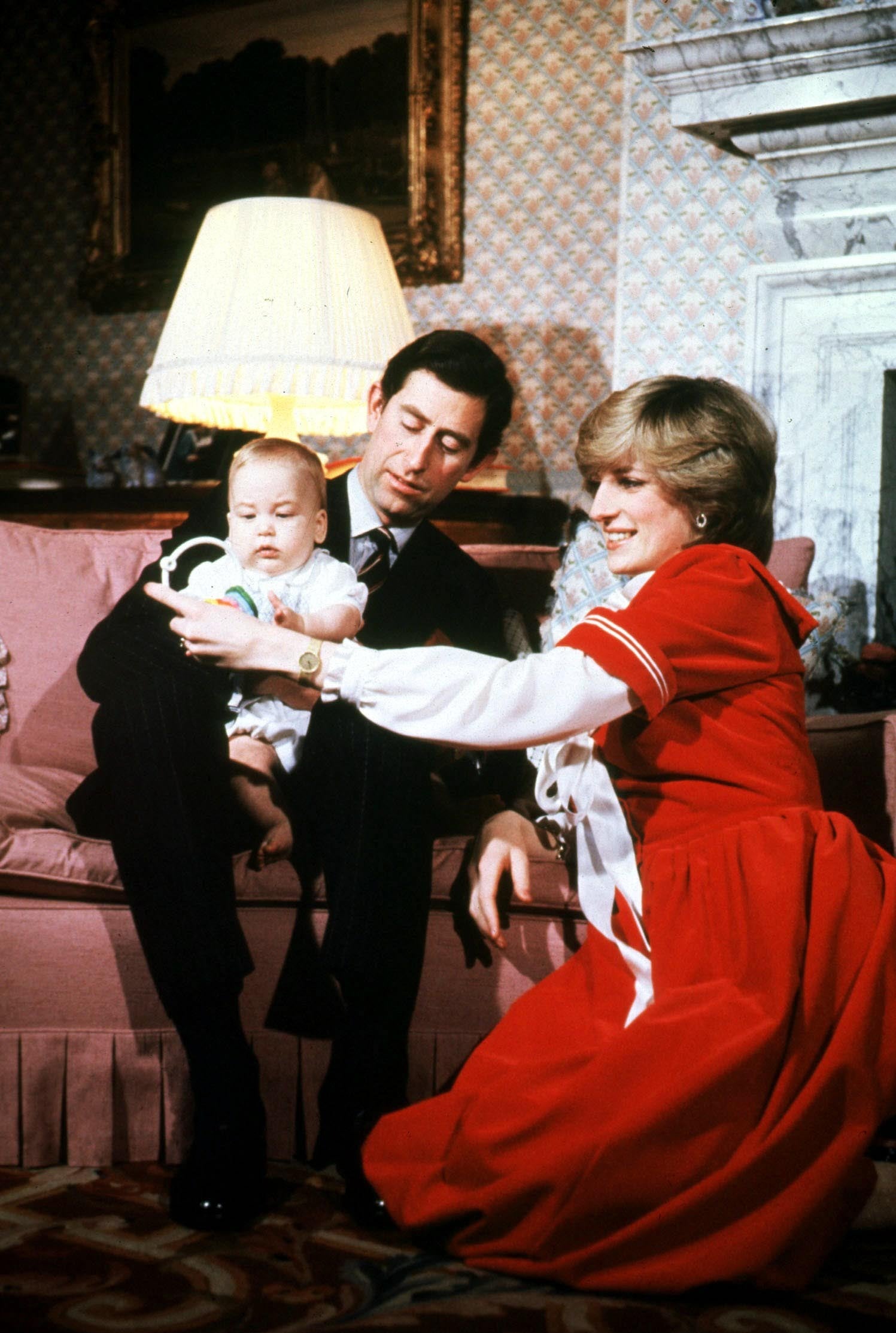
Supporters also include millennial Prince William, who has recently said he wants to give his children the stability he lacked in his childhood. “But you take that, and you learn from it, and you try and make sure you don’t make the same mistakes as your parents,” he said in an interview for documentary series The Reluctant Traveler.


And it seems that cycle-breaking has the potential to create a powerful shift. A range of research is finding that when parents intentionally decide to interrupt those patterns, it has a measurable impact on the wellbeing of the next generation, and kids grow up more securely attached and resilient than they otherwise would. Furthermore, studies find that if we don’t address the patterns, parents who have a lot of unresolved trauma are much more likely to repeat them, and pass on the impact of the adverse childhood experiences they themselves went through.
What makes cycle-breaking so different from other parenting styles is that it starts not with your child, but with you. It’s you who makes the decision to say: “This ends with me.”
When I look at my family tree, for example, I don’t see patterns of physical similarity, like eye colour or height. I see patterns of attachment issues, emotional neglect, and unhealthy coping strategies. I see unrecognised neurodivergence, workaholism and addiction trickling down through the generations.
.jpeg)
One story my dad told was how when he was about 10 years old, his Indian father, a chemist, who had come to Britain in the 1920s, bought him a pet rat. Every day, my father played with it, and he grew to love it. What my grandfather didn’t tell him was that he was also using the animal in a lab experiment to show the effects of nicotine. When the experiment was over, he told my deeply upset and confused father that he intended to euthanise it later that day.
But then, perhaps that’s not so surprising, given that my grandfather told stories about how his own father, a judge in Burma, took him to the hangings of men he had sentenced in order to “toughen him up”. Even though that tale had been diluted by the time it trickled down to me, I recognised the feeling of being trapped by emotionally cruel adults.
My mother’s family history had its own scar tissue. Her father was a jockey who won the Derby in 1943. He later became a successful racehorse trainer, but was also addicted to gambling. He took his own life at the age of 58 when my mother was a teenager. Ten years later, my mother’s youngest brother did the same, close to the racecourse where his father had his greatest wins.
When my parents met, both were young, wounded, and too shell-shocked to reflect on how their respective childhoods were still affecting their present. Into this turmoil, I was born.
To protect myself, I became a withdrawn teenager and disappeared into my schoolwork. My personality was also being formed by my defence mechanisms. By my early twenties, I had become hyper-independent, determined to prove my worth with tangible achievements in a world where I had felt unimportant as a child.
But in other ways, I was fortunate that my family was so visibly dysfunctional that I could see it for what it was. For many, it can be hard to recognise the cycle of secrets, shame or unprocessed grief they are born into, especially if these have been normalised as “it’s just the way we are”.
But my father was so unpredictable, always involved in some fall-out with a business partner or dating a new mistress, that it was clear to me by the end of primary school that this wasn’t the way dads were “supposed” to behave. As I got old enough to have my own relationships, I was relieved to find that, rather than being drawn to unstable men like my father, I couldn’t get away from dysfunctional men quickly enough.
I was fortunate enough to meet and marry a man who I knew would never be unfaithful, or break up the home of the children we would go on to have. As I continued to work hard to give my children something different, I became a parenting author, which allowed me to speak to professionals and write pieces. This in turn gave me the space to think about how I could achieve that.
My primary aim was always to help my girls feel emotionally safe – something I never experienced during my childhood, as I was moved around like a chessboard piece after my parents split when I was 10.
.jpeg)
Of course, it’s never possible to be the perfect parent. In fact, it’s not even a good idea, as kids need to see us learn from our mistakes. So I didn’t always get it right. Sometimes, in my efforts to make them feel better than I had felt as a child, I over-corrected, going too quickly into “fix” mode, until I recognised it was enough to be there to support them while they worked it out.
And cycle-breaking has many layers. I learnt that it’s about more than just knowing you intend to do something different. It’s about looking at the patterns you have stored in your body. It wasn’t until I retrained as a Gestalt psychotherapist three years ago that I realised how hypervigilant my nervous system had become, and how that affected my outlook, and my parenting.
Even though I was now an adult, safe and in charge of my life, over half a century later, I was still scanning the environment and expecting bad things to happen. It took my training – and the personal psychotherapy that involves – to slow down and breathe, in order to be a calmer presence for my children and myself.
There’s also the isolation of cycle-breaking, because not everyone in your family is doing it together. Being the first to say you want to question what’s happened in your family, and to do something different, can feel dangerous and confrontational to others. Several relatives, who preferred the status quo of suppression and silence, died without speaking to me again after I questioned the past.
.jpeg)
I am not angry. That was their choice. And it’s mine to prioritise my children over outdated, unexamined narratives. But then, I don’t believe cycle-breaking should be about erasing the past or blaming our ancestors.
As terms like “toxic parent” have entered the mainstream, we’re seeing unprecedented numbers of people breaking off contact with their families. But the generations before us didn’t have the tools we have today. It’s only now that we fully understand the impact of family breakdown and trauma on children’s development. So I still try to imagine my parents and grandparents as the small, powerless children they once were, which is why the picture of the little boy my father once was sits on my shelf.
And if there’s anything I’ve learnt as a parenting author of 12 books, and a cycle-breaker myself, it’s to worry less about the details of sleep routines, milestones and exam grades. For the sake of your children’s future emotional health, simplify your parenting, and ask just one question: “What would it have been like if your parents had questioned what happened to them in their childhood – and what they did NOT want to pass on to you?”
By asking this question alone, you’re creating a new emotional inheritance for the next generation.
Tanith Carey is the author of ‘What’s my Baby Thinking? Practical Child Psychology for Modern Parents’ with Dr Angharad Rudkin, out on 6 November, published by Penguin DK
Join our commenting forum
Join thought-provoking conversations, follow other Independent readers and see their replies
Comments
Bookmark popover
Removed from bookmarks