‘A load of rubbish’: What is Blue Monday and why is it criticised?
Allegedly Blue Monday is the “most depressing” day of the year

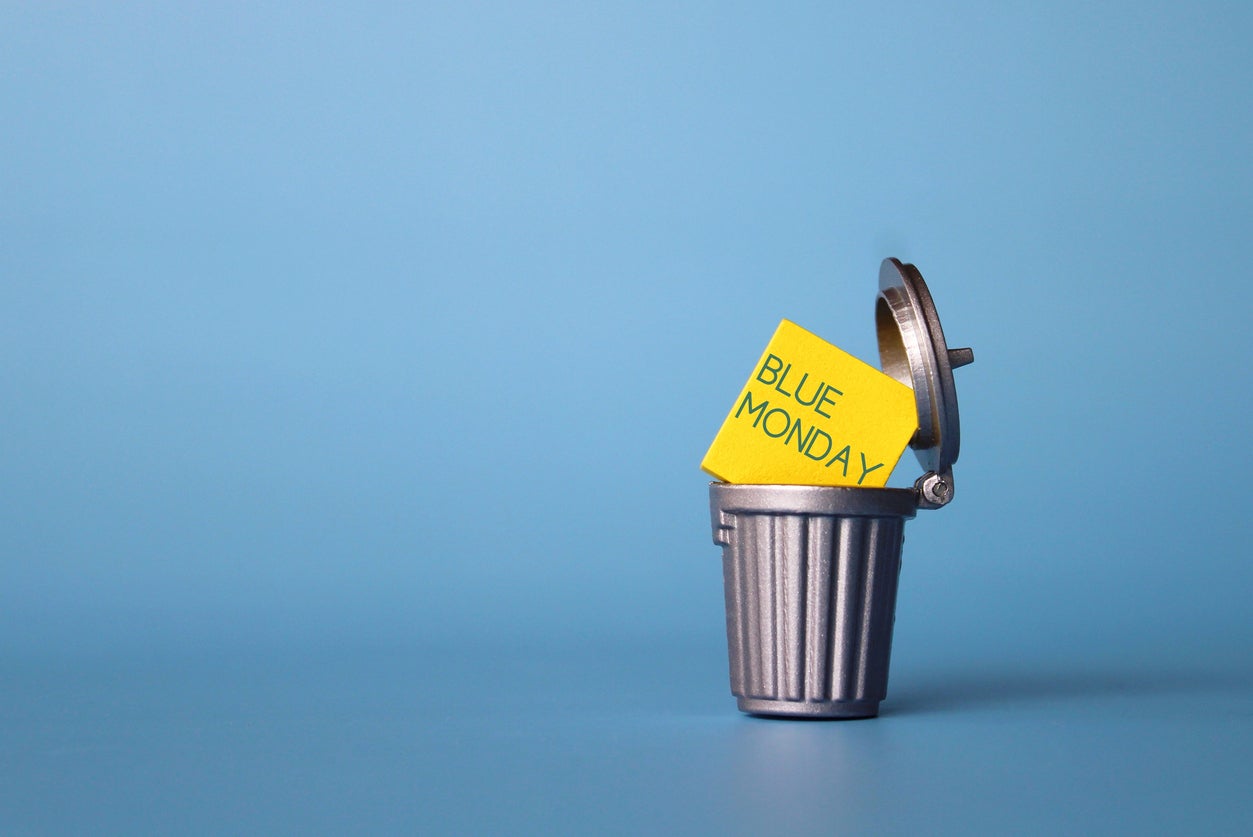
The third Monday of January is annually dubbed "Blue Monday," a concept claiming it to be the year's most depressing day.
This notion has gained such traction that it trended prominently on social media platform X, formerly Twitter, this Monday.
However, mental health charities have consistently criticised Blue Monday as a myth, arguing it trivialises the complexities of depression.
What is Blue Monday?
Allegedly Blue Monday is the “most depressing” day of the year due to feelings of sadness a few weeks after Christmas, with many workers still having to wait another week until payday.
Other factors which supposedly make the day so miserable include cold, grey weather and the breaking of New Year resolutions.
January is actually a great time to make those big decisions for the year ahead
Where did the term come from?
In the words of mental health charity Mind UK, Blue Monday was coined by Welsh psychologist Dr Cliff Arnall in 2005 “to help a travel company sell summer holidays”.
Writing for Sky Travel, the psychologist developed a formula taking into account various factors including weather conditions, levels of debt, the number of days since Christmas, and the time since New Year resolutions to pinpoint the third Monday of January.
However, Dr Arnall himself has backtracked from these calculations and distanced himself from his findings.
In an interview with The Independent in 2018, he acknowledged the day has become riddled with negative connotations and said it was “never my intention”.
“Whether embarking on a new career, meeting new friends, taking up a new hobby or booking a new adventure, January is actually a great time to make those big decisions for the year ahead,” he added.
Why has Blue Monday drawn criticism?
Several charities have sought to debunk the Blue Monday myth and criticised the term for minimising the experiences of people who live with depression and other mental health issues every day.
“(Blue Monday) oversimplifies the complex nature of mental health challenges and risks trivialising real emotions and feelings for sales,” mental health charity Samaritans posted to X on Monday.
“Life can be tough enough without extra mental health stereotypes like this.”
Sonya Trivedy, Samaritans executive director of external engagement, called Blue Monday “harmful” and “a load of rubbish”.
Our volunteers are busy 24 hours a day, 365 days a year, so the idea that there’s a single ‘worst’ day of the year is not only a load of rubbish but is harmful as it could deter people from seeking support when they really need it
The charity’s Brew Monday campaign, devised on the same day as Blue Monday to dispel the trend, encourages people to reach out to friends, family and strangers over a cup of tea.
“Our Brew Monday campaign aims to dispel the unhelpful myth of ‘blue Monday’, because we know people can struggle any day of the year,” she said.
“Our volunteers are busy 24 hours a day, 365 days a year, so the idea that there’s a single ‘worst’ day of the year is not only a load of rubbish but is harmful as it could deter people from seeking support when they really need it.”
Bookmark popover
Removed from bookmarks