How to high-low your food shop: Splurge on flavour, save on the rest
With 70 per cent of Brits prioritising value without compromising on taste, a growing number are adopting ‘high-low’ shopping: spending on the ingredients that matter, saving on the ones that don’t. Here’s how the method works – and three recipes that prove eating well on a budget is entirely doable
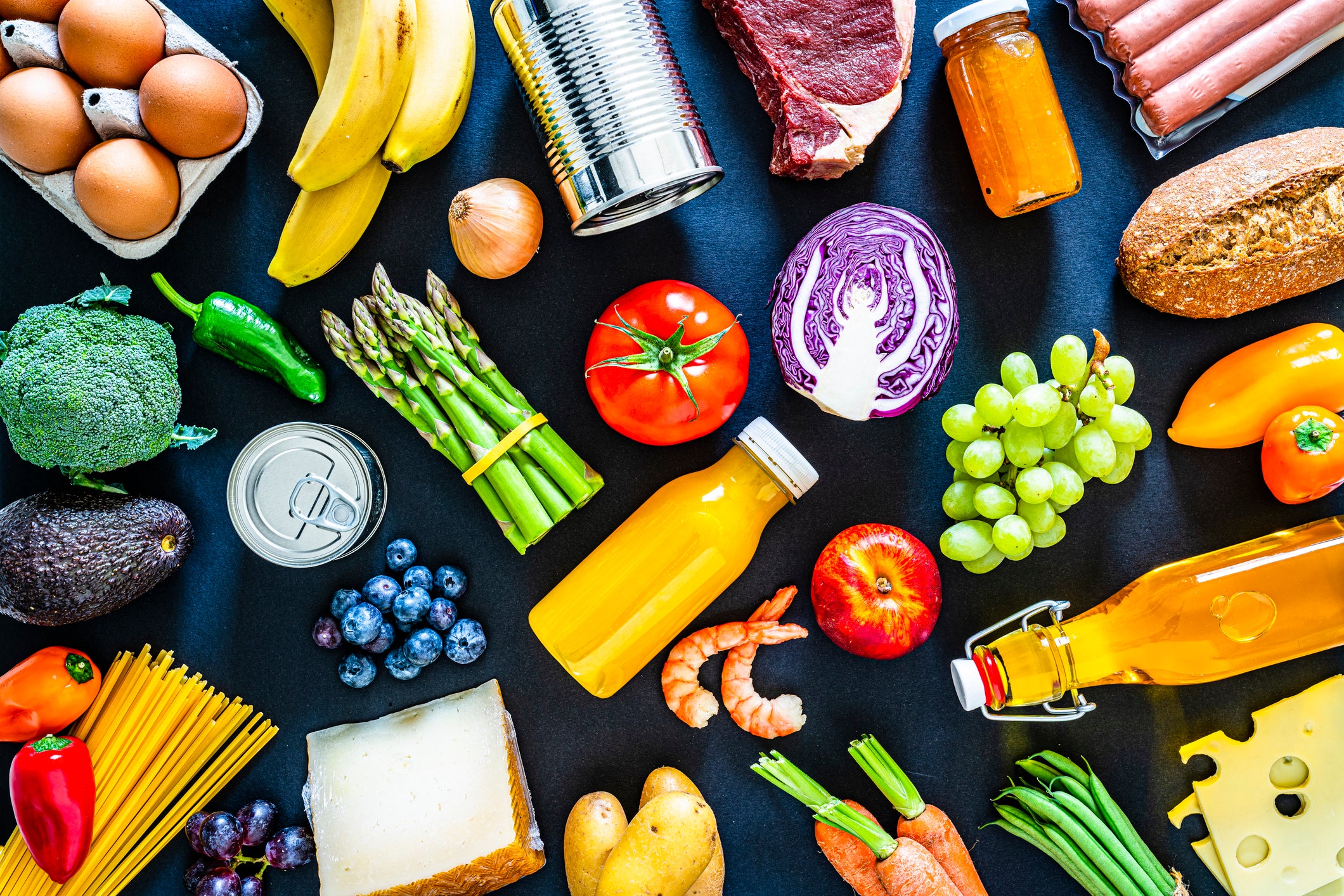
After the festive blowout and the grim arithmetic of January bank statements, the weekly food shop is suddenly where many of us look for redemption. But this year Brits aren’t simply trading down – they’re getting strategic.
According to new data from Ocado, 70 per cent of shoppers want to prioritise value without compromising on taste, prompting a rise in what the fashion world once called “high-low” spending: splurging on the things that matter, saving on the things that don’t, and ending up with meals that feel indulgent without the overdraft.
In recipe terms, that looks like pairing luxurious ’nduja with budget penne; folding truffle butter through store-cupboard potatoes rather than splashing out on whole truffles; or building a caesar salad with eggs, olive oil and parmesan as the stars, while sprouts, breading mixes and everyday staples do the heavy lifting. The result: high flavour, low faff and a grocery basket that finally feels clever – not compromised.
Saff Michaelis demonstrates the approach with three new recipes: a rich, smoky ’nduja penne with burrata built on tinned tomatoes and dried pasta; creamy truffle mash and sausages that turns humble roots into a treat; and a Brussels sprout caesar with crispy chicken schnitzel that feels straight out of an east London small-plate spot, but without the small-plate price tag.
So how do you know when to splash out and when to play it cool? Michaelis breaks it down:
When to splurge
Favour fats
“Fats like butter and olive oil impart and carry flavour, so if your fats are of great quality, your flavour will be too. A good olive oil paired with a cheaper garlic will taste better than the other way around, so don’t be afraid to splurge a little here.”
Quality through colour
“I always invest more in the ingredients that are giving colour and visual appeal to a dish. For example, if I’m making a caesar salad dressing, I always use great quality eggs with richer coloured yolks, as if I don’t, the dressing could end up looking a little anaemic.”
When to save
Cost-effective carbs
“Carbs should never be the most expensive thing on your shopping list. In my experience, cheaper own-brand pasta is often as good or even better than a premium brand, and equally, enough delicious butter or cream can make the humblest potato sing.”
Budget ‘back-up dancers’
“Ingredients like soffritto mixes, tinned or jarred pulses, and stocks are all back-up dancers to your star ingredient(s). You layer these to create an overall flavour, and therefore each one doesn’t necessarily need to be premium in isolation.”
’Nduja and burrata pasta
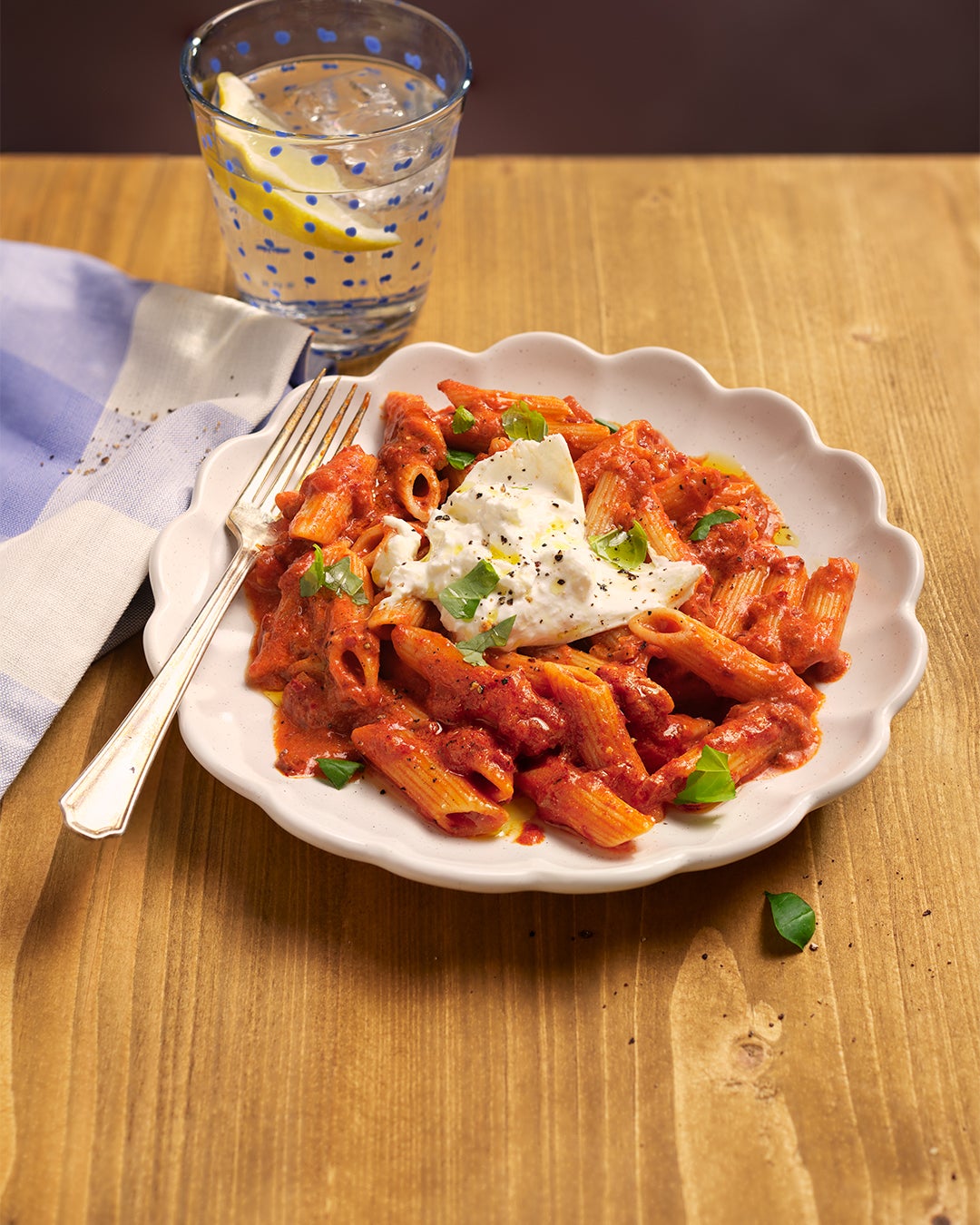
This ’nduja and burrata pasta recipe is set to be a firm favourite. ’Nduja in this dish is a real treat – it feels indulgent but carries so much flavour.
The sauce is rich and creamy, but has a gentle smoky spice to it from the sausage. Cold burrata split over the top to serve perfectly contrasts the heat of this super easy pasta dish, whilst the simple penne pasta shape scoops up this creamy sauce: a must try for easy winter cooking.
Serves: 4
Prep time: 10 minutes | Cook time: 40 minutes
Ingredients:
90g ’nduja sausage (use any leftovers to fry with eggs)
1 medium brown onion, finely diced
3 large garlic cloves, crushed
4 tbsp olive oil, plus extra to finish
400g Italian plum tomatoes
2 tsp Italian tomato purée
100ml red wine or stock
2 tsp caster sugar
350g dried penne pasta
4 tbsp mascarpone
1 small handful basil leaves, to serve
150g Italian burrata
Method:
1. Add the ’nduja to a large, cold pan and set over a medium-high heat. Fry for 5 mins until lightly crisp and oil renders, breaking up with a spoon as you go.
2. Add the onion and cook for 5 mins, until soft. Stir through the garlic and cook for a further 2 mins, adding a splash of oil if needed.
3. Tip in the tomatoes, stir then gently crush with the back of a spoon. Stir through the tomato puree, wine/stock and sugar. Use 150ml boiling water to rinse out the tomato tin then add this. Bring to a simmer then cook for about 15 mins, until thickened and a deep red. Season to taste. (This can be done up to 2 days ahead, cover and chill.)
4. Meanwhile, cook the pasta to packet instructions. Drain, reserving ¼ cup of cooking water.
5. Add the mascarpone to the sauce and gently stir until melted and combined. Add a little of the pasta water, until creamy but still vividly red then season.
6. Tip the pasta into the pan, stir to coat then divide between plates. Tear the burrata over the top, drizzle with oil, freshly ground pepper and plenty of torn basil leaves to serve.
Creamy truffle mash and sausages
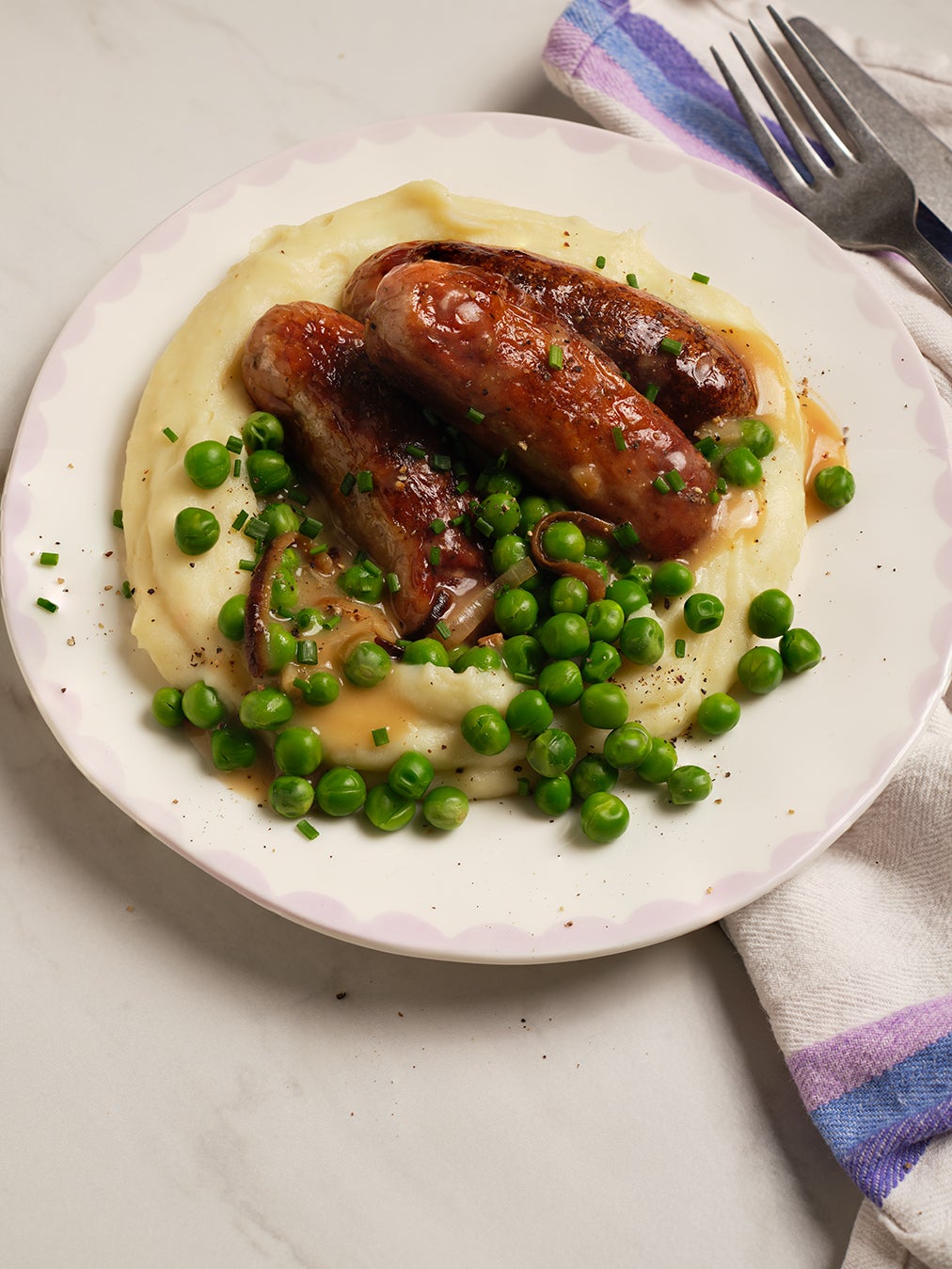
The perfect antidote to chilly winter evenings. This is a creamy and hearty dish with a deliciously chunky gravy that we keep subtle on flavour so as not to overpower the perfectly mild taste of truffle in the mash. Best served after a stonking walk and eaten with a post-chill red nose. For the hostess who likes her guests leaving full!
Serves: 2 hearty, or 4 family-friendly
Prep time: 20 minutes | Cook time: 45 minutes
Ingredients:
2 tbsp sunflower oil, plus a splash
6 sausages
850g British King Edward potatoes, peeled and quartered (approx 6 medium-sized potatoes)
100-150g truffle butter
200ml double cream
3 tbsp parmesan, grated
50ml British whole milk, optional
1 large brown onion, sliced into half-moon ribbons
2 large garlic cloves, peeled
2 sprigs thyme
50g plain flour
500ml chicken stock (from 1 chicken stock pot)
250ml dry white wine (such as Pinot Grigio)
250g frozen garden peas
2 tbsp chives, finely sliced, optional
Method:
1. Heat the oven to 200C/180C fan/gas 6. Set a tray into the oven to heat up.
2. Heat a splash of oil in a frying pan over a medium heat. Pierce the sausages lightly, add to the pan and fry for a few mins on each side, until golden. Transfer to the hot tray in the oven to finish cooking, about 20 mins.
3. Meanwhile, tip the potatoes into a pan of cold, salted water. Set over a medium-high heat and bring to the boil then cook until tender, about 15 mins. Drain well and allow to dry slightly. Tip back into the dry pan then mash until smooth, add the butter, ¾ of the cream, cheese and mix until smooth. Add a splash of milk to make silky smooth mash, if needed.
4. Return the pan the sausages were browned into a low. Add the oil, onions, garlic and thyme then gently cook until the onions are soft, translucent and lightly caramelised. Stir through the flour then gradually whisk in the stock and wine until a smooth, thick gravy forms. Season and simmer gently.
5. Cook the peas to packet instructions and drain.
6. Remove the garlic and thyme from the gravy then whisk through the remaining cream.
7. Divide the mashed potatoes between serving plates, top with sausages and peas then spoon over gravy and sprinkle with chives, if using, to serve.
Brussel caesar with schnitzel
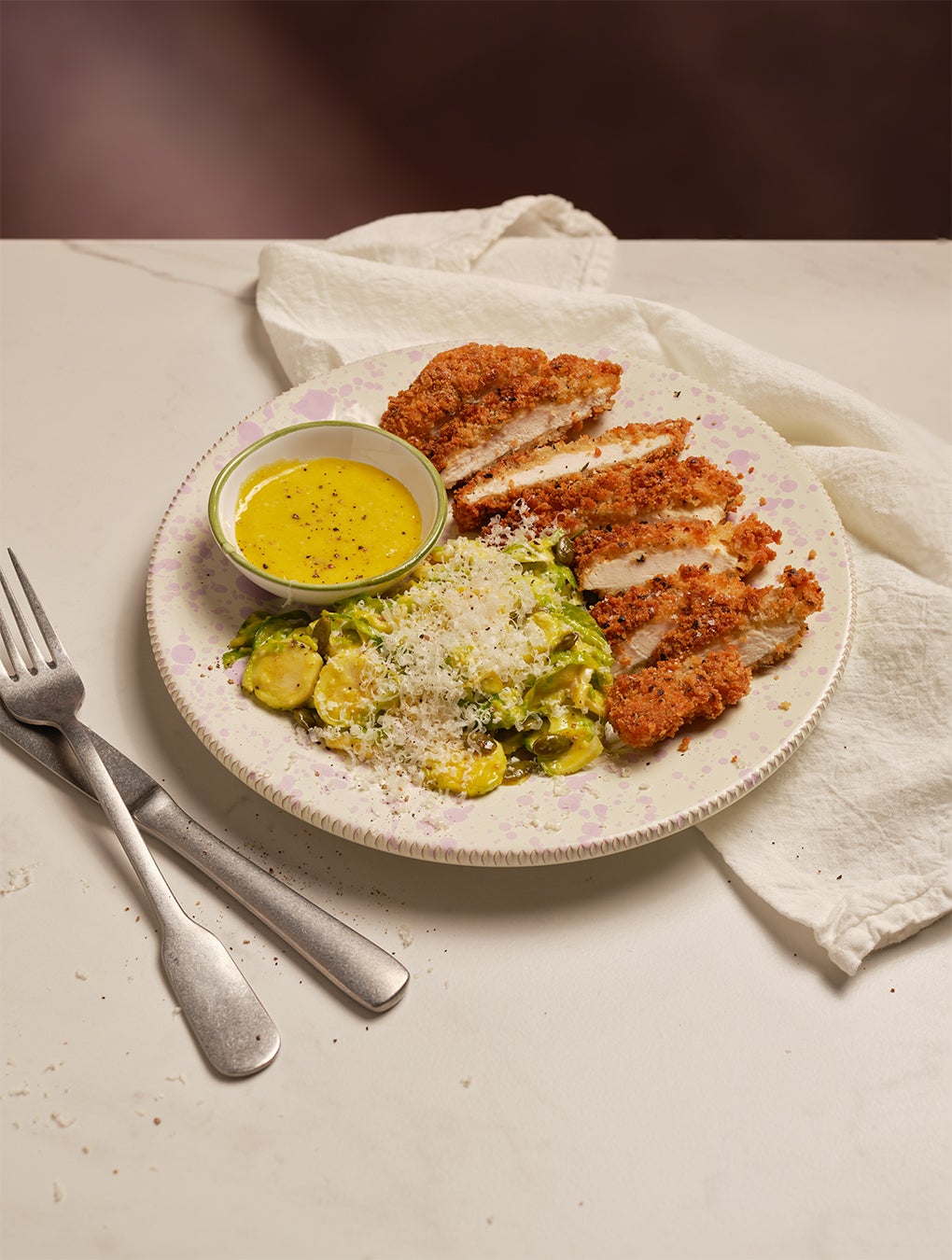
This recipe is sure to become a family staple all year round. Using sprouts for the base of the salad adds a fab bit of festive razzle dazzle to this otherwise cult salad. And then, in lieu of croutons (with whom I have a love/hate relationship and insufficient dental cover), deliciously crispy breadcrumbed chicken.
Served with extra sauce for dipping, because the dressing is really the star of the show. Everything about this feels like it could be served at your avant-garde east London small plate spot - but instead it’s from the comfort of your home, and the only pricey bits are the eggs, oil and parmesan. A subtle upgrade that still keeps this dish cheaper than the glass of orange wine the aforementioned small plate spot would have tricked you into tasting. A hosting win all round and perfect as a “light lunch”.
Serves: 4
Prep time: 30 minutes | Cook time: 20 minutes
Ingredients:
1 large garlic clove, peeled
2 Cantabrian anchovy fillets
2 large egg yolks
1½ tsp Dijon mustard
2 tbsp lemon juice (plus zest to finish)
160ml extra virgin olive oil
50g Parmigiano Reggiano, finely grated
500g Brussels sprouts, finely sliced
50g pumpkin seeds, lightly toasted
2 chicken breast fillets, halved widthways
50g plain flour
2 tsp paprika
2 eggs, whisked
150g white breadcrumbs
2 tsp garlic powder
2 tsp onion powder
2 tsp Italian herbs
100ml neutral oil, for shallow frying
Method:
1. Chop the garlic and anchovies on a board, then, using the back of a knife, mash to a paste. Transfer to a large mixing bowl, then whisk in the egg yolks, Dijon and lemon juice.
2. Slowly drizzle in the oil, whisking constantly, until all the oil has been added and the dressing has emulsified. Whisk through 30g parmesan, season with black pepper and loosen with a splash of cold water, if needed. Reserve about ⅓ of the dressing, then add the sprouts and seeds to the remaining dressing in the bowl and toss to coat. Leave to soften.
3. Set the chicken on a board and gently pound it with a rolling pin to flatten it until thin.
4. Set up a dredging station. Mix the flour and paprika on a plate, whisk the eggs in a bowl and mix the breadcrumbs with garlic powder, onion powder and Italian herbs.
5. Dip 1 piece of chicken in the flour, then egg, then coat generously in breadcrumbs and set aside. Repeat with the remaining chicken.
6. Heat the oil in a deep frying pan over a medium-high heat. Add the chicken, one at a time, and cook for 3-4 mins on each side until cooked through, golden and crisp. Set on kitchen paper and sprinkle with flaky sea salt. Repeat with the remaining chicken.
7. Slice the chicken and divide between serving plates. Add a spoonful of sprouts, top with lemon zest and sprinkle with the remaining parmesan. Serve with the remaining dressing in a dish on the side.
Recipes from Ocado
Join our commenting forum
Join thought-provoking conversations, follow other Independent readers and see their replies
Comments
Bookmark popover
Removed from bookmarks